The Sabbath of witches — History & Analysis
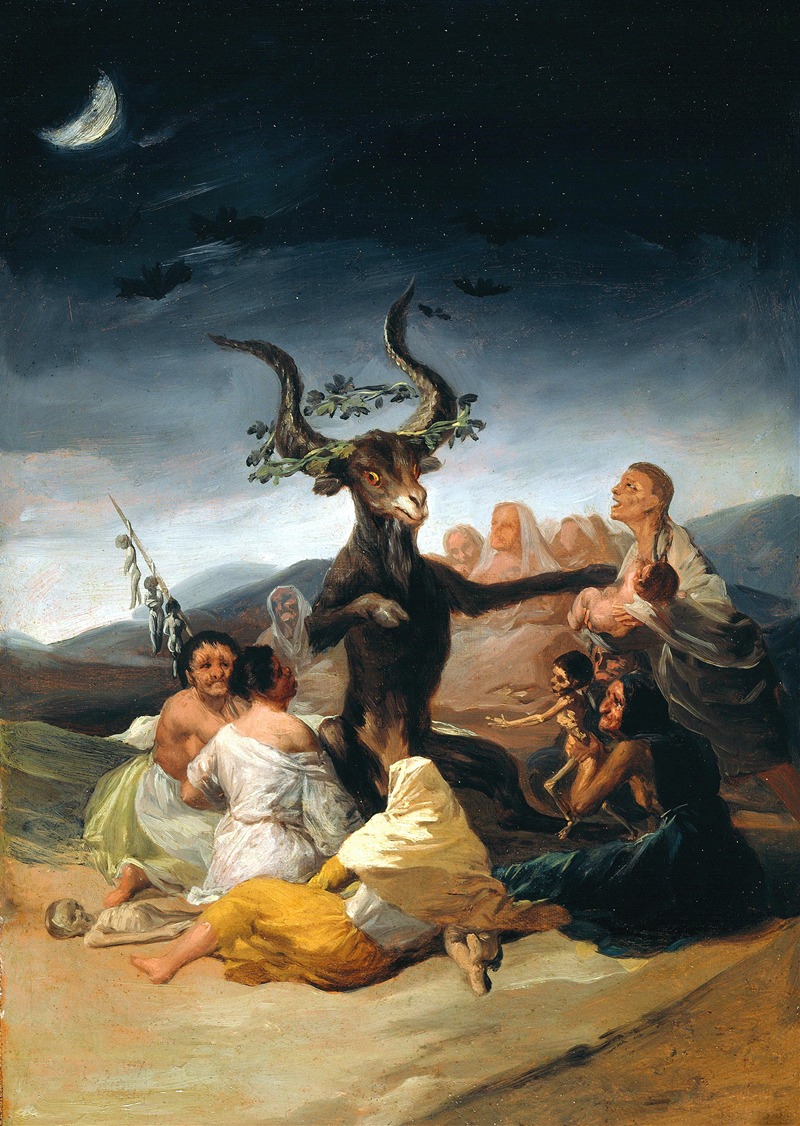
“Art reveals the soul when the world turns away.” In the shadowy corners of The Sabbath of Witches, divinity becomes an unsettling element, twisting the familiar into something profoundly bizarre. Look to the center where a towering figure of a goat looms, its skeletal limbs stretching outward like a dark prophet. Notice how Goya employs sharp contrasts, the deep blacks and sickly greens swirling around the central figure, drawing the eye into its malevolent gaze. Each witch, cloaked in haunting expressions, encircles their dark master, illuminated by an eerie glow that highlights their warped faces — a dance of fear and fervor captured in thick, frenetic brushstrokes.
Yet, beneath the grotesque imagery lies a testament to humanity's eternal struggle with the divine. The juxtaposition of the grotesque and the sacred prompts contemplation on the nature of worship, as the witches seem both empowered and entrapped by their allegiance to this sinister figure. The joy of ecstasy mingles with palpable dread, exposing a deep-seated conflict within the human spirit when confronted with the otherworldly.
In 1823, Goya painted this work during a tumultuous period in Spain, marked by political unrest and a growing disillusionment with the Church. His life was shadowed by personal turmoil, including the deafness that left him feeling increasingly isolated. The world of art was shifting towards Romanticism, yet Goya’s exploration of darkness and the macabre placed him ahead of his time, as he sought to unveil the unseen depths of human nature.