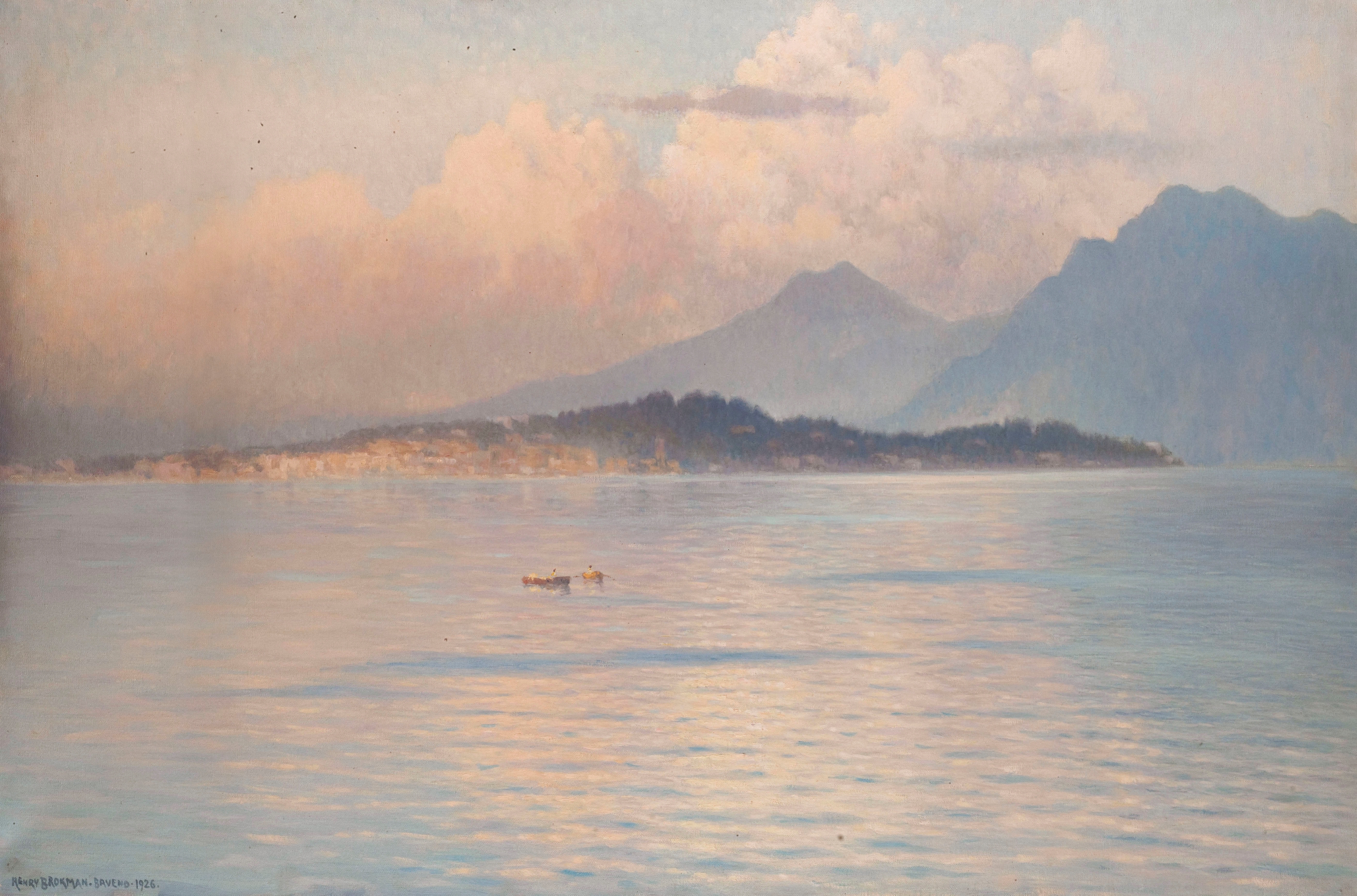
Femme sur la terrasse de l’hôtel Cocumella. Vue sur le Vésuve — History & Analysis
Can beauty exist without sorrow? In Femme sur la terrasse de l’hôtel Cocumella. Vue sur le Vésuve, the answer is woven into the fabric of solitude and longing, echoing in the outer and inner landscapes alike. Look to the left at the woman seated on the terrace, her posture elegant yet introspective. She gazes toward the distant silhouette of Mount Vesuvius, the vibrant blues and greens of the Mediterranean landscape contrasting starkly with her muted attire.
Notice how the sunlight spills softly onto her face, illuminating the delicate features, yet casting shadows that hint at a deeper introspection. The artist’s use of light and color creates a mesmerizing interplay of warmth and melancholy, inviting you to ponder the woman's quiet moment of reflection. Delve deeper into the canvas, where the juxtaposition of the serene backdrop and the figure’s solitary presence reveals layers of emotional tension. The idyllic view of Vesuvius, often associated with destruction, symbolizes both beauty and inevitable change, mirroring the woman’s own inner conflict.
Elements of loneliness rise like the wafts of smoke from the volcano, manifesting in her distant gaze as she appears to be an observer of life rather than a participant in it. Henry Brokman painted this work in 1897 while living in Italy, a period marked by his exploration of impressionistic techniques. During this time, the art world was shifting towards modernism, and Brokman's focus on personal emotion within landscapes was both a reflection of his life experiences and an answer to the changing tides in the artistic community. This painting stands as an eloquent testament to his ability to capture the bittersweet nuances of existence.