L’Oasis — History & Analysis
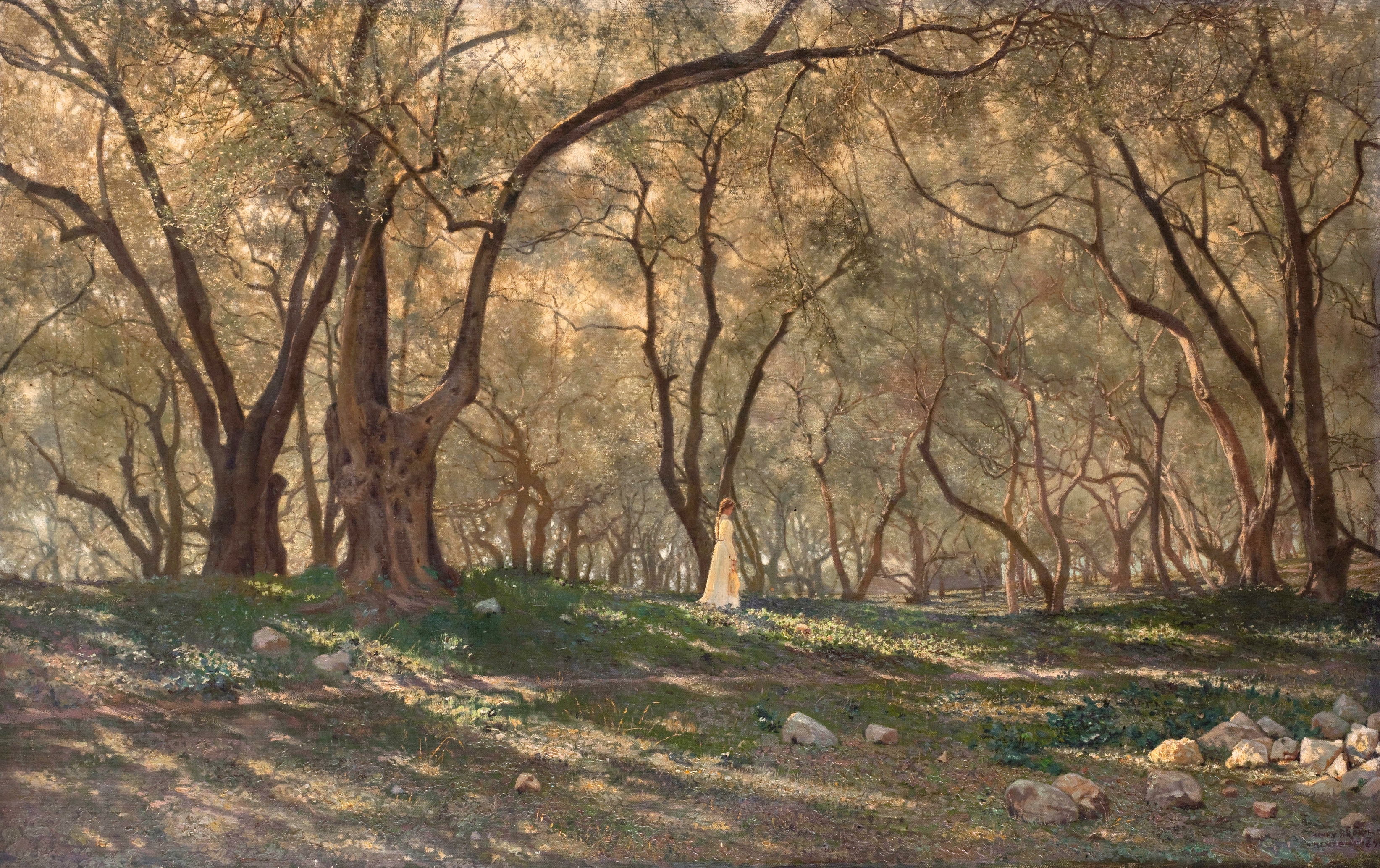
When did color learn to lie? In an age where innocence seems obscured by the tumult of the world, one must wonder what truths lie beneath the vibrant hues of L’Oasis. Focus first on the lush greens that envelop the characters, drawing your gaze to the serene expanse of nature. Here, the artist employs a masterful interplay of light and shadow, where dappled sunlight dances upon the leaves and reflects off the shimmering water, inviting tranquility. Notice how the figures, clad in delicate whites, seem to emerge from this oasis, their expressions soft and contemplative.
The gentle brushstrokes create a sense of movement, as if the scene is alive, inviting the viewer into a moment suspended in time. Yet, beneath this idyllic façade, there are layers of emotional tension that hint at the fragility of purity. The juxtaposition of the serene landscape with the subtle tension in the figures’ postures hints at an unvoiced yearning or an unacknowledged sadness. Each character appears enraptured by their surroundings, yet there is a distance in their gazes that suggests a longing — perhaps for a lost innocence or an escape from reality.
This duality amplifies the work’s beauty, prompting contemplation of what lies beyond the surface. In 1890, Henry Brokman painted L’Oasis during a period marked by artistic experimentation and the onset of modernism. Living in France, he was part of a vibrant artistic community influenced by the Impressionist movement, which sought to capture the fleeting moments of life and nature. This was a time of exploration, as artists increasingly turned their focus inward and sought to convey deeper emotional truths through their work.