Jeune Fille Sous Les Oliviers – Menton — History & Analysis
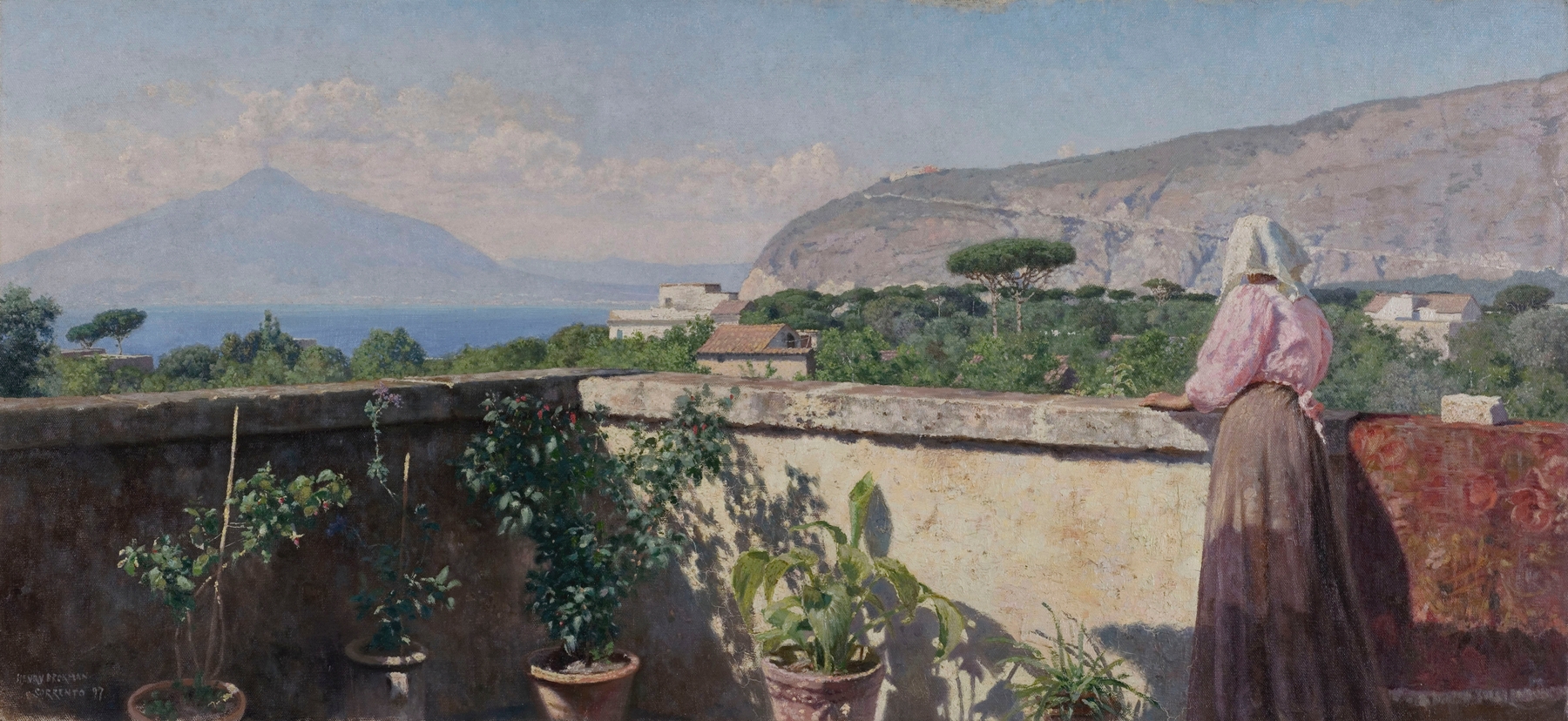
Who listens when art speaks of silence? In Jeune Fille Sous Les Oliviers – Menton, the gentle presence of a young girl enveloped in stillness invites us to contemplate the weight of unspoken sorrow. Look to the left, where the sun-drenched olive trees stretch their gnarled branches overhead, casting dappled shadows across the girl’s serene face. The soft, muted palette of greens and browns creates a natural harmony, while the delicate brushwork captures the texture of both the girl’s flowing gown and the rough bark of the trees.
Her posture, slightly hunched and introspective, draws the viewer’s gaze, suggesting a deep connection to the landscape that both shelters and conceals her thoughts. The emotional tension is palpable; the contrast between the vibrancy of the scenery and the girl’s quiet demeanor speaks volumes. Is she lost in reminiscence, or perhaps mourning a past that lingers like the shadows at her feet? Every olive leaf sways gently, as if whispering secrets of love and loss, making the viewer ponder the stories held within the silence.
This juxtaposition of life and stillness evokes an aching sense of grief, capturing a fleeting moment that resonates with the weight of what is left unsaid. Henry Brokman painted this piece in 1897 while living in Menton, a coastal town on the French Riviera. At this time, he was exploring the Impressionist movement, seeking to express the emotional landscapes of his subjects. Brokman’s work emerged during a period of profound change in the art world, as artists began to break free from traditional constraints, allowing for personal reflections such as those found in this poignant portrayal of solitude.