Tente Arabe Dans Le Désert À Blidah — History & Analysis
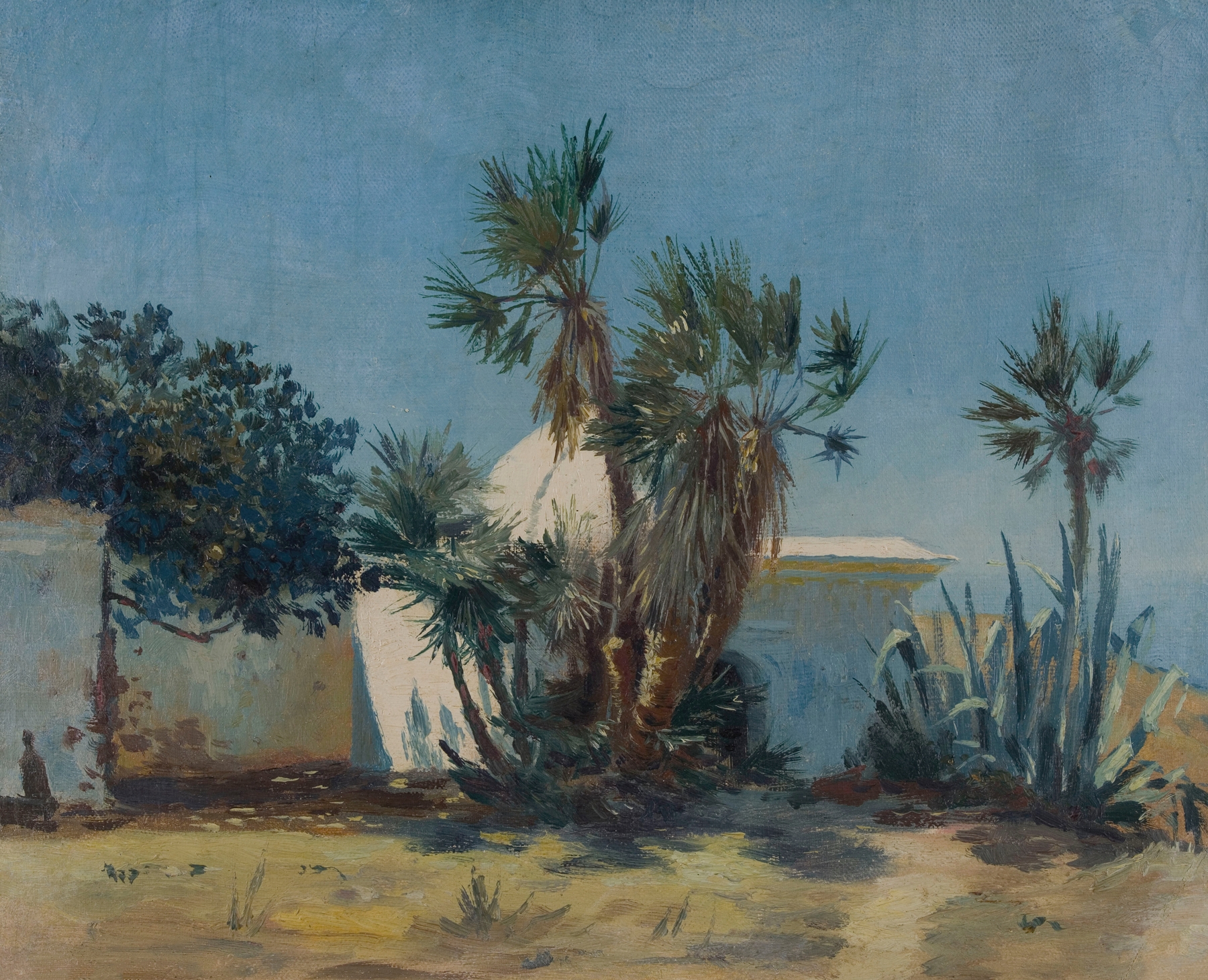
Is this a mirror — or a memory? In Tente Arabe Dans Le Désert À Blidah, a solitary tent stands resilient against the vast expanse of sand, beckoning viewers into a realm of revelation and solitude. Look to the center of the canvas where the tent, adorned with intricate patterns, forms a striking focal point. The muted ochres and warm browns of the desert create a harmonious contrast with the vibrant hues of the fabric, while soft strokes conjure the gentle undulation of the dunes. Notice how light drapes over the tent, casting shadows that suggest movement, as if the fabric whispers secrets of its surroundings.
This interplay of color and light envelops the viewer in a serene yet curious ambiance. Beneath the surface, the painting speaks to deeper themes of isolation and cultural identity. The starkness of the desert landscape contrasts sharply with the ornate tent, symbolizing the delicate balance between tradition and the harshness of existence. Within this juxtaposition lies a tension — the longing for connection amid the vast emptiness of the surrounding environment.
Each brushstroke invites contemplation on the transient nature of life and the stories that unfold within secluded spaces. In 1890, Henry Brokman painted this piece during a time when European fascination with North Africa was at a peak. Living in France, he was influenced by the growing interest in Orientalism, a movement that romanticized and idealized Eastern cultures. This artwork captures not only a geographical location but also the intimate exploration of identity and memory, reflecting a broader narrative in art history.