Flusstal von Isernia bei Neapel — History & Analysis
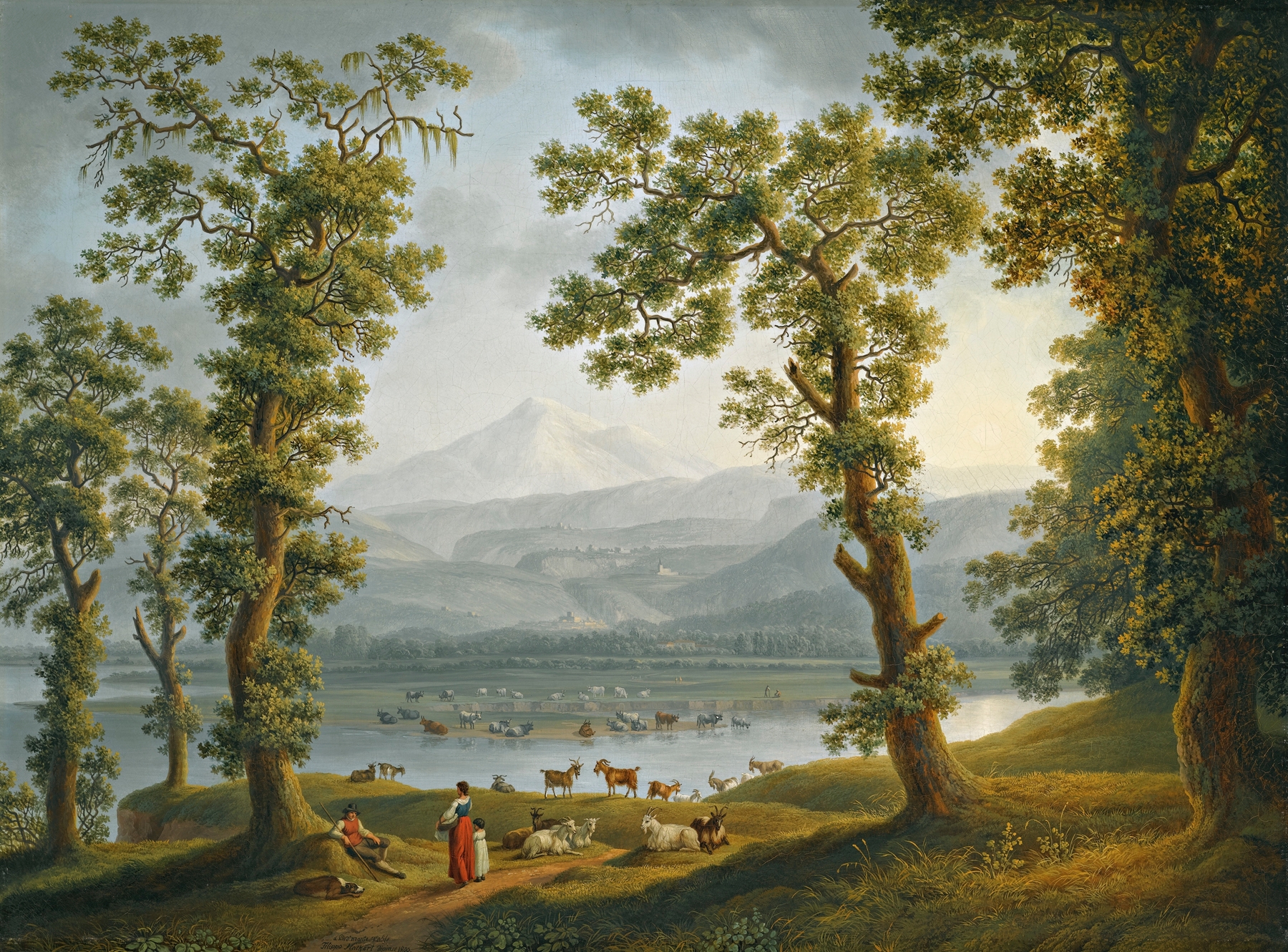
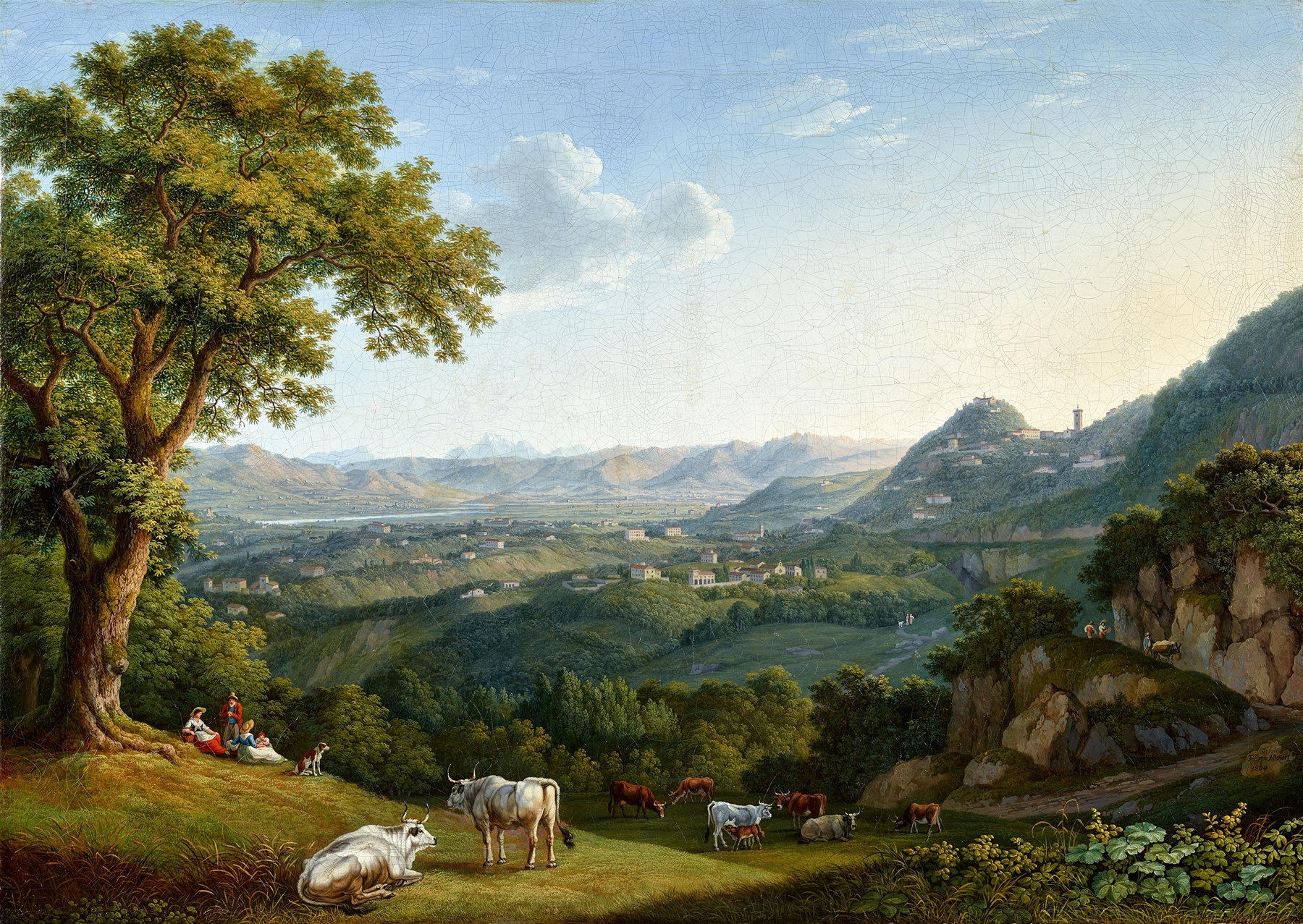
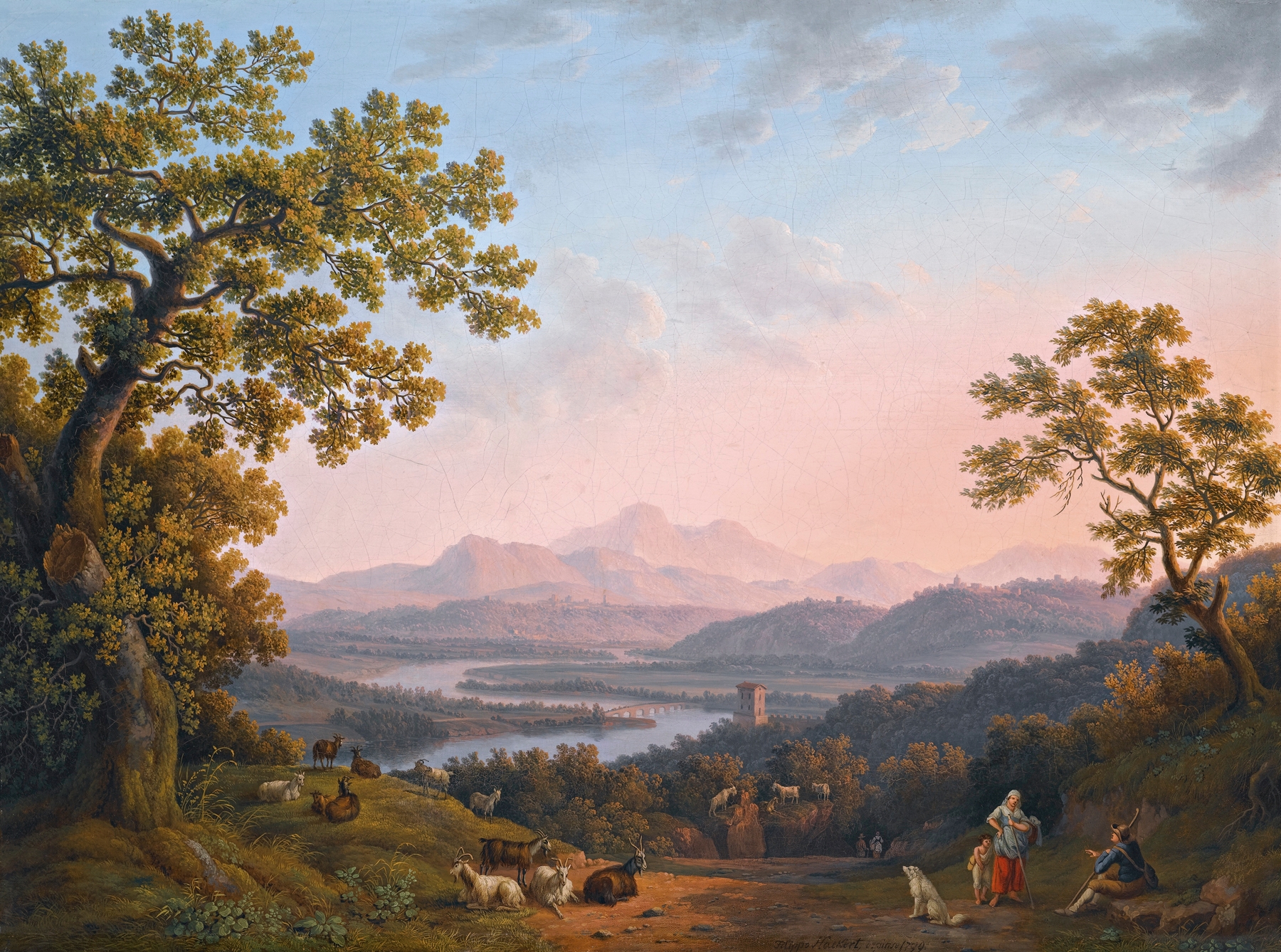
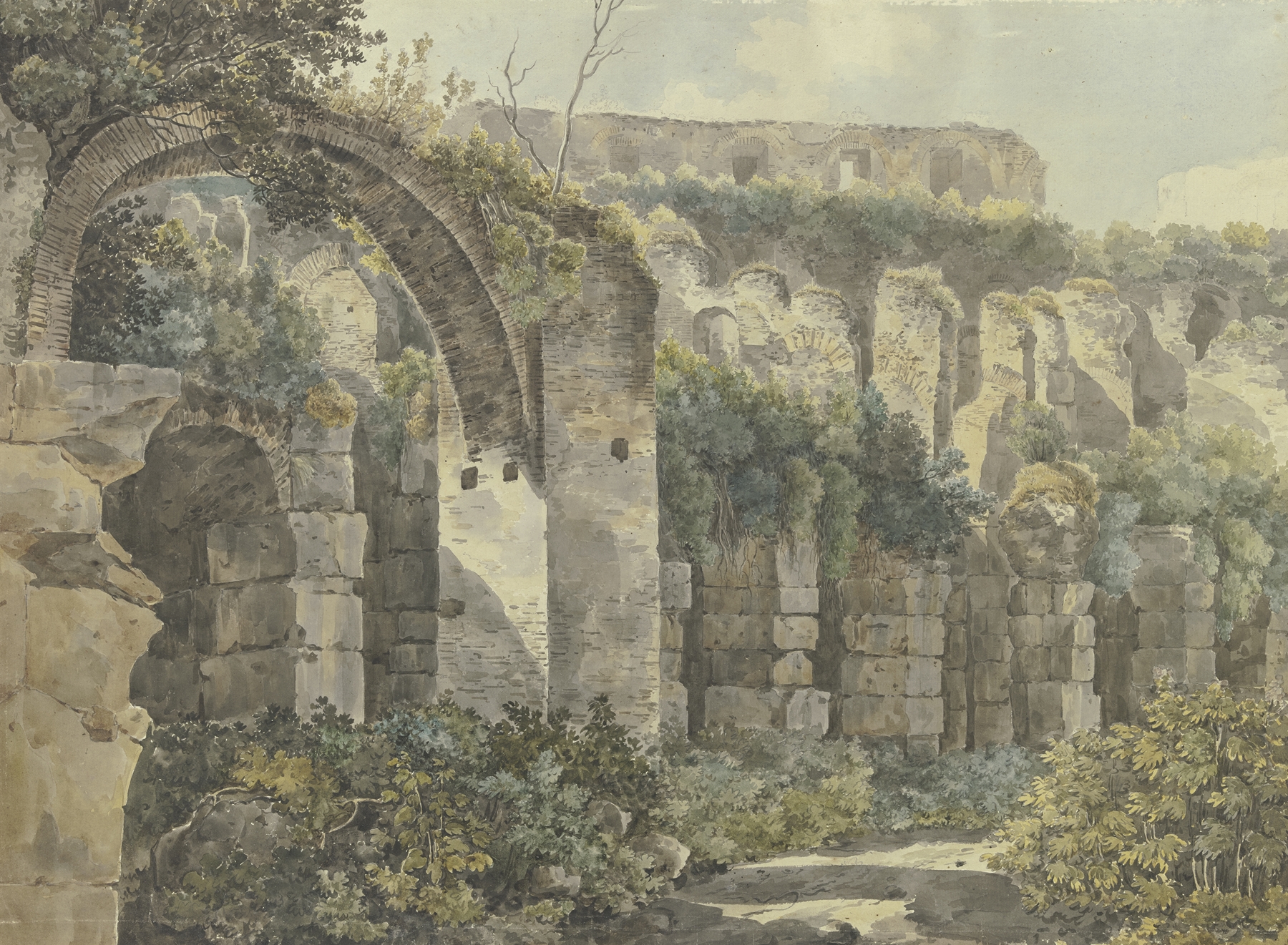
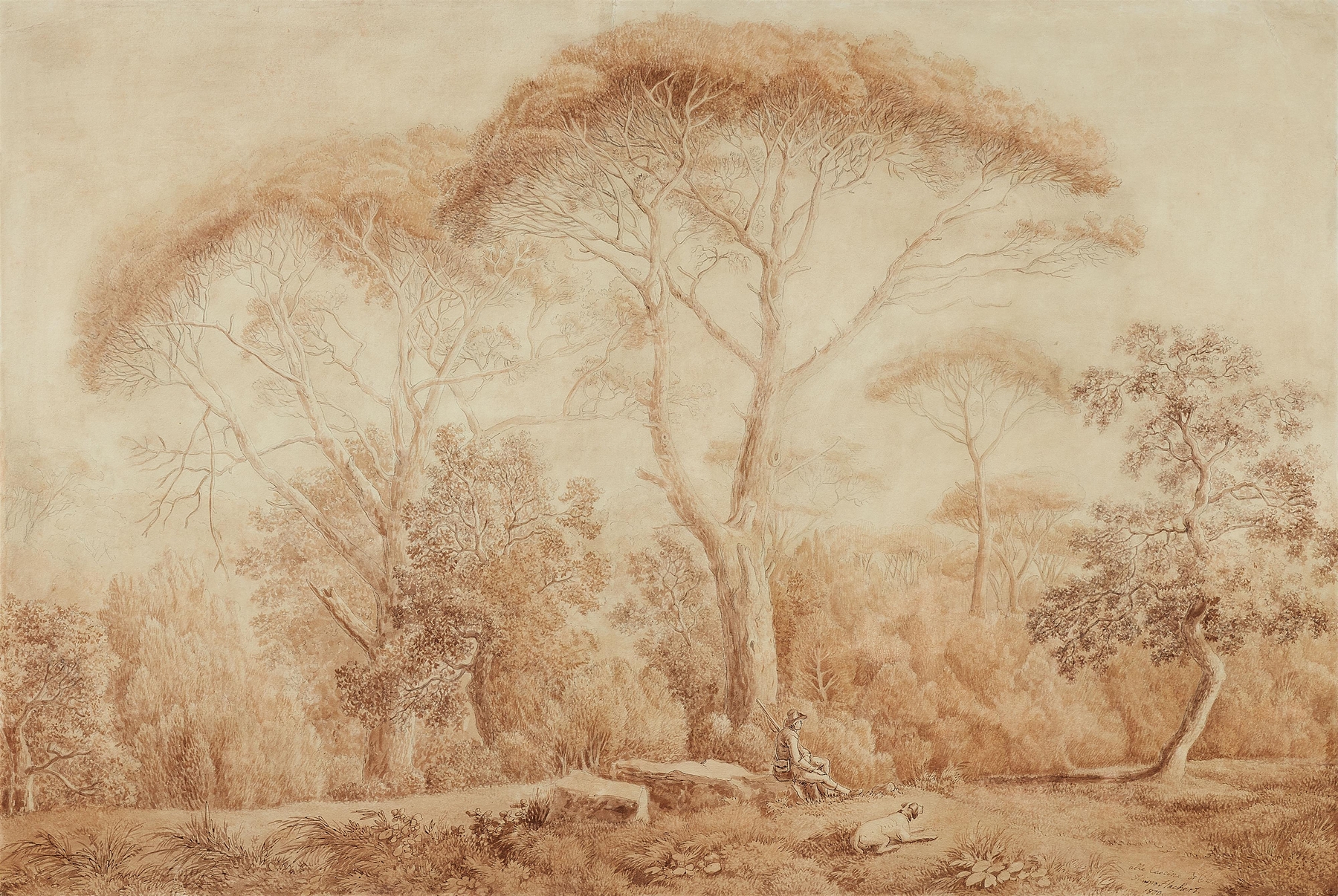
Did the painter know this moment would outlive them? In Flusstal von Isernia bei Neapel, a serene landscape captures the essence of nature's relentless movement, forever inviting the viewer to lose themselves in its tranquil embrace. Look to the center of the composition, where the gentle flow of the river meanders through a lush valley, framed by verdant hills that rise dramatically in the background. Notice how the brushwork creates a sense of vitality, each stroke echoing the subtle currents of water.
The interplay of soft greens and earth tones with delicate highlights suggests the sun's tender touch, illuminating the scene with a warm glow, almost as if nature itself is breathing. Within this idyllic setting, contrasts abound—between the stillness of the land and the fluidity of the water, the solidity of the hills and the ephemeral nature of the sky. The figures in the foreground, seemingly content in their surroundings, become part of the landscape's timeless rhythm, their own movements echoing the currents of the river. Here, the harmony between humanity and nature speaks to an eternal dialogue, a reminder of the fleeting beauty that surrounds us.
Jacob Philipp Hackert painted this work in 1791 while living in Italy, where he was deeply influenced by the sublime beauty of the landscapes. During this period, Europe was experiencing a shift towards Romanticism, with artists increasingly drawn to nature's power and mystery. Hackert’s ability to capture these elements marked him as a significant figure in landscape painting, bridging classical traditions with emerging romantic sensibilities.