Friar Pedro Shoots El Maragato as His Horse Runs Off — History & Analysis
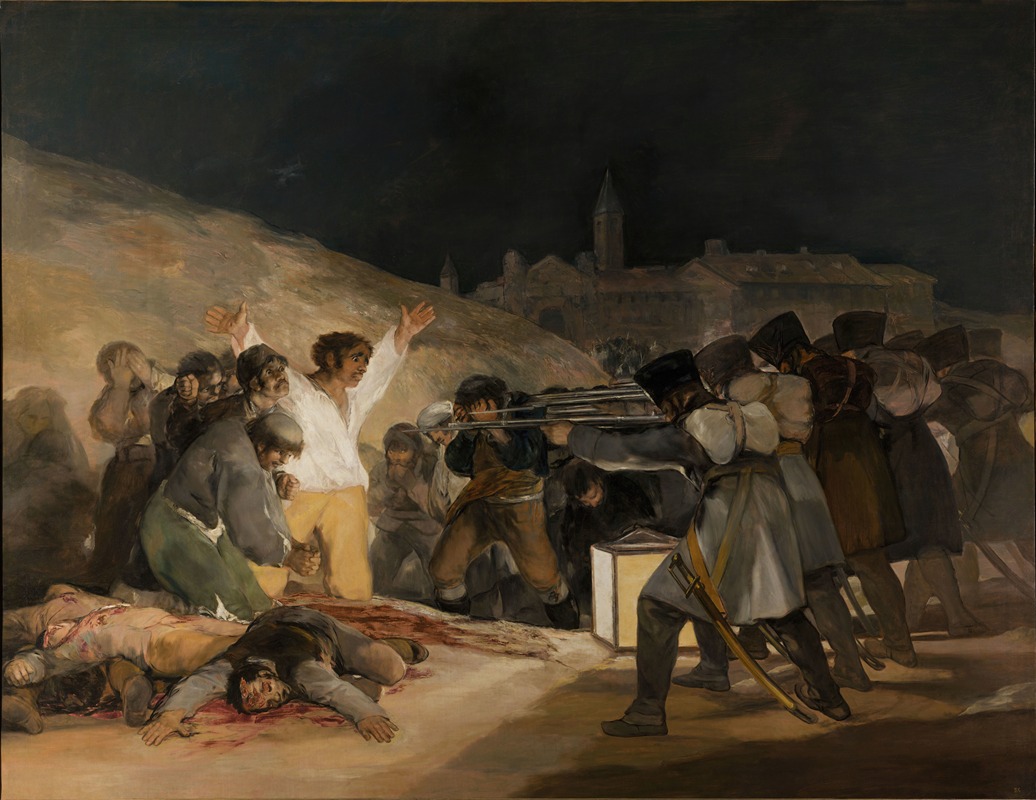
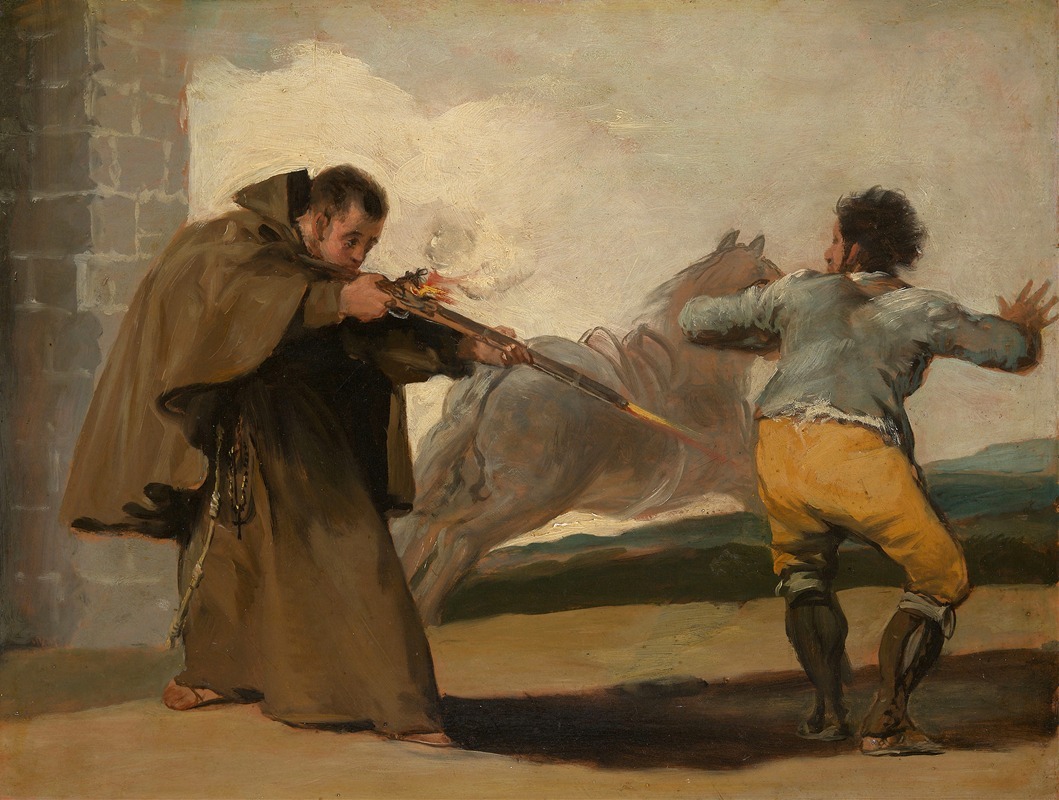
What if beauty was never meant to be finished? In a world thick with chaos and unresolved tension, the fragments of a moment captured forever serve as a haunting reminder of the struggle between order and chaos. Focus your gaze on the central figure, a friar with a resolute countenance, as he stands defiantly, gun raised, amidst a swirl of motion. Notice how the stark contrast between the deep hues of his dark habit and the vibrant chaos of the background draws you into the heart of the clash. The composition is striking—not merely a focus on the act of violence, but an exploration of its aftermath, with the fleeing horse galloping off into an uncertain future.
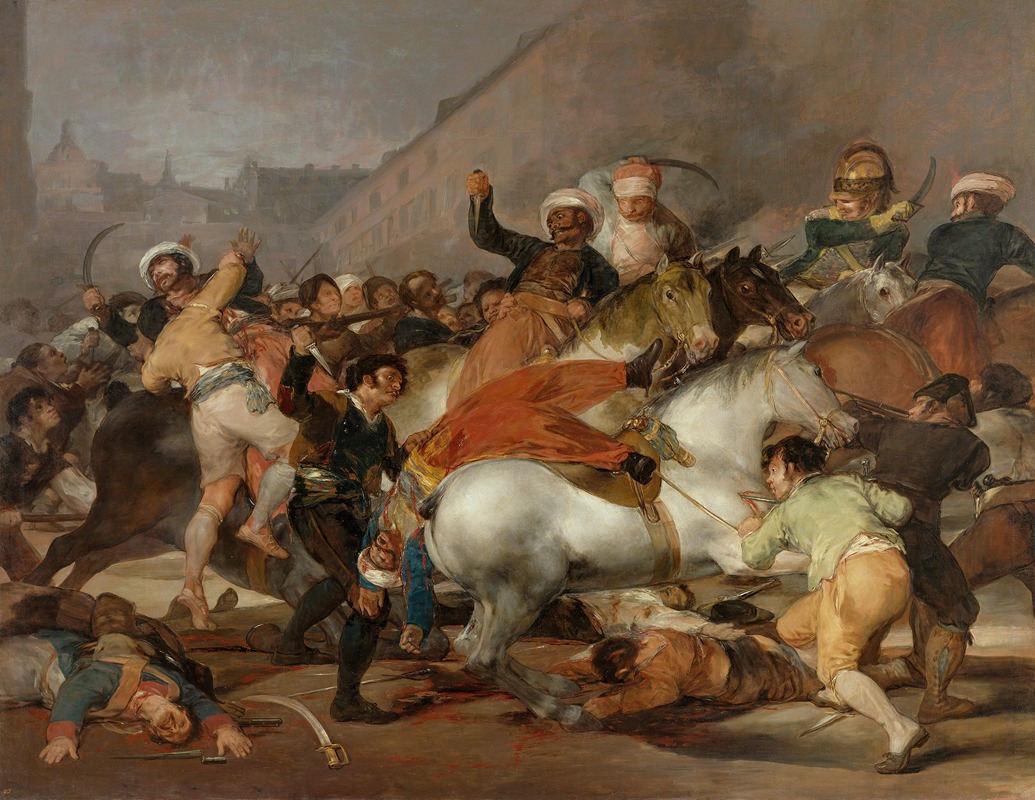
The dynamic brushstrokes invoke both dread and a sense of impending beauty in destruction. Deeper insights emerge as the viewer contemplates the layers of meaning. The friar, a figure of supposed piety, contrasts sharply with the brutality of his action, prompting reflections on morality, duty, and violence. The errant horse symbolizes lost control and the fleeting nature of stability, mirroring the tumultuous political climate of Spain in the early 19th century.
Each detail encapsulates a story of conflict—between man and man, belief and action, and the inevitability of change. In the early 1800s, while painting this work, Goya found himself in a rapidly changing Spain, grappling with the turmoil brought about by the Napoleonic Wars. This period was marked by a profound disillusionment with authority and the human condition, reflecting his own personal struggles with illness and the shifting tides of artistic expression. This piece stands as a pivotal moment in his oeuvre, bridging the gap between traditional representation and a more expressive, emotional approach to art.