From the Top of Kaaterskill Falls — History & Analysis
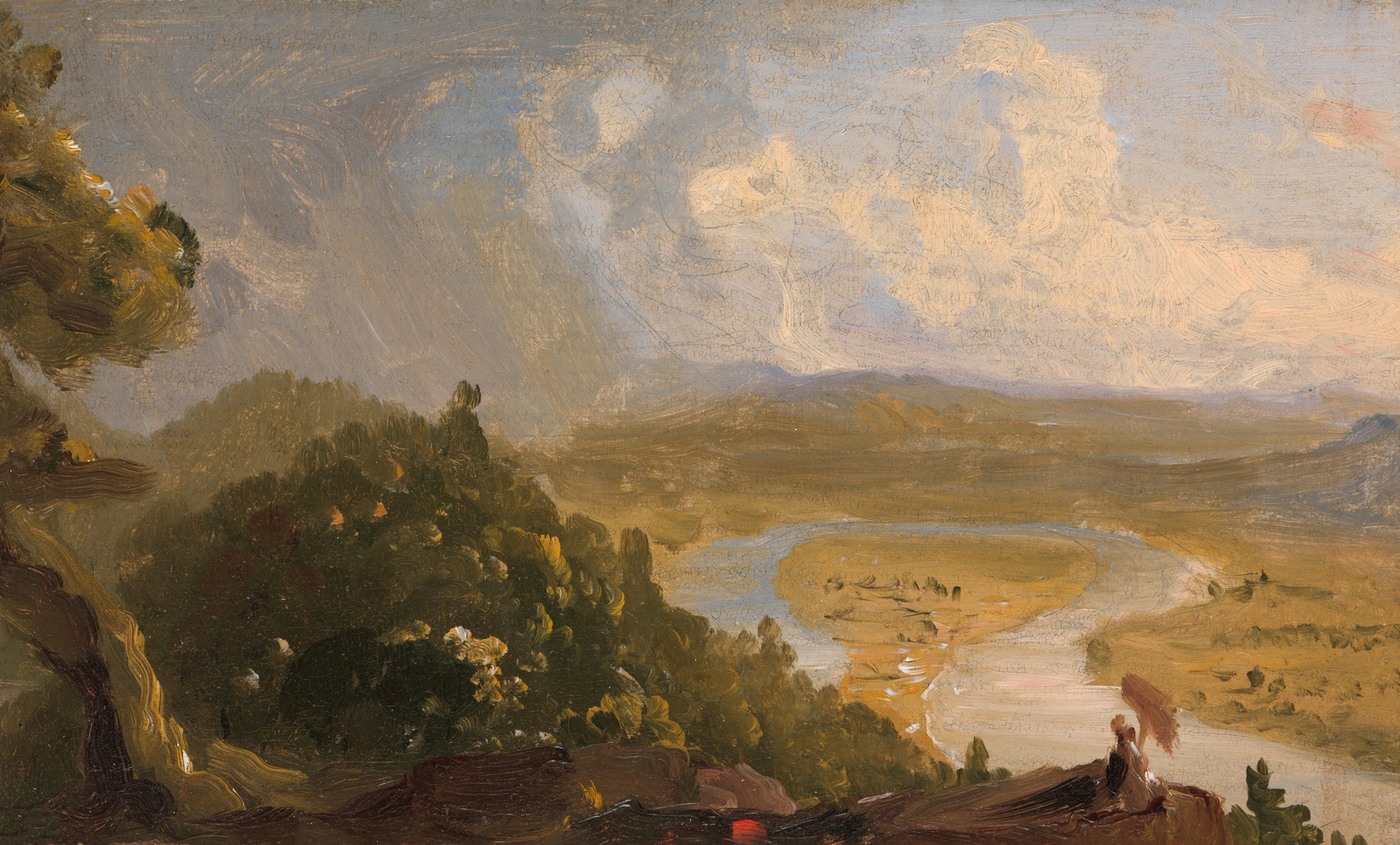
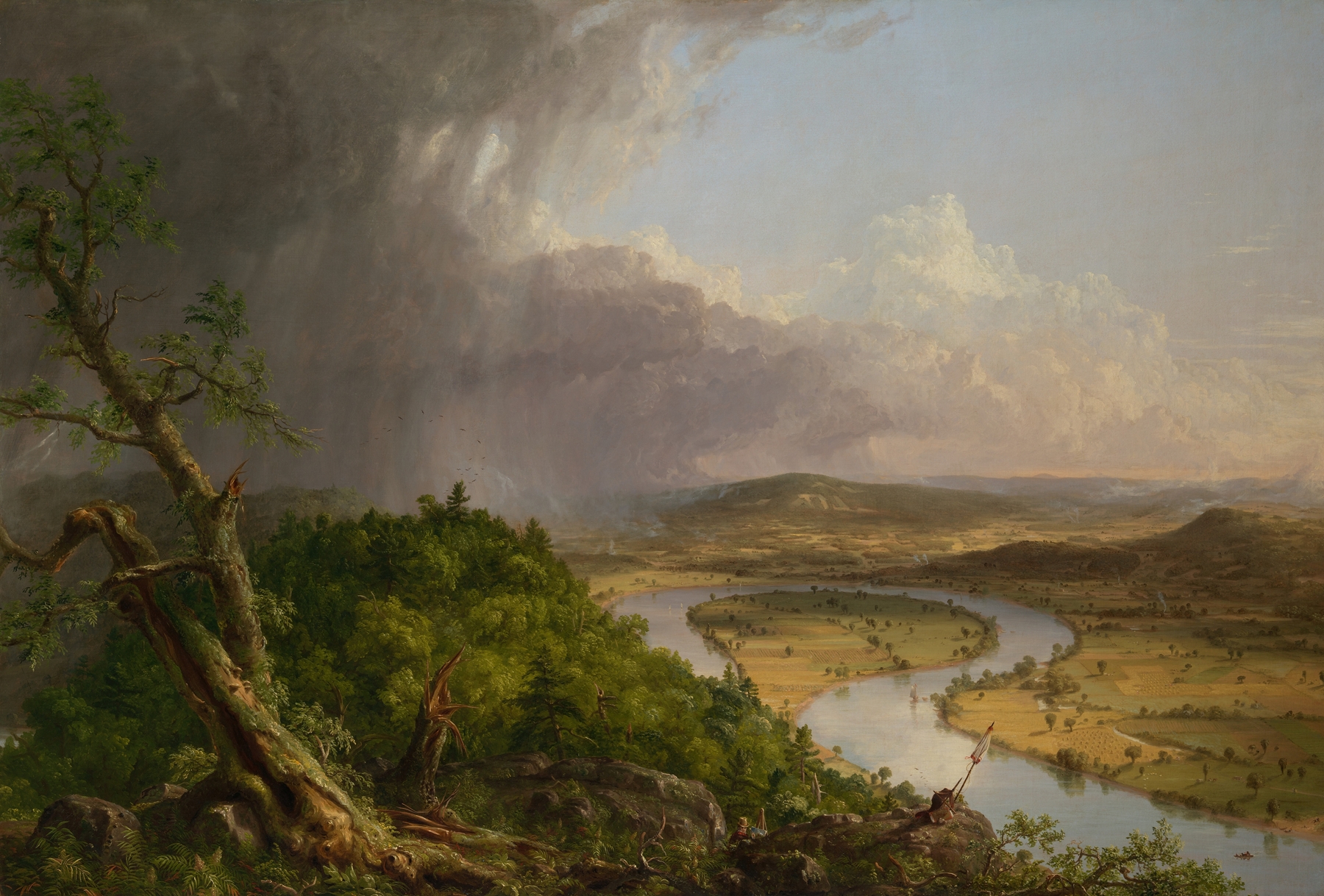
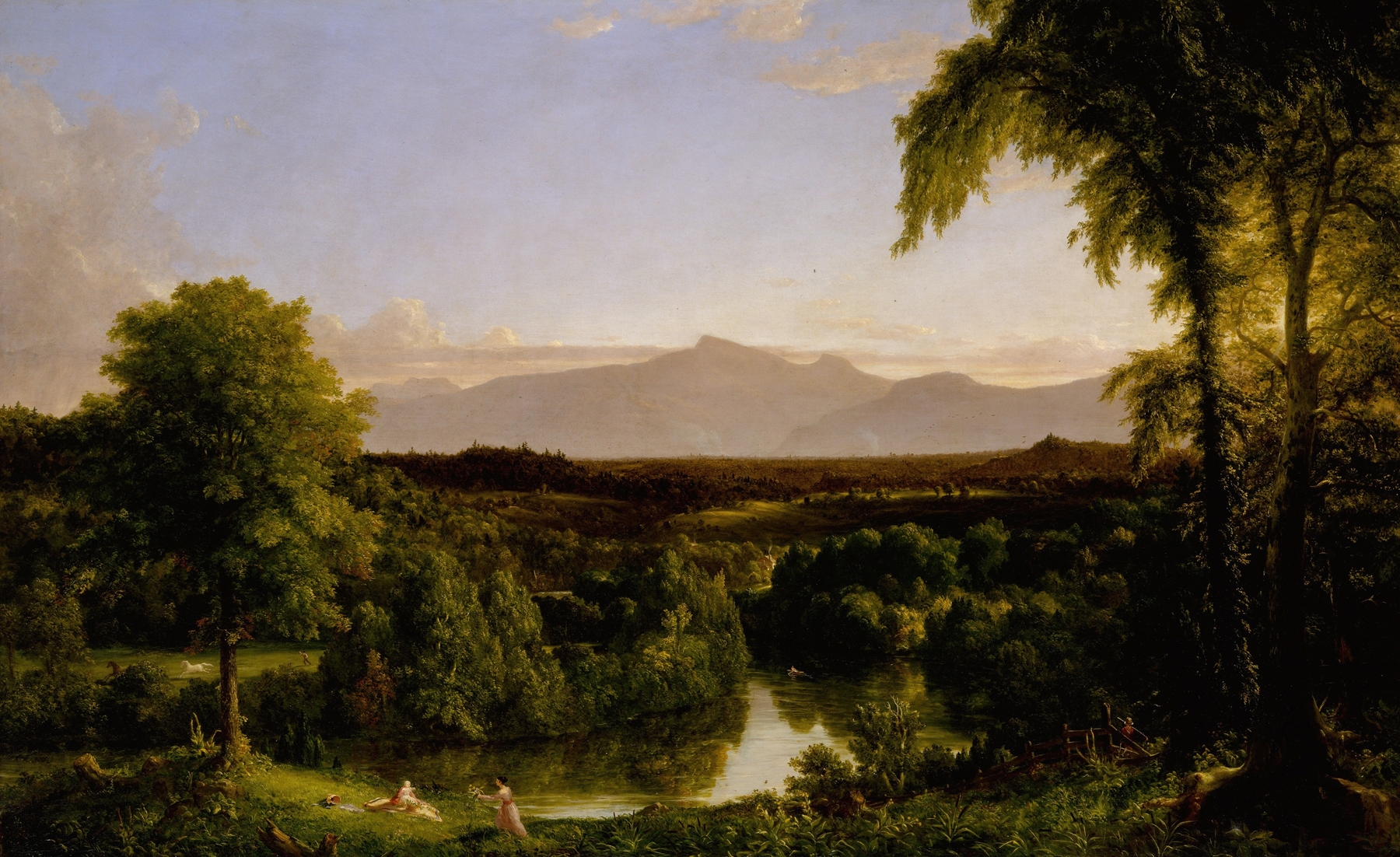
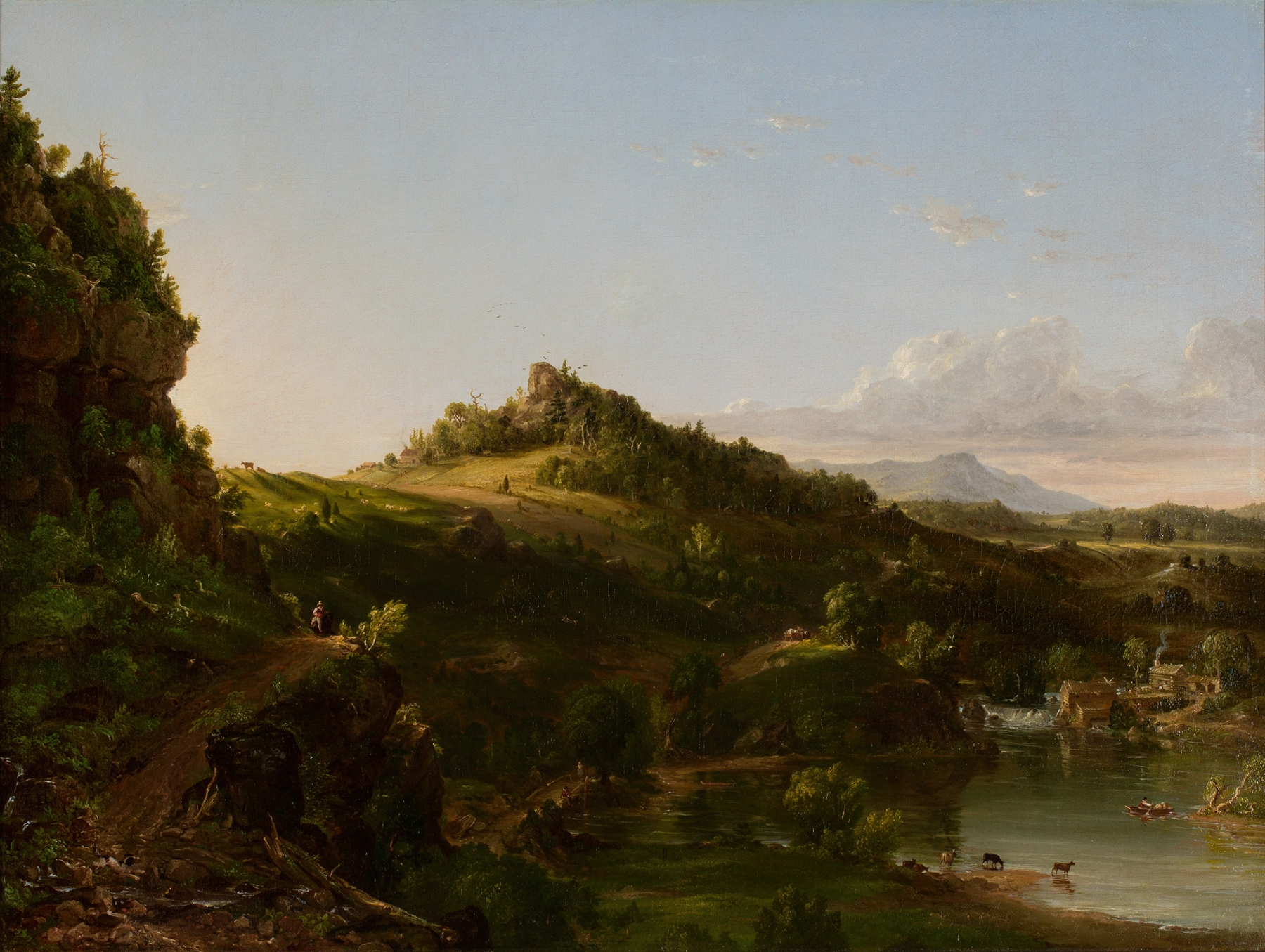
When did color learn to lie? In the hands of a master, it can enchant, mislead, and transport us to realms unseen, revealing truths hidden in the fabric of nature. Look to the left, where the cascading waters tumble down the rocky escarpment, their brilliant blues and whites contrasting sharply with the earthier tones of the surrounding landscape. Notice how the light dances upon the water, creating an illusion of movement, while the verdant greens of the trees embrace the edge of the precipice.
The dramatic interplay between sunlight and shadow shapes a scene that is both serene and powerful, inviting the viewer into an eternal moment of wonder. Yet, beneath this picturesque surface lies a duality. The verdant foliage and the vibrant water may seem inviting, but the steep drop hints at danger, a reminder of nature's sublime power. The expansive sky overhead, with its swirling clouds, echoes the tumult of the human experience—a world where beauty and peril coexist.
The contrasting elements of solitude and majesty speak to the deep emotional resonance of the landscape as both enchanting and formidable. Thomas Cole painted this work in 1826 while residing in the burgeoning Hudson River Valley, a hub of Romanticism that celebrated the American wilderness. At this time, he was gaining recognition for his detailed and atmospheric landscapes, reflecting both the beauty of nature and the tensions of a rapidly changing world. This painting is a testament to his pioneering vision, embodying the reverence for nature that characterized the movement and laid the groundwork for future American landscape artists.