Gebirgslandschaft, auf dem Weg ein Mädchen zu Pferde, links zwei Kühe — History & Analysis
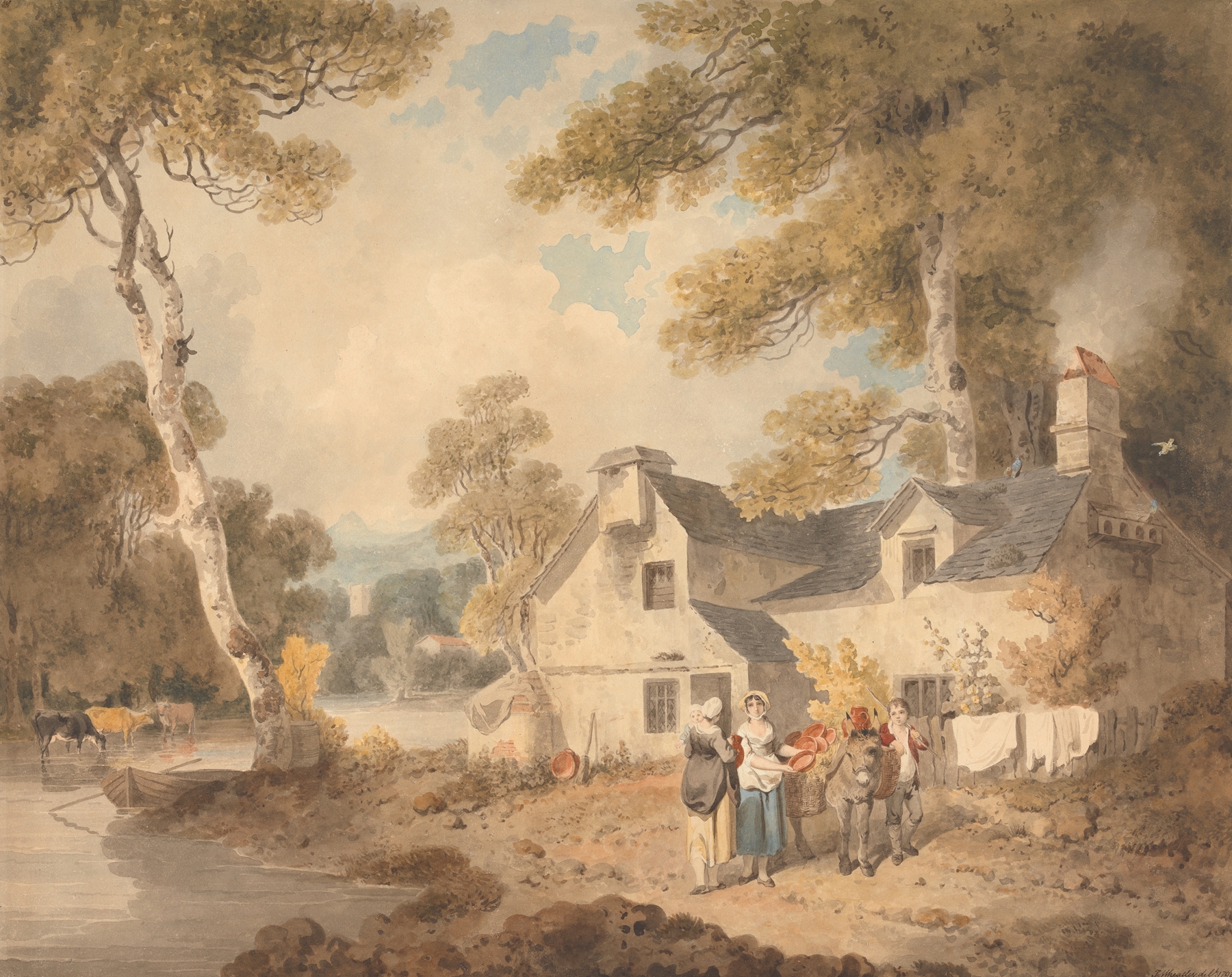
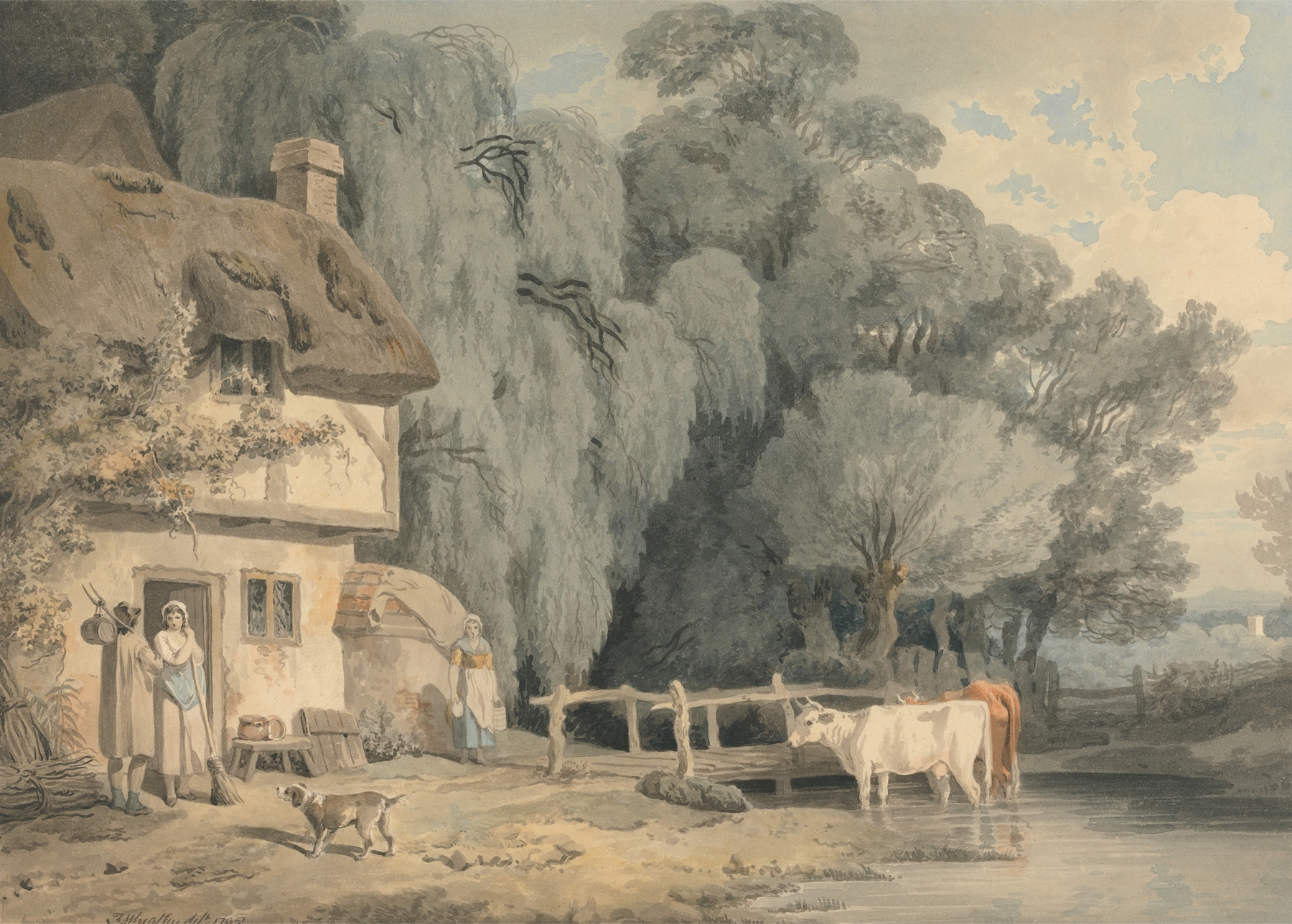
Did the painter know this moment would outlive them? The gentle play of light in Gebirgslandschaft, auf dem Weg ein Mädchen zu Pferde, links zwei Kühe invites us to ponder the endurance of beauty captured on canvas, a fleeting slice of life made eternal. Look to the left at the two cows, their tranquil forms grounded against the rolling hills. The artist’s delicate brushwork creates a lush landscape that embraces the viewer, while the soft hues of green and brown evoke a sense of calm. Notice how the sunlight filters through the clouds, casting a golden glow on the girl atop her horse, her figure illuminated as if she were the centerpiece of a pastoral symphony.
This interplay of light elevates the scene from mere observation to an intimate experience, drawing us into the serene harmony of nature. Within the composition lies a contrast between the stillness of the cows and the potential movement of the girl. Her poised figure suggests a journey, one that could lead to adventure or simply a quiet exploration of the landscape. The painter captures not just a moment, but the essence of tranquility paired with the promise of freedom.
Each brushstroke carries an emotional weight, reminding us of the delicate balance between nature and human presence. In 1784, Francis Wheatley painted this work at a time when England was teetering between the Enlightenment's ideals and the stirrings of Romanticism. Living in London, Wheatley was influenced by the shifting tides of artistic expression, embracing both the charm of pastoral scenes and the emerging fascination with the sublime. As Europe grappled with change, his landscapes became a refuge, immortalizing a simpler relationship with nature that would resonate through the ages.