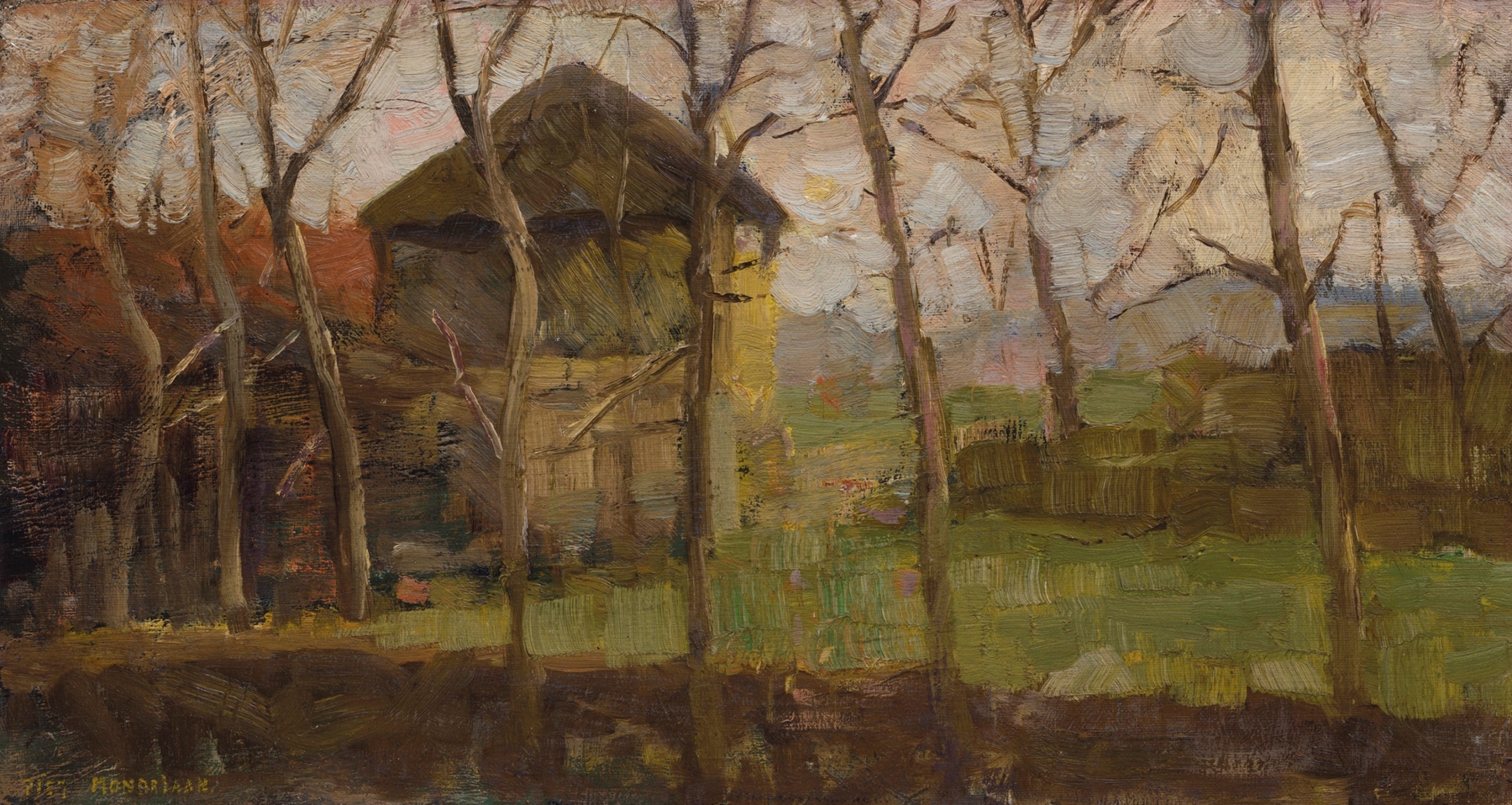
Gebogen irrigatiegracht grenzend aan boerenerf met Bloeiende bomen (Curved Irrigation Ditch Bordering Farmyard with Flowering Trees) — History & Analysis
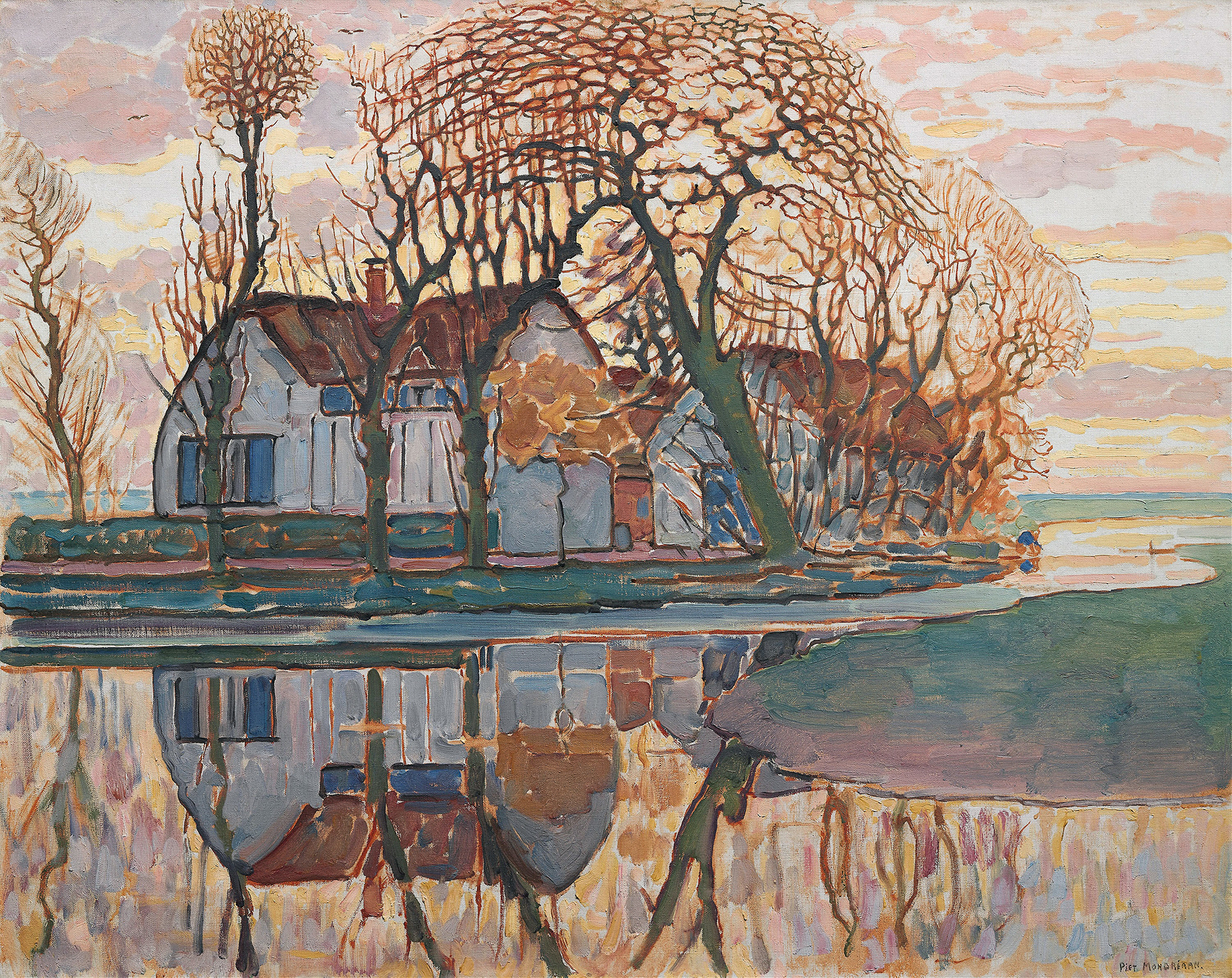
Who listens when art speaks of silence? In Gebogen irrigatiegracht grenzend aan boerenerf met Bloeiende bomen, the stillness of the rural landscape hums with an unspoken promise of revolution. Here, nature whispers its secrets, waiting for a beholder to uncover the layers beneath its serene surface. Look to the center where the curved irrigation ditch draws your gaze, flowing like a ribbon through the verdant tableau.
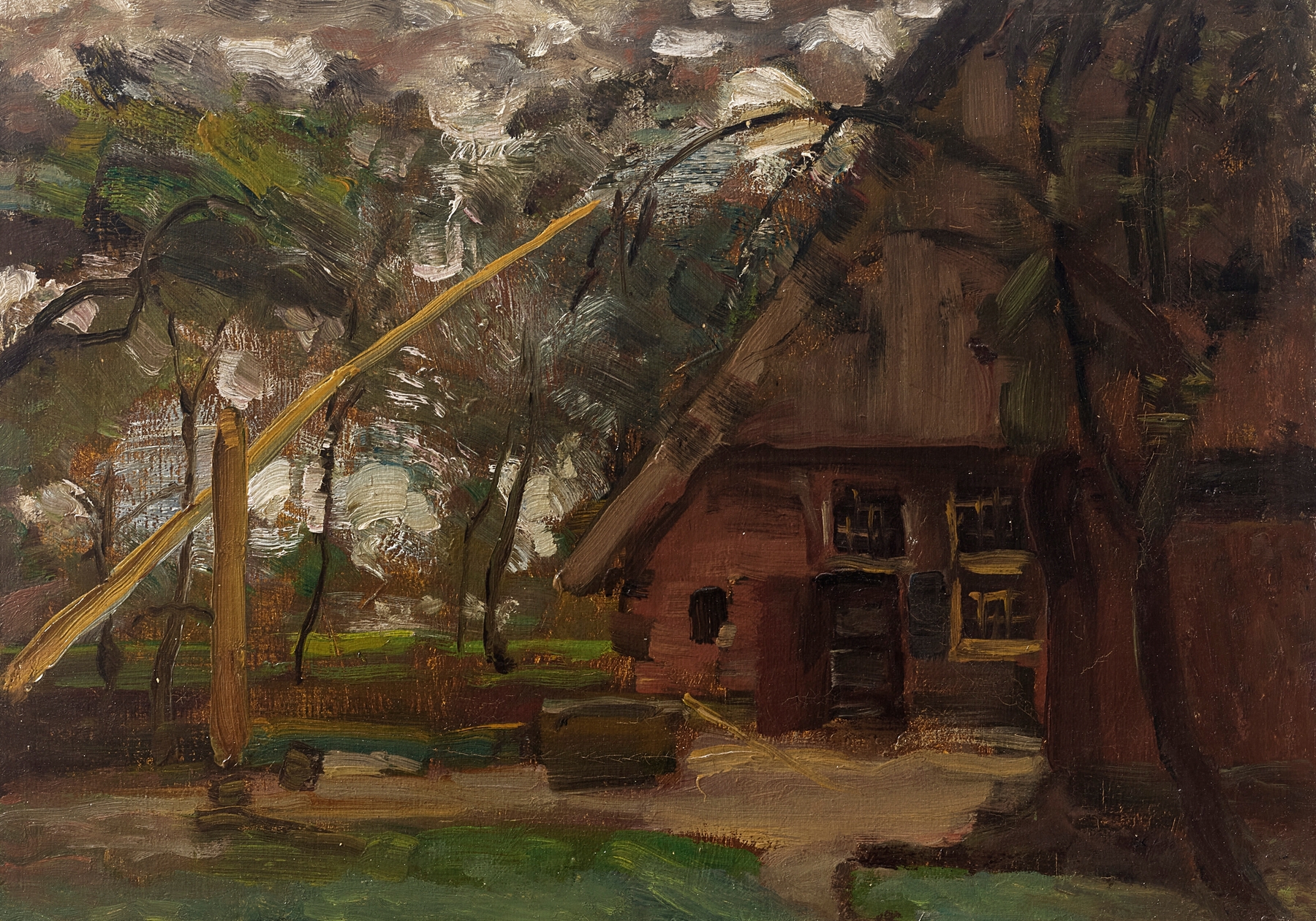
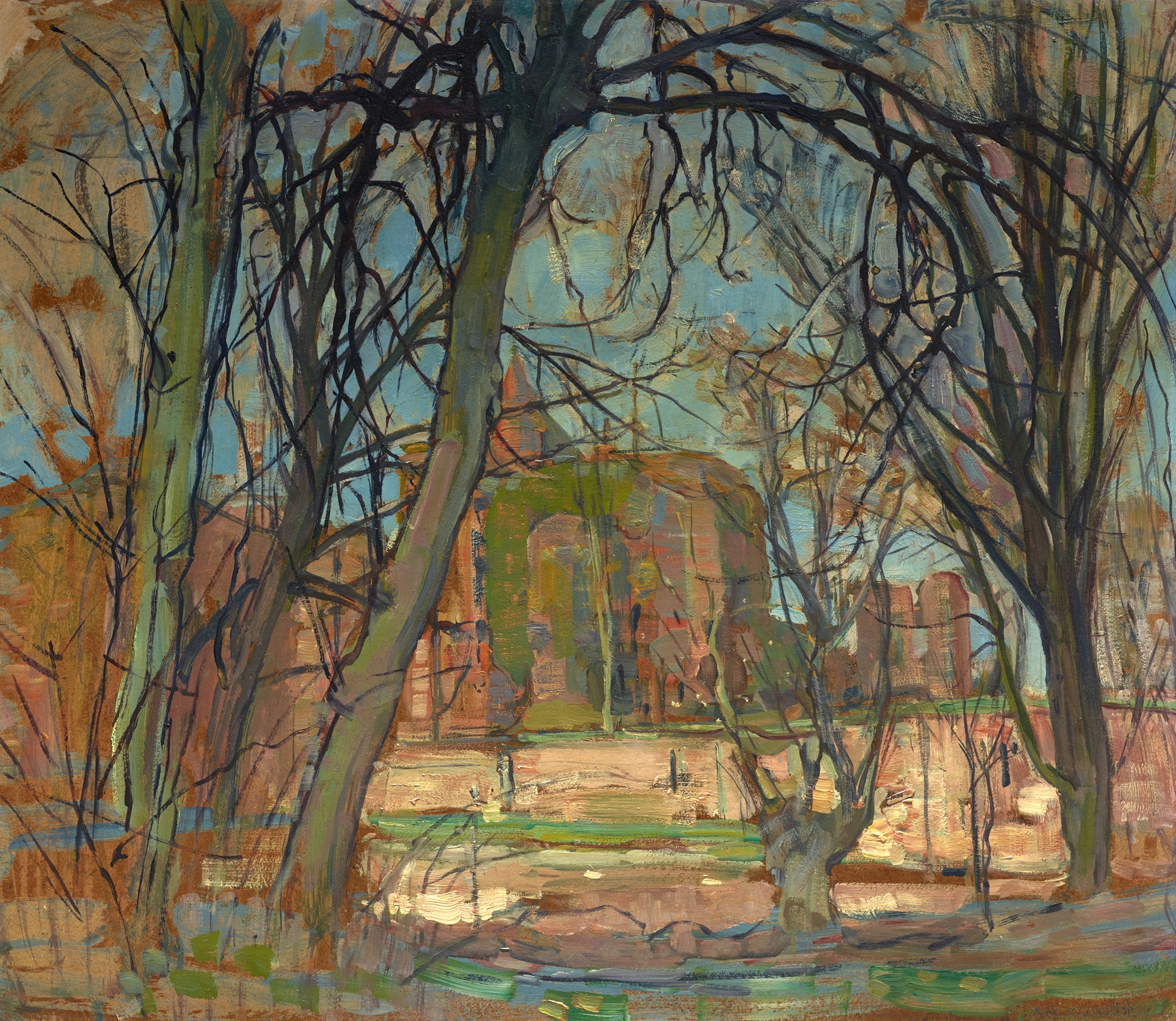
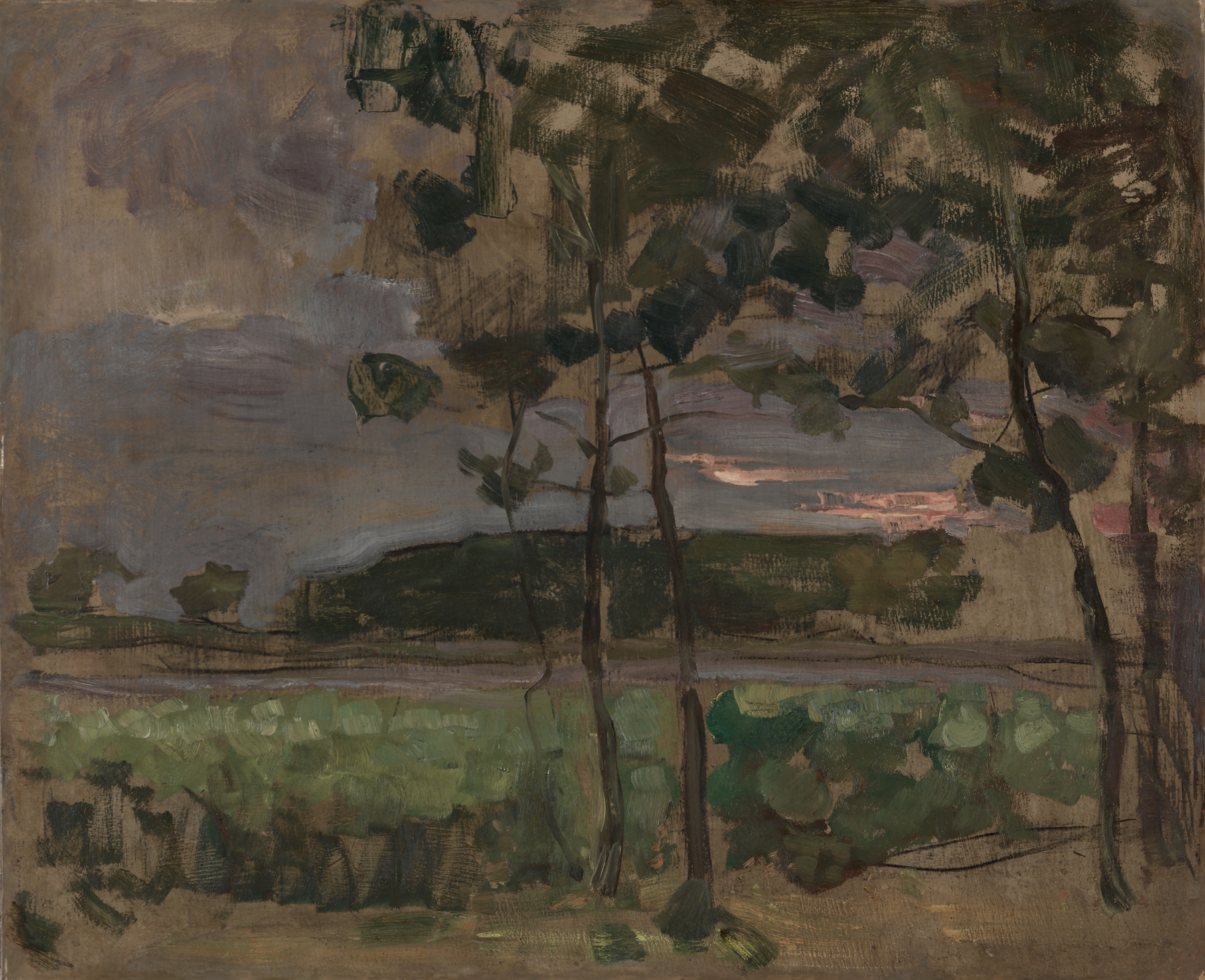
The lush greens contrast with the soft pinks and whites of flowering trees, creating a harmony that feels almost symphonic. Mondrian’s brushstrokes are deft yet purposeful, capturing both the tactile quality of the earth and the delicate beauty of blooms. The composition flows naturally, inviting you to trace the curve of the ditch, while subtle shadows play upon the ground, grounding the scene in a moment that breathes life. Delve deeper, and you may find that the vibrant colors and flowing forms are a celebration of balance amid the chaos of change.
The curved lines represent a departure from strict geometry, hinting at the artist's evolving thoughts on abstraction. This piece, painted during a time of social and artistic upheaval, suggests a tension between the rustic tranquility of rural life and the burgeoning modernity of the early 20th century. Created in 1902, during his years in the Netherlands, Mondrian was steeped in the influence of post-impressionism and the avant-garde movements surrounding him. As he observed the transformation of landscapes and ideologies, he began to grapple with the notions of form and color that would eventually lead him to the radical abstraction for which he is best known.