Hellebaardier te paard — History & Analysis
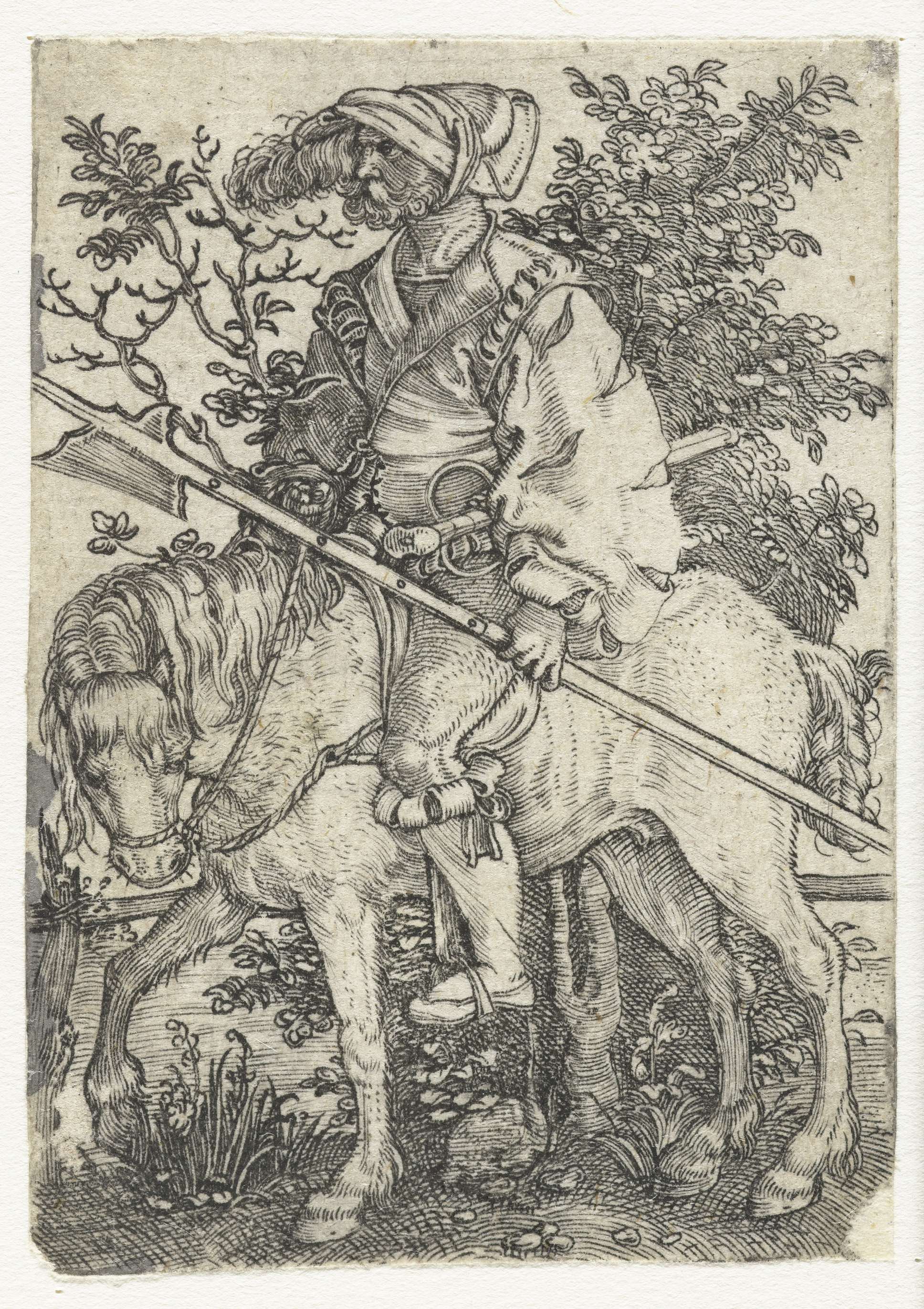
Is this a mirror — or a memory? The figure of the horseman stands poised as if caught in a moment of transformation between past valor and present stillness. Draped in a striking ensemble, he wields his halberd with a sense of authority that resonates through the ages, challenging viewers to consider the weight of history in a single gaze. Look to the left, where the figure, clad in vivid colors, commands attention against a muted background. Notice the meticulous details of his armor, glinting in a manner that suggests both protection and the burden of expectation.
The halberd extends outward, drawing the eye along its length, while the horse, proud and dynamic beneath him, adds a sense of movement and life to the composition. The rich hues employed by the artist contrast sharply with the earthy tones, embodying the interplay between nobility and the harsh realities of the world. At first glance, the work appears a straightforward portrayal of a noble warrior, yet it subtly invites deeper reflection on the duality of power and vulnerability. The figure’s serene expression belies the tensions of warfare, while the stark contrast of light and shadow invokes a haunting sense of nostalgia. Each brushstroke hints at a story of evolution—both of the individual and the society that shaped him.
The halberd itself stands as a symbol of transition, representing a time when knights were both revered and feared. During his artistic career in Nuremberg, roughly between 1512 and 1540, the artist was part of a vibrant Northern Renaissance, deeply influenced by humanism and the changing nature of society. This period was marked by a fascination with both classical antiquity and contemporary life, as artists explored themes of identity and status. In this work, he encapsulated the spirit of an era in transition, reflecting both the grand ideals and the personal narratives of those who lived through it.