Hirtenlandschaft mit Fluss — History & Analysis
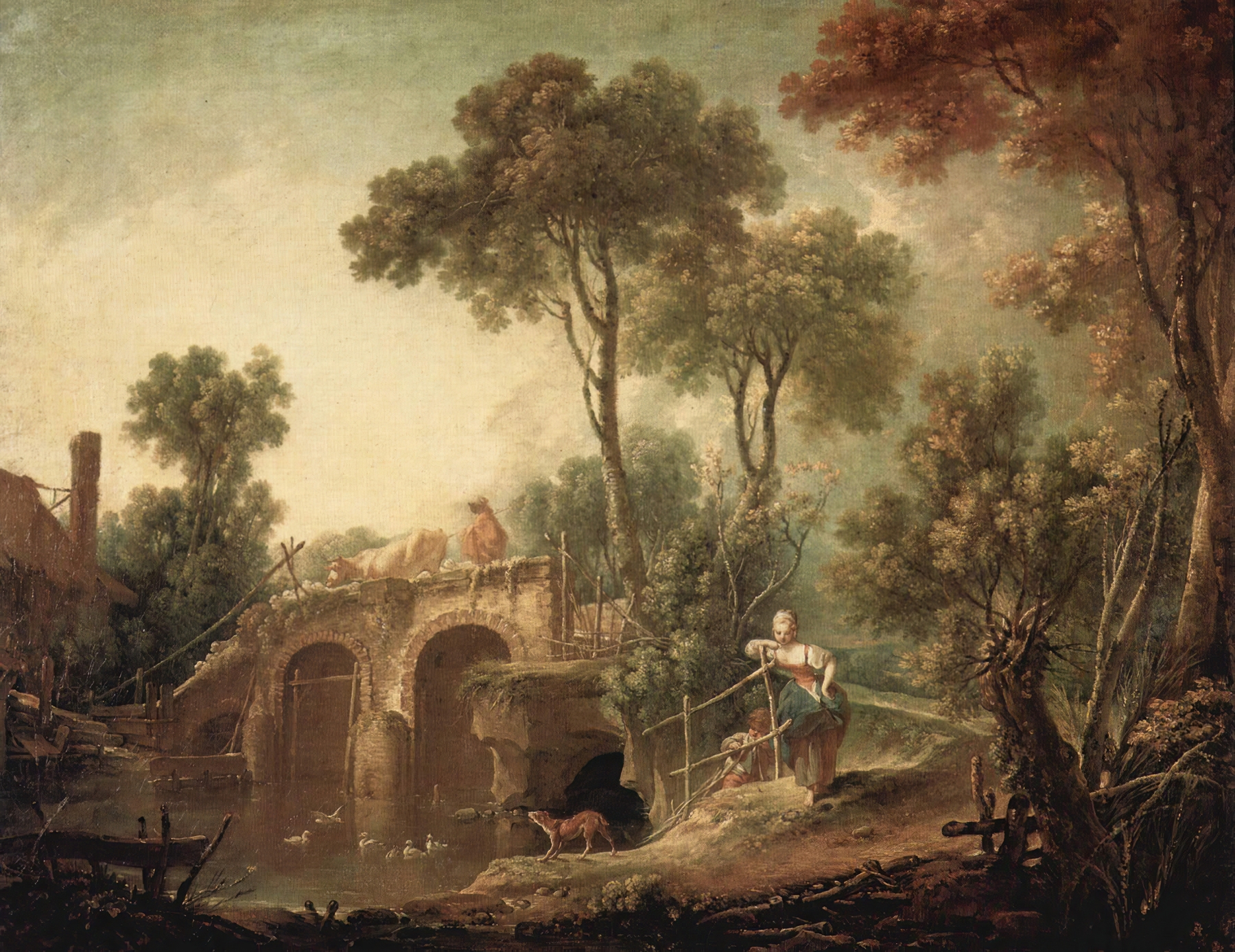
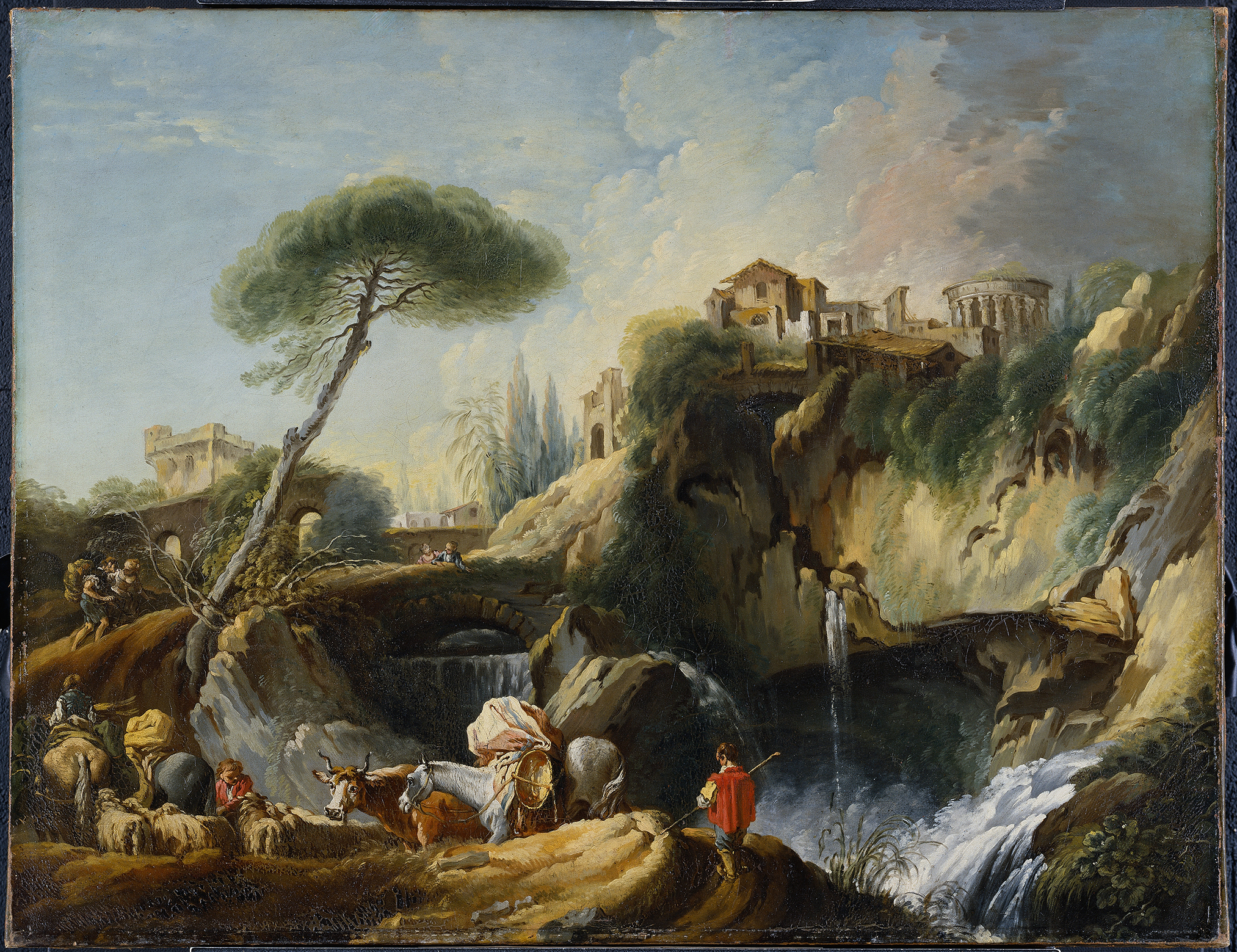
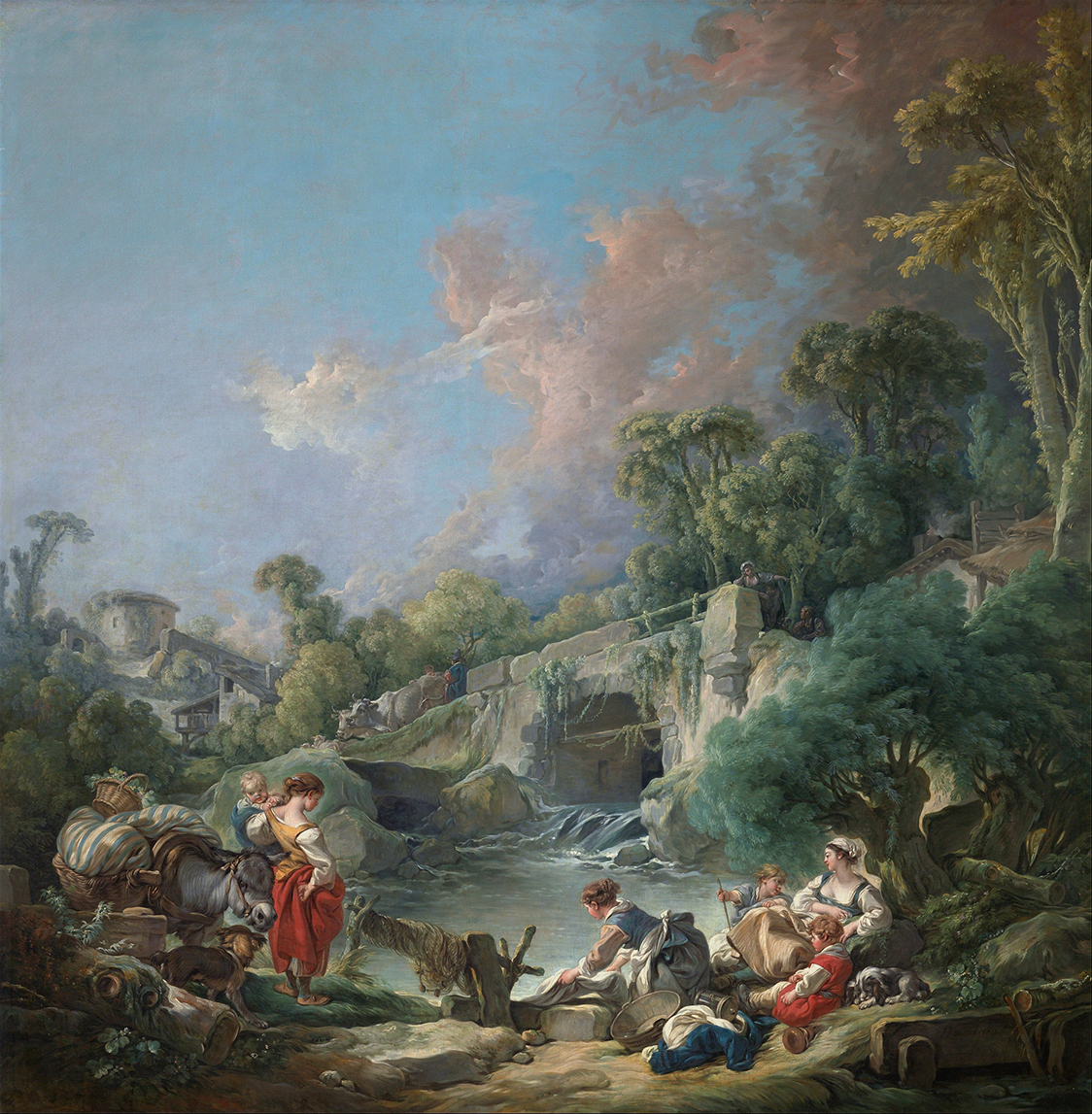
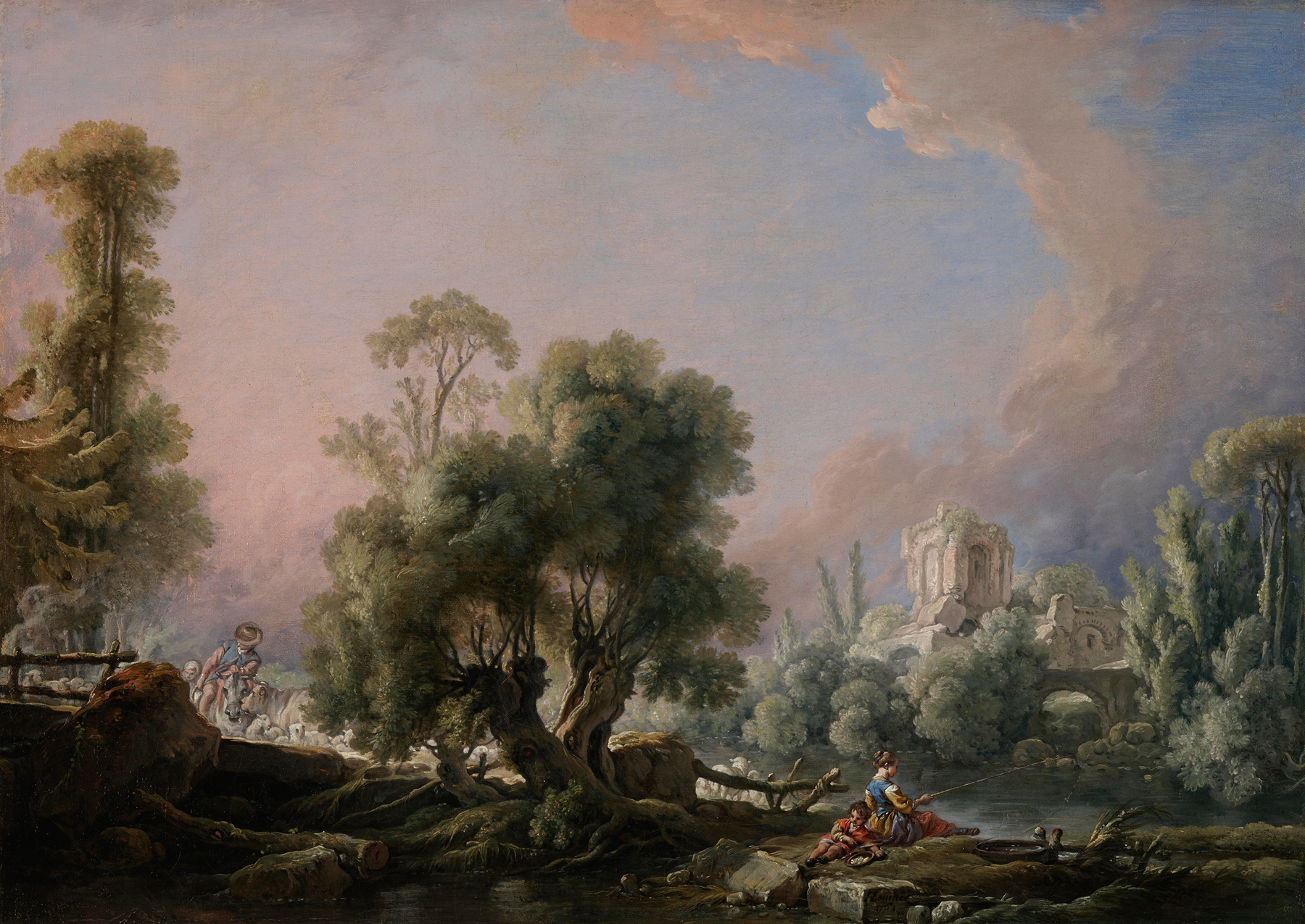
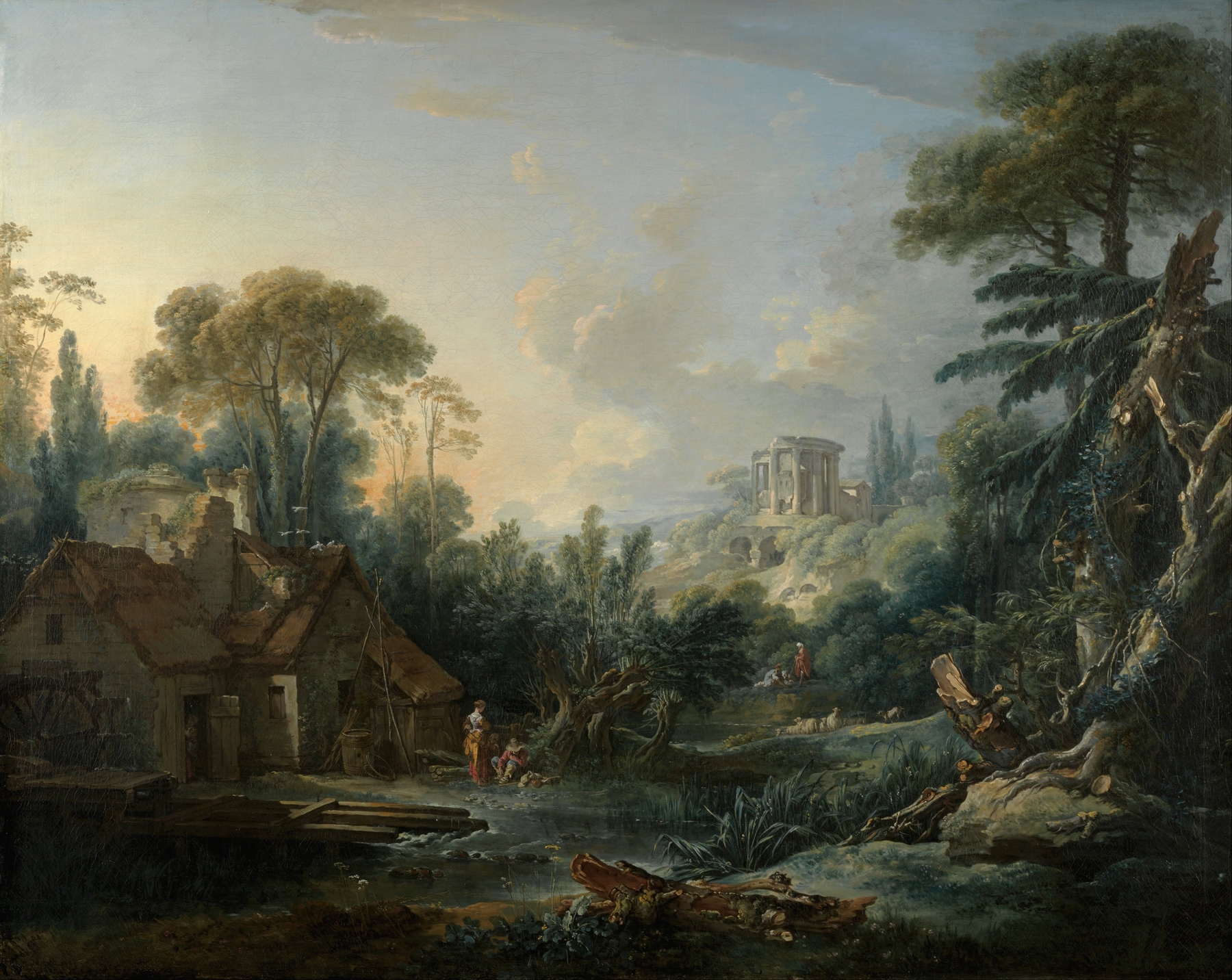
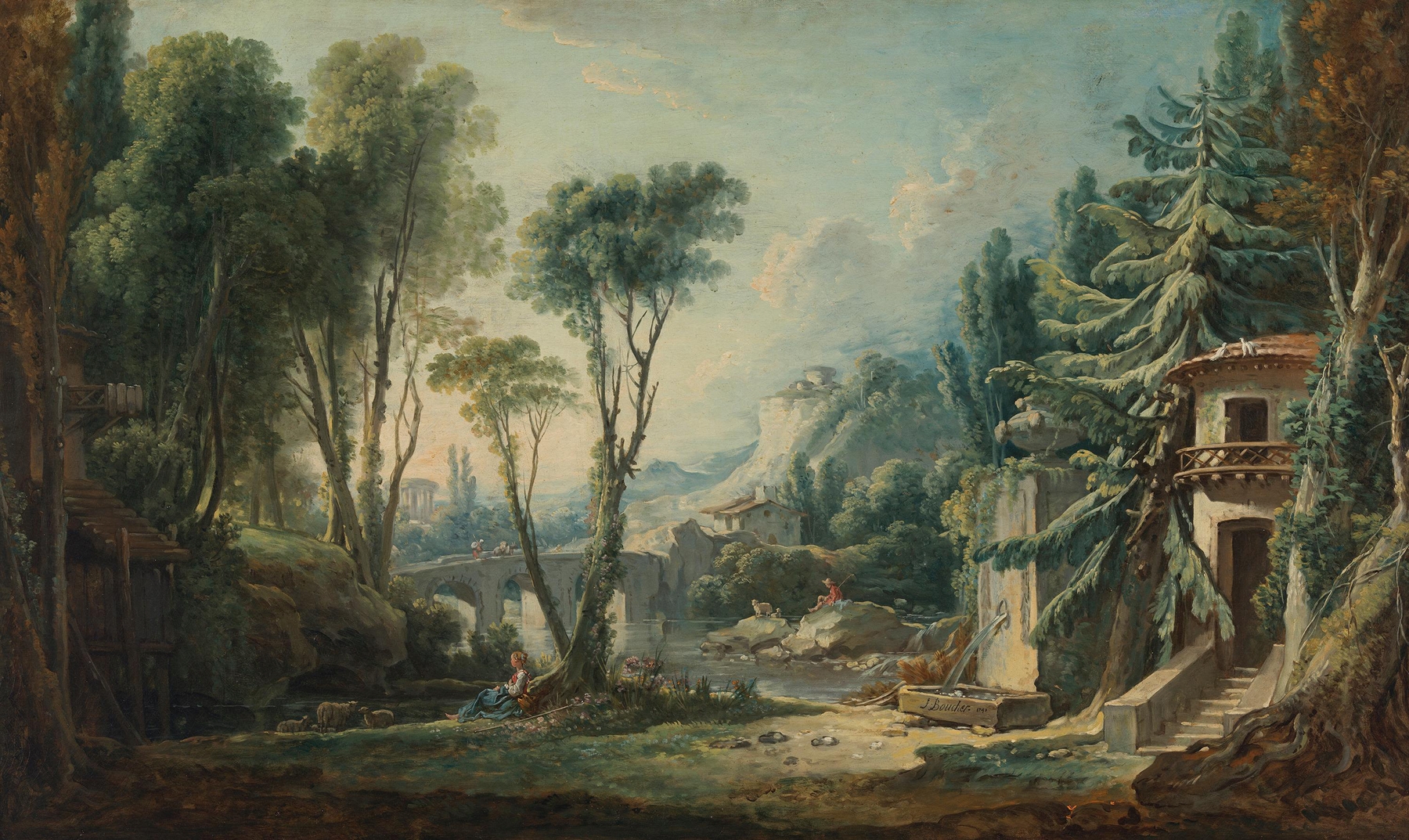
“To paint is to remember what time wants us to forget.” In the world of art, transformation whispers through every stroke, inviting us to see beyond mere representation. Look to the left at the gentle curve of the river, its surface shimmering with sunlight, mirroring the soft hues of the sky. The lush greens, mingling with delicate pastels, create a harmonious rhythm that draws the viewer’s eye from the tranquility of the water to the pastoral figures dotting the landscape. Notice the elegant gestures of the shepherds as they guide their flocks, their movements infused with a serene grace that contrasts with the wild beauty of nature surrounding them.
Boucher’s choice of light and color evokes an idyllic splendor while hinting at deeper narratives of pastoral life. The lushness of the landscape represents a transformative moment where nature and humanity coexist harmoniously, yet a sense of transience lingers. The fleeting beauty of this rural paradise resonates with the inevitability of change, inviting viewers to reflect on the passage of time that erodes and reshapes even the most serene landscapes.
In 1741, Boucher was deeply entrenched in the Rococo movement, exploring themes of beauty and pastoral idealism. Working in France during a period marked by political and social shifts, he sought refuge in the idyllic, yearning for a serene world amidst the chaos of reality. This painting encapsulates that longing, a moment suspended in time, expressing not only the artist's mastery but also the universal desire for transformation and tranquility.