Idyllic Landscape with Woman Fishing — History & Analysis
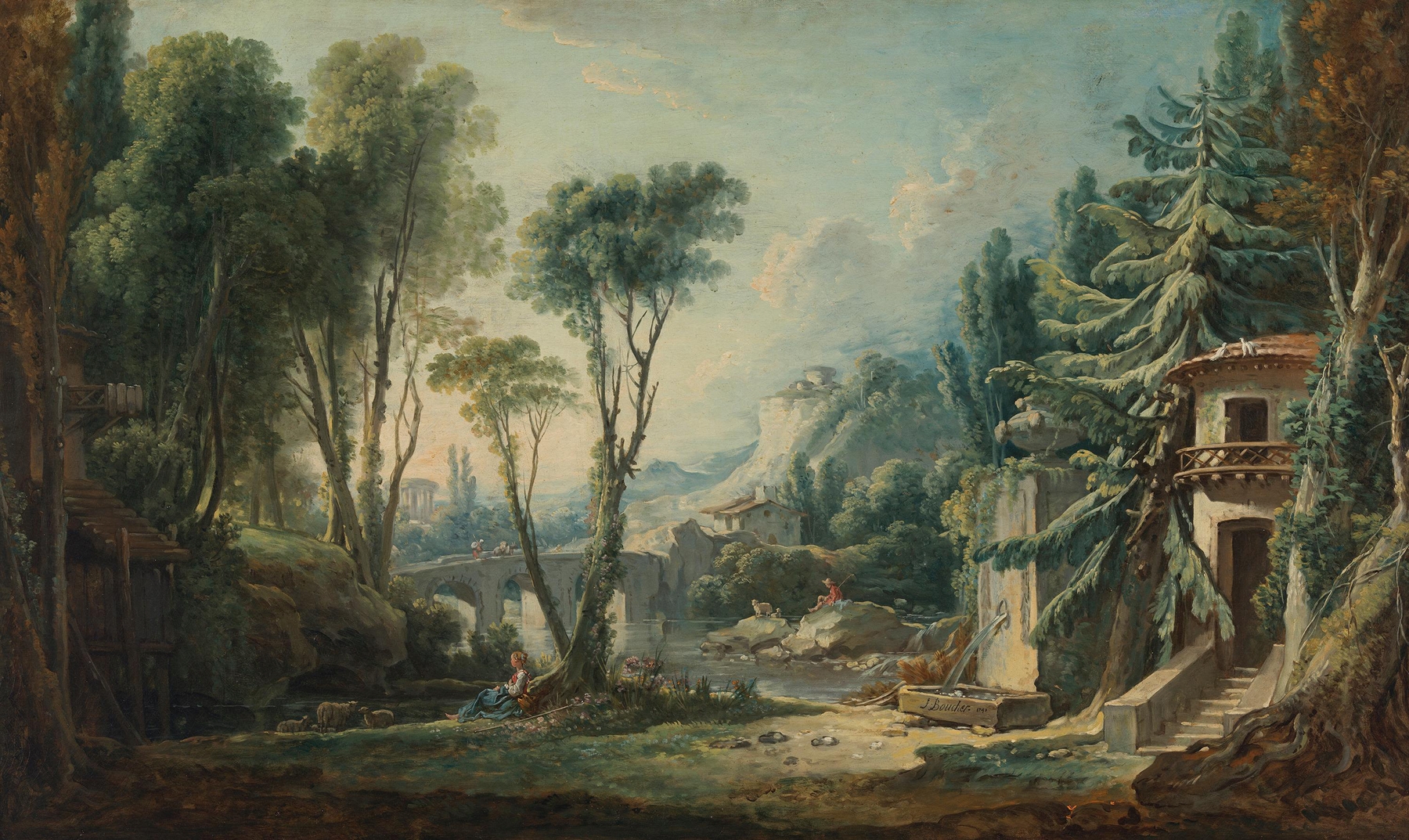
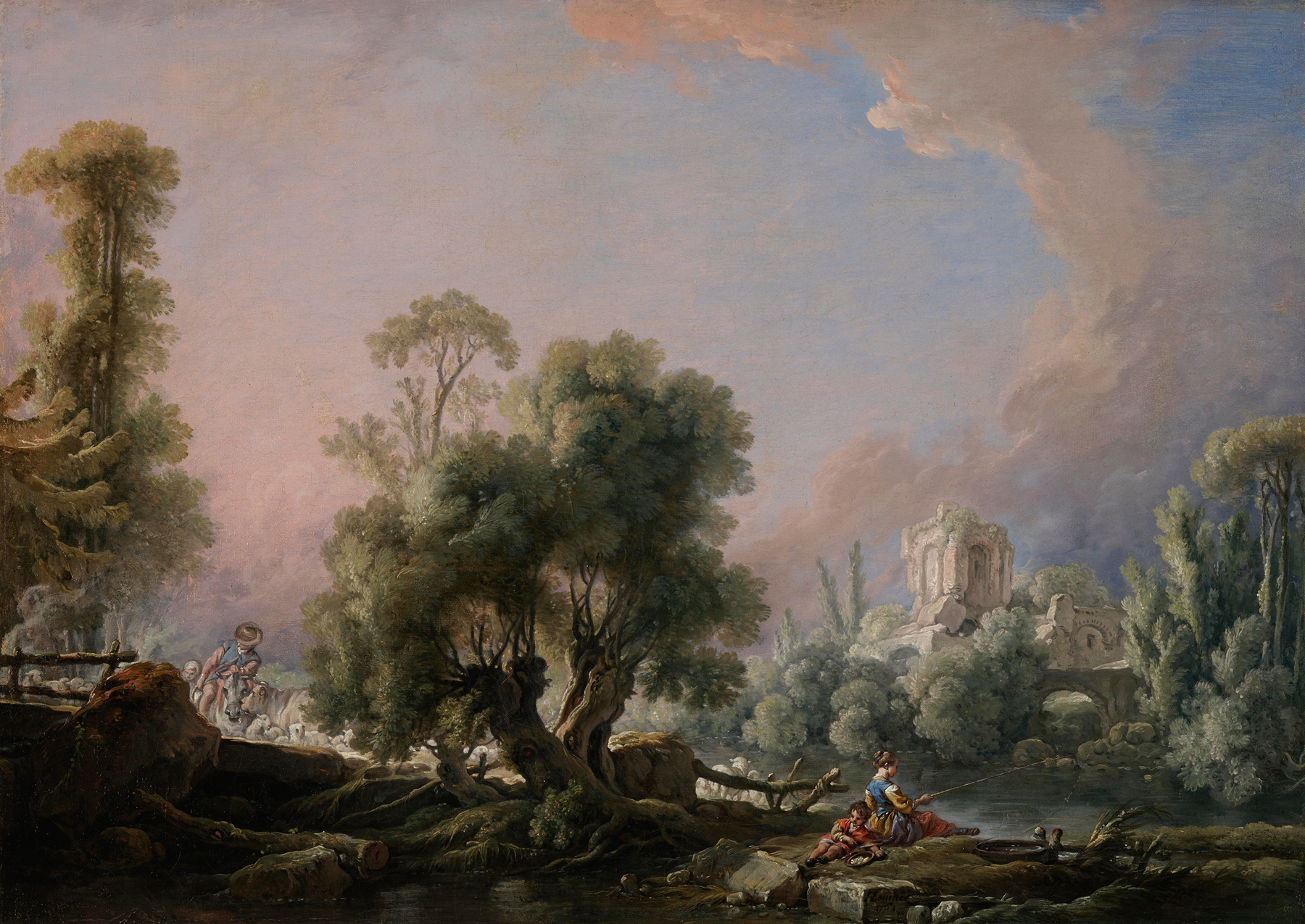
Art reveals the soul when the world turns away. In the quiet embrace of nature, beauty becomes an escape and a refuge, inviting us to pause and reflect on life’s simple joys. Look to the center of the canvas where a woman, elegantly poised, leans over the gentle stream, her delicate hand guiding a fishing line into the water. The soft pastel hues envelop her, intertwining with the lush greenery that frames the scene, creating a harmonious balance.
Notice how the dappled sunlight filters through the leaves, casting playful shadows that dance across her flowing gown. The artist’s deft brushwork captures the tranquility of the moment, while the serene landscape envelops the viewer like a warm embrace. Delve deeper into the subtle contrasts within the painting: the juxtaposition of the woman's active gesture against the stillness of the water, a metaphor for the tension between humanity and nature. The vibrant colors suggest a fleeting moment of happiness, yet there’s an underlying solitude in her expression, hinting at an introspective journey.
This serene tableau resonates with a yearning for connection, both with the world around her and within herself. Created in 1761 during a time when François Boucher was immersed in the Rococo movement, Idyllic Landscape with Woman Fishing reflects the artist’s fascination with pastoral beauty and leisure. During this period, Boucher’s work was celebrated for its enchanting charm, illustrating the ideals of beauty and grace that defined the French aristocracy. As Europe faced the shifting tides of culture and politics, his art provided a gentle reprieve, capturing a world that felt both idyllic and ephemeral.