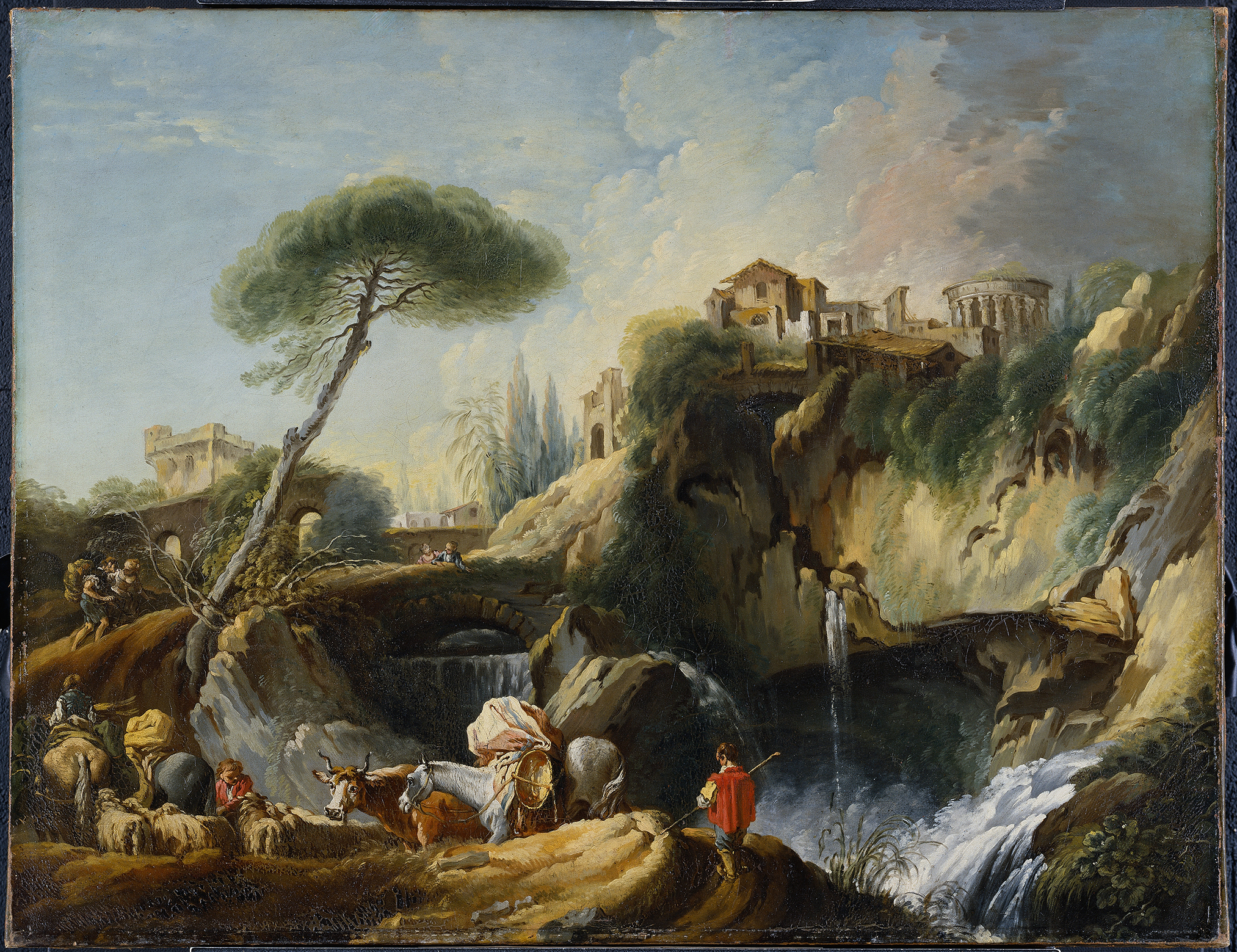
View of Tivoli with the Temple of Vesta — History & Analysis
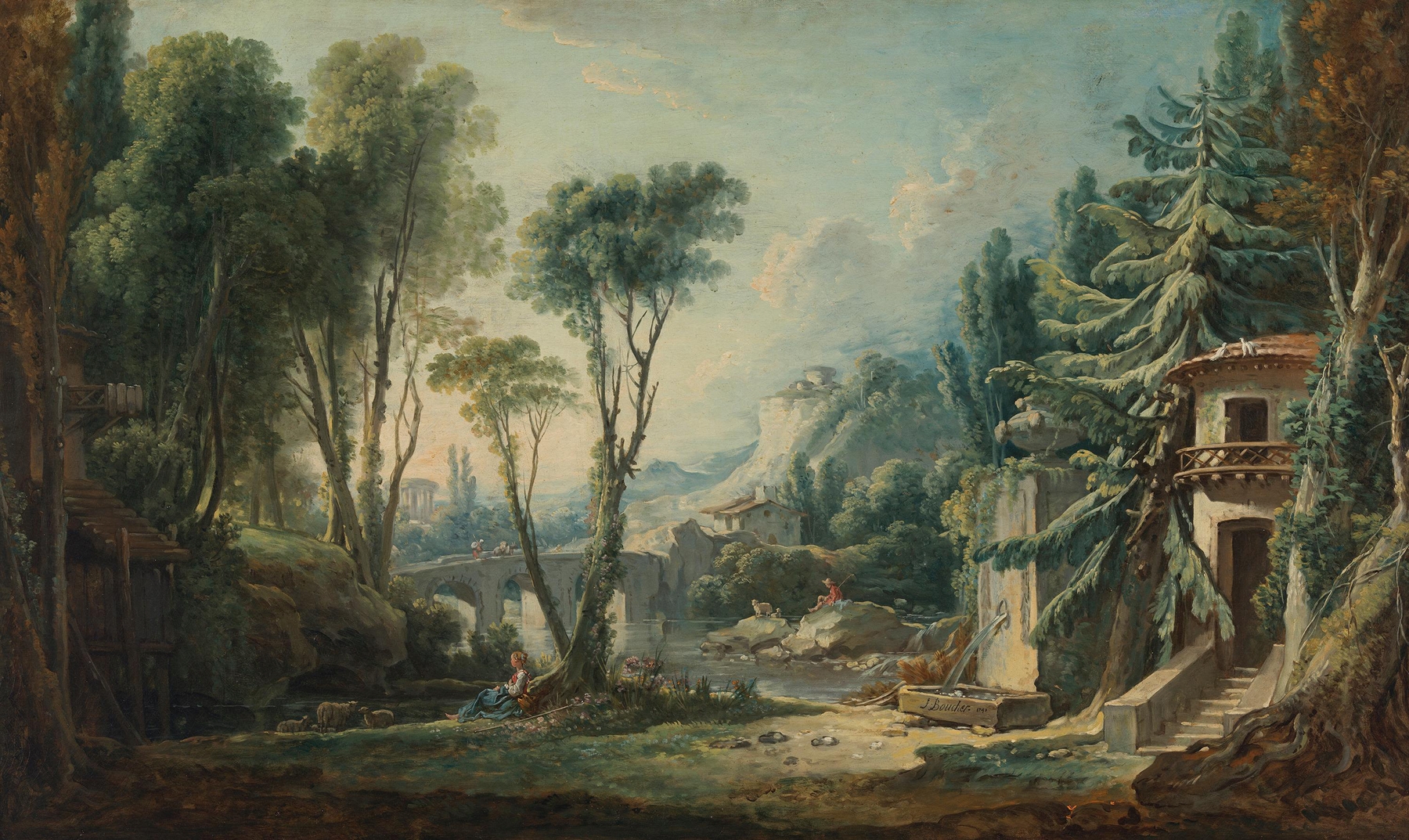
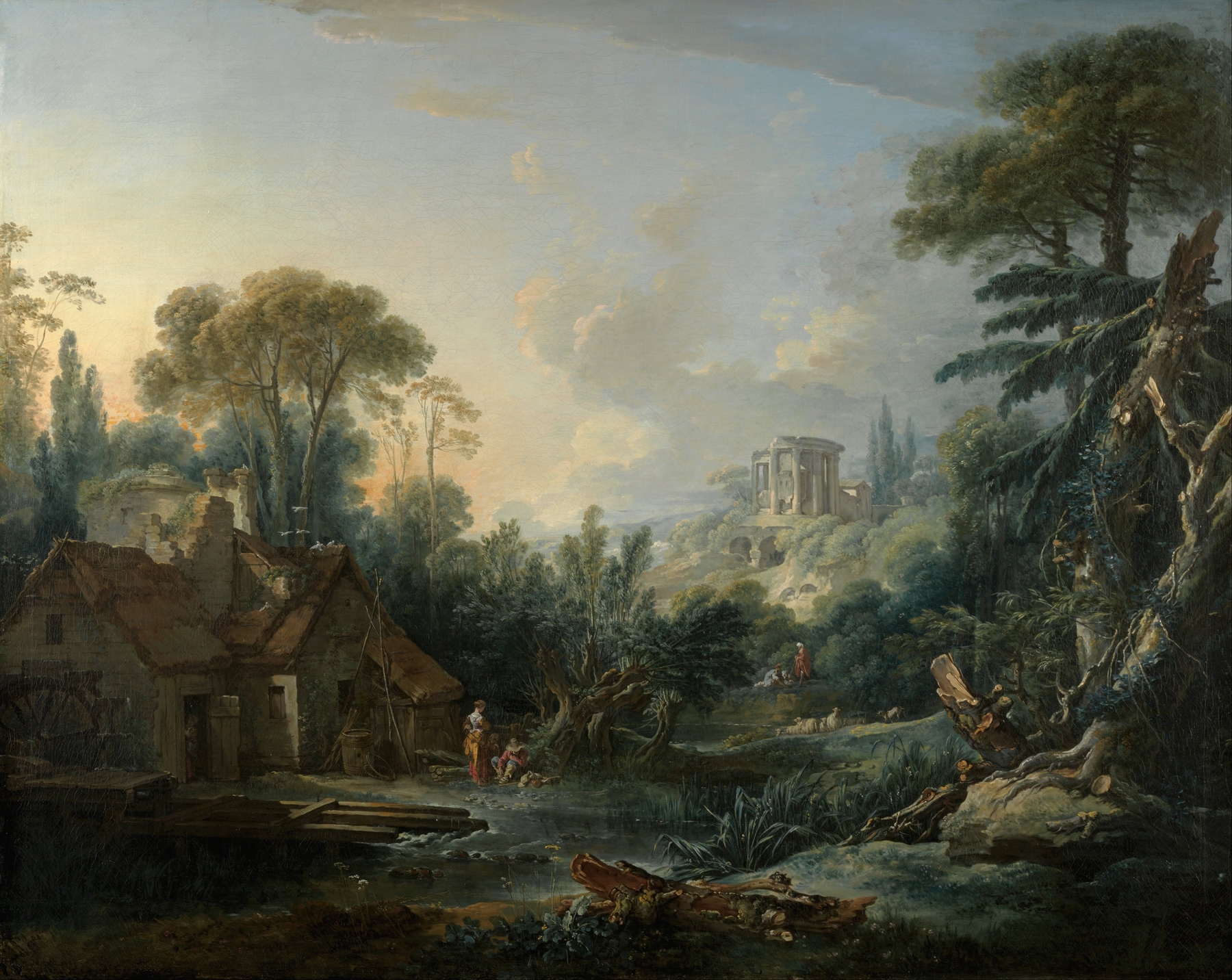
“Every brushstroke is a heartbeat remembered.” In the stillness of art, we find the pulse of ecstasy, a celebration of beauty frozen in time. Focus first on the sweeping landscape that unfolds before you, where verdant hills roll gently under a sky brushed with soft pastels. Look to the left at the temple, its classical architecture punctuated by the vibrant greens and blues of nature surrounding it. Notice the way the light dances across the water, capturing reflections that seem to shimmer with the joy of life itself.
The warm hues of the sunset meld seamlessly into the cool shadows, creating a harmony that invites you to linger. Within this idyllic scene lies an interplay of tension and serenity. The juxtaposition of the solid temple against the ephemeral sky represents the eternal versus the transient, while the lush foliage hints at the chaos of nature lurking just beyond the edges of the frame. The figures meandering through the landscape evoke a sense of human presence, yet they remain secondary to the overwhelming beauty of the setting, suggesting that ecstasy lies as much in the experience of nature as in our place within it.
Created during a period of personal prosperity in Paris, the artist painted this piece sometime in the 18th century, amid the flourishing of Rococo art. The era was characterized by a pursuit of pleasure and beauty, as artists sought to capture the joy of life through their work. Boucher's fascination with mythological themes and pastoral landscapes reflected not only his personal vision but also the cultural zeitgeist, one that reveled in the sensuality and exuberance of the natural world.