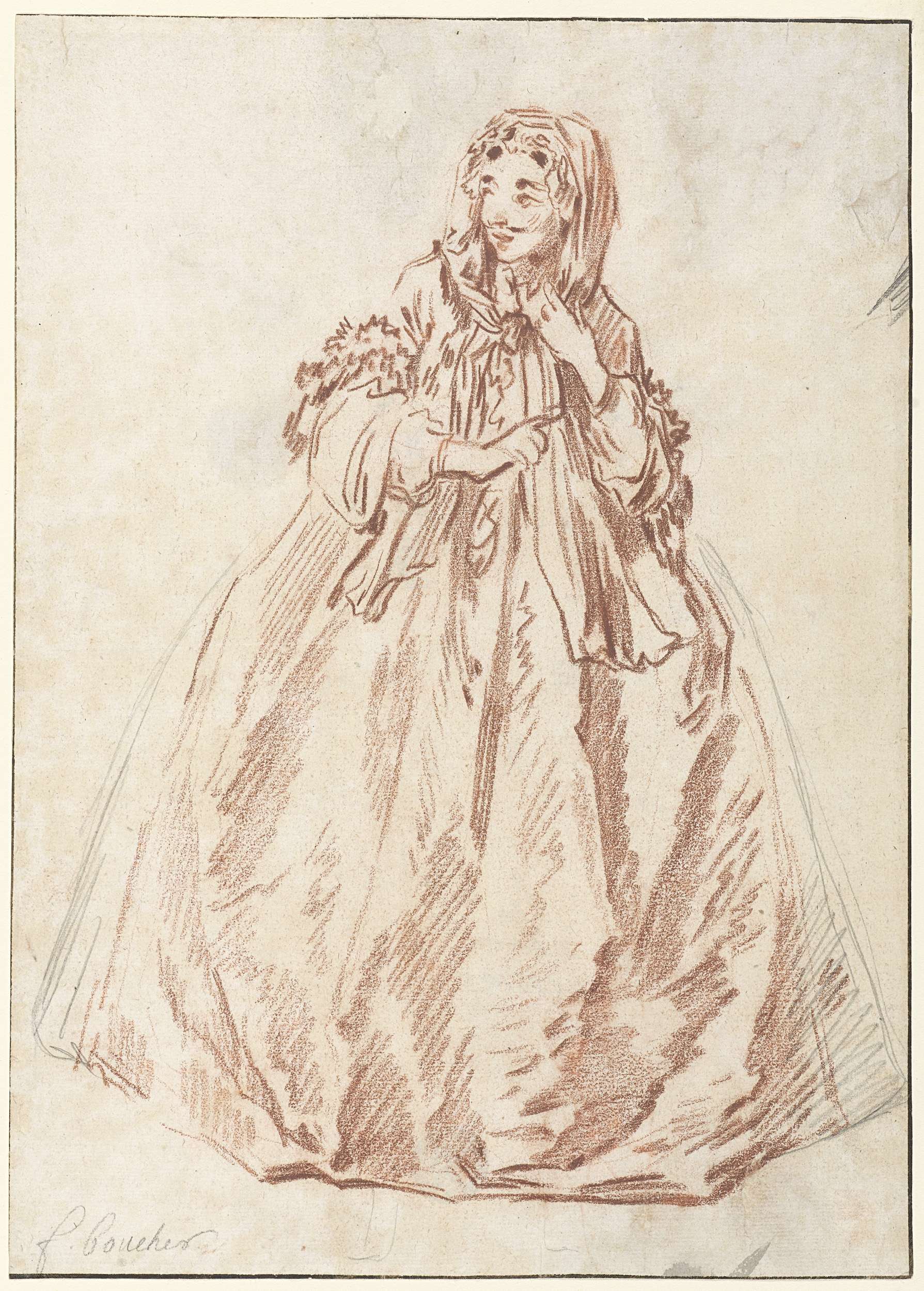
Study of Mascarille Dressed as a Woman — History & Analysis
What secret hides in the quiet of the canvas? In Study of Mascarille Dressed as a Woman, destiny is a delicate thread woven through the layers of paint and character. Look to the center where Mascarille, the renowned comic actor, strikes a pose that balances both charm and audacity. His elaborate attire, adorned with intricate fabrics, showcases a rich palette of earthy reds and soft pastels, inviting the viewer to appreciate the playfulness of his disguise.
Notice how the light caresses the folds of his dress, illuminating the artistry of Boucher’s brushwork while subtly hinting at the theatricality of the masquerade. Beneath the surface of the whimsical portrayal lies a commentary on identity and societal roles. The contrast between Mascarille’s flamboyant attire and his male persona evokes a dialogue on gender fluidity and the constraints of 18th-century France. Additionally, the exaggerated gestures and facial expression convey not just humor but a deeper yearning to transcend the limitations imposed by society, making one ponder the true essence of self amidst the performance.
François Boucher painted this work between 1731 and 1734 during a transformative period in French art, where the Rococo style was flourishing. At the time, he was gaining prominence within the royal courts and the Parisian art scene. This study reflects his playful exploration of character and costume, embodying the spirit of an era enamored with artifice and the pleasures of life.