Washerwomen — History & Analysis
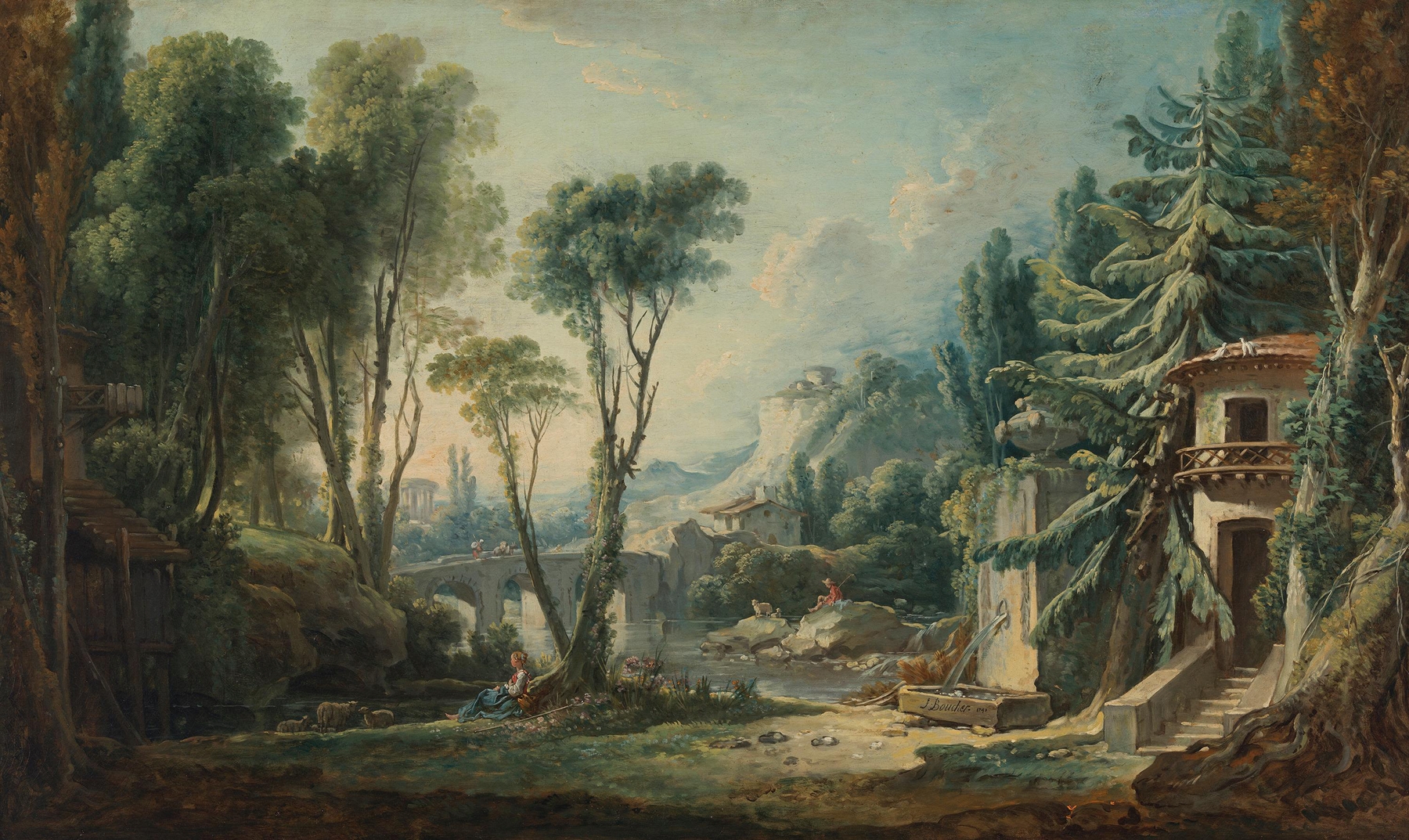
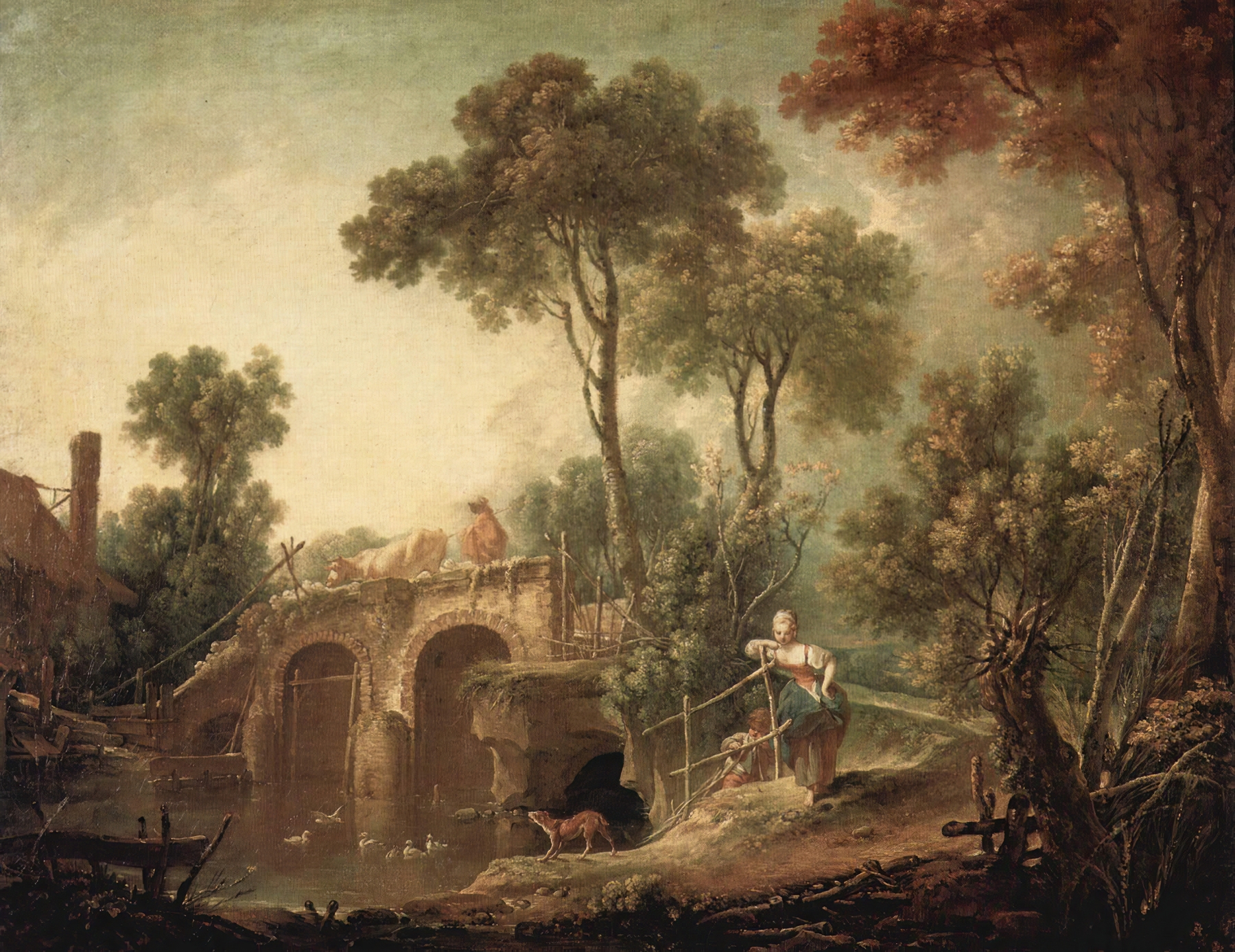
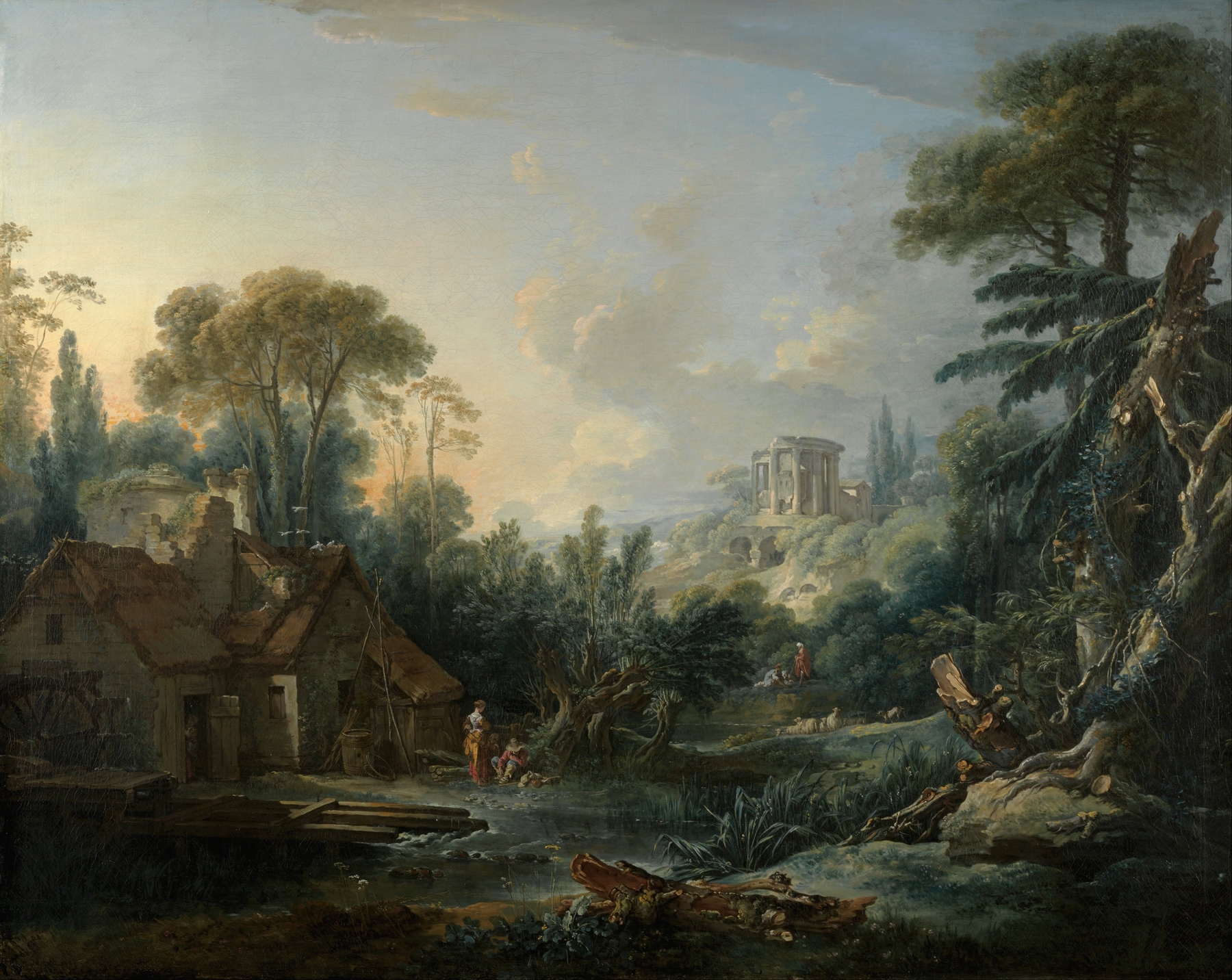
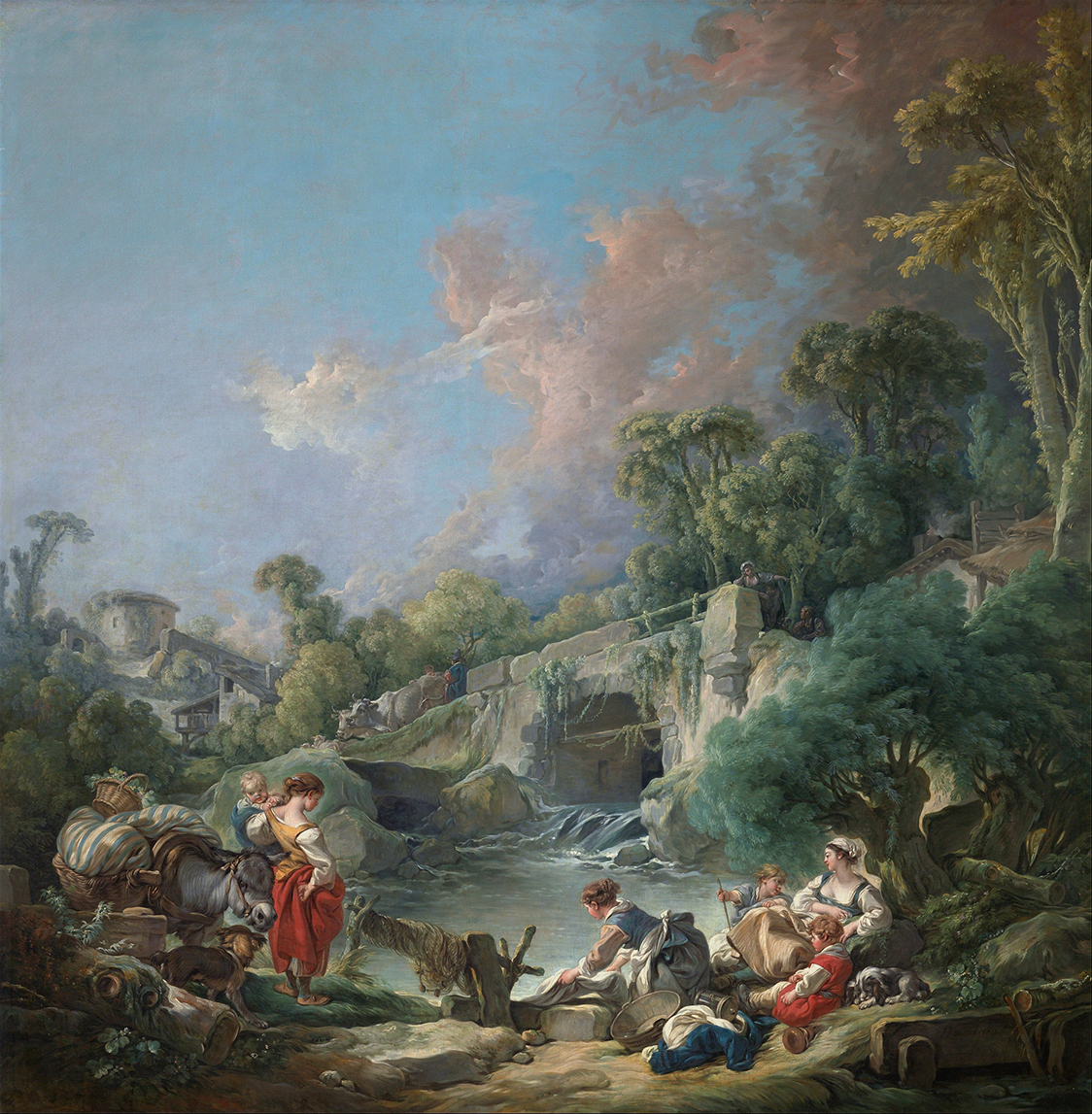
“The canvas doesn’t lie — it simply waits.” Beneath the surface of Washerwomen, a captivating revelation stirs, inviting us to consider what we see and what remains unspoken within the confines of its painted borders. Look to the left at the women bending over the gentle stream, their forms elegantly intertwined with nature. Notice how Boucher’s brushstrokes animate the scene, with soft blues and greens enveloping them, while sunlight dapples through the trees overhead. The fluidity of their gestures, as they scrub and rinse, echoes both the toil of their labor and the grace of daily life, blurring the line between struggle and serenity.
Yet within this pastoral portrayal lies an exploration of social class and gender roles. The vibrant colors and idyllic setting contrast with the mundanity of their task, hinting at the dichotomy between the beauty of the moment and the labor it encapsulates. Each figure carries not only the weight of their work but also the invisible burdens of a society that often overlooks them, revealing a complex interplay between visibility and invisibility.
In 1768, while painting Washerwomen, François Boucher was already an established figure in the Rococo movement. Living in France during a time of cultural opulence, he produced works that often celebrated the everyday lives of women in ways that both honored and critiqued their roles. This piece reflects a moment when art was shifting, embracing both depth and superficiality, as Boucher navigated the delicate balance between reality and idealism.