Holländische Winterlandschaft (Schneewehen) — History & Analysis
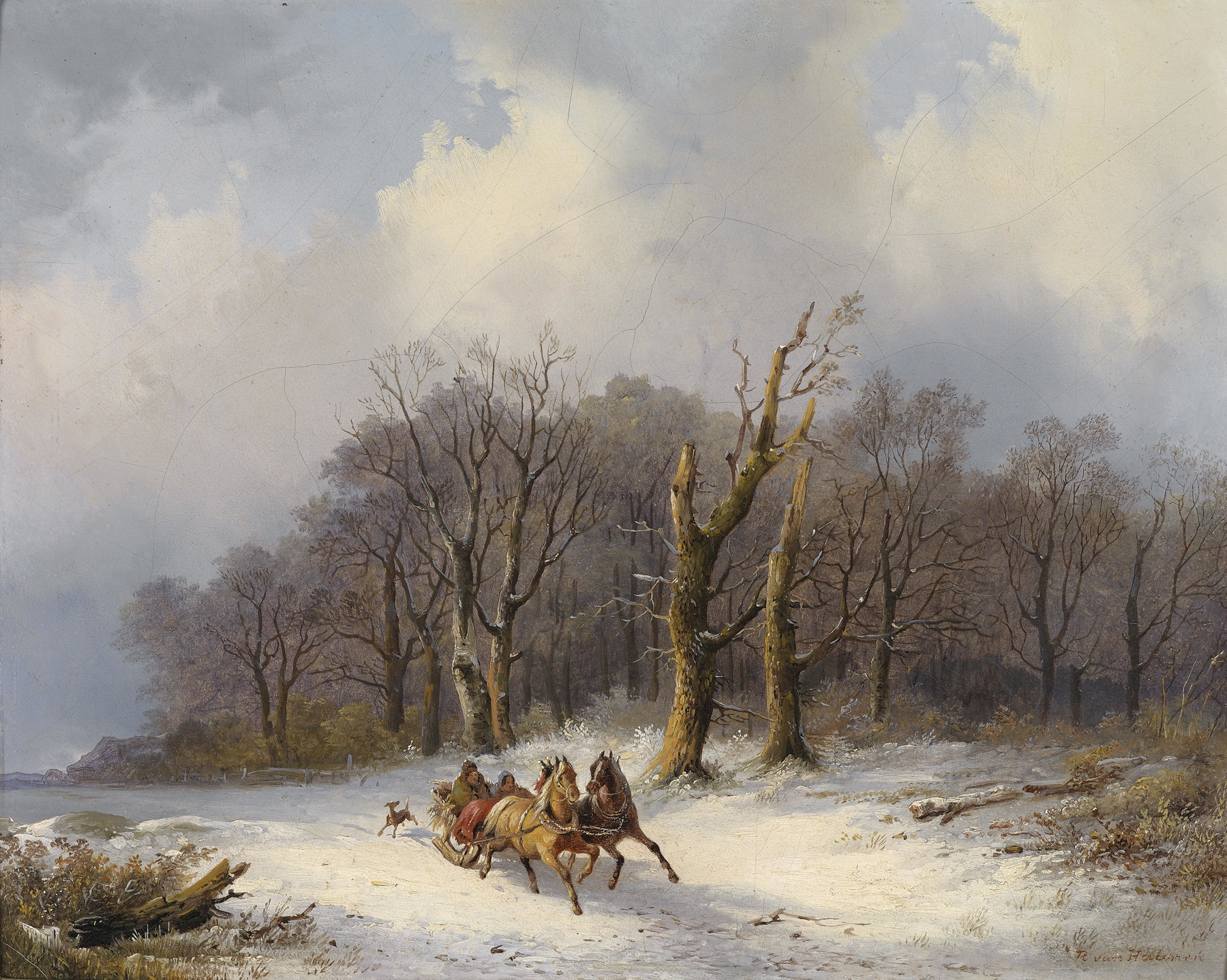
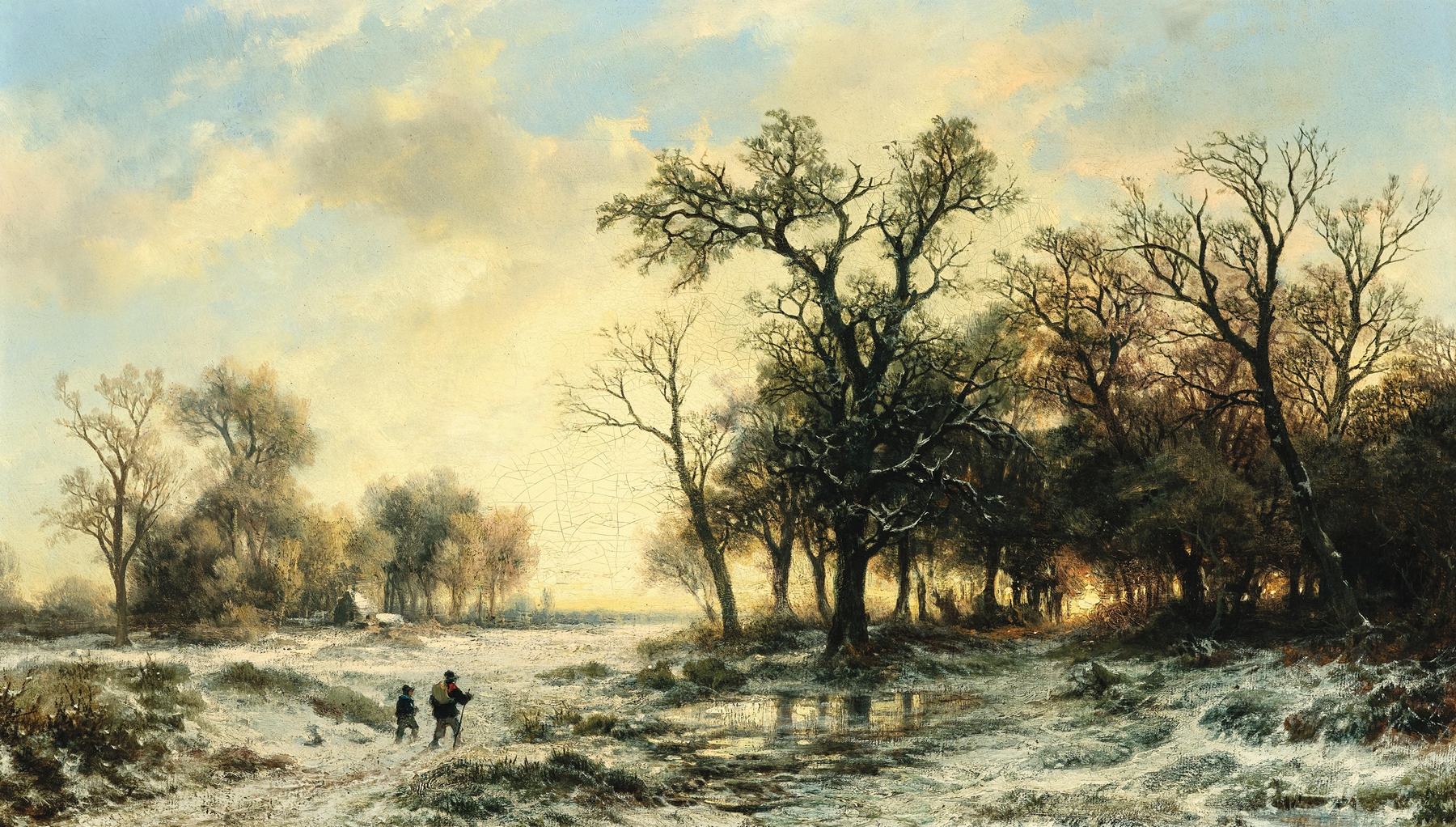
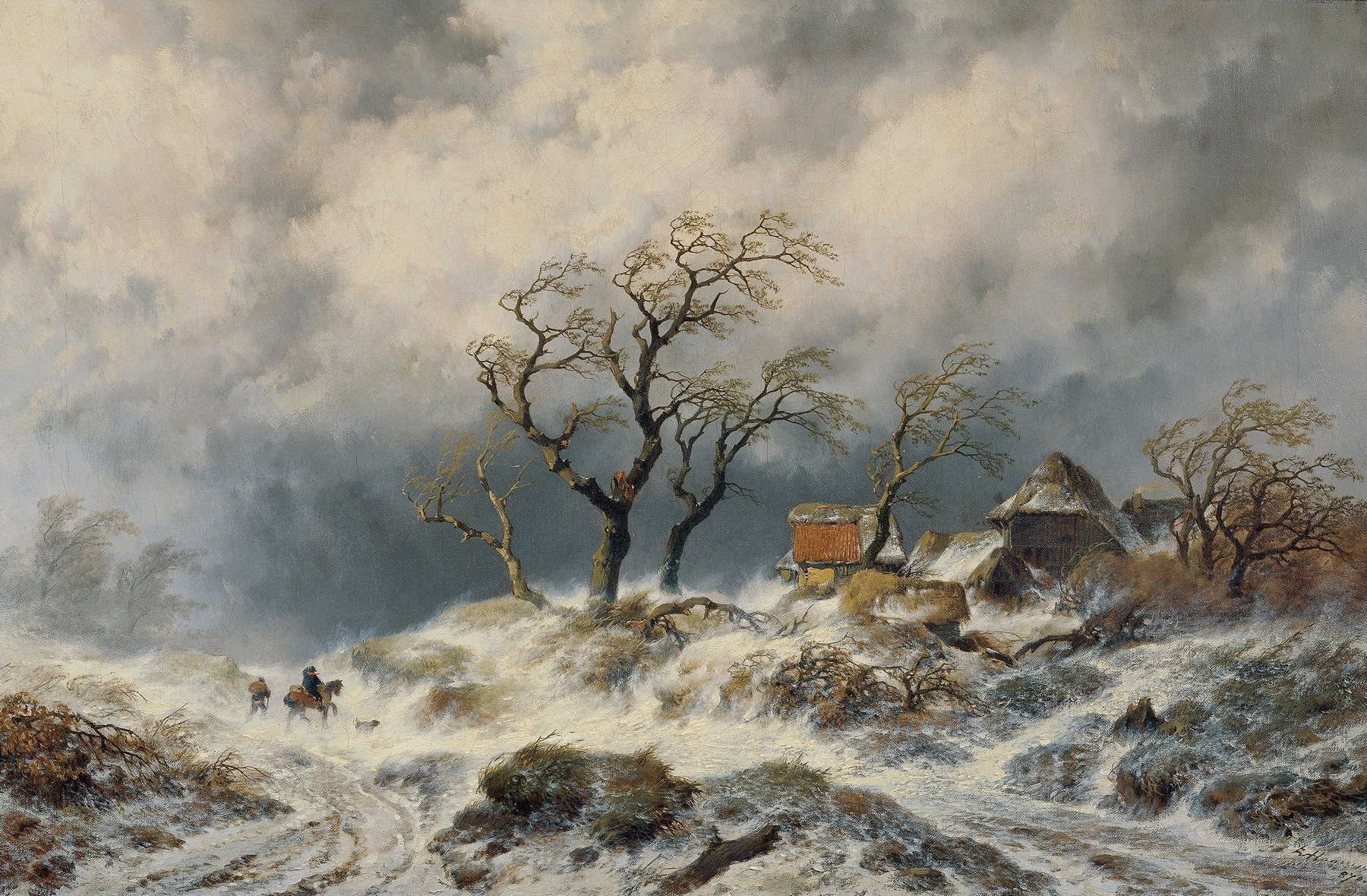
Did the painter know this moment would outlive them? Captured in Holländische Winterlandschaft (Schneewehen), a desire for tranquility and beauty unfolds against the backdrop of a serene winter landscape. Look to the foreground where snow blankets the ground in delicate layers, a whispering hush enveloping the scene. The meticulous brushwork brings life to the snowdrifts that rise like gentle waves, while the subtle play of cool blues and soft whites evokes a sense of stillness.
Notice how the horizon stretches into a soft, muted sky, inviting the eye to wander between the earth and the heavens. Within this composition, a palpable tension exists between the starkness of the cold and the warmth of the glowing light that breaks through the clouds. The interplay of shadow and light highlights the isolation of the barren trees, which stand resolute, evoking a yearning for connection amid the vastness. Each detail, from the textured patterns of the snow to the wisps of cloud above, tells a story of endurance and hope in the face of winter's chill.
Remigius Adrianus van Haanen painted this work in 1870, during a period marked by a growing interest in landscape painting among Dutch artists. Living in the Netherlands, he was inspired by the natural beauty around him and the desire to capture life's ephemeral moments. At this time, the art world was transitioning towards Impressionism, yet he remained rooted in the realistic portrayal of nature, allowing Holländische Winterlandschaft (Schneewehen) to stand as a testament to both his skill and the era's artistic shifts.