Horseman At The Door Of A North-African Town — History & Analysis
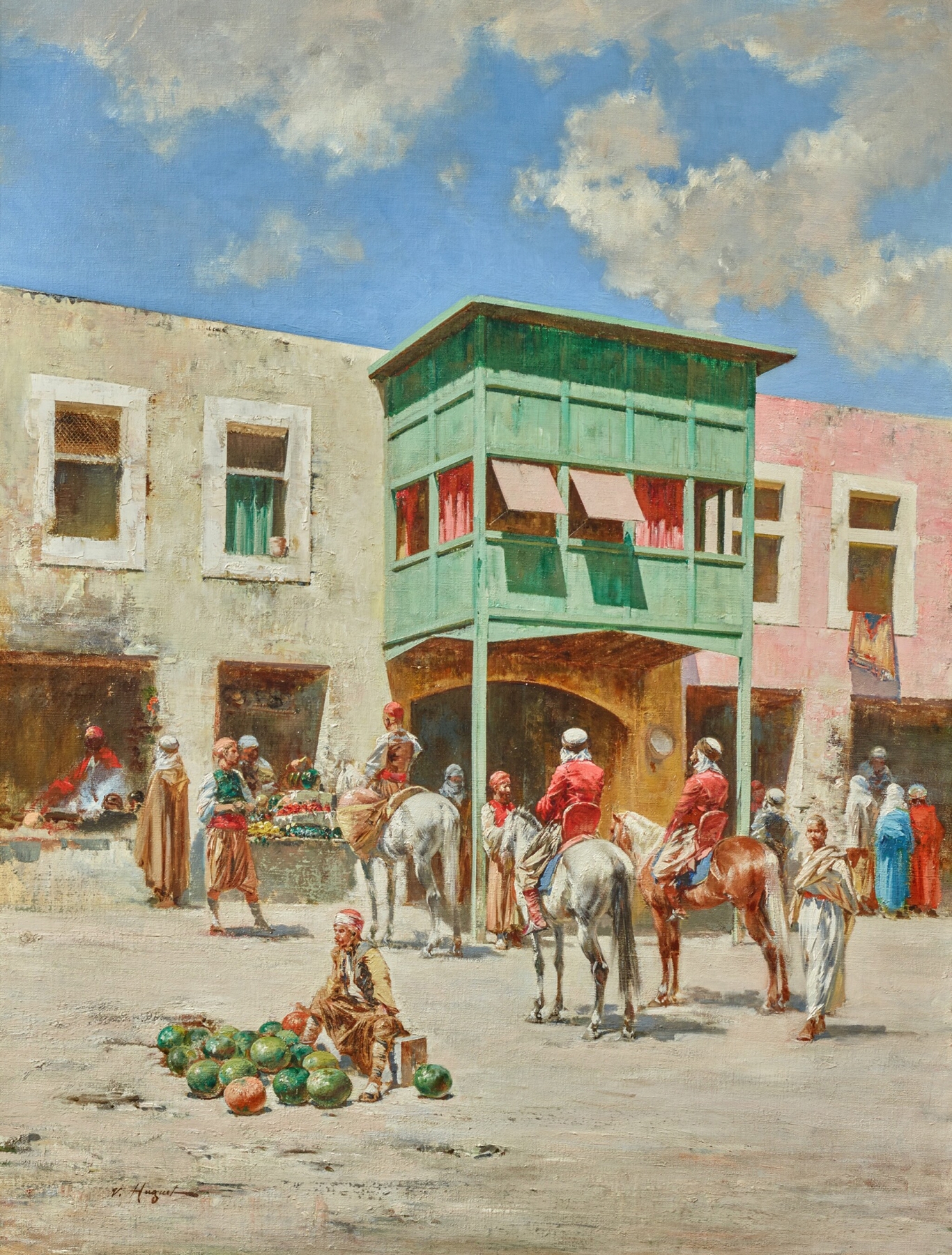
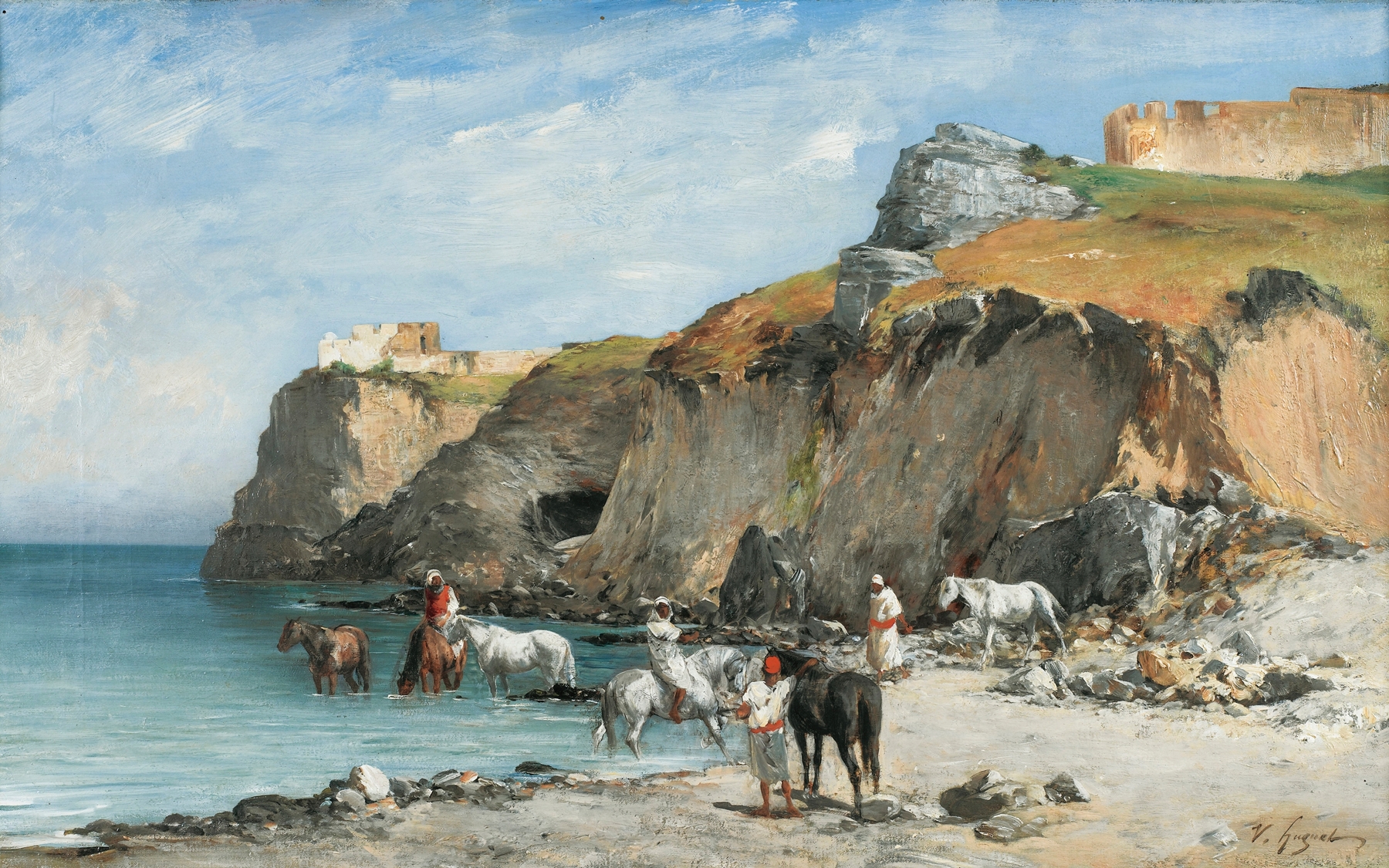
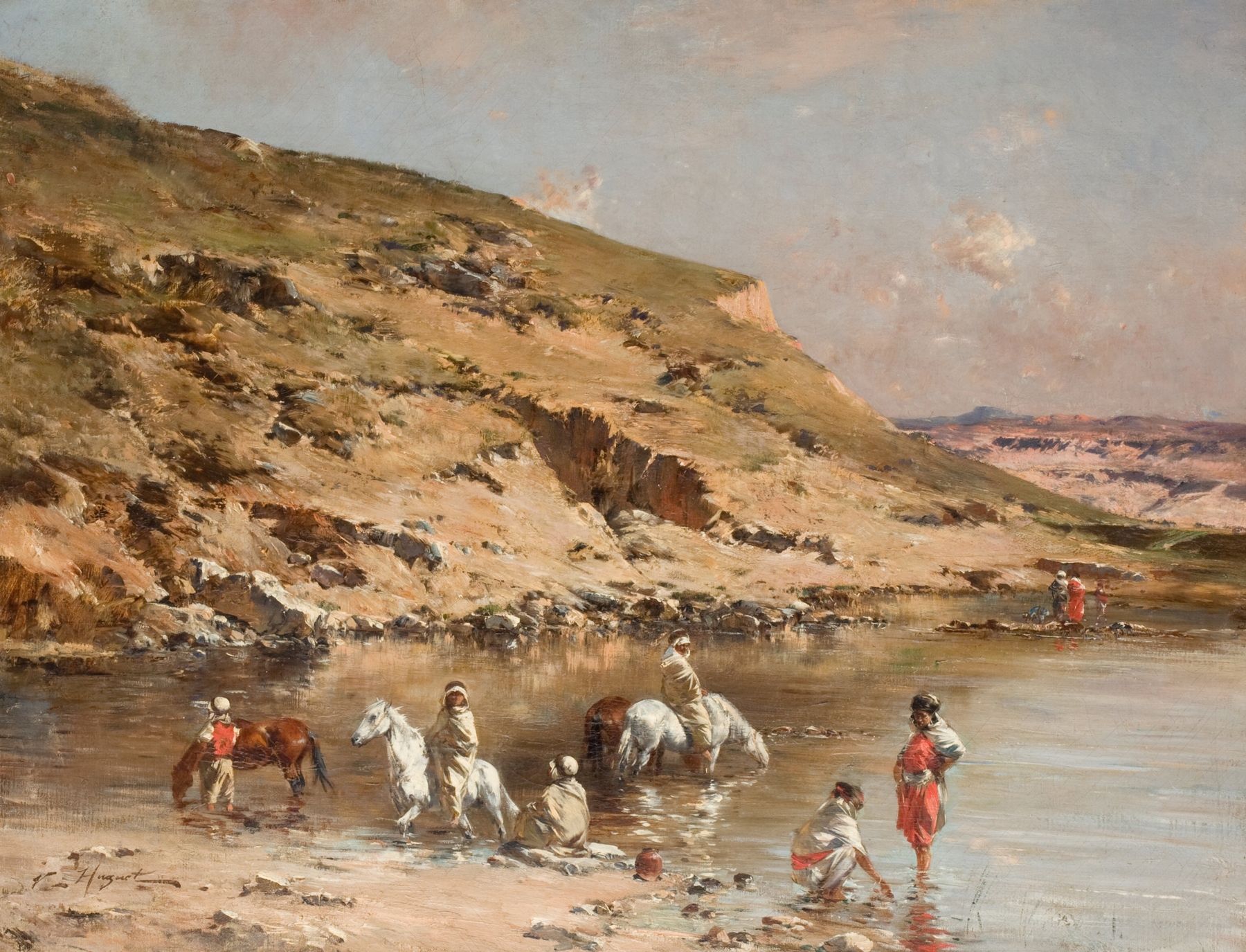
When did color learn to lie? The vibrant hues of North Africa speak both of life’s richness and its delicate fragility, capturing the viewer in a moment of profound introspection. Look to the foreground of the composition, where a horseman poised at the threshold of a bustling town exudes both authority and vulnerability. The warm ochres and deep blues blend harmoniously, yet the juxtaposition of the man’s striking silhouette against the intricate background hints at an inner turmoil.
Notice how the dappled sunlight filters through the architectural arches, casting playful shadows that dance around the figures, emphasizing the tension between the vibrant life of the town and the solitude of the horseman. The emotional undertone of the piece unfolds through subtle details: the horseman’s clenched reins suggest unspoken anxieties, while the distant figures engaged in their daily routines hint at a world unaware of his internal struggle. This contrast sparks a dialogue about isolation amidst community, evoking the fragility of human connections in the chaos of life. The painting captures a moment suspended in time, where the vibrancy of color serves both to celebrate and to conceal the complexities of existence.
Victor Huguet created this work during the late 19th century, a time marked by the fascination with exoticism and the allure of distant lands in European art. His travels to North Africa deeply influenced his palette and subjects, as he sought to capture the essence of a culture perceived through a Western lens. Huguet’s exploration not only reflected his artistic ambitions but also the broader currents of colonial interest and romanticism that shaped his era.