House with a Turret, rue de la Tixéranderie, Paris — History & Analysis
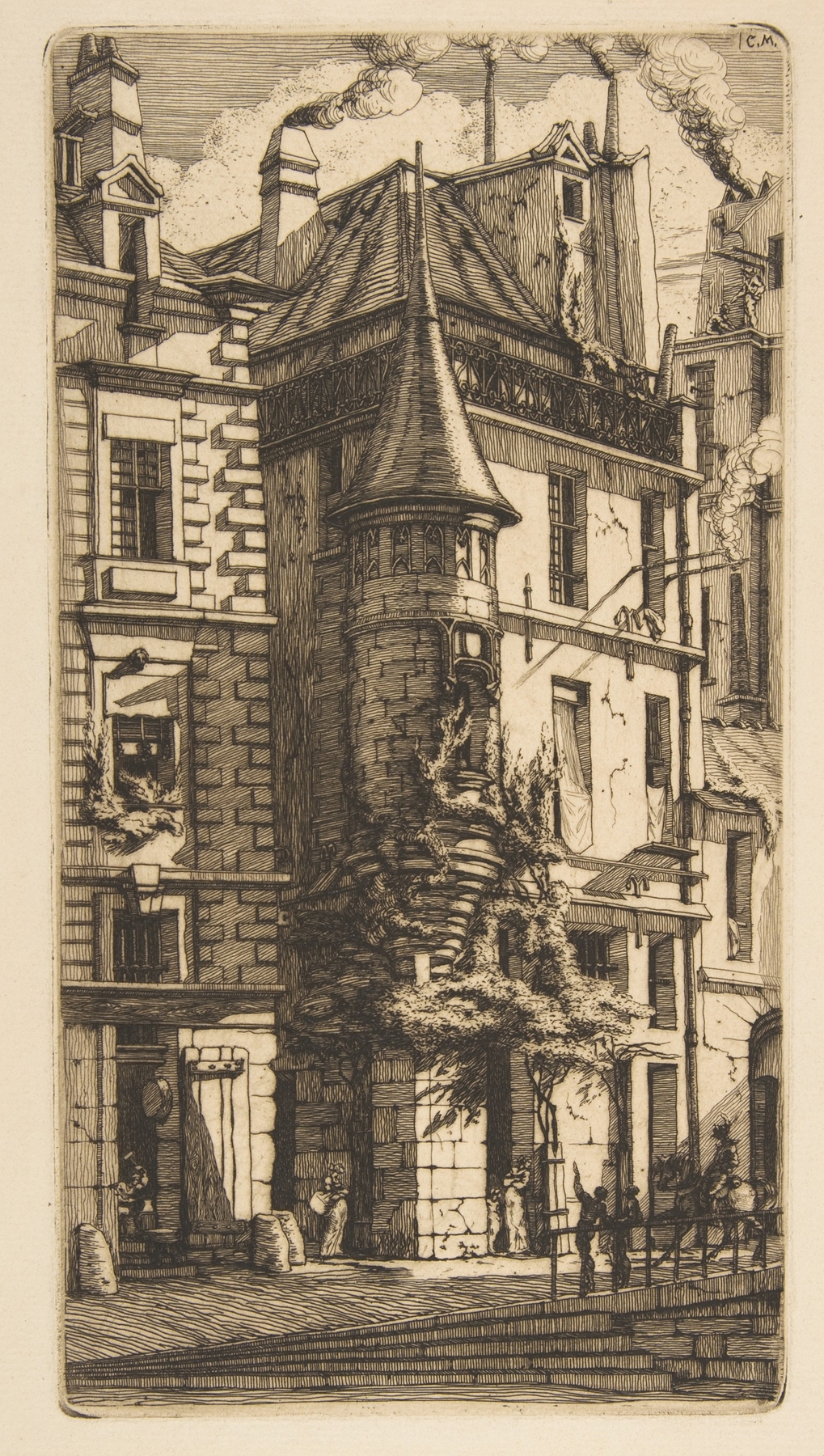
Where does light end, and longing begin? In the delicate interplay of shadow and illumination, House with a Turret, rue de la Tixéranderie, Paris captures this poignant tension, inviting viewers to ponder the passage of time. Look to the foreground, where the turret rises majestically against the soft Parisian sky. The meticulous detailing of the brickwork, with its subtle variations in tone, draws the eye upward, creating a sense of verticality that echoes the aspirations of the city. Notice how the light bathes the building in a warm glow, while the surrounding shadows hint at the mysteries that dwell in the alleyways below.
Meryon’s technique showcases a masterful use of etching, rendering both the architectural details and atmospheric effects with striking clarity. Beneath the surface, the artwork serves as a meditation on the fleeting nature of urban life. The turret, standing tall and proud, symbolizes permanence, contrasting with the ephemeral quality of the streets filled with transient figures. The interplay of light and shadow emphasizes the tension between nostalgia and the present moment, provoking reflections on the passage of time and the stories that echo through the city.
Each detail holds significance, inviting viewers to delve deeper into their own connections to place and memory. In 1852, Meryon was immersed in the artistic currents of Paris, grappling with both personal struggles and the transformative changes of the city around him. At this time, he was developing his unique style, influenced by the burgeoning Realist movement while simultaneously forging a path that echoed the romanticism of his predecessors. His depiction of House with a Turret reflects not only his artistic vision but also the profound longing for continuity amidst the ever-changing urban landscape.