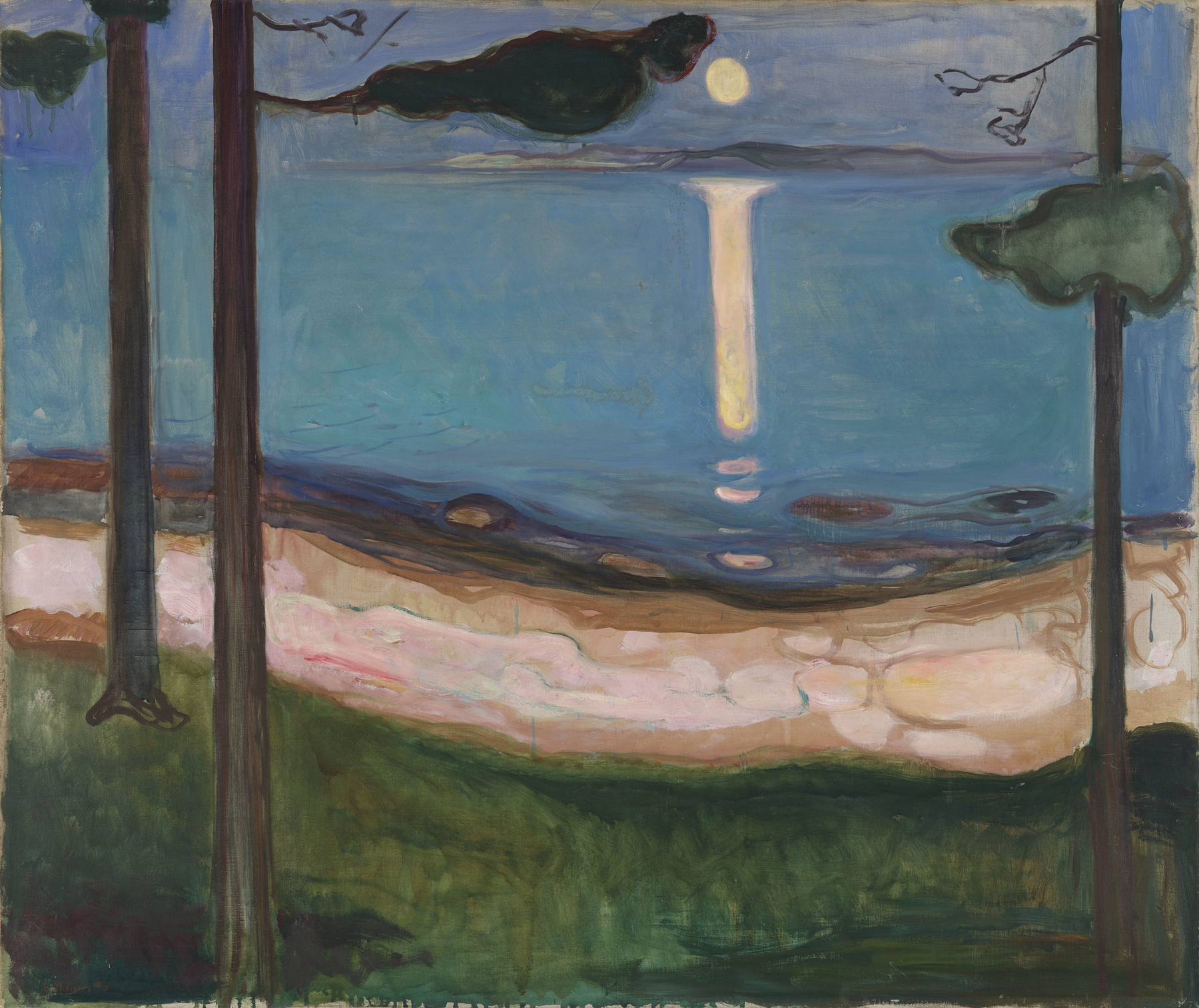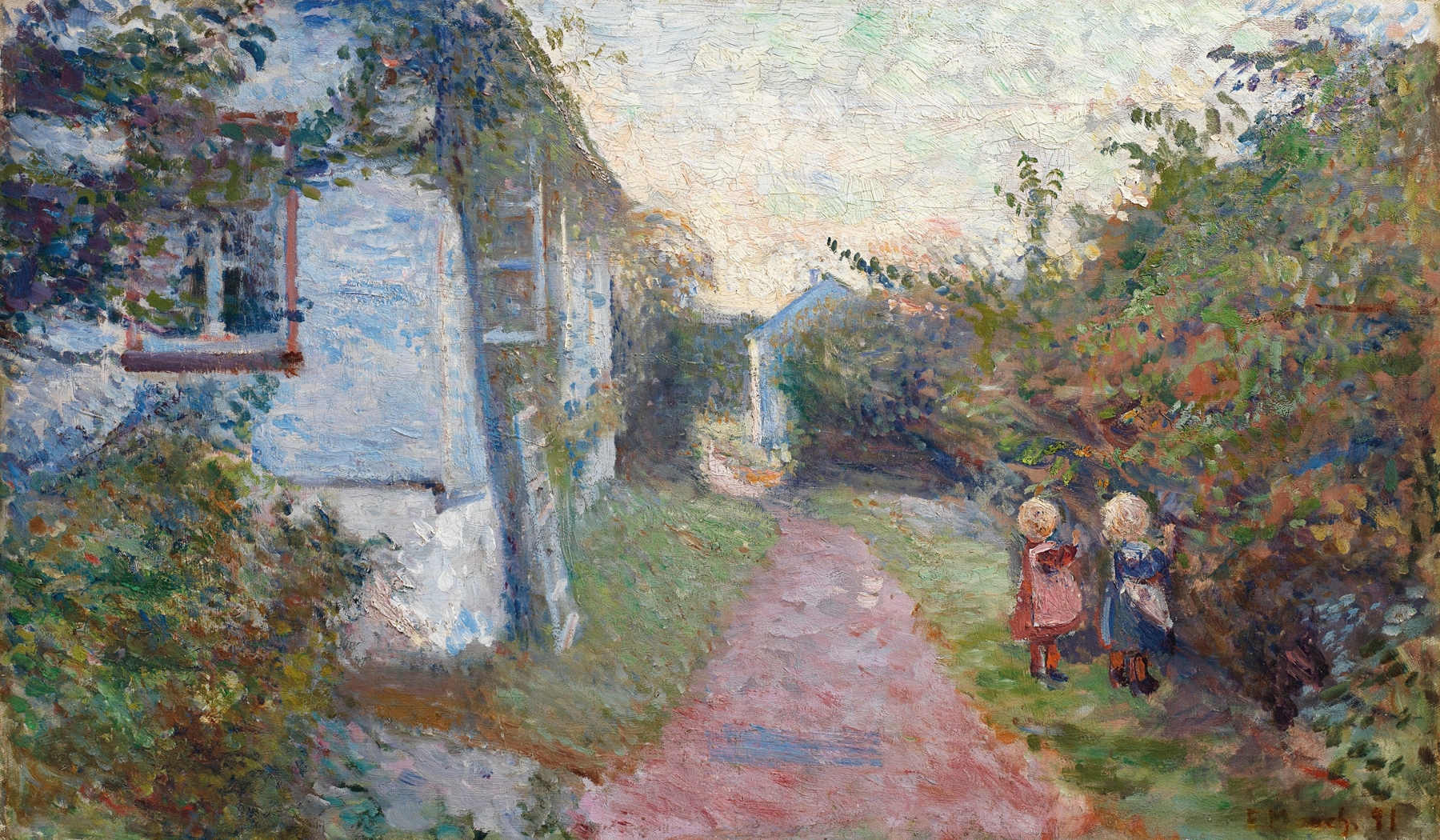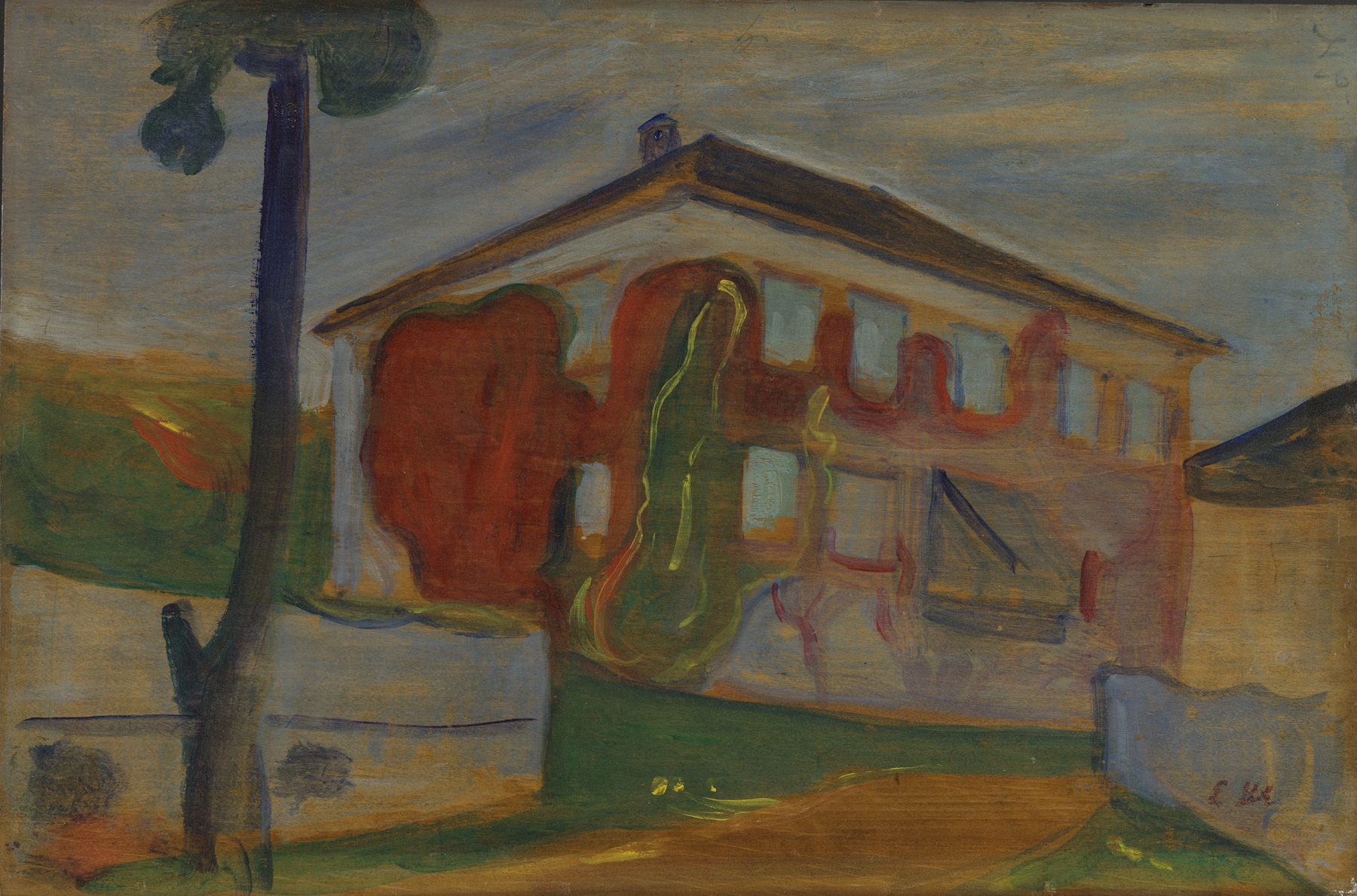
What if beauty was never meant to be finished? This thought lingers like a whisper in the vibrant strokes of Munch’s canvas, where innocence intertwines with nature’s untamed magic. Look to the left at the sprawling mass of red Virginia creeper, its tendrils cascading over the house like a lover's embrace. The deep crimson contrasts sharply with the muted tones of the dwelling, drawing your eye into the heart of the scene. Notice how the light dances across the foliage, illuminating the greenery and casting shadows that flicker with life. This interplay of color and light creates a palpable tension, suggesting a moment suspended between reality and dream. The house stands there, both inviting and enigmatic, embodying a sense of nostalgia tempered by mystery. The creeping vine symbolizes the passage of time, a reminder of nature's relentless growth and its ability to reclaim what humanity has built. Here, innocence lies in the portrayal of a simple home, yet there is an underlying tension — a question of how long this beauty can endure against the ravages of nature and time. Munch painted this piece in Norway at the turn of the century, a time when he was grappling with personal struggles and the shifting tides of the art world. The Symbolist movement was gaining momentum, influencing his exploration of emotional depth and psychological themes. This work reflects not only a personal moment in the artist's life but also the broader artistic movement toward expressing the complexities of human experience.