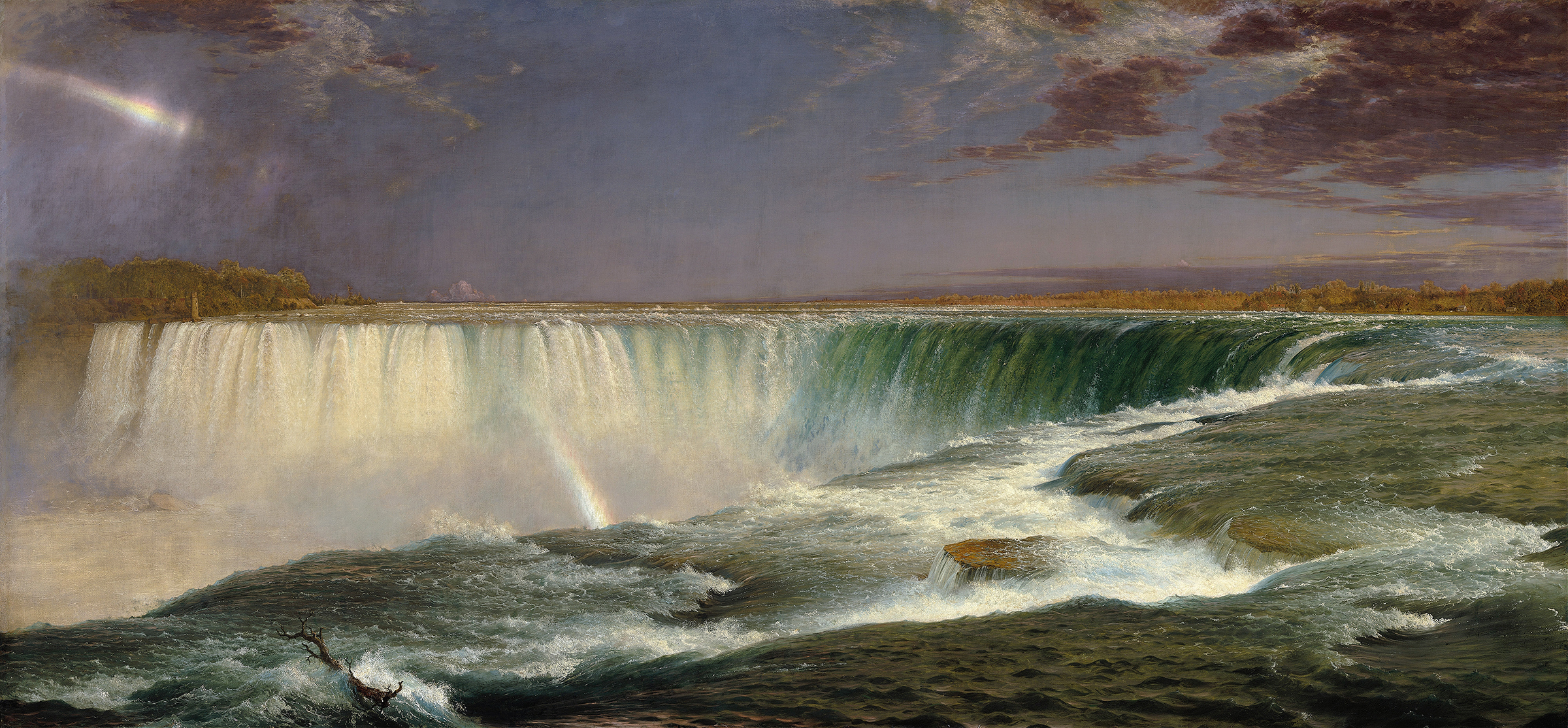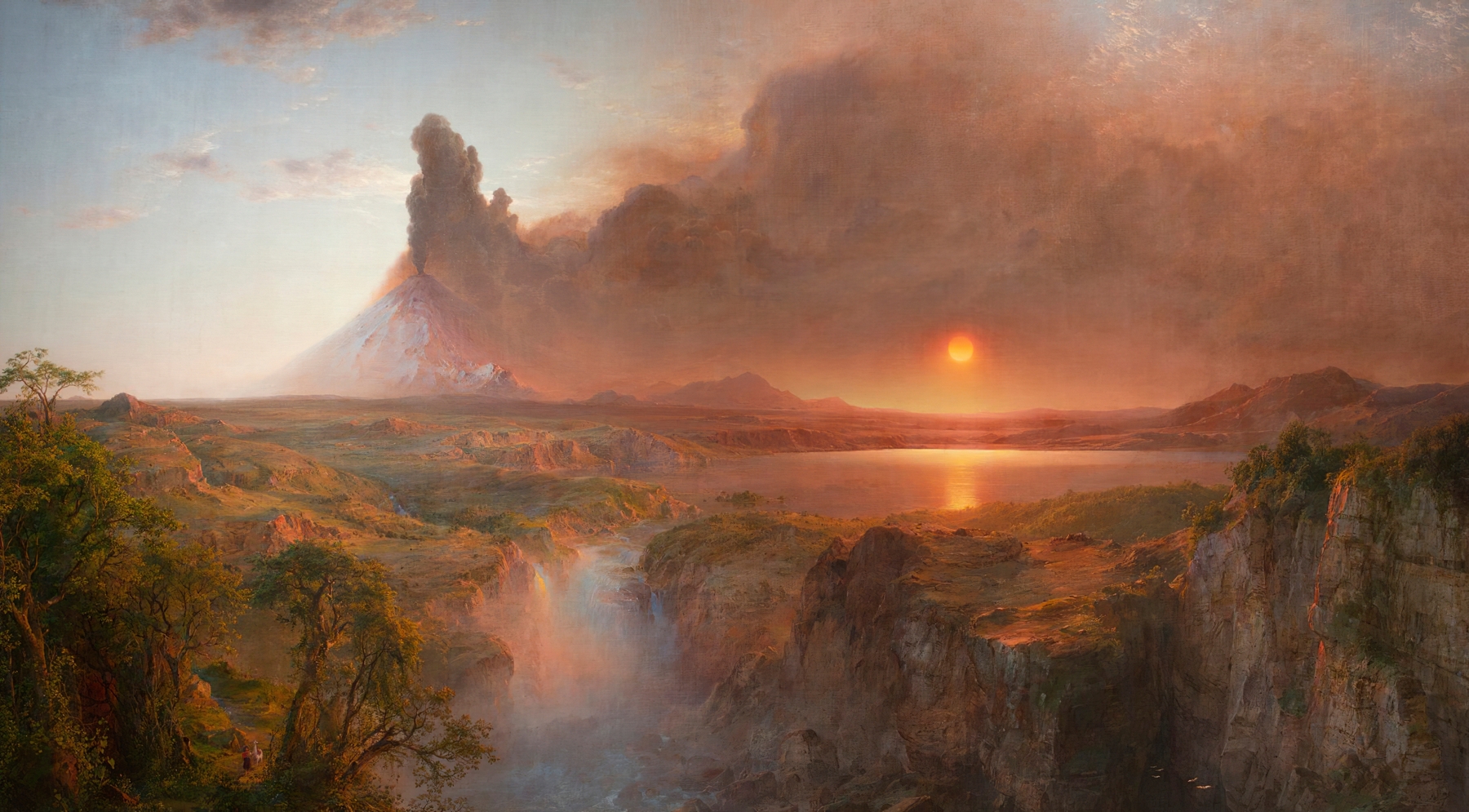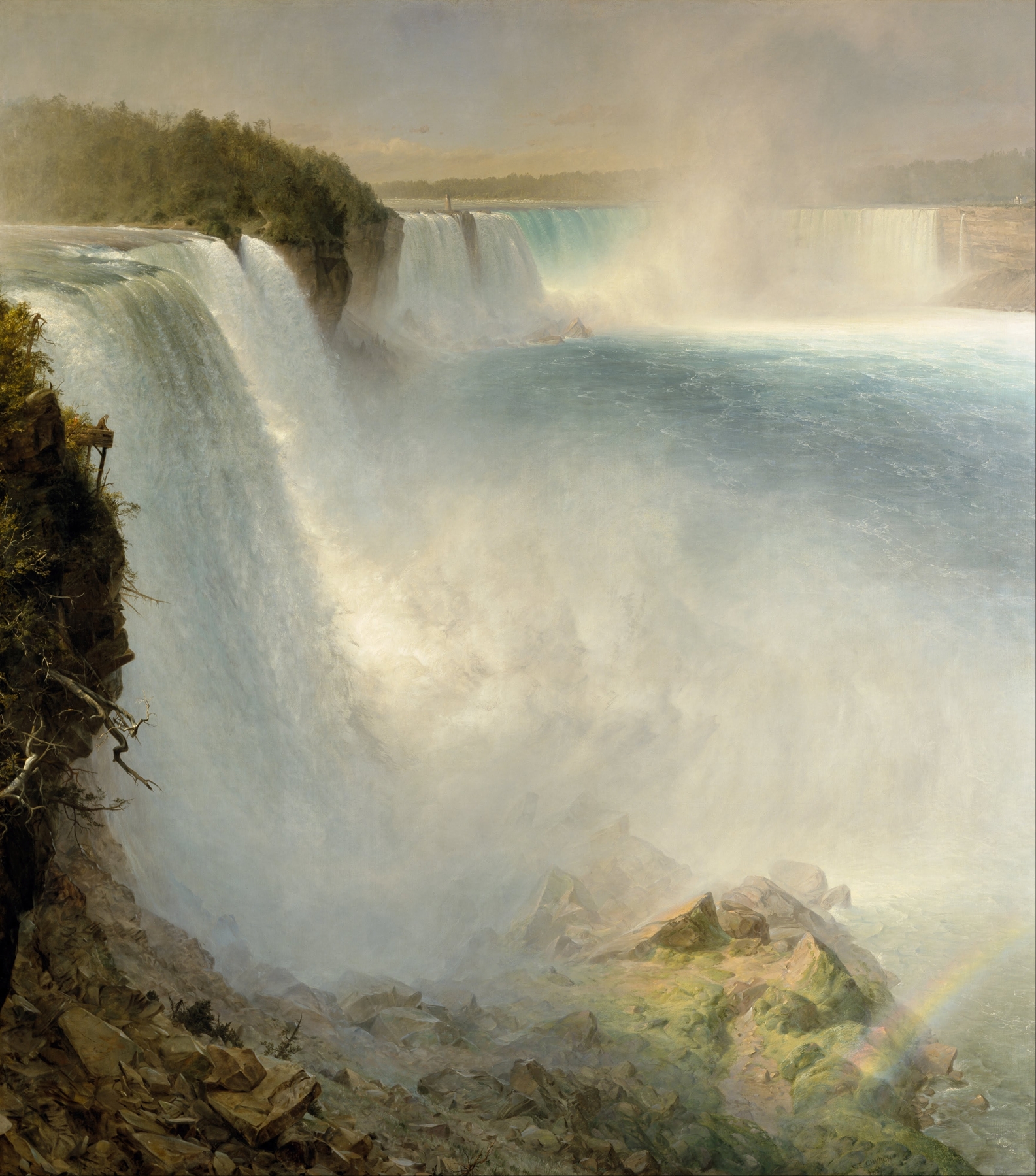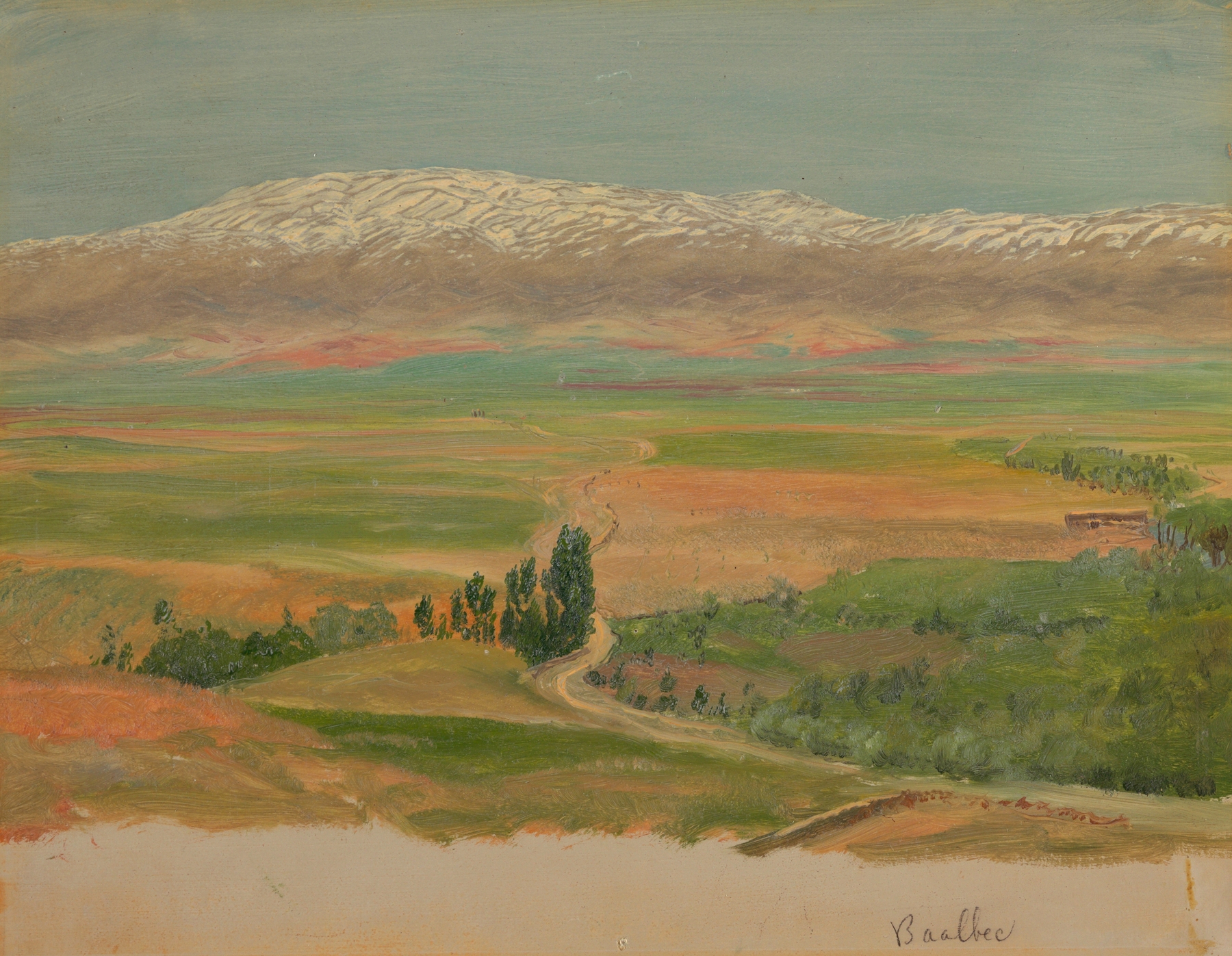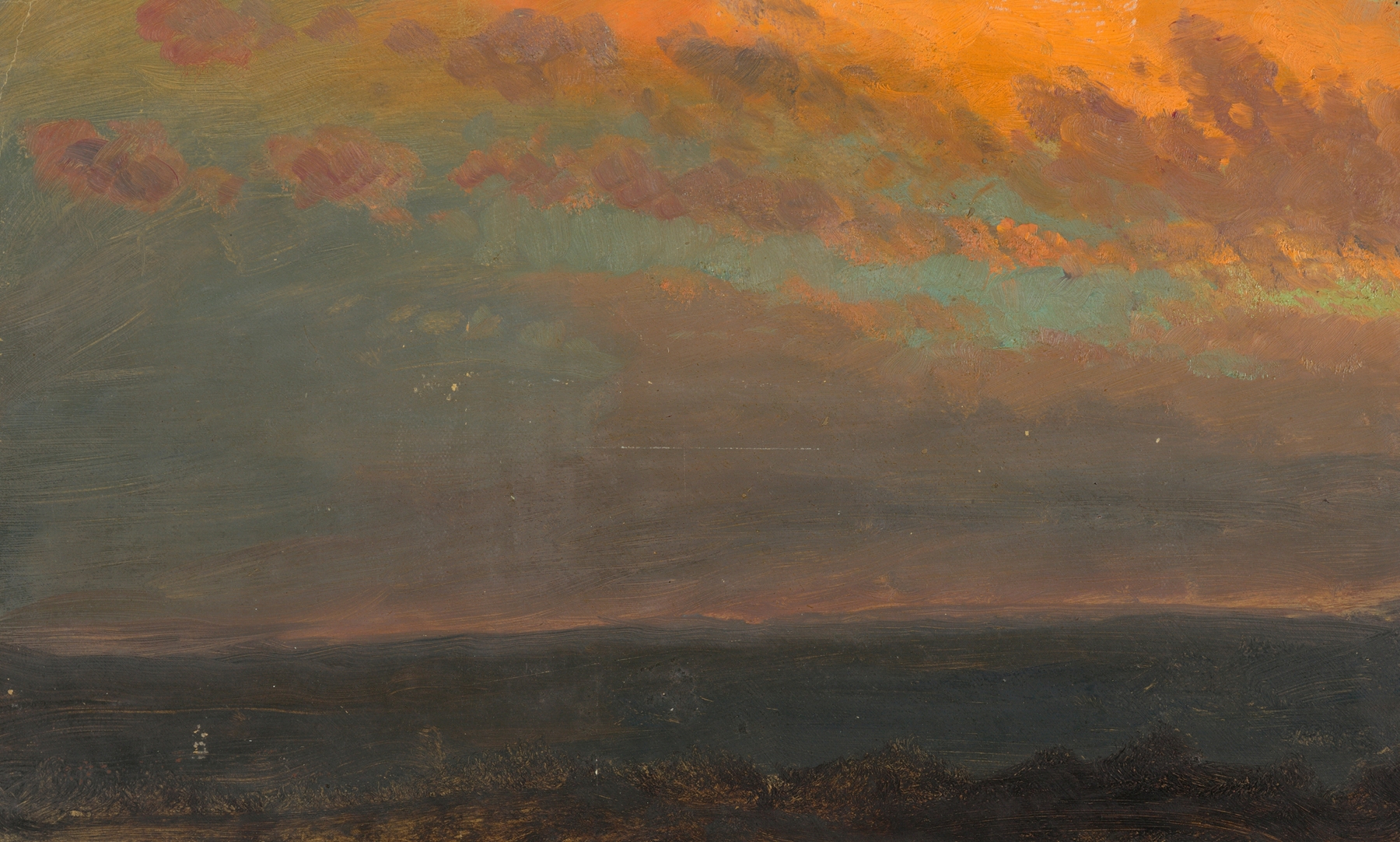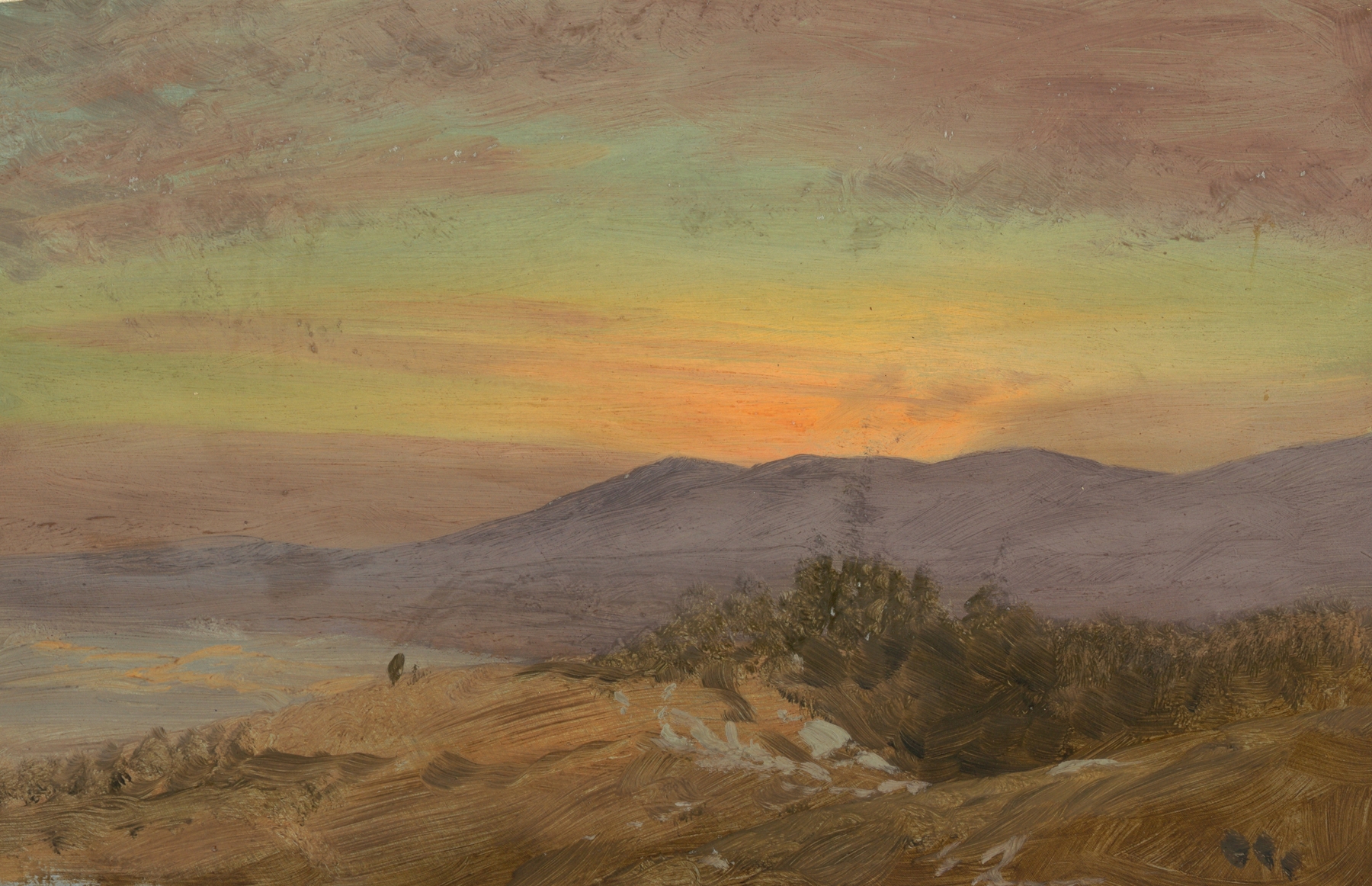
“Every brushstroke is a heartbeat remembered.” In *Hudson Valley, sunset*, the viewer is invited to confront the delicate balance between beauty and fear, as fleeting moments flicker before our eyes like the dying light of day. Look to the horizon first, where vibrant hues of orange and pink bleed into deep purples, igniting the sky. The sun dips below the landscape, casting elongated shadows over the rolling hills and calm waters. The meticulous detail in the foliage invites you to trace the contours of each leaf, while the soft gradients of color reveal Church's mastery of light and atmosphere. The composition draws you in, capturing the ephemeral nature of twilight, as if time itself holds its breath. Yet, beneath this enchanting vista lies an undercurrent of tension. The intensity of the sunset hints at an impending darkness, an inevitable closure to the day's warmth. The quiet serenity invites contemplation, while the shadows creeping across the land evoke a sense of unease, nudging us to consider what lies beyond the horizon. There's a juxtaposition of tranquility and foreboding, reflecting the fears of a world forever in flux, caught between light and dark. Frederic Edwin Church created this masterpiece in the late 1860s, during a period marked by both personal and national turmoil. Following the Civil War and amid a burgeoning landscape movement, he sought to capture the sublime beauty of America. His exploration of light and nature in this work reflects not only his artistic ambition but also the collective anxieties of a nation grappling with its identity in a rapidly changing world.