Hunter Returning Home in a Winter Woodland — History & Analysis
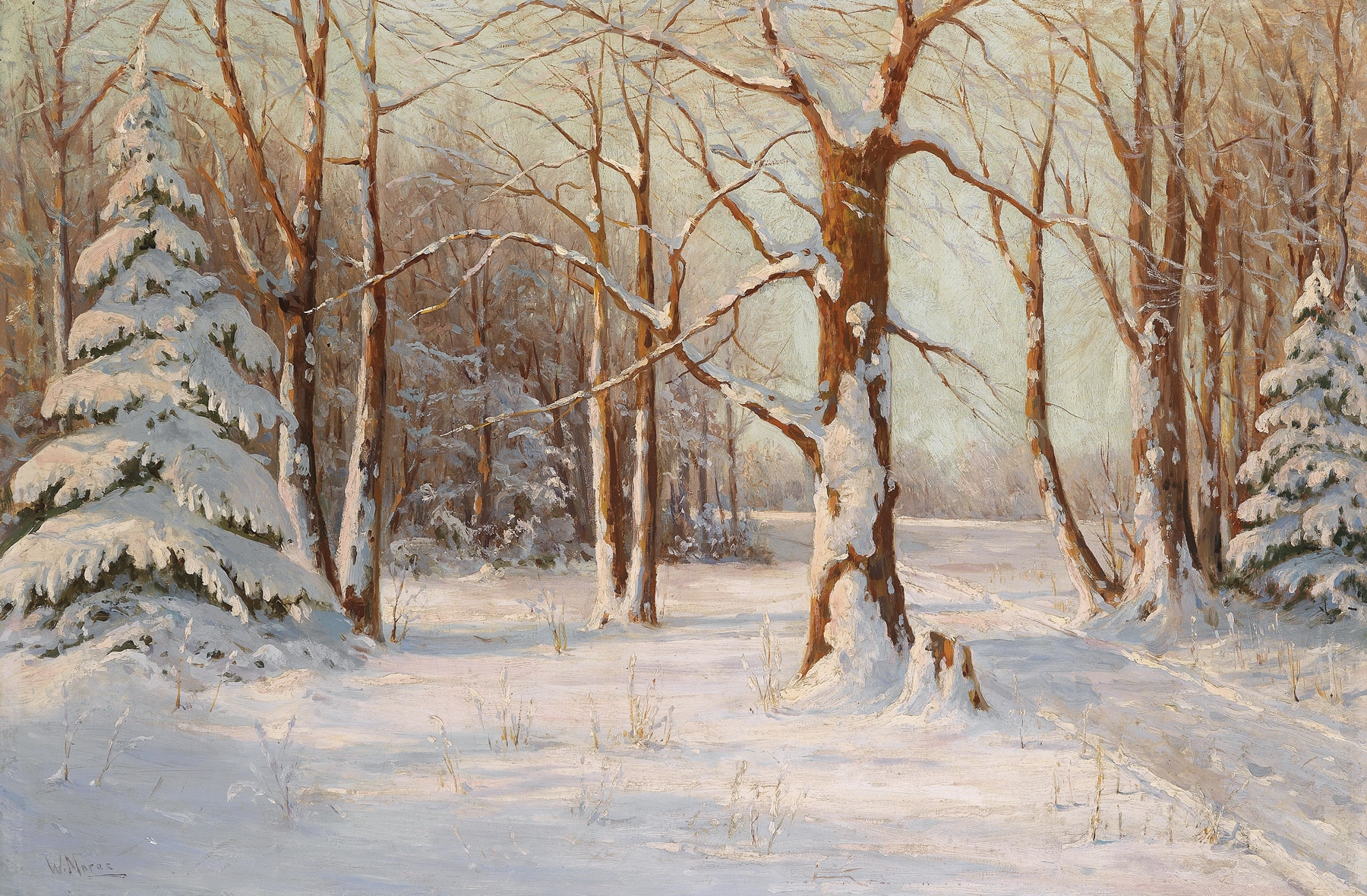
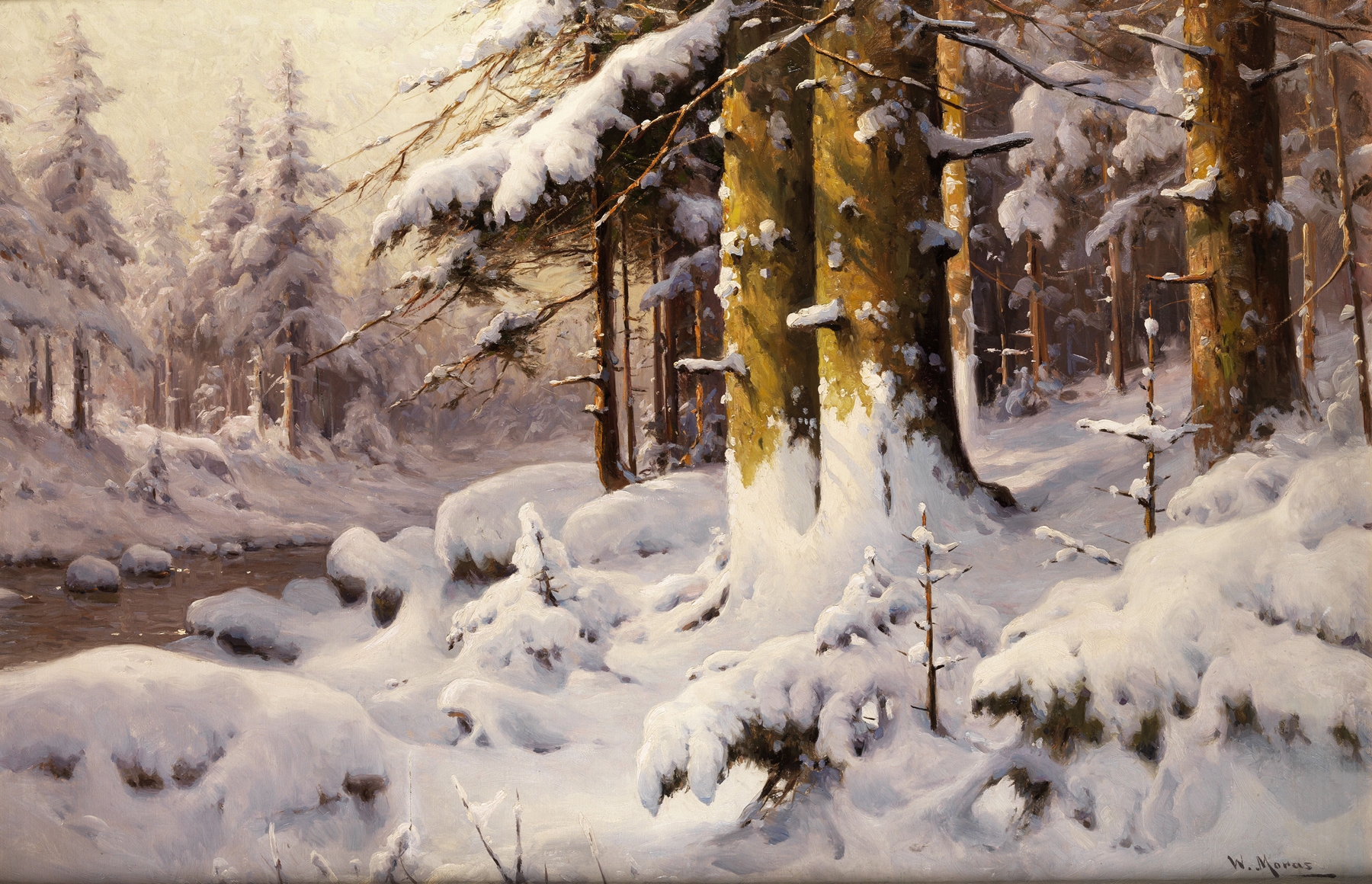
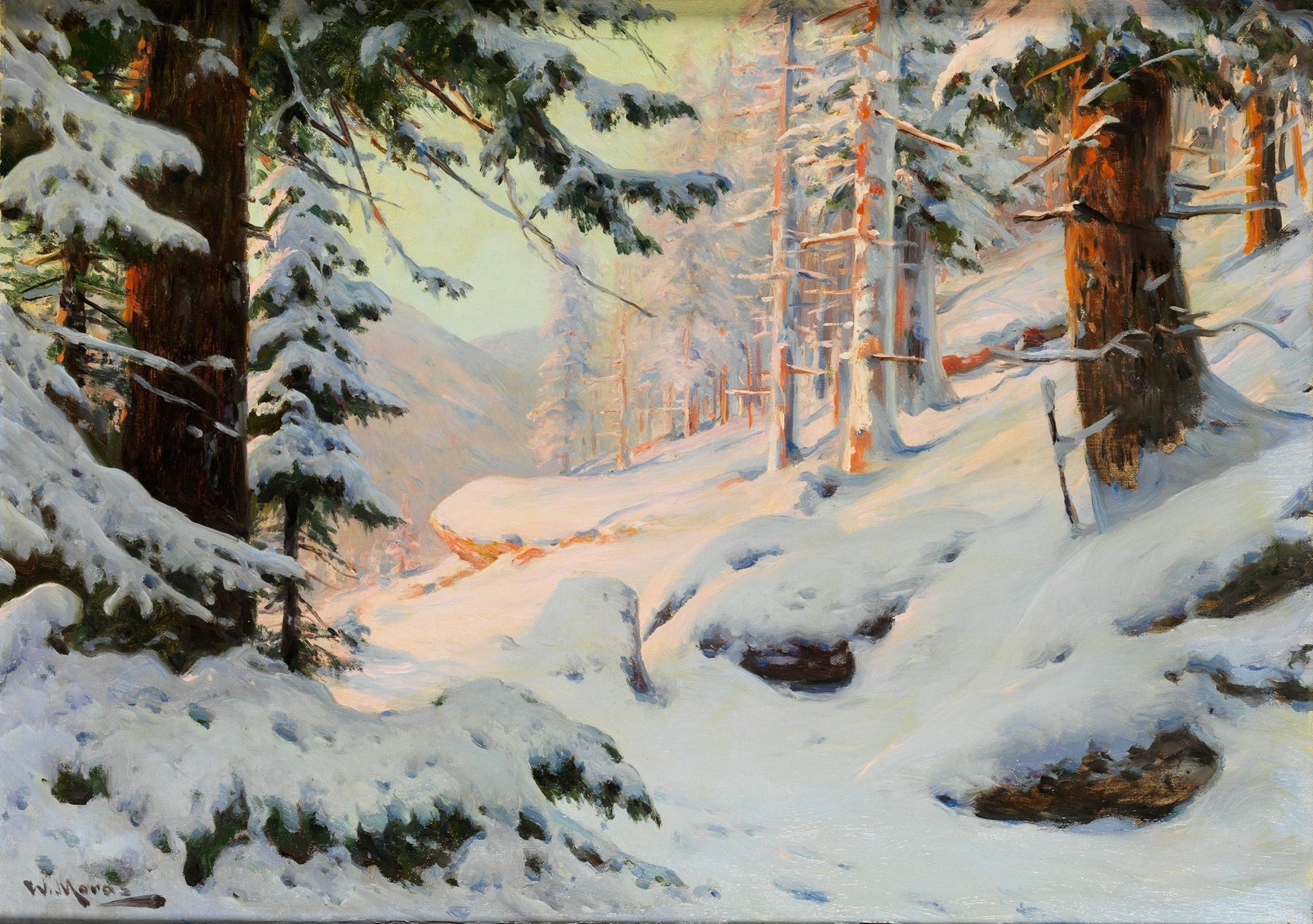
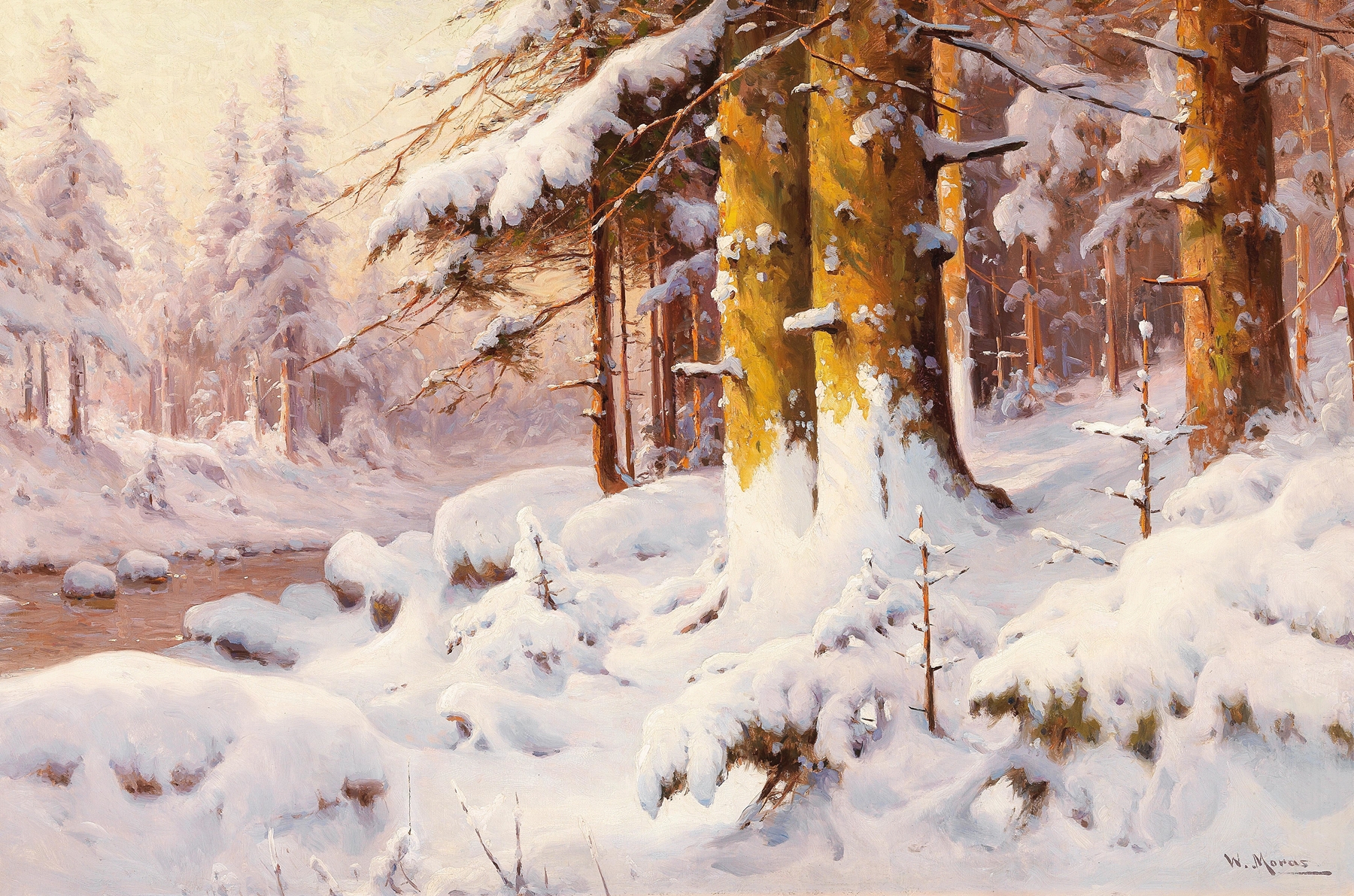
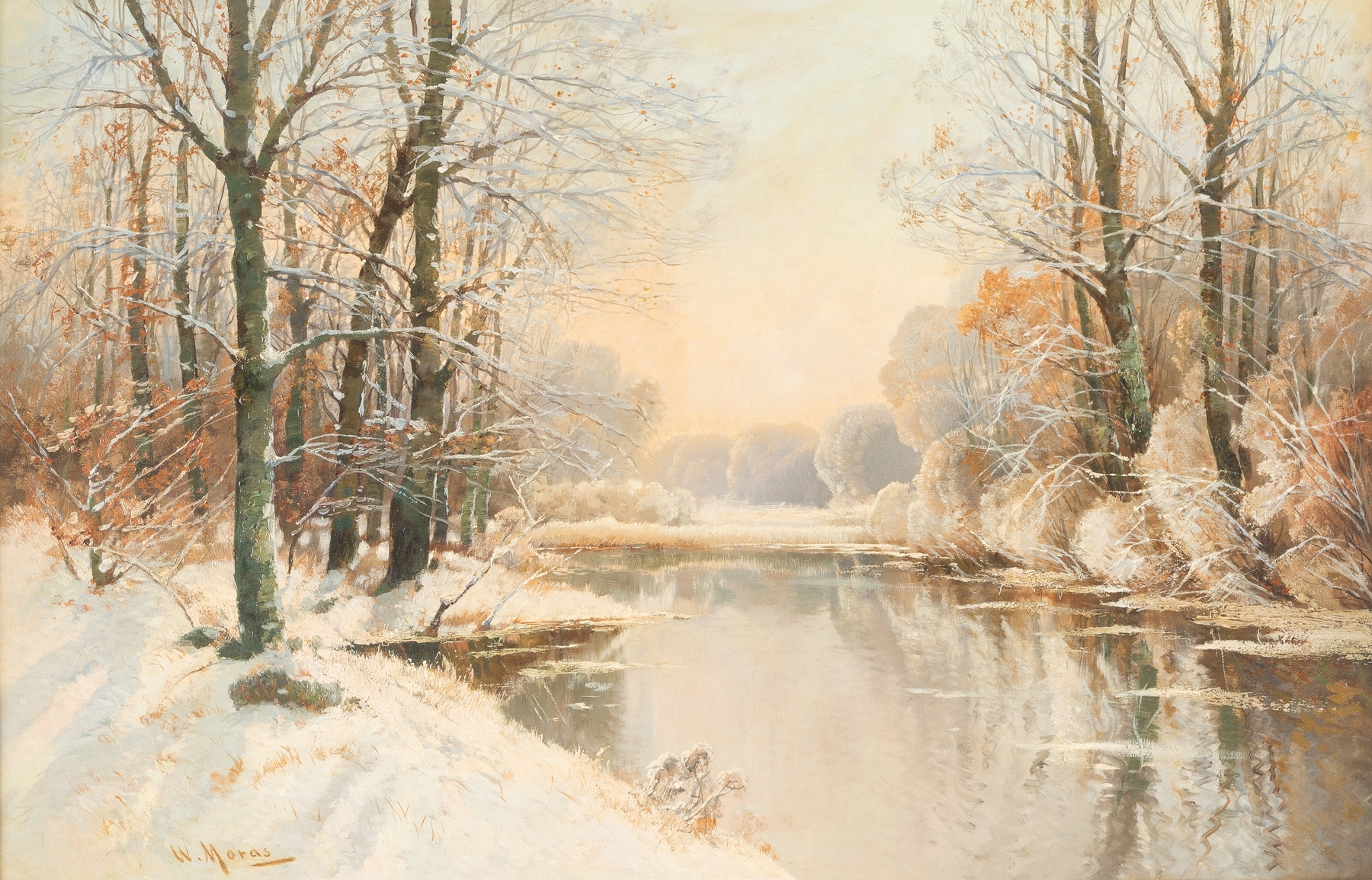
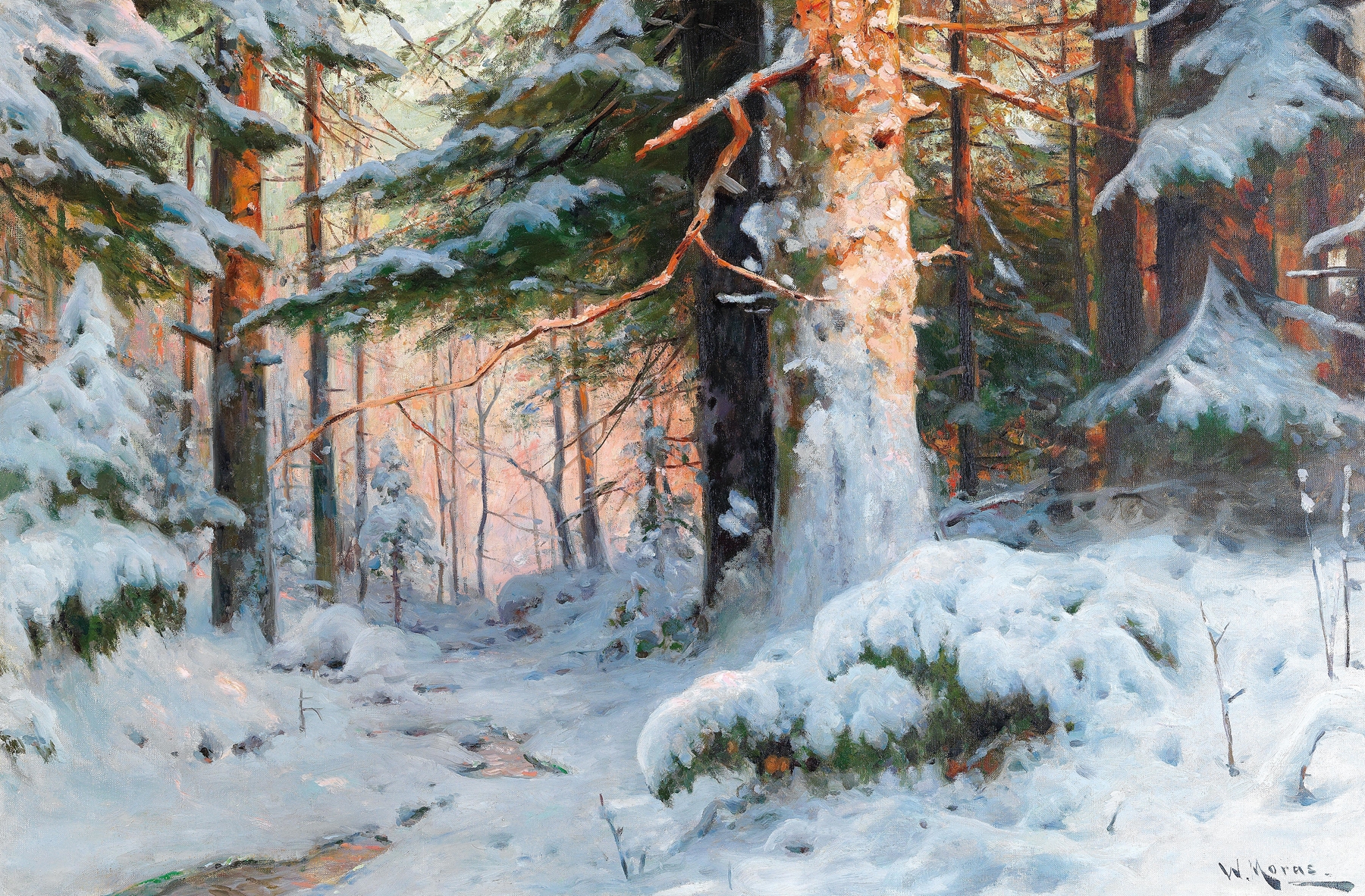
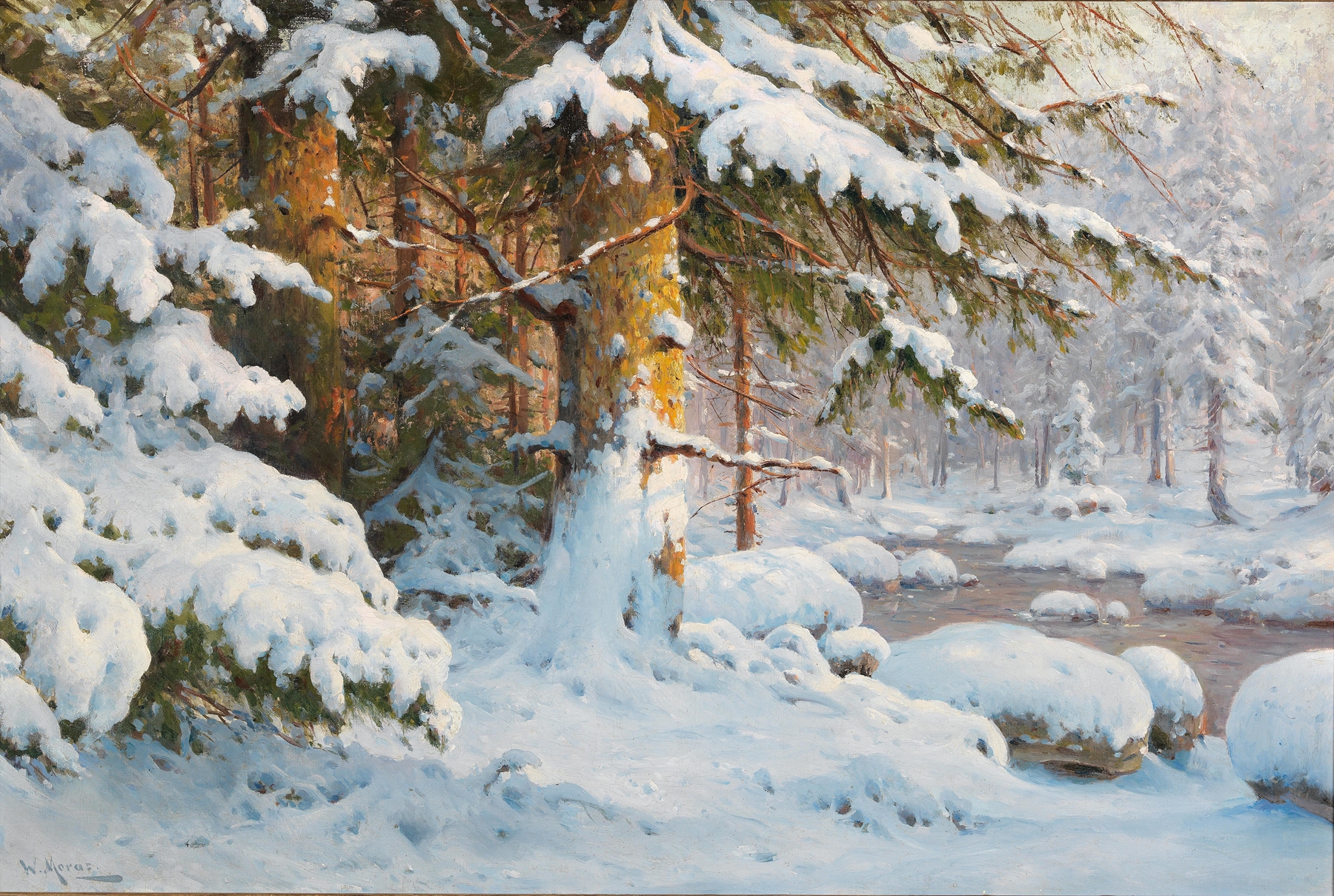
Can beauty exist without sorrow? The haunting allure of nature often dances hand in hand with the echoes of loss, reminding us of our ephemeral existence. Begin your exploration by focusing on the central figure, a solitary hunter clad in muted browns and greens, navigating the tranquil yet stark winter landscape. The soft white snow blankets the ground, while skeletal trees stretch their limbs skyward, juxtaposing the warmth of the hunter’s presence against the coldness of the scene.
Notice how the light filters through the branches, casting playful shadows that dance on the snow, drawing your gaze deeper into the heart of the woodland. Delve into the contrasts within this piece—there’s a palpable tension between the hunter’s determined stride and the serene stillness surrounding him. The painting evokes a sense of solitude and introspection, suggesting the weight of mortality as the hunter carries not just his catch, but also the burden of survival. The starkness of winter serves as a reminder of life’s fragility, inviting reflection on the interwoven themes of life, death, and the silent beauty of nature.
Created in an unspecified time, the artist painted this work without the constraints of contemporary art movements, resulting in a personal exploration of the human condition amidst nature’s stark realities. While little is documented about Moras's life during this period, he was known for his depictions of rural life and landscapes, likely influenced by the changing perceptions of nature in the late 19th to early 20th centuries. This painting stands as a testament to that evolving relationship, capturing the delicate balance between existence and the inevitable cycle of life and death.