Winter im Wald — History & Analysis
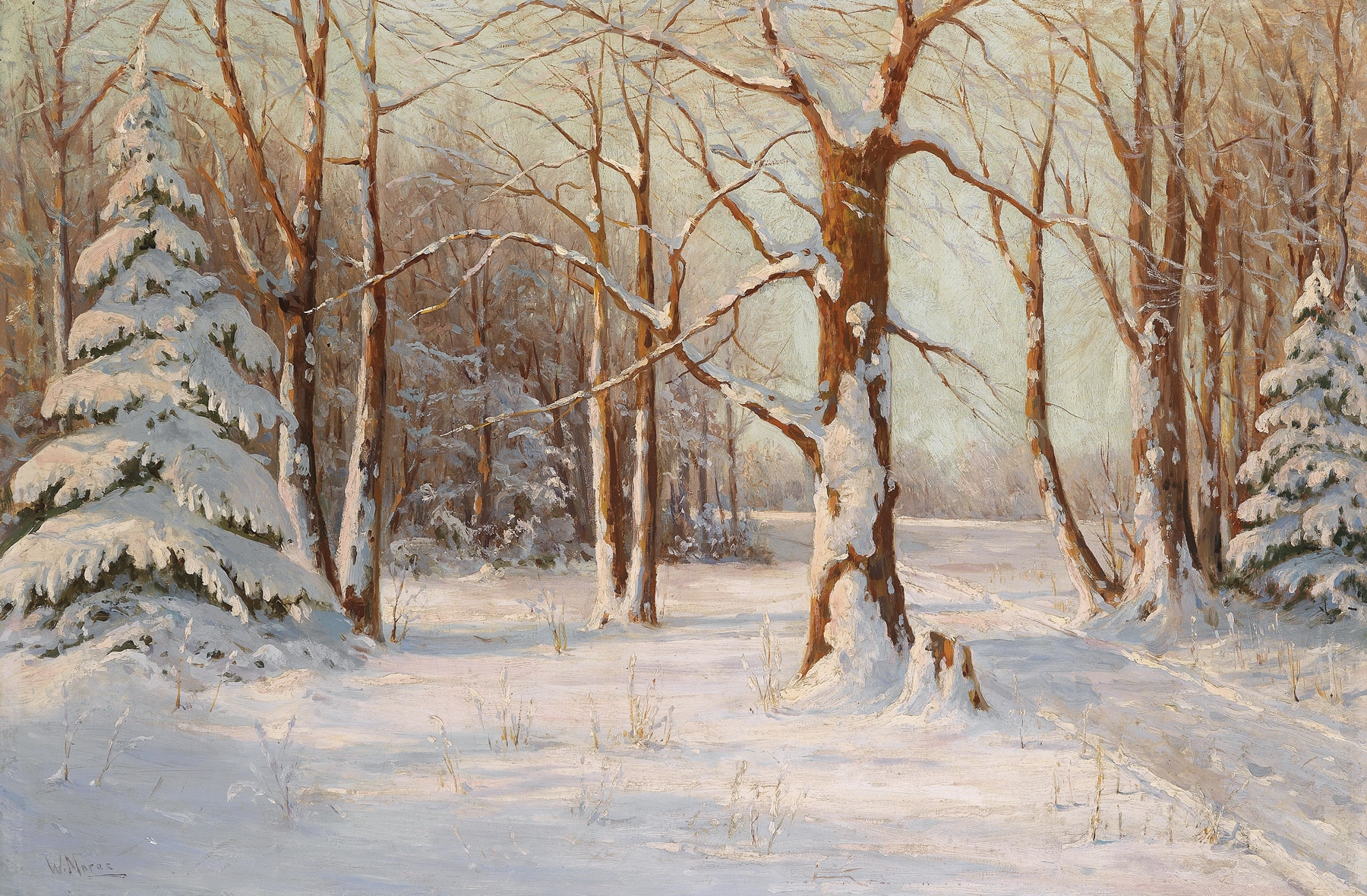
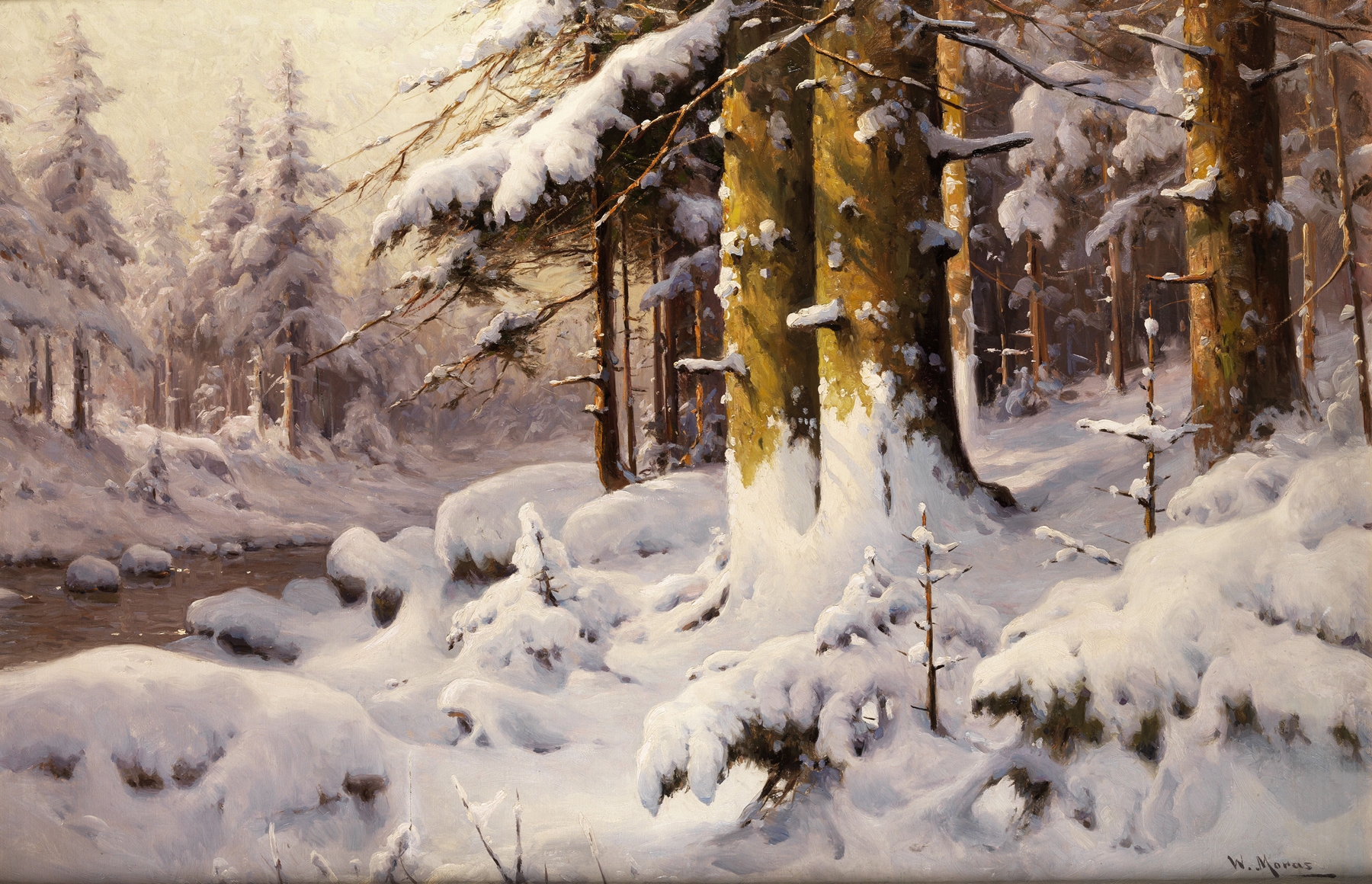
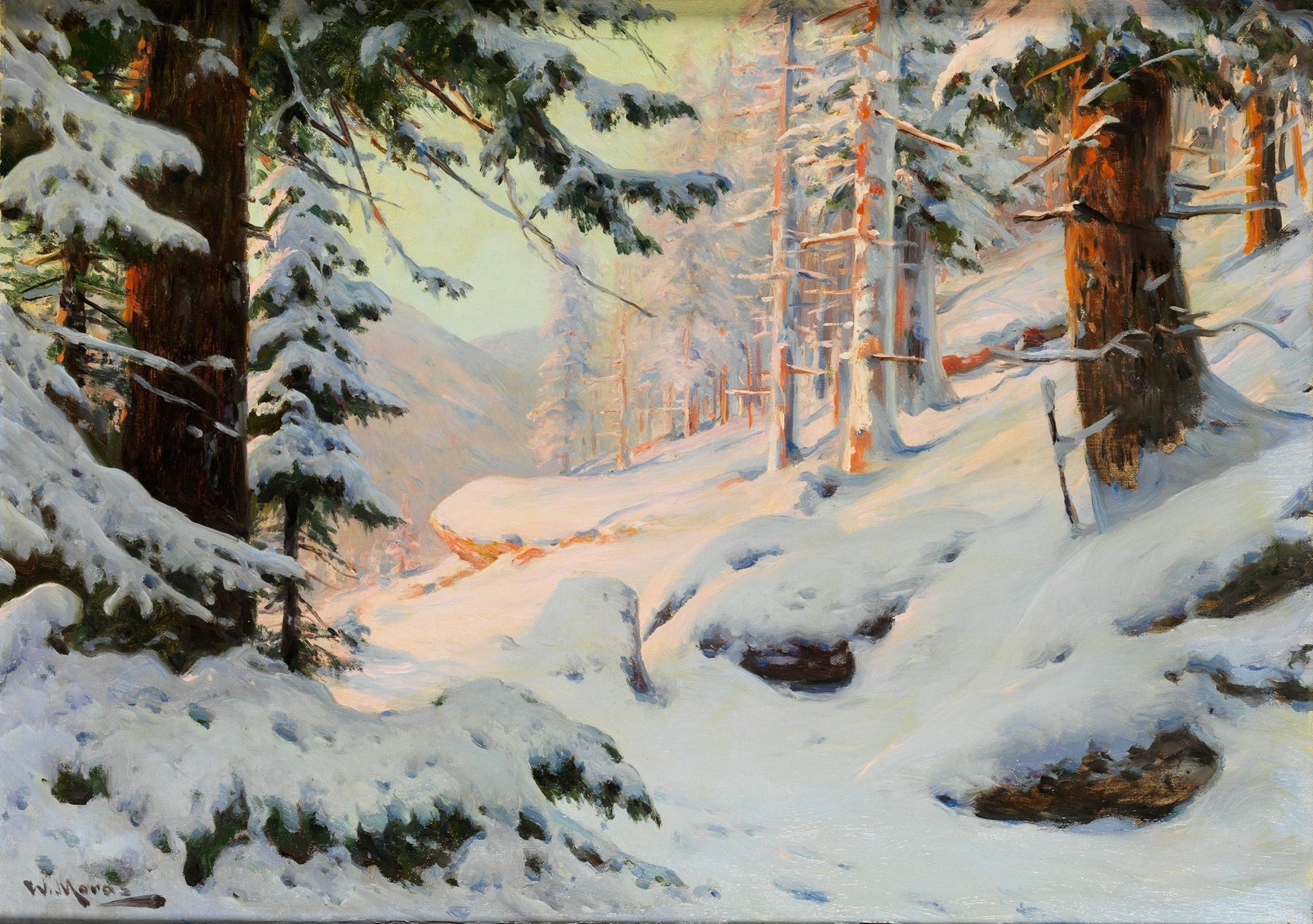
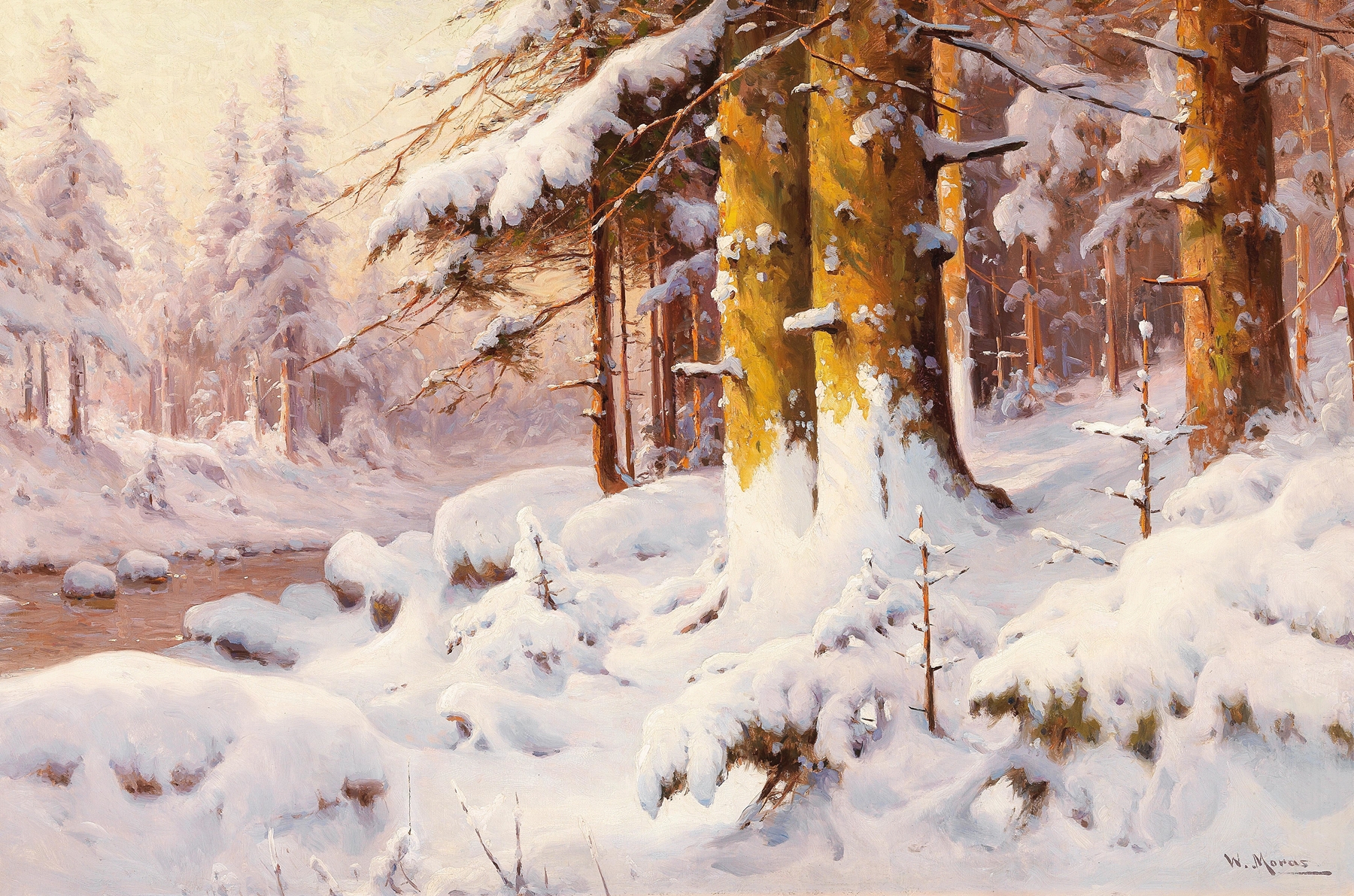
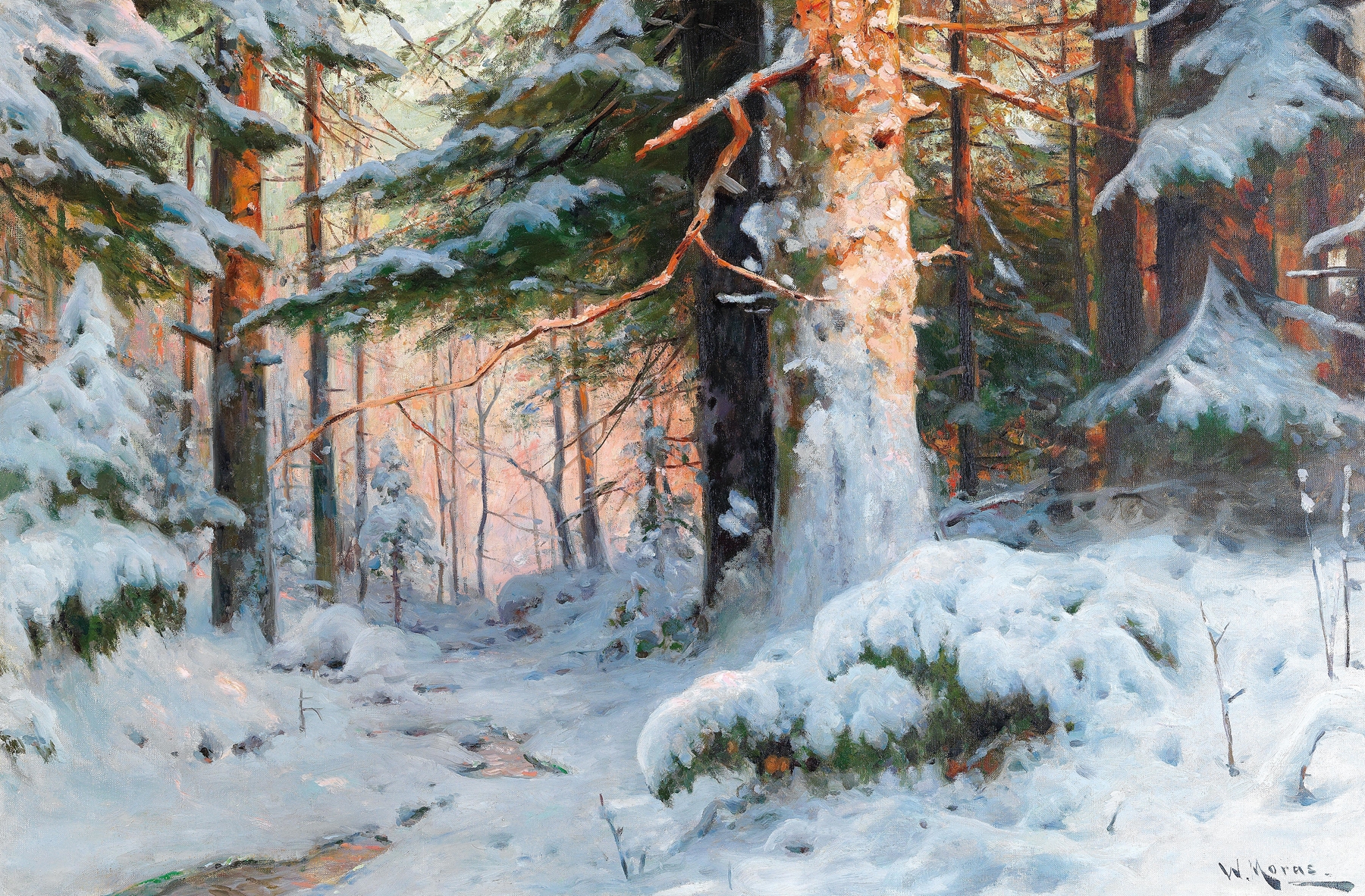
“To paint is to remember what time wants us to forget.” This statement encapsulates the delicate balance between transience and permanence that Winter im Wald embodies. Look to the center of the canvas, where a gentle snowfall blankets the forest floor, each flake a whisper of winter’s embrace. The tall, dark trees stand solemnly around the clearing, their branches heavy with snow, creating a sense of both confinement and sanctuary. Notice how the muted palette of cool grays and serene whites interplays with the soft blues, evoking a tranquil yet melancholic atmosphere.
The light appears filtered, casting a soft glow that highlights the intricate details of the tree trunks and the subtle textures of the snow. In the stillness of the scene, there lies a profound tension: the fragility of nature against the strength of the trees. The harmony between the heavy snow and the sturdy trunks signifies the balance of life in harsh conditions. Each stark element tells a story of resilience and rest, reminding us of the cycles we often overlook.
The serene quietness provokes contemplation, inviting the viewer to find their own sense of balance amidst the chaos of modern existence. Walter Moras painted Winter im Wald at a time when he was deeply influenced by the Symbolist movement, which emphasized emotion and the beauty of nature. Although the exact date of the painting remains unknown, Moras was active in the late 19th to early 20th century, a period marked by both artistic exploration and societal change in Germany. His commitment to capturing the essence of landscapes reflected a desire to connect with the inner truths of both self and nature.