Winterwald — History & Analysis
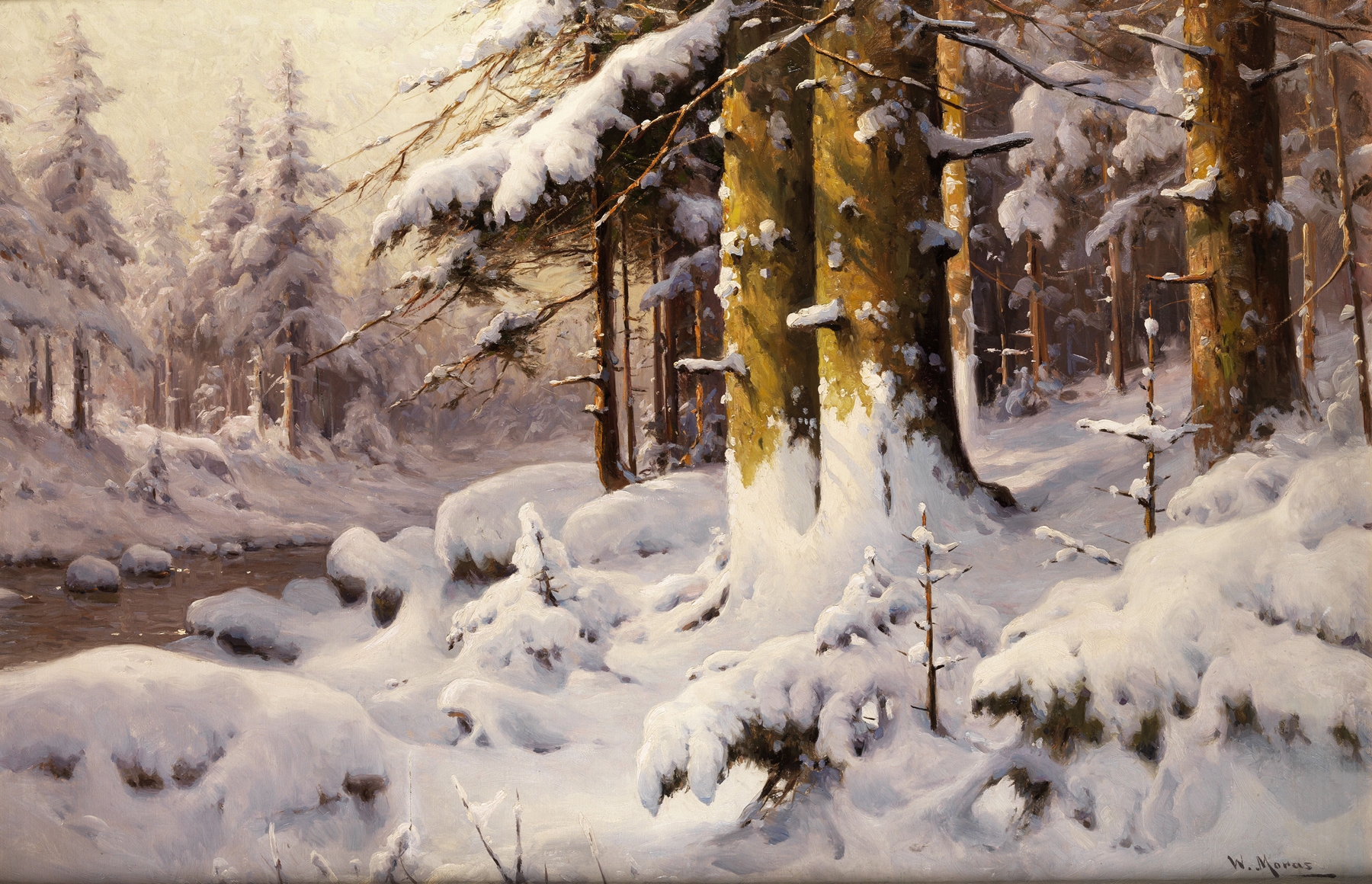
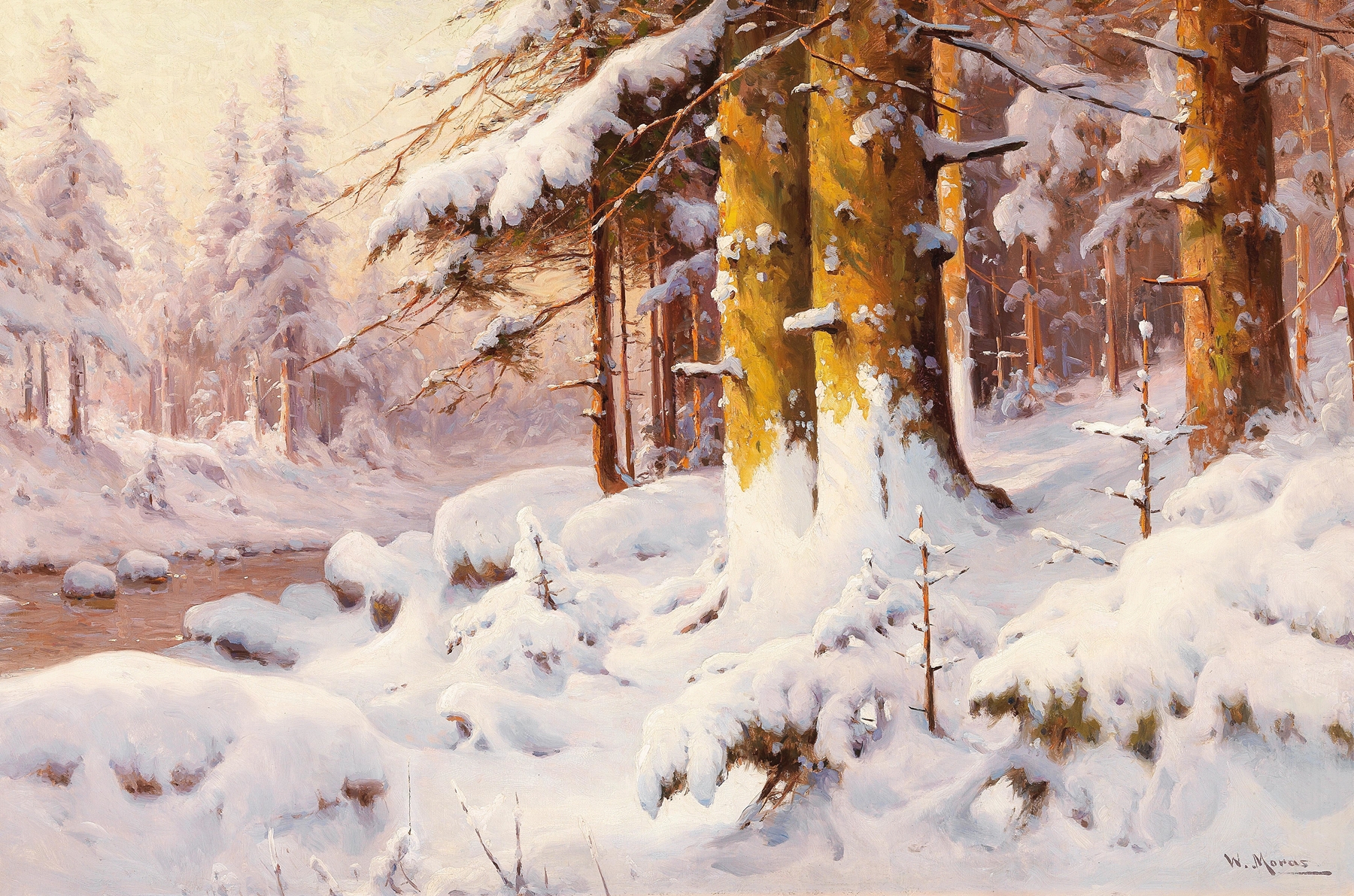
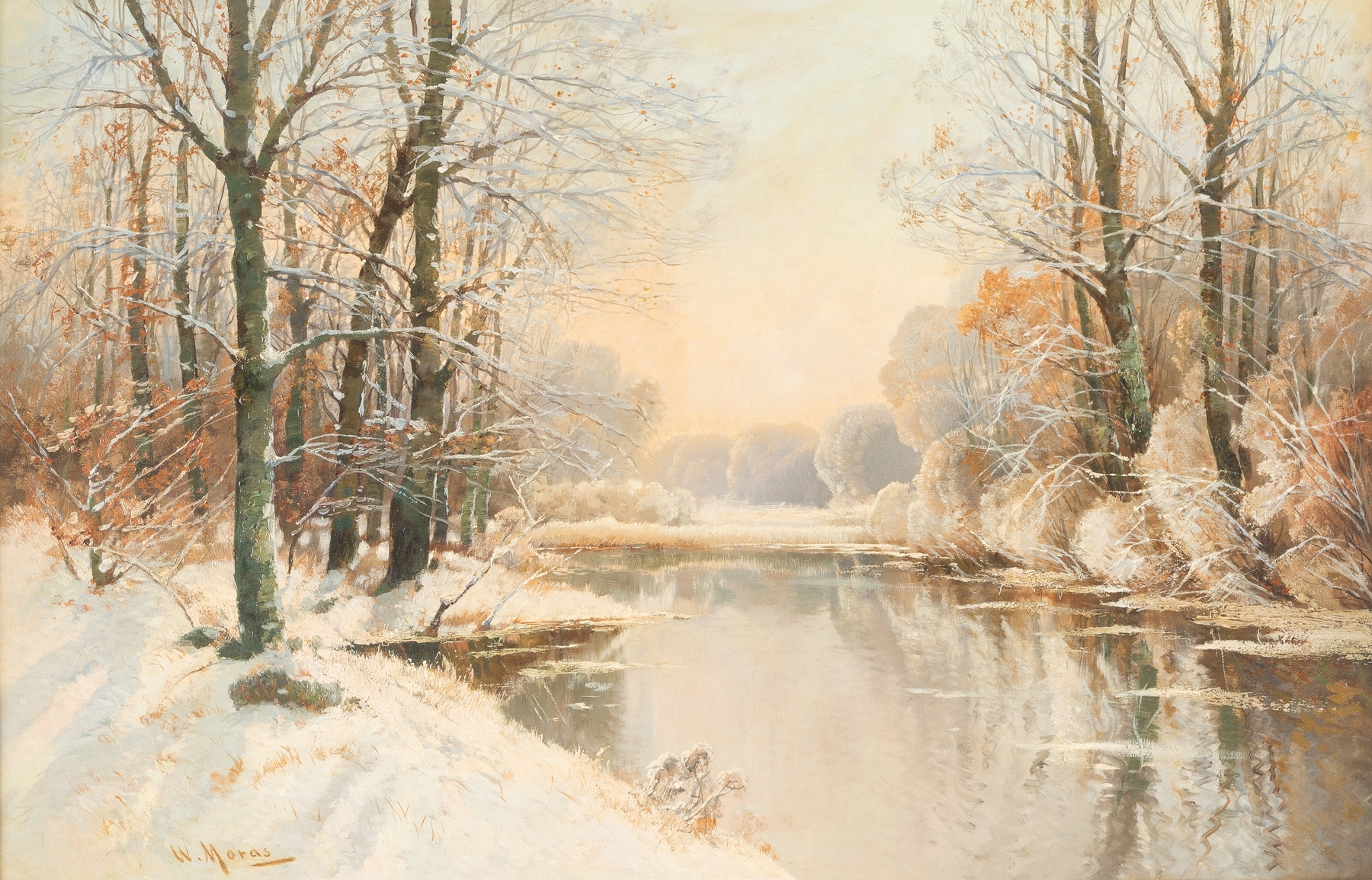
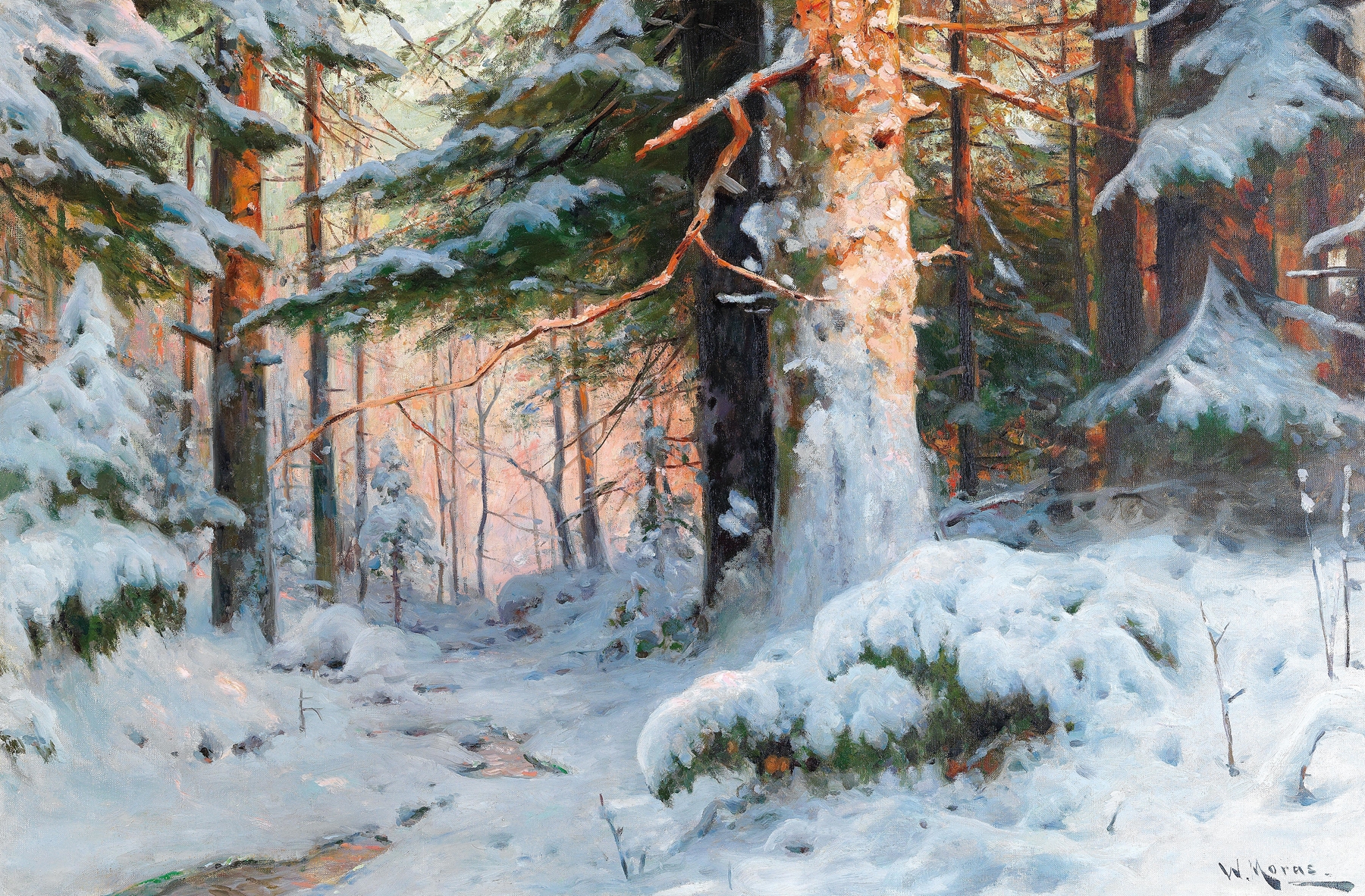
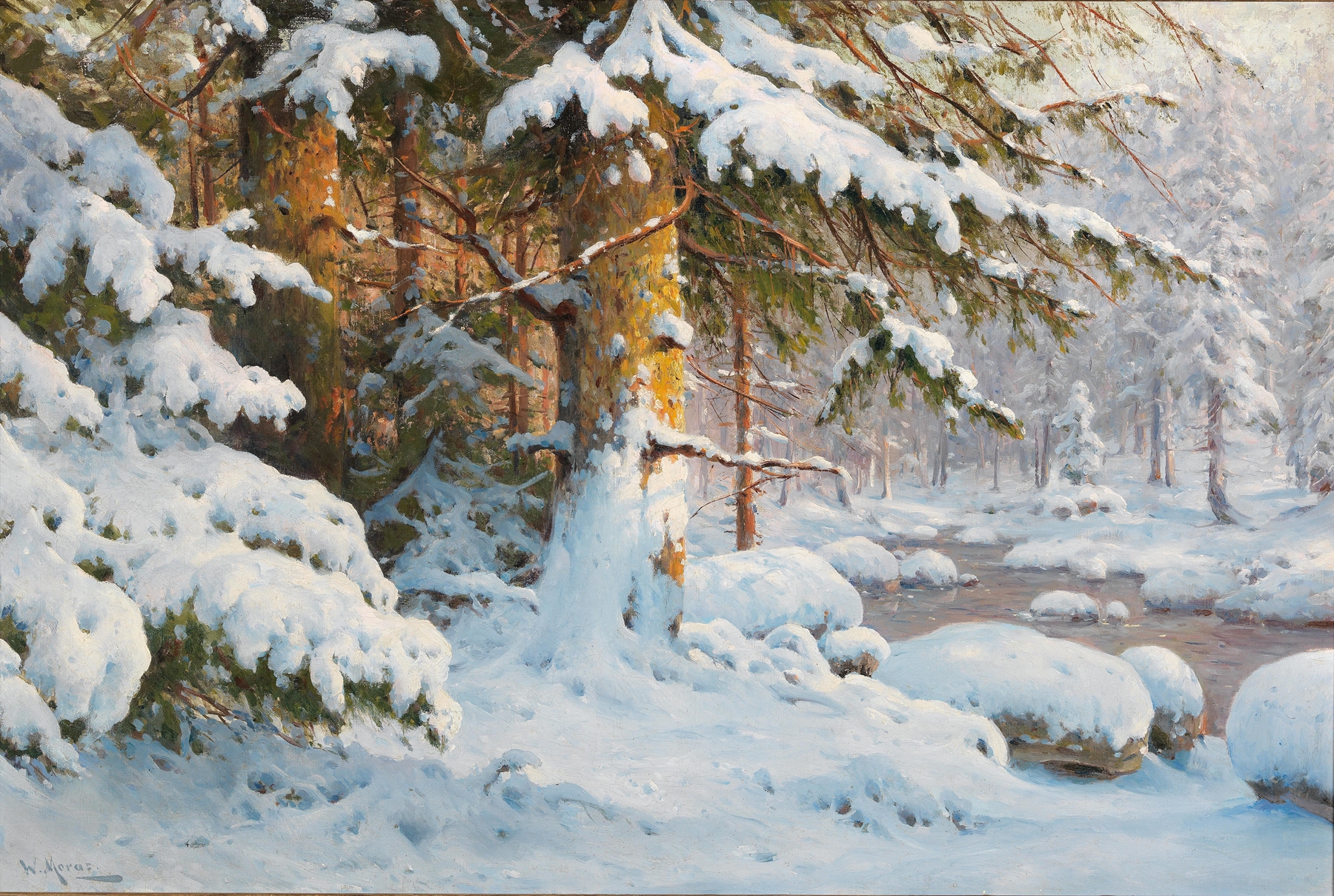
What if beauty was never meant to be finished? The realms of nature and art weave together in a delicate dance, inviting contemplation of impermanence and reflection. Look to the center, where a hauntingly serene winter landscape unfolds before you. The trees, cloaked in glistening snow, stretch their bare branches towards a pale sky, their silhouettes a stark contrast against the soft whiteness.
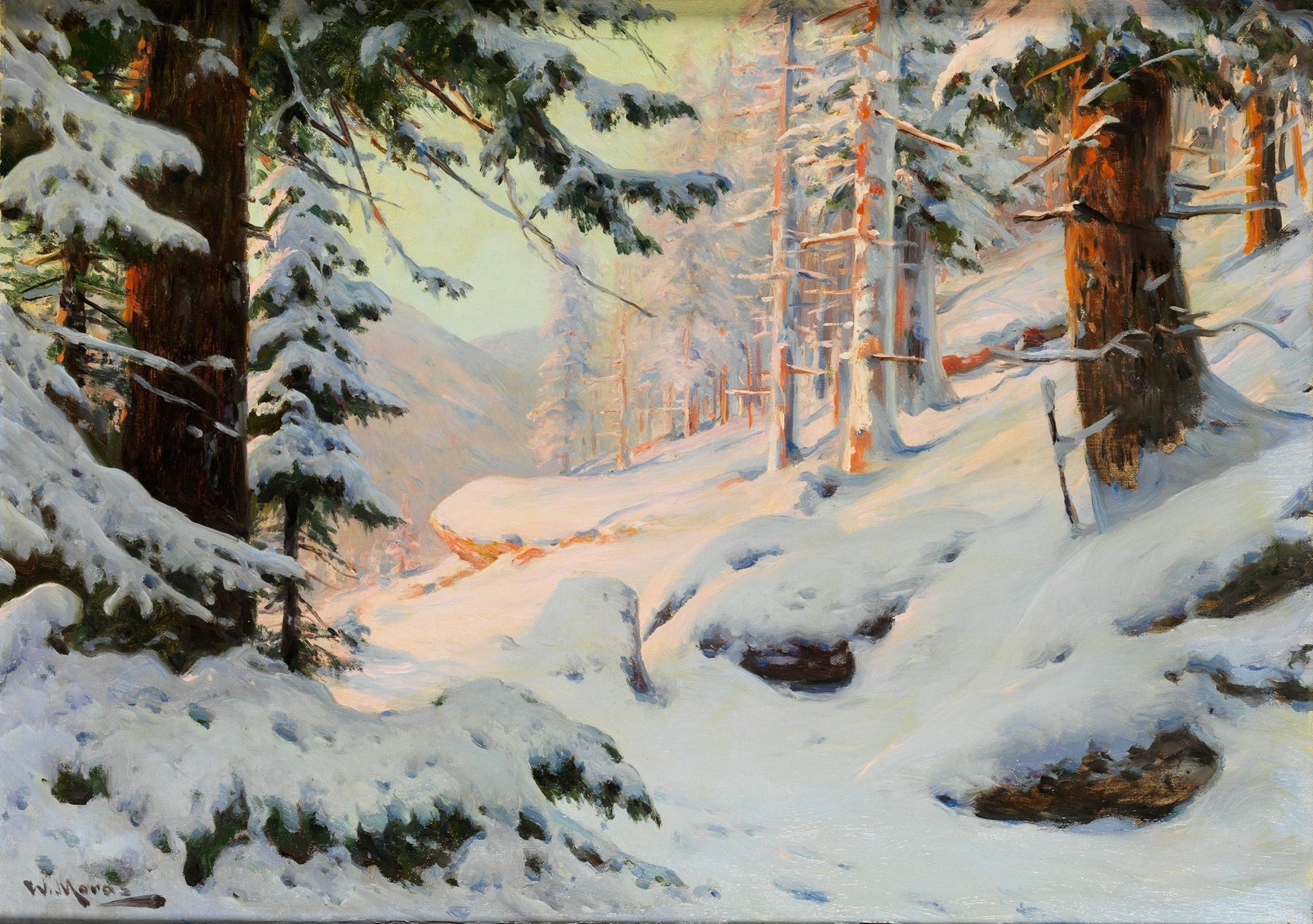
Notice how the light filters through the branches, casting intricate shadows on the ground, creating a play of darkness amidst the purity of snow. The cool blues and muted grays evoke a tranquil stillness, while hints of warmer tones suggest the lingering presence of life beneath the frost. Amidst this stillness, small details pulse with life’s quiet rhythms. The delicate texture of the snow, with its glimmering crystals, hints at the ephemeral nature of beauty—a reminder that even the most serene moments are transient.
The juxtaposition of the stark winter scene with the gentle warmth of the light suggests a profound harmony between solitude and connection, embodying the silence that often accompanies reflection. Walter Moras likely created Winterwald during a time when nature's beauty captivated artists searching for ways to express emotional depths. Though the exact date remains unknown, Moras was active during the late 19th to early 20th centuries, a period of artistic exploration and the rise of Impressionism. His works often reflect a deep appreciation for the natural world, perhaps influenced by the Romantic movement's quest to capture the sublime in art.