Sommeridylle — History & Analysis
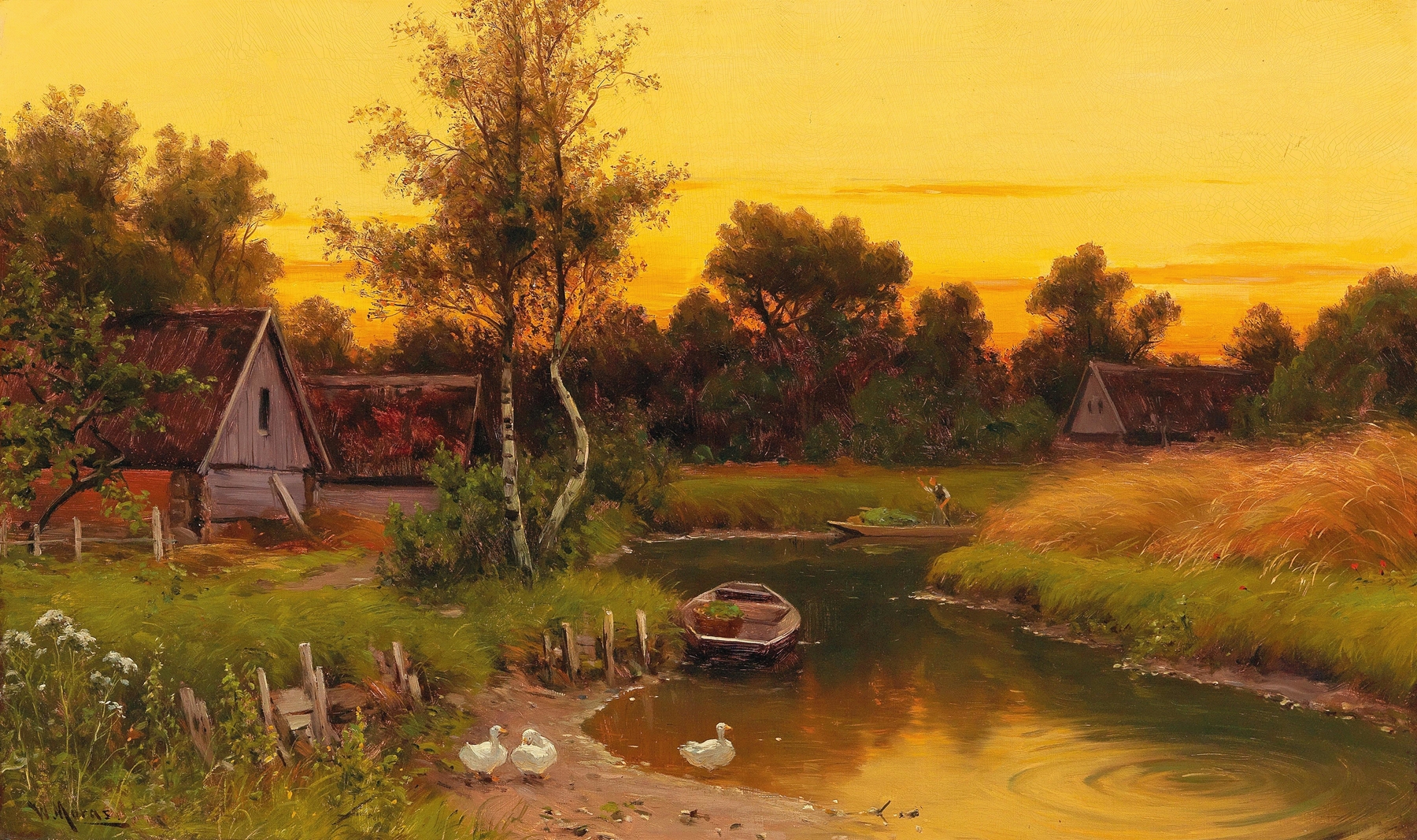
Is this a mirror — or a memory? The boundary between reality and nostalgia blurs in a landscape where time feels suspended, beckoning us to explore its depths. Look to the foreground, where a gentle stream winds its way through a lush meadow, reflecting the dappled light that filters through the foliage above. The vibrant greens of the grass contrast beautifully with the soft blues of the water, while hints of wildflowers punctuate the scene with bursts of color.
Notice how the composition draws your eye along the curve of the stream, guiding you deeper into the idyllic setting, inviting you to linger in its tranquility. Yet beneath this serene surface lies a tension between the fleeting nature of joy and the weight of absence. The absence of figures suggests solitude, raising questions about who might have once inhabited this space. The interplay of light and shadow hints at the passage of time, suggesting that even in this pastoral paradise, moments are ephemeral and memories fade like the sunset.
The void left behind resonates, underscoring the contrast between the beauty of the scene and the inevitability of change. Moras created Sommeridylle during a time when the art community was exploring the concepts of Impressionism and Naturalism, seeking to capture the essence of fleeting moments. Though the exact date of this work is unknown, the artist’s dedication to depicting the tranquil beauty of the natural world reflects the broader cultural shift towards exploring landscapes that evoke emotion and memory. This piece stands as a testament to a moment in time that continues to resonate with viewers today.