Wintry forest landscape — History & Analysis
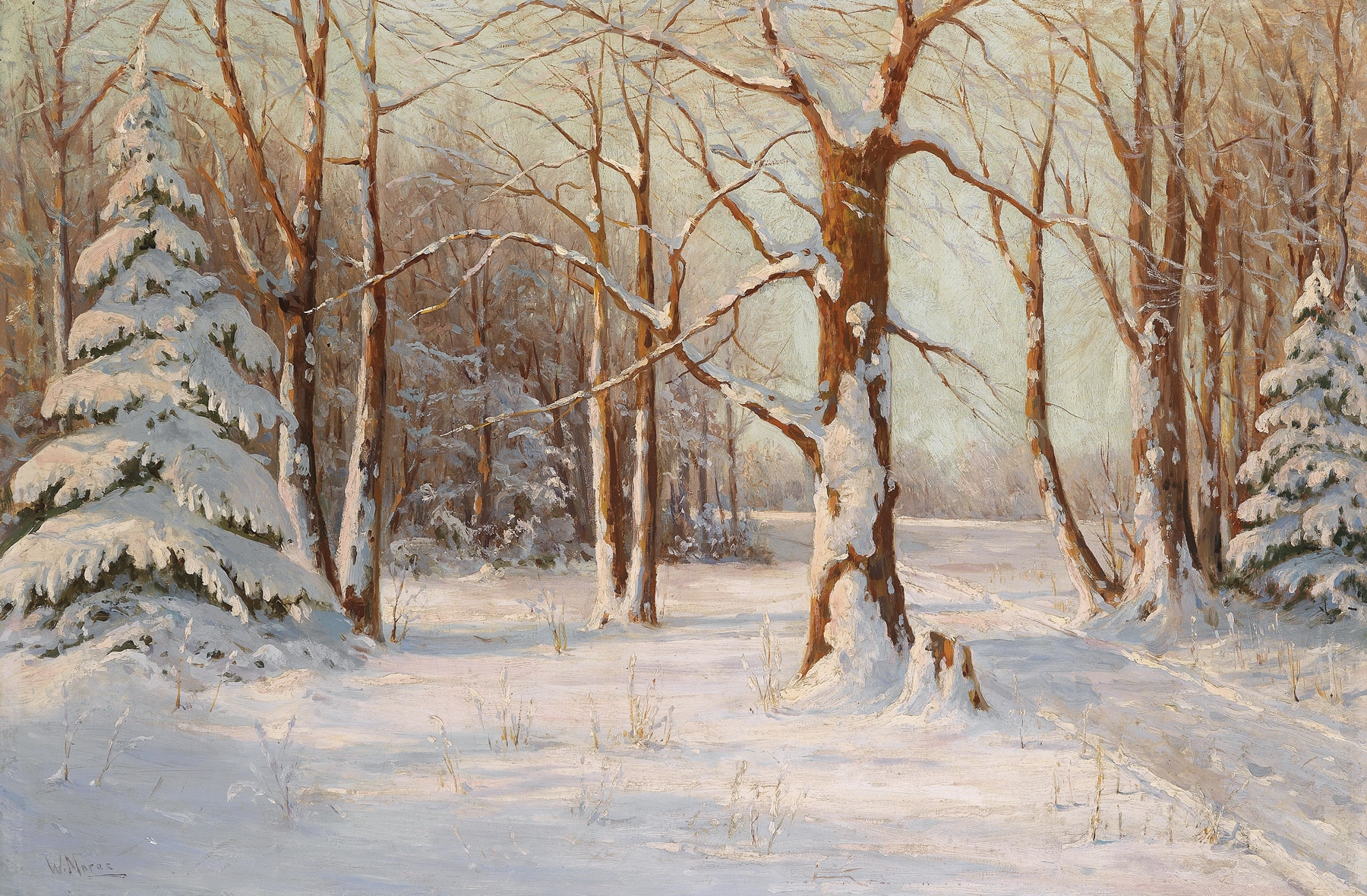
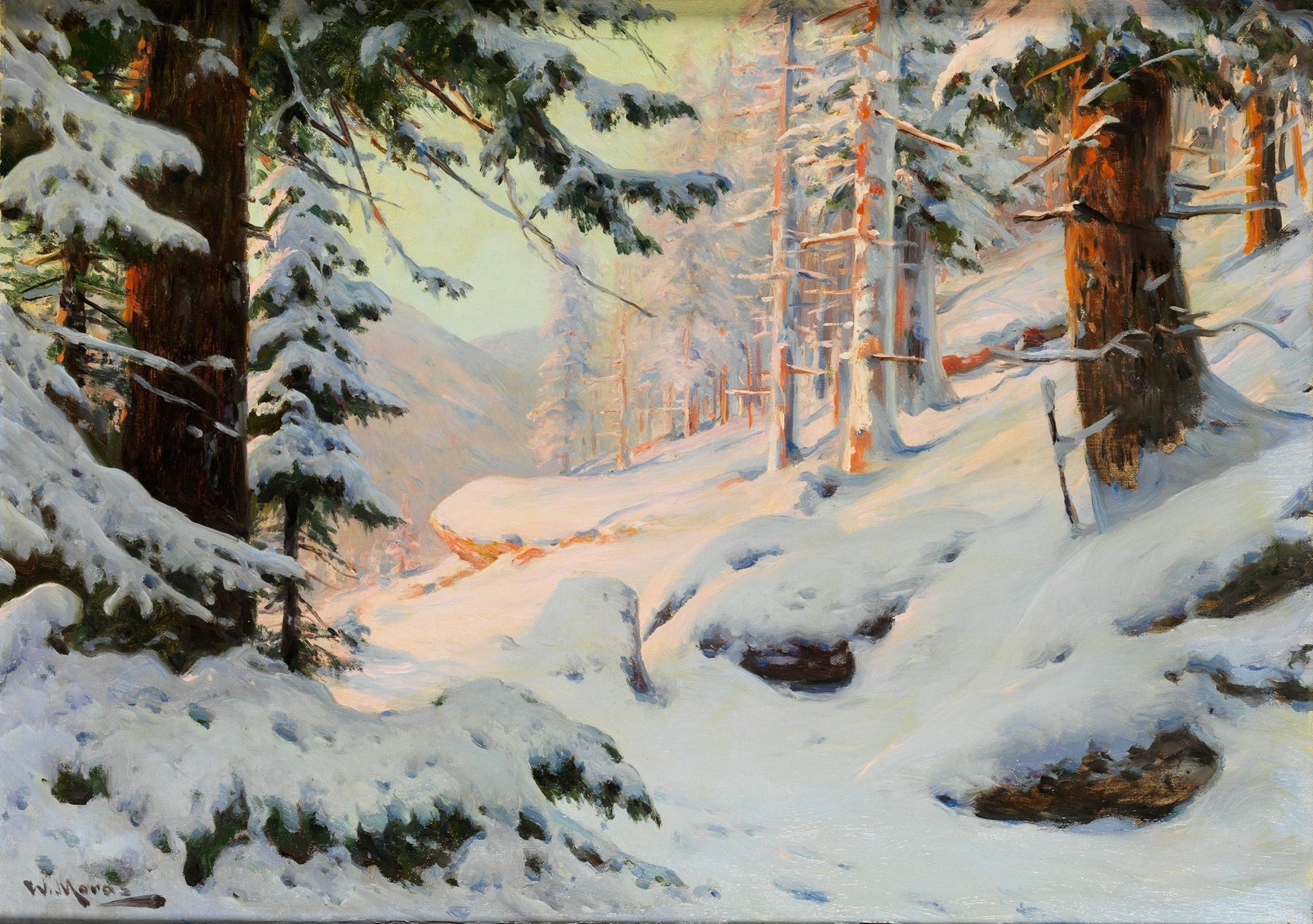
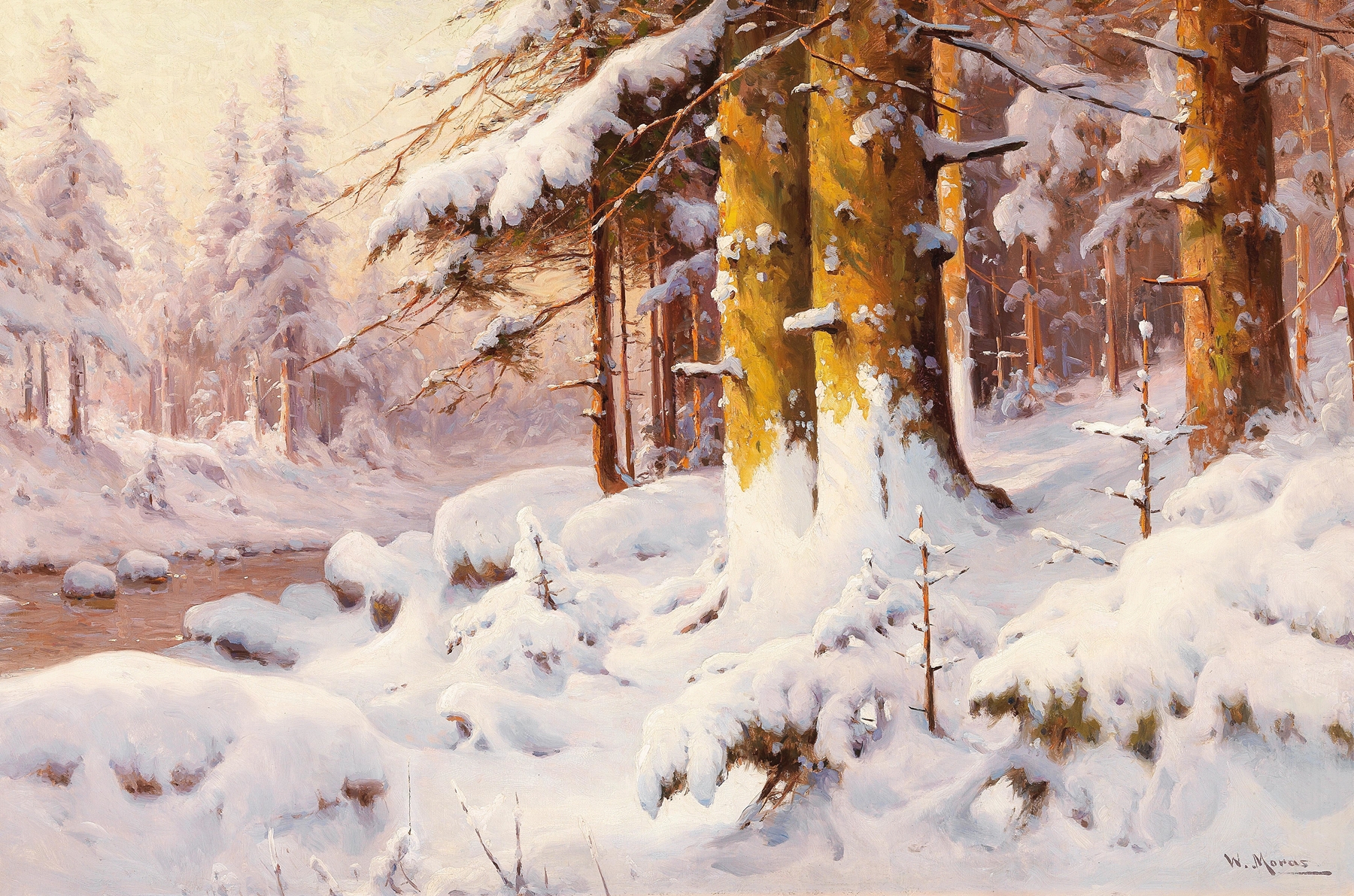
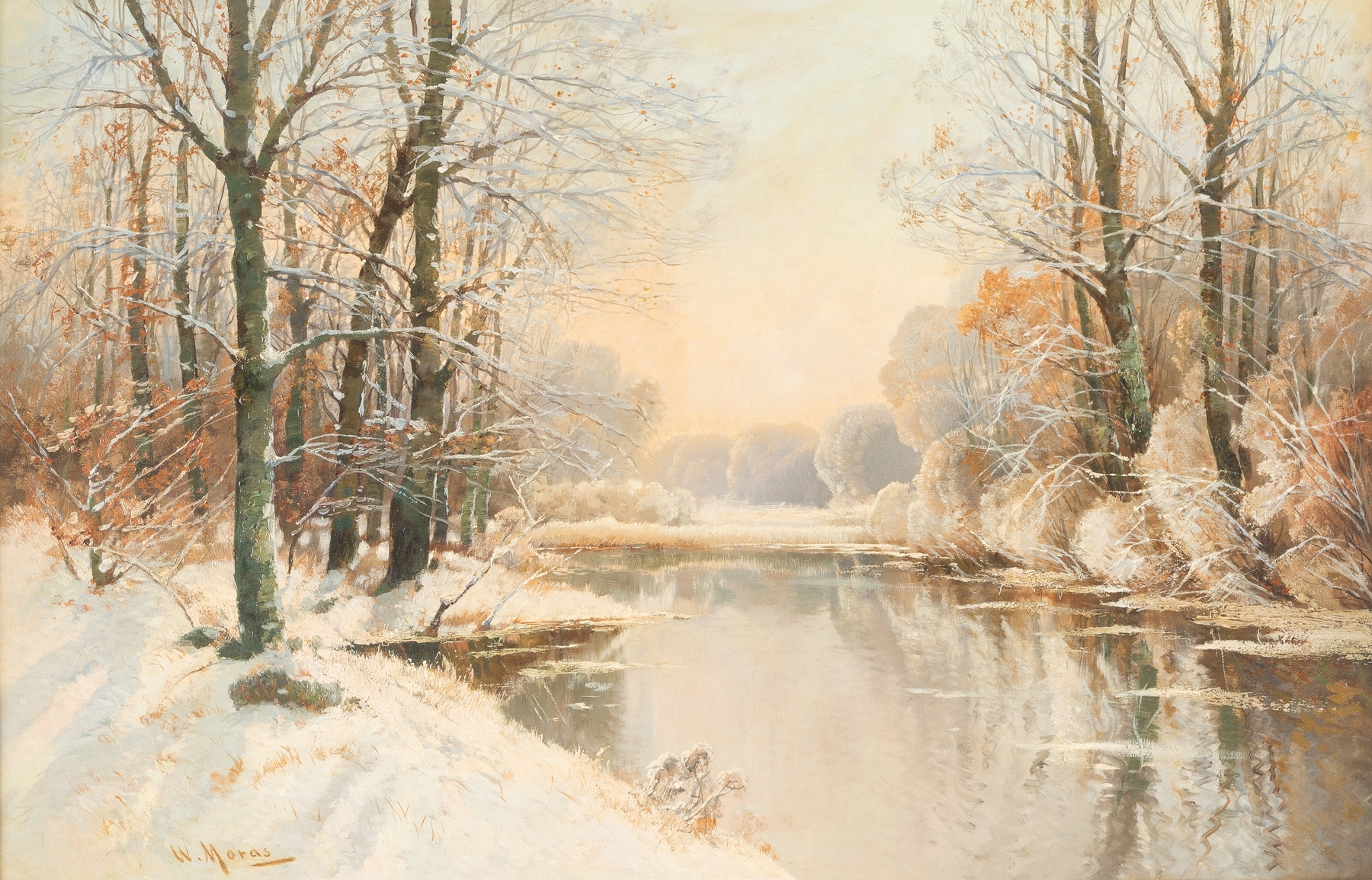
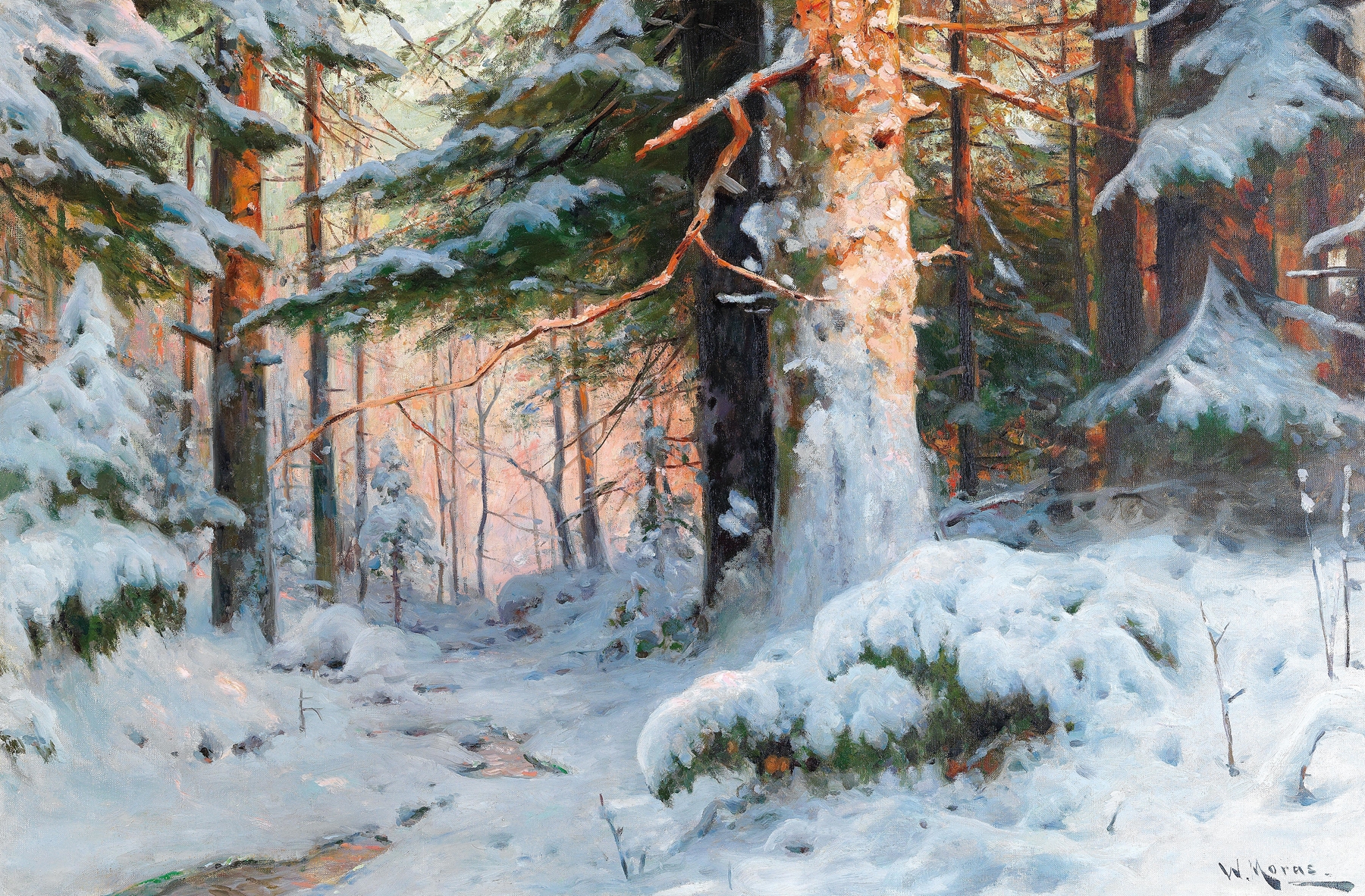
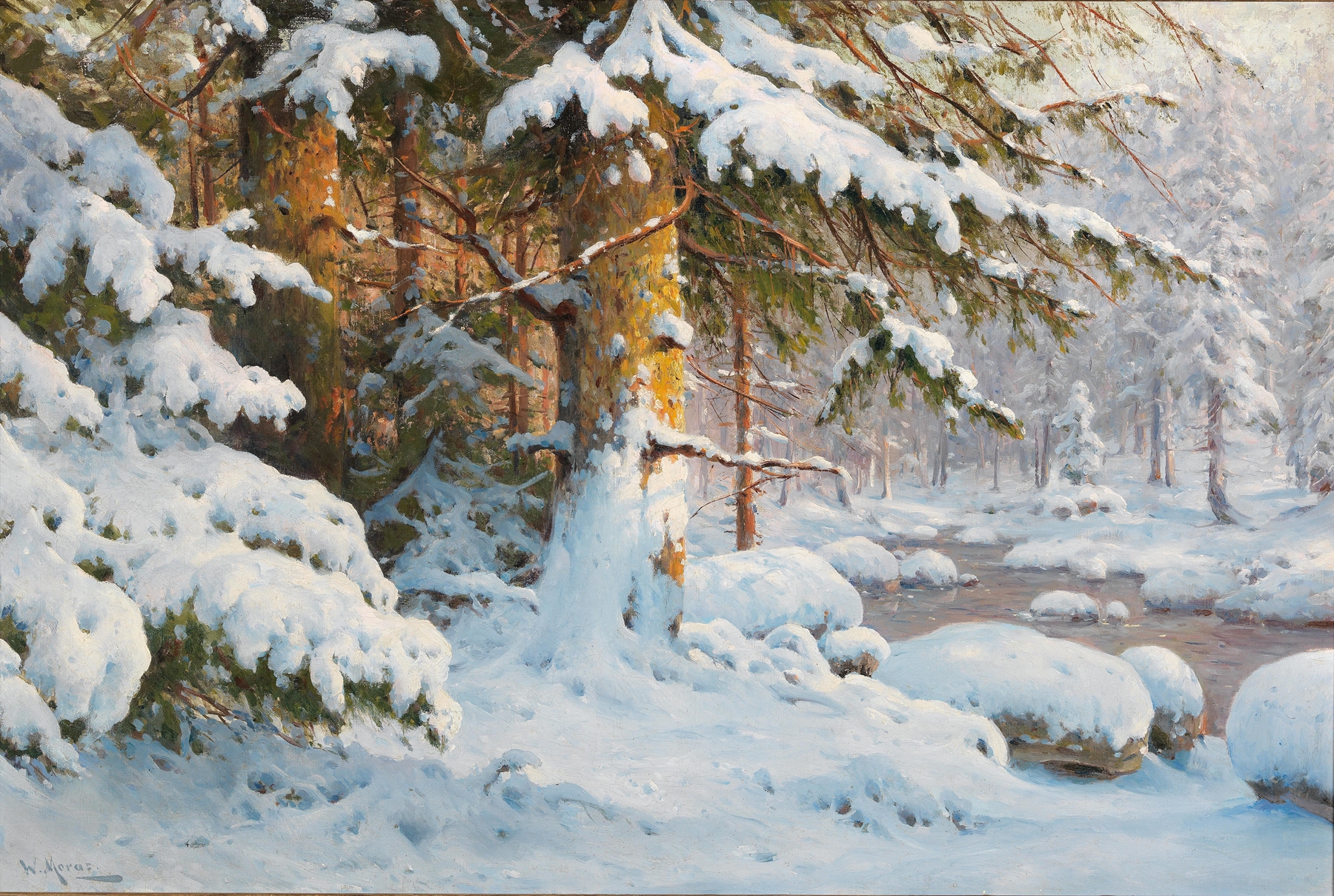
“Every brushstroke is a heartbeat remembered.” In the stillness of winter, a landscape breathes, each stroke of the brush echoing nature's pulse. Focus on the delicate interplay of whites and blues that dominate the canvas, inviting you to imagine the chill in the air. Look closely at the textured layers on the trees, where Moras's precise technique captures the weight of snow resting on slender branches. The subtle shifts in color draw your eye across the composition, tracing the contours of the forest floor and inviting you deeper into the tranquil scene.
Amidst this serene beauty, tensions arise—between the stillness of the snow and the implied movement of the trees swaying in an unseen breeze. There exists a contrast between the cold desolation of winter and the warmth of the light peeking through the branches, suggesting life and hope even in the harshest of seasons. The pathways through the snow whisper of journeys taken, each footstep a personal story within the larger narrative of the landscape.
Moras created this enchanting work during an era when artists were seeking to capture the essence of nature in its raw form, influenced by the Romantic movement's fascination with emotive landscapes. He painted it while living in Germany, a time marked by introspection and a growing appreciation for the sublime beauty of the natural world. This moment encapsulated both a personal exploration of solitude and a broader artistic shift towards expressing emotion through the environment.