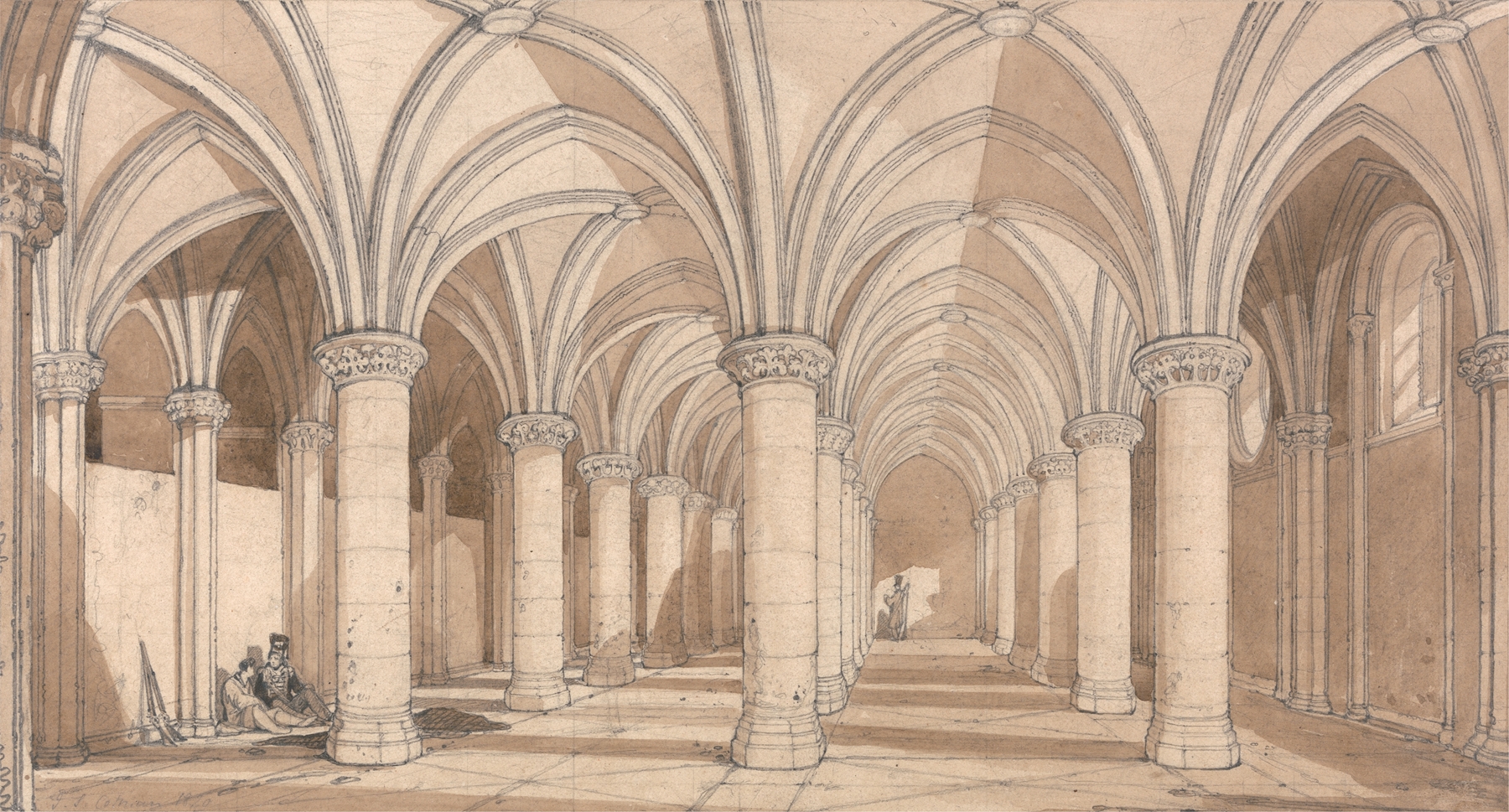
Interior of a Dormitory of the Ipswich Blackfriars at the End of its Period of Occupation by Ipswich School — History & Analysis
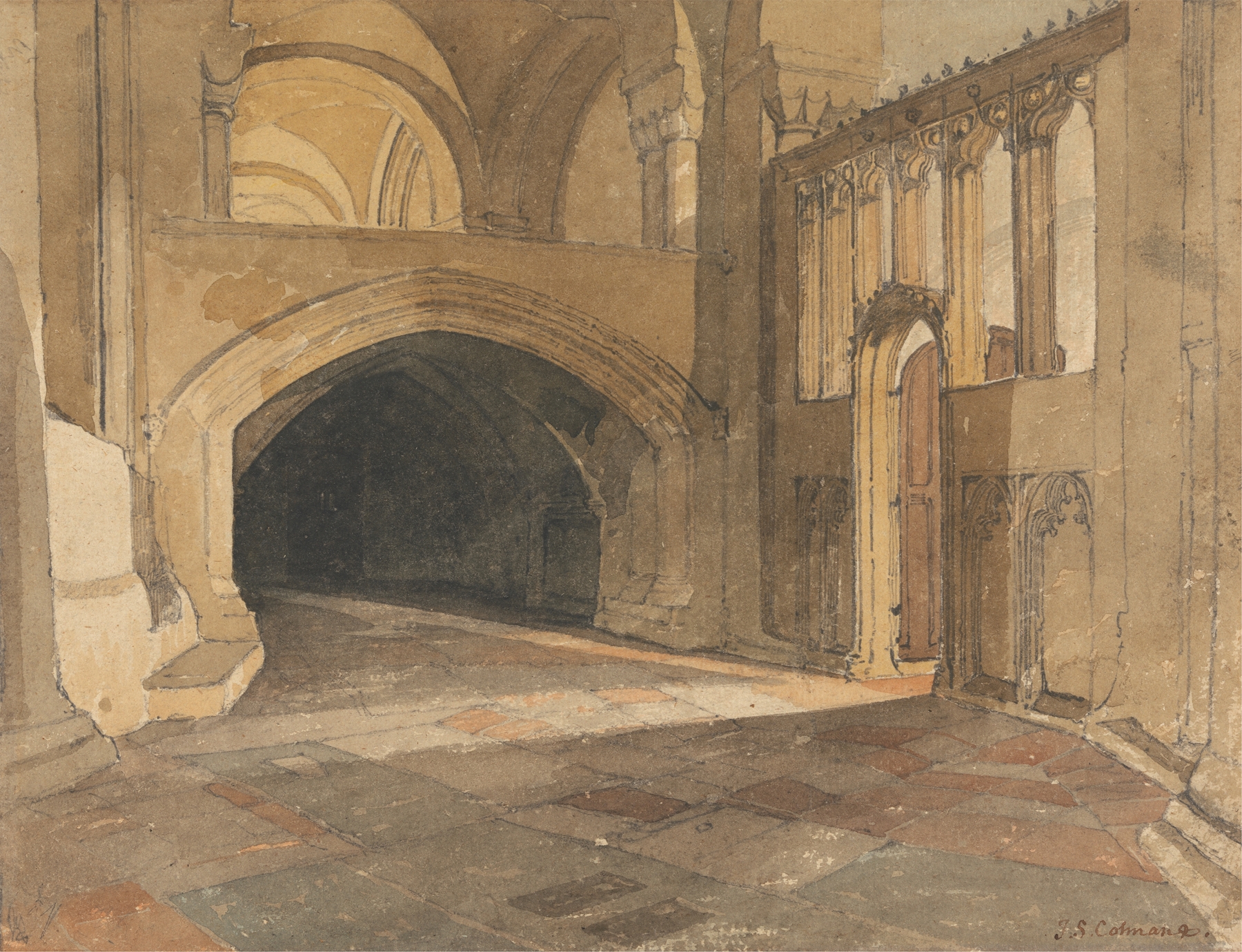
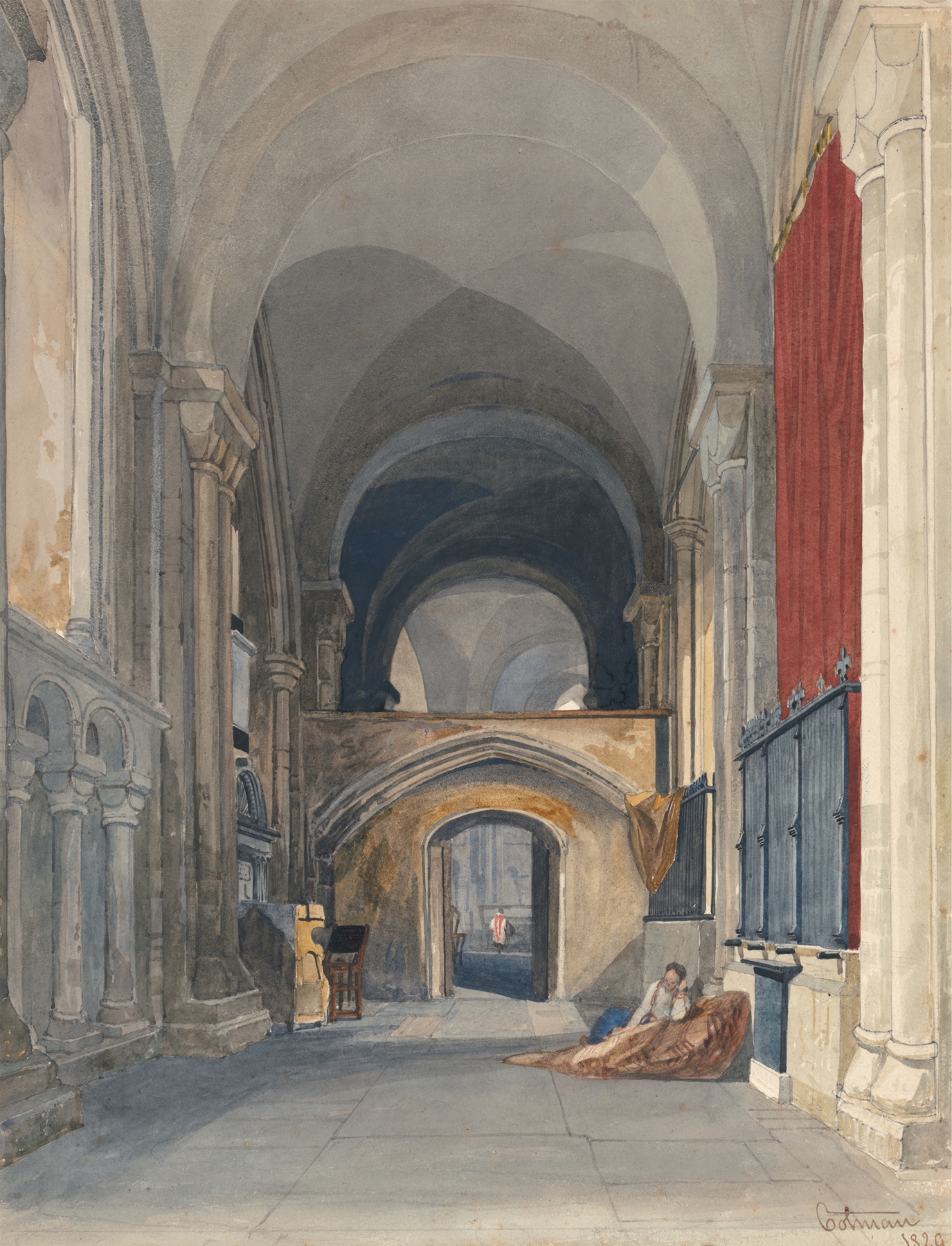
The air is thick with echoes of laughter and muted whispers, as sunlight filters through dusty panes, casting gentle light on the worn wooden floors. The remnants of an era linger in the faded grandeur of the room where young minds once thrived. Shadows stretch across the space, hinting at the stories of camaraderie and solitude etched into the very walls. Look to the left at the tall, arched windows, framed by delicate curtains that flutter softly with the breeze. Notice how the natural light magnifies the warm tones of ochre and brown, creating a cocoon of melancholy beauty.
The arrangement of simple furniture speaks volumes—each table and chair strategically placed, inviting a sense of contemplation while also suggesting the absence of youthful exuberance. Beneath the surface, a tension surfaces between nostalgia and decay. The peeling paint symbolizes the passage of time, representing both the end of an institution and the legacy it leaves behind. A solitary desk in the corner stands empty, evoking the isolation felt by those who once occupied this space, while the cracked walls echo the laughter and debates that once filled the air.
This scene serves as a poignant reminder of impermanence and the bittersweet nature of cherished memories. John Sell Cotman painted this scene between 1838 and 1842, during a period when he was deeply engaged in capturing the essence of historical sites in England. As the Industrial Revolution reshaped the landscape, Cotman’s emphasis on the legacy of places like the Ipswich Blackfriars became a reflection of both personal and societal transitions. His work mirrors the artist's own exploration of identity within the shifting tides of a rapidly changing world.