Near Whitby, Yorkshire — History & Analysis
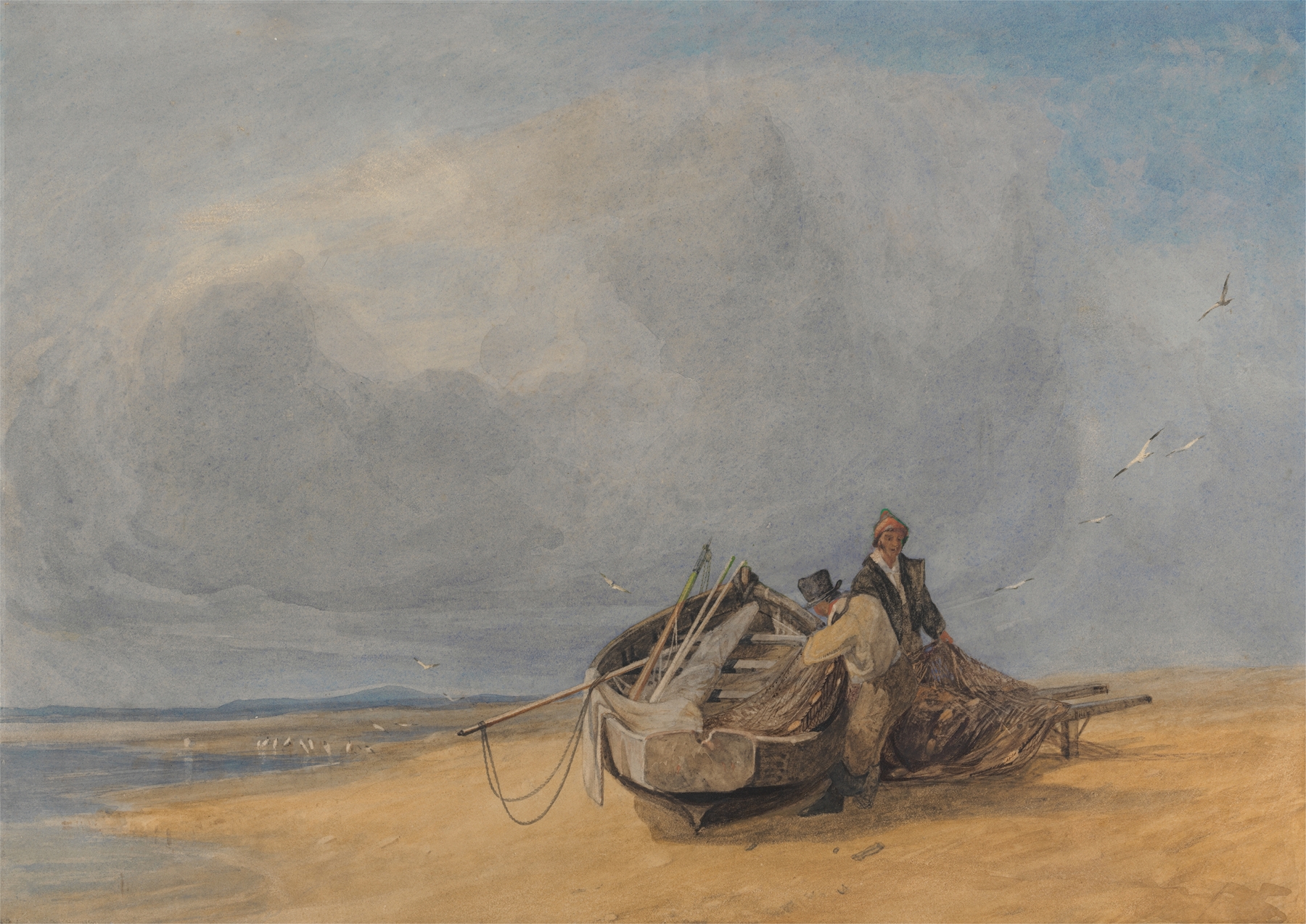
When did color learn to lie? In a world where landscapes can whisper secrets of solitude, this painting invites us to explore the haunting beauty of emptiness. Look to the foreground, where a muted palette of browns and greys creates an expanse that seems both expansive and confining. The gentle rolling hills and the distant shoreline merge into a soft horizon, interrupted only by a sparse scattering of trees.
Notice how the clouds loom overhead, painted with strokes of white and blue, their presence both majestic and foreboding, as if they are guardians of this tranquil yet desolate scene. Delve deeper into the juxtaposition of the serene landscape and the palpable sense of isolation. The water, while calm, reflects the muted tones of the sky, creating a mirror that amplifies the emptiness, suggesting a world where nature stands still. Each brushstroke conveys a delicate tension; the artist captures a moment where beauty and desolation intertwine, leaving the viewer to ponder the stories hidden within the silence.
In 1814, John Sell Cotman was immersed in the exploration of watercolor as a medium, living in Norwich during a time when the Romantic movement was flourishing. His focus on the English landscape during this period illustrated a profound contemplation of nature, amid a shifting world that sought to understand itself through art. Cotman’s connection to his surroundings was not merely visual; it was deeply emotional, reflecting the complexities of life and the quiet moments that resonate within us all.