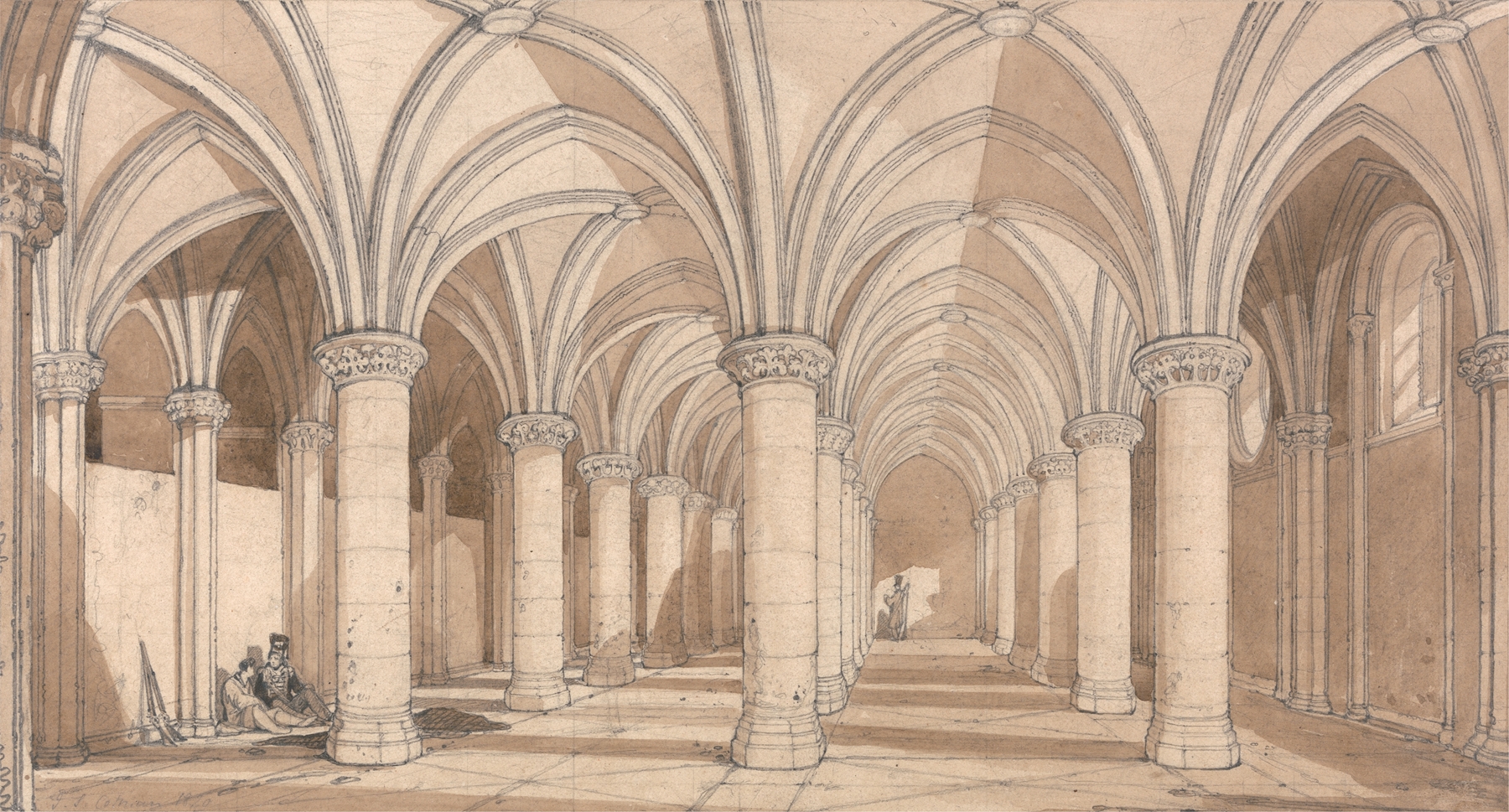
Norwich Cathedral; Interior of the North Aisle of the Choir, Looking East — History & Analysis
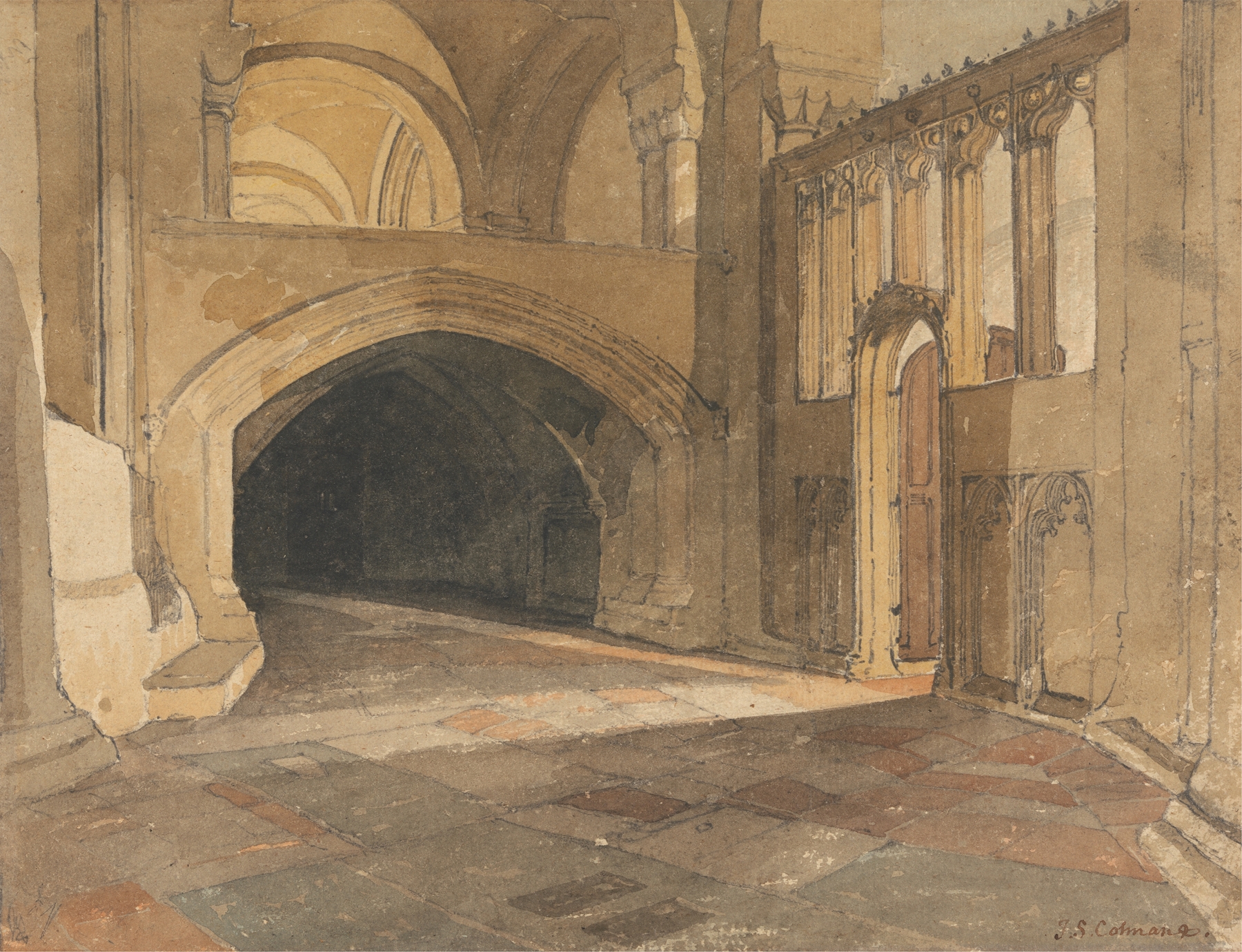
Can beauty exist without sorrow? In the solemn embrace of ancient stone and light, one is reminded of the legacies built through both joy and grief. Look to the left at the intricate columns rising majestically, each etched with the passage of time. Notice how the gentle light trickles through the stained glass, casting a kaleidoscope of colors that dance across the cool, gray surfaces of the cathedral's interior.
The soft interplay of light and shadow creates an ethereal atmosphere, inviting the viewer to explore the depth of the scene and the details hidden within its architecture. In this work, the contrast between the rigid grandeur of the stone and the fluidity of light suggests the tension between permanence and transience. Each column stands as a testament to human endeavor, while the filtered sunlight symbolizes the fleeting essence of life that graces this sacred space. The perspective chosen magnifies the cathedral’s vastness, emphasizing both the awe it inspires and the silence it demands, evoking a sense of reverence for the stories held within its walls.
In 1829, during a time of significant artistic exploration in England, the artist captured this view at Norwich Cathedral. Cotman was deeply influenced by the Romantic movement, which sought to express individual emotion and connection to nature. This work is a manifestation of his desire to bridge the past and present, reflecting the shifting tides of art and the enduring spirit of architectural heritage.