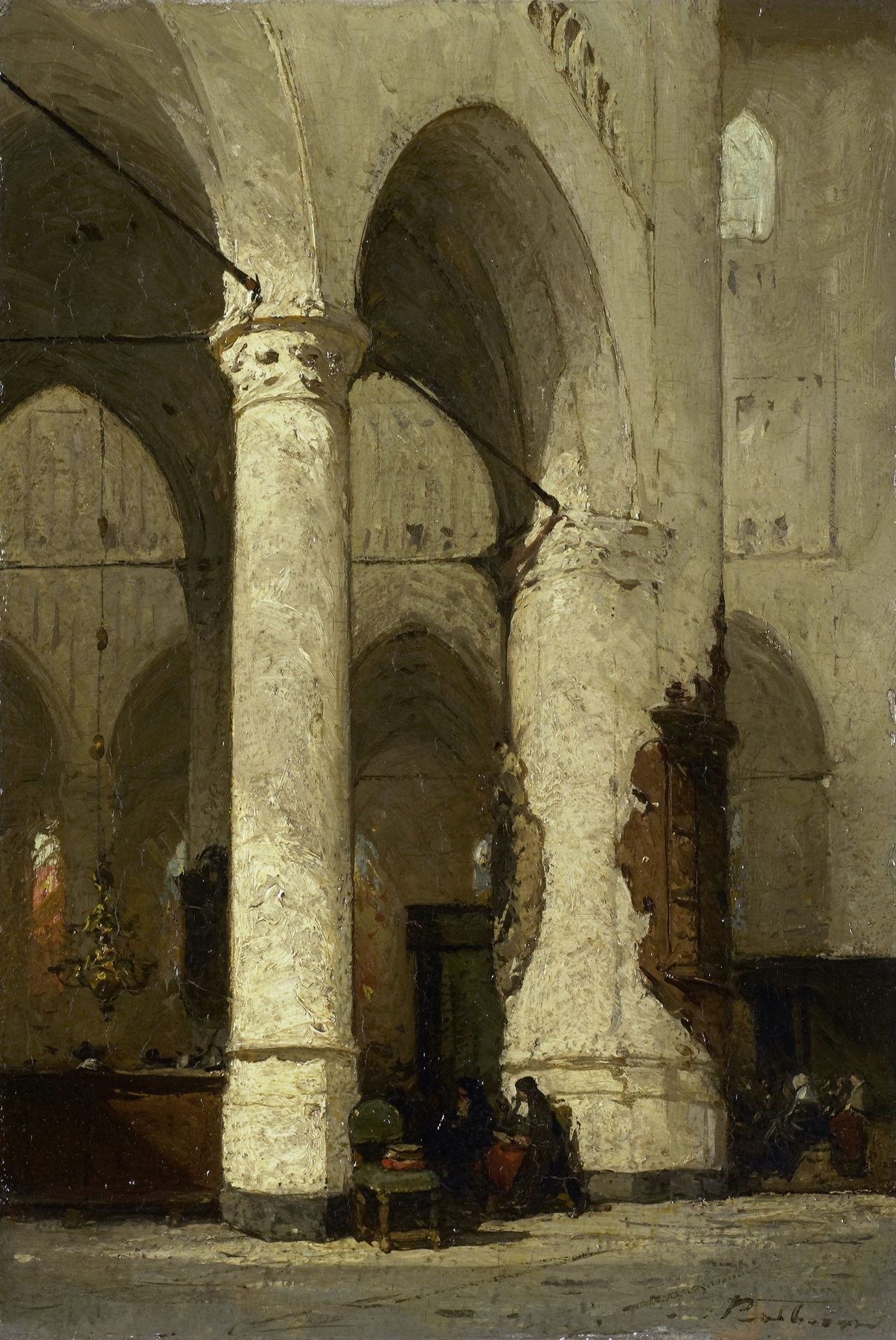
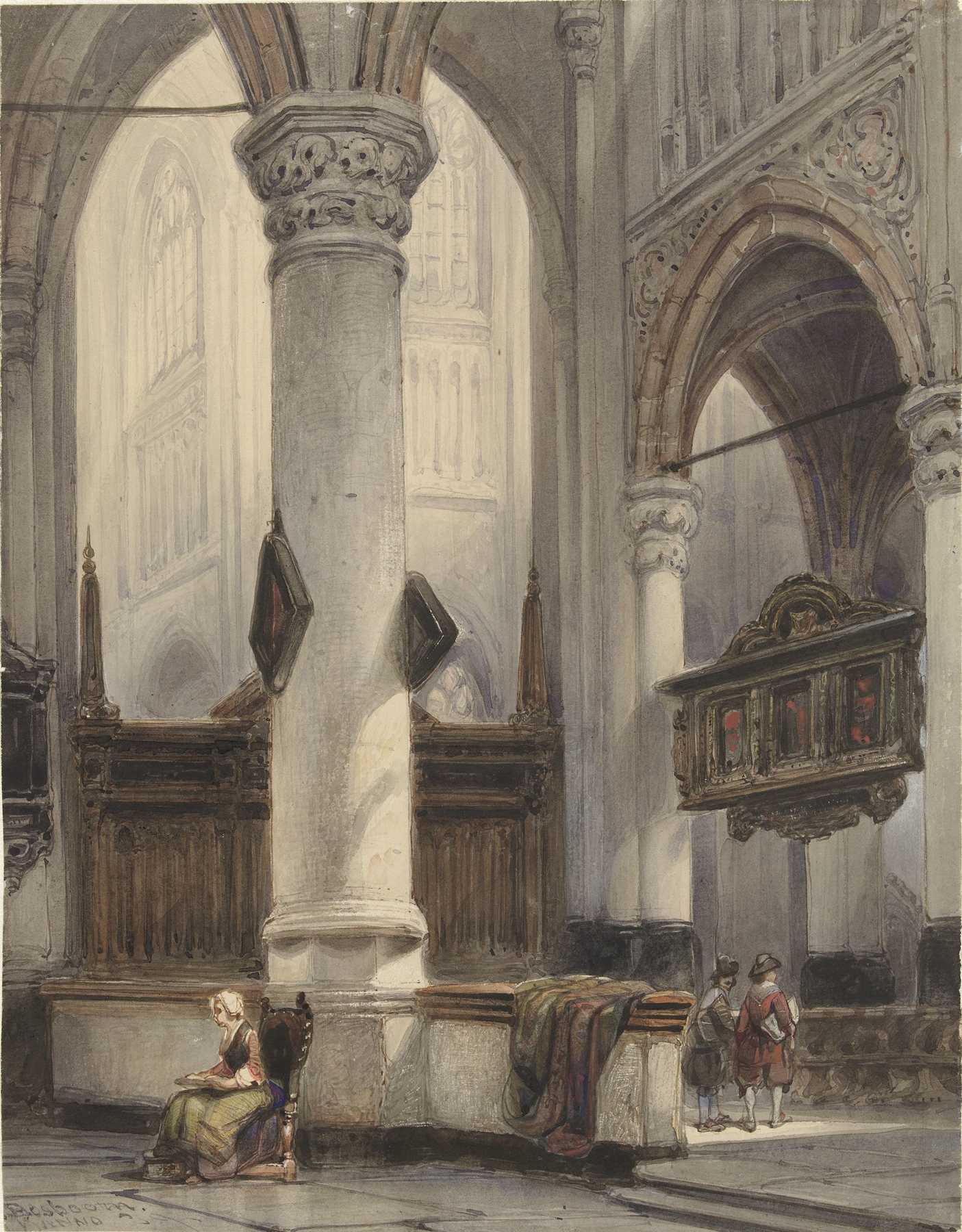
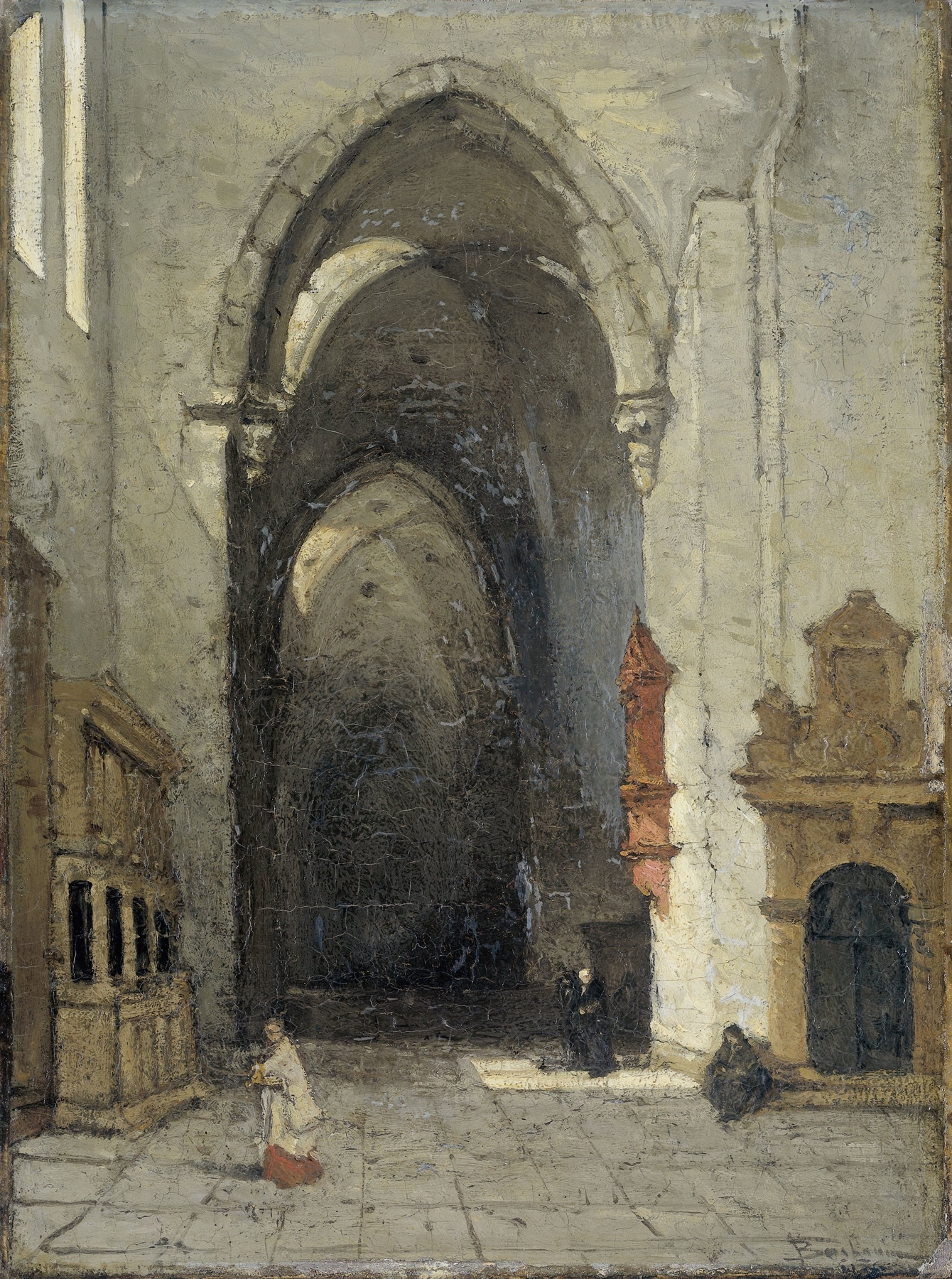
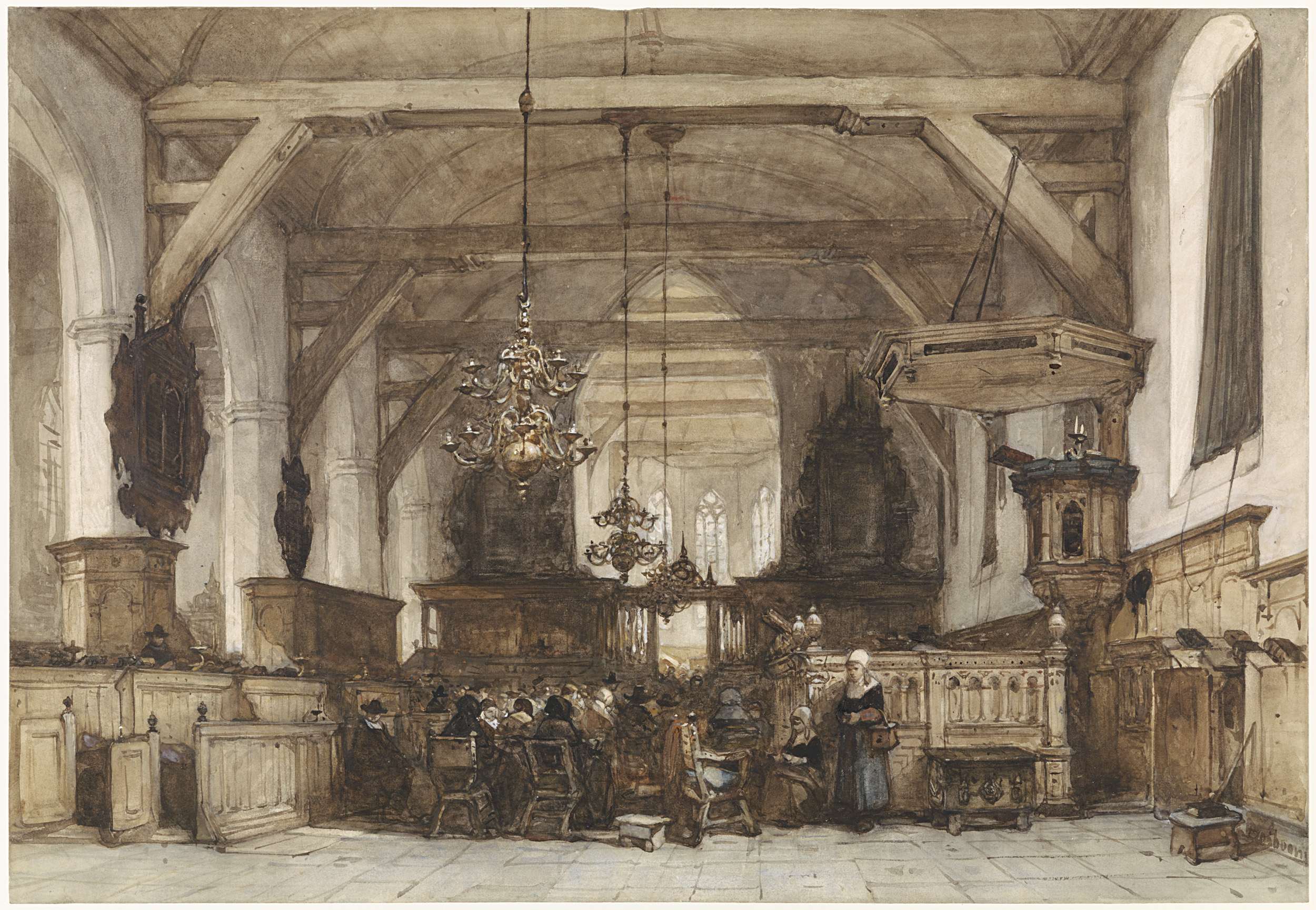
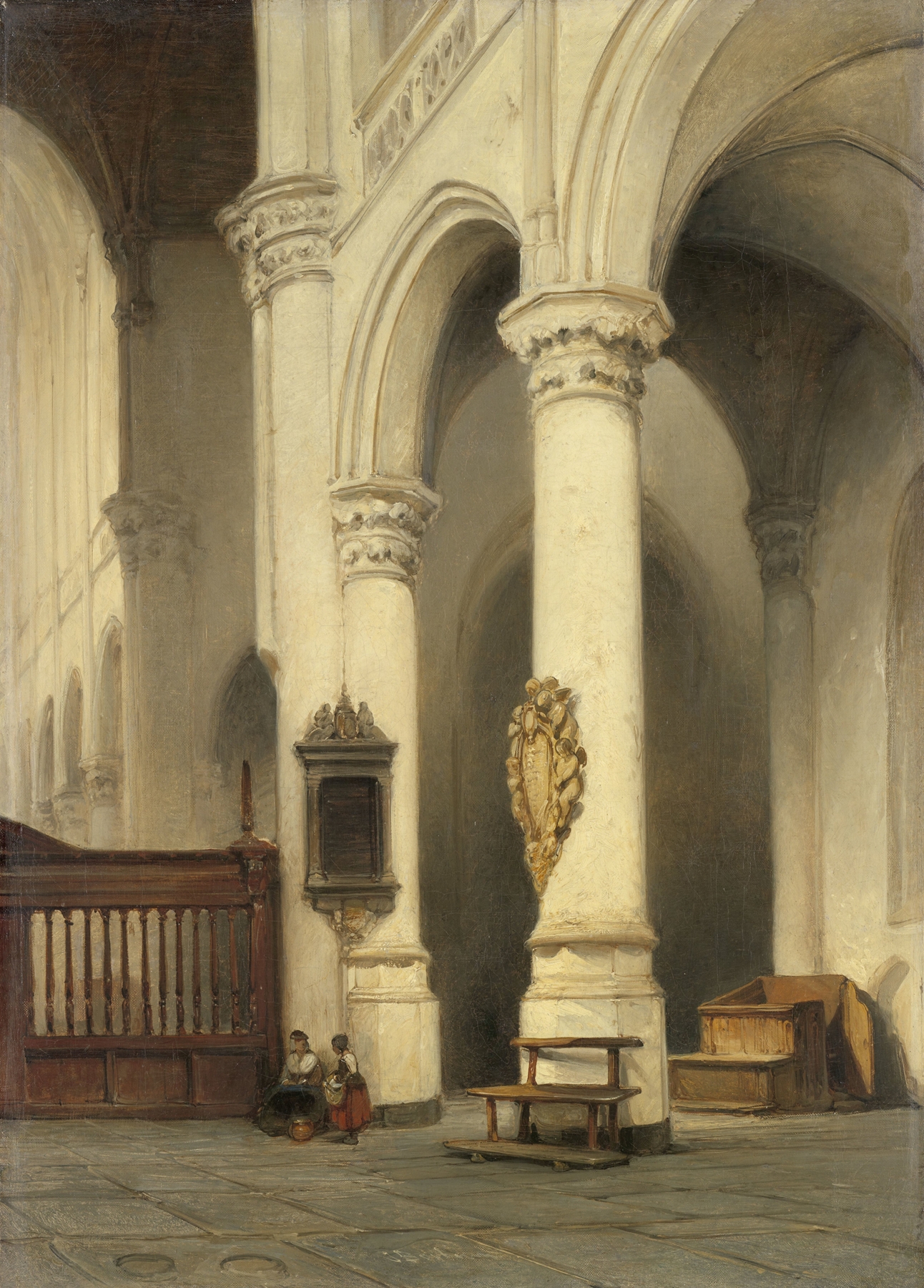
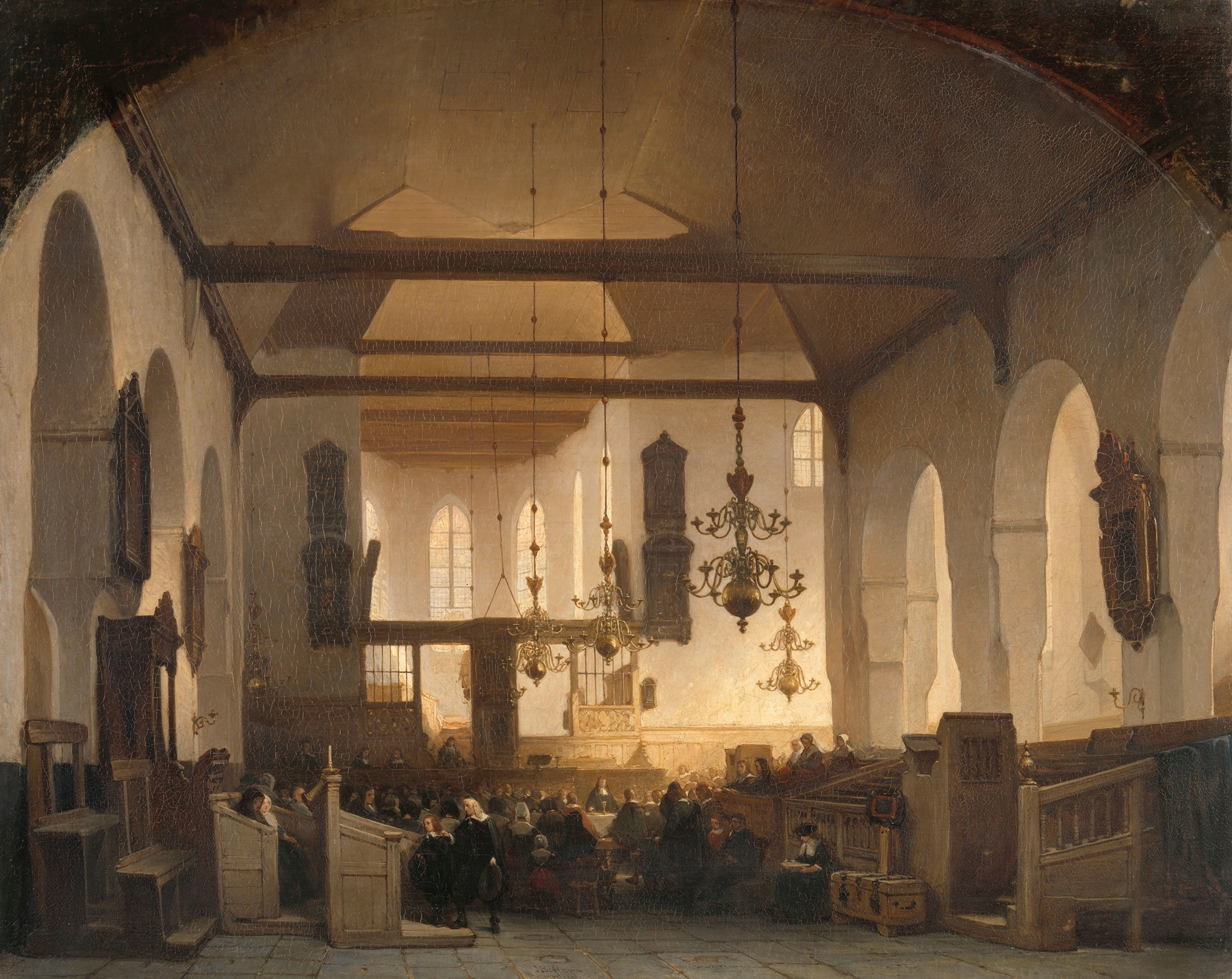
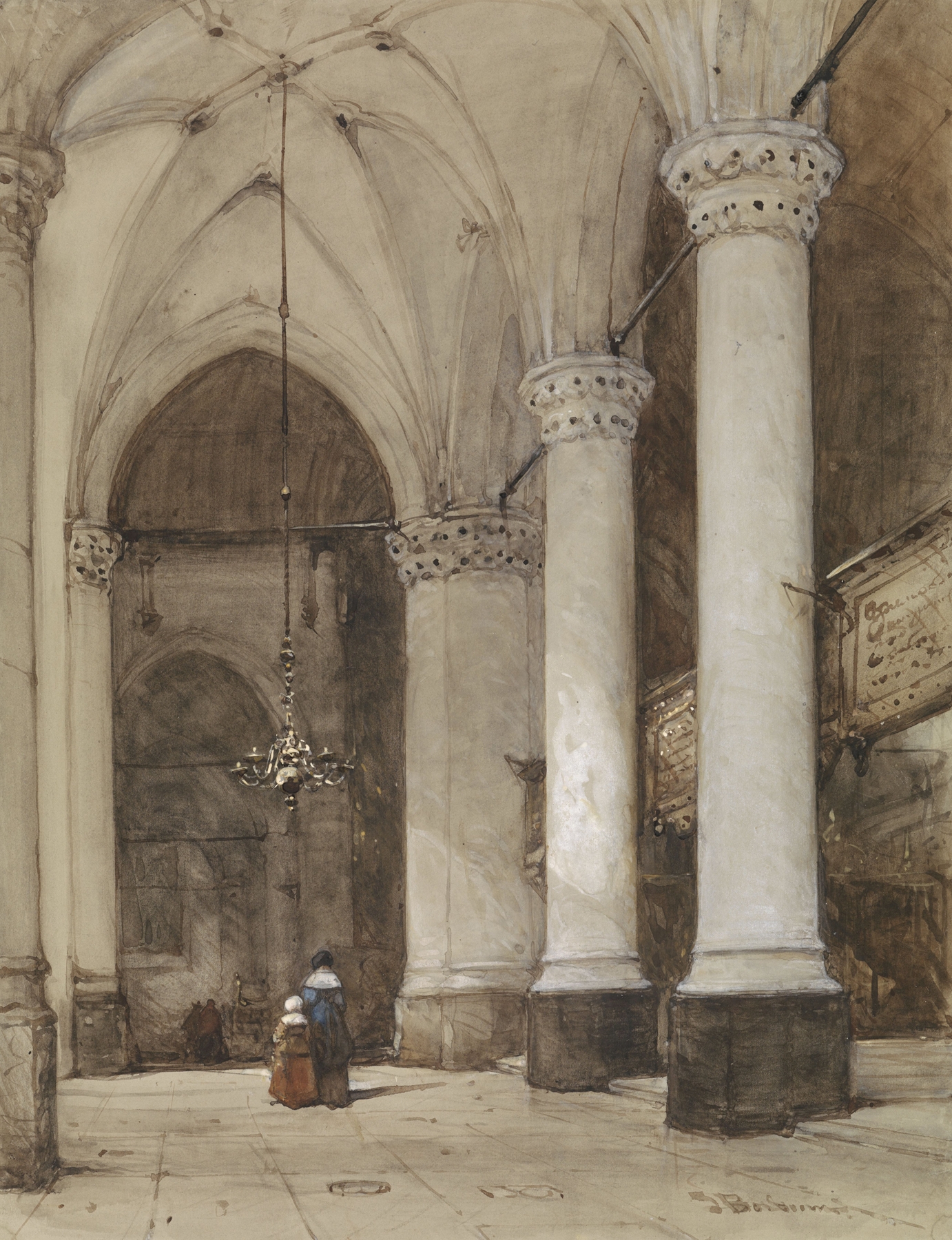
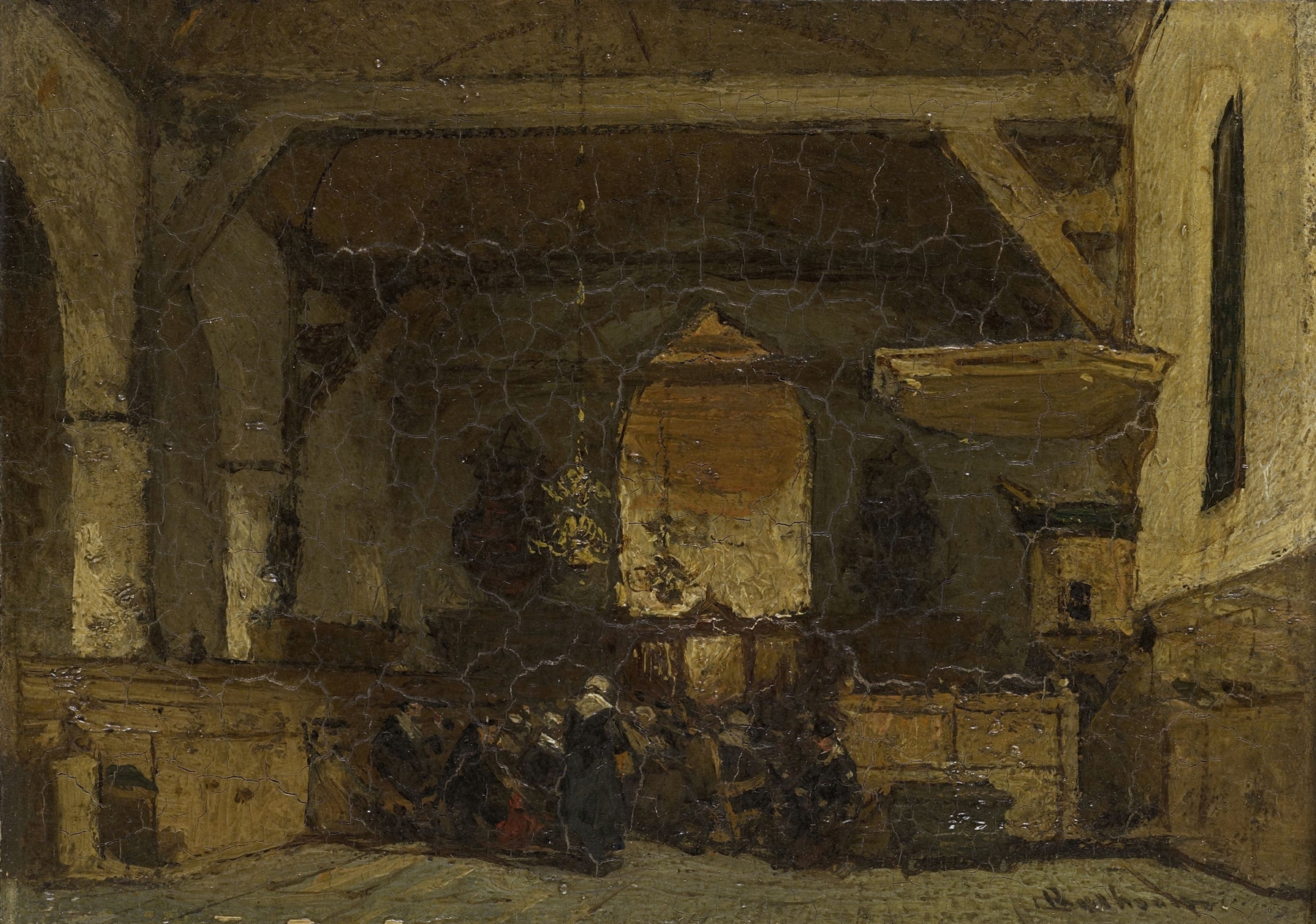
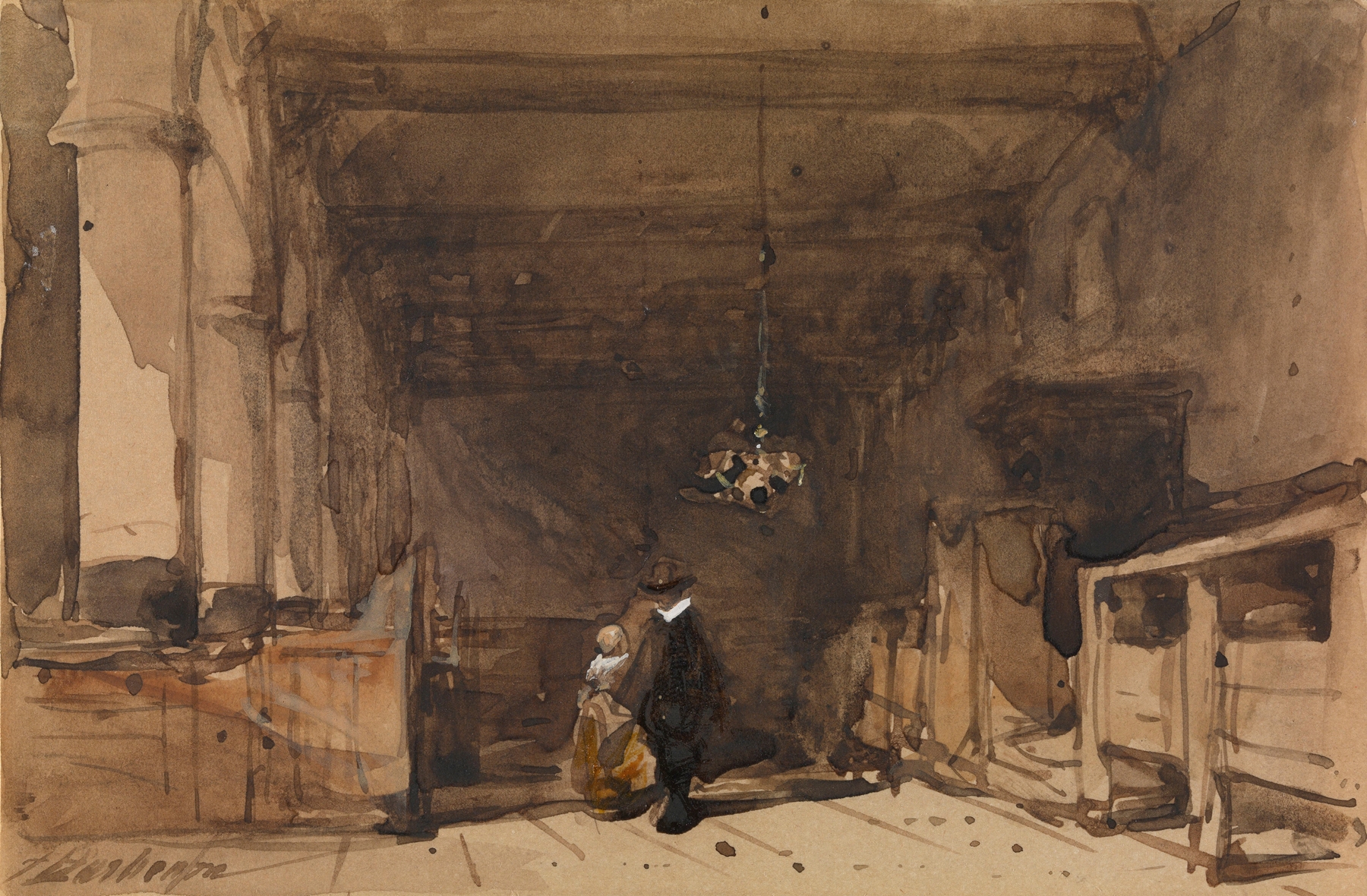
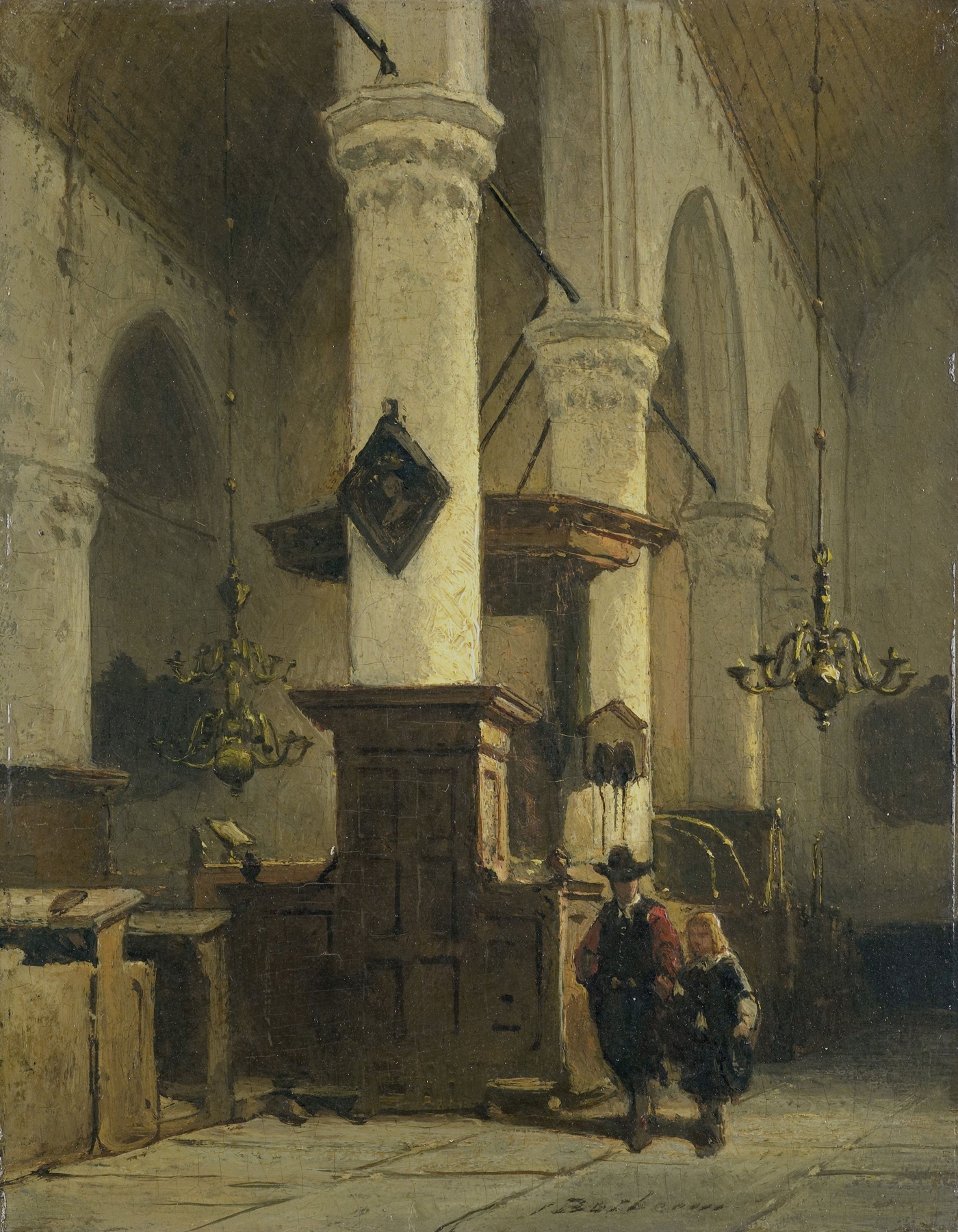
Interior of the Church of St Bavo in Haarlem — History & Analysis
Could a single brushstroke hold eternity? In the quiet solitude of a church, where time seems suspended, the weight of sorrow and sacredness intertwine. Look to the left at the intricate detailing of the arches, each curve echoing whispers of prayers once spoken. The soft light filtering through stained glass illuminates the dust motes, creating a golden haze that envelops the space.
Notice how the deep, rich hues of the wood paneling contrast with the cool tones of the stone, establishing a serene yet somber atmosphere that invites contemplation. Hidden within this depiction are the layers of grief and reverence that mark the human experience. The contrast between the towering architecture and the stillness of empty pews speaks to the absence of congregants, evoking a sense of loss amid the beauty. The interplay of shadow and light conjures a melancholic reflection on faith, solitude, and the passage of time—a reminder that even sacred spaces harbor echoes of longing.
Painted during the late 19th century, this work emerged from Bosboom’s deep engagement with his environment, reflecting a growing interest in realism and the spiritual dimensions of everyday life. At this time, he was establishing his reputation in the Netherlands, where the art world was shifting toward capturing the essence of modern life while grappling with the weight of tradition. As it graced the canvas, it expressed both personal and collective resonances of the human spirit intertwined with the architecture of devotion.