Irises — History & Analysis

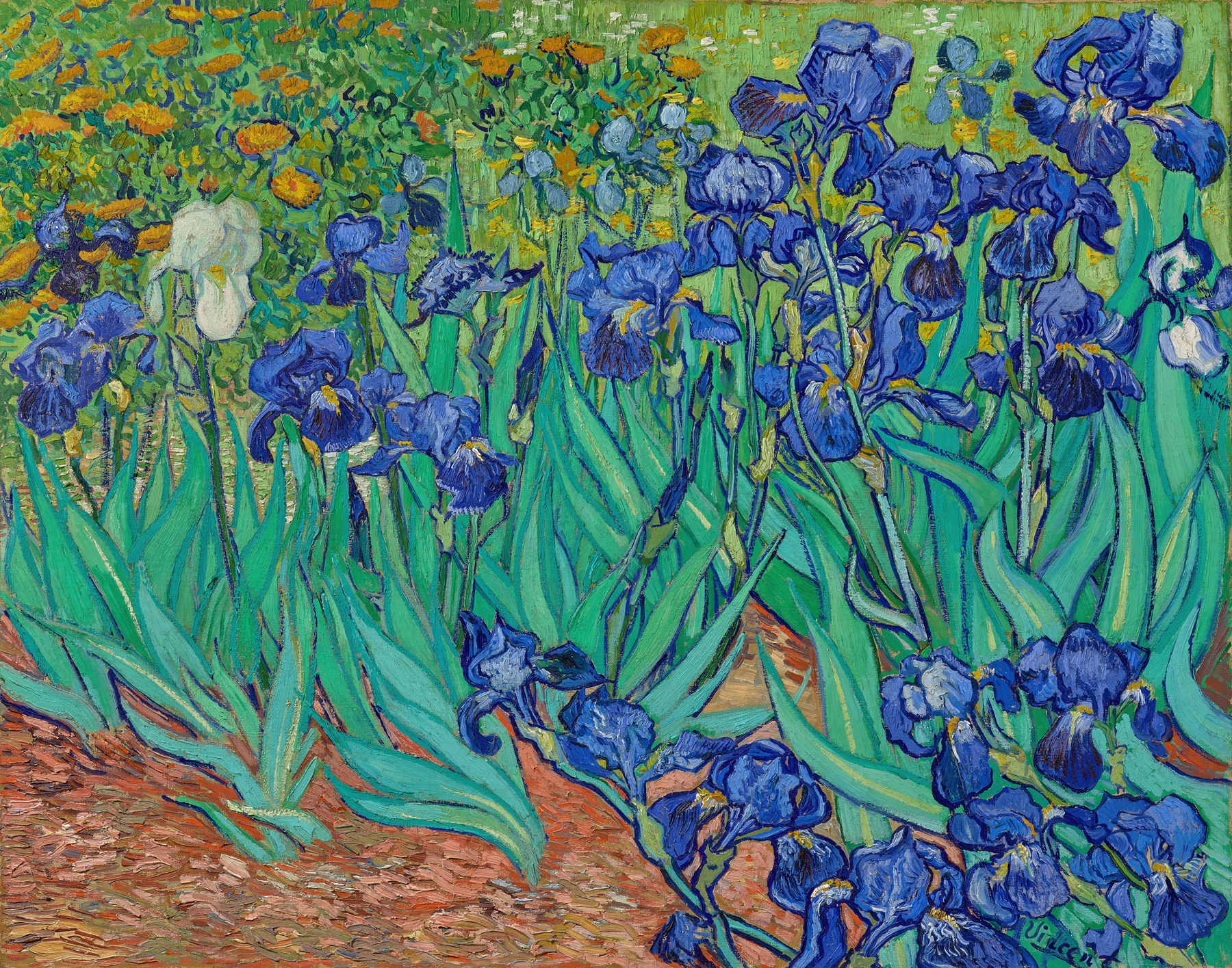
“To paint is to remember what time wants us to forget.” In the delicate dance of petals and hues, Irises captures a moment suspended between memory and eternity, inviting us to revel in nature’s ephemeral beauty. Focus first on the lush, vibrant blooms, where deep blues and purples interweave with flashes of gold. Notice how the brushstrokes pulse with energy, each stroke alive with emotion, swirling together to form the striking irises that dominate the canvas. The tumultuous, expressive lines convey a sense of urgency, creating a tension between chaos and harmony as the flowers almost seem to sway.
The background, a muted green, serves to amplify the vibrancy of the irises, drawing the viewer’s gaze toward their vivid presence. Delve into the symbolism woven within the floral forms: the irises symbolize hope and courage in the face of adversity. Each petal holds a whisper of Van Gogh’s internal struggle, a reflection of his battle with mental health during his time at the asylum in Saint-Rémy-de-Provence. The contrast between the bright blooms and the darker undertones speaks to the coexistence of beauty and despair, transforming the canvas into an exploration of resilience amidst turmoil.
In 1889, Van Gogh painted Irises during a pivotal period of his life. Residing in a mental asylum, he sought solace in the natural world surrounding him. This work not only represents a turning point in his artistic expression but also aligns with the burgeoning post-Impressionist movement, where emotion and personal experience became as vital as the subject itself.