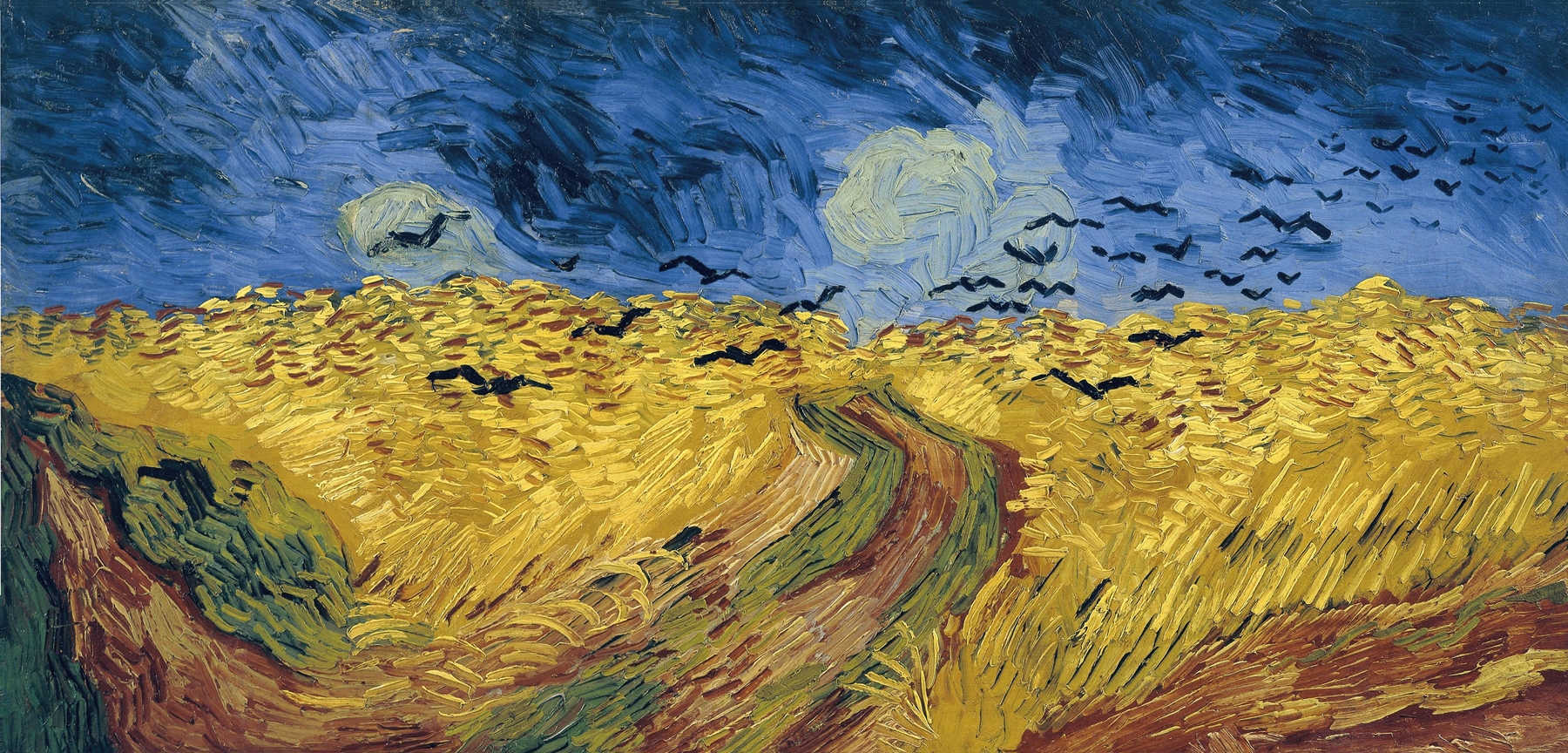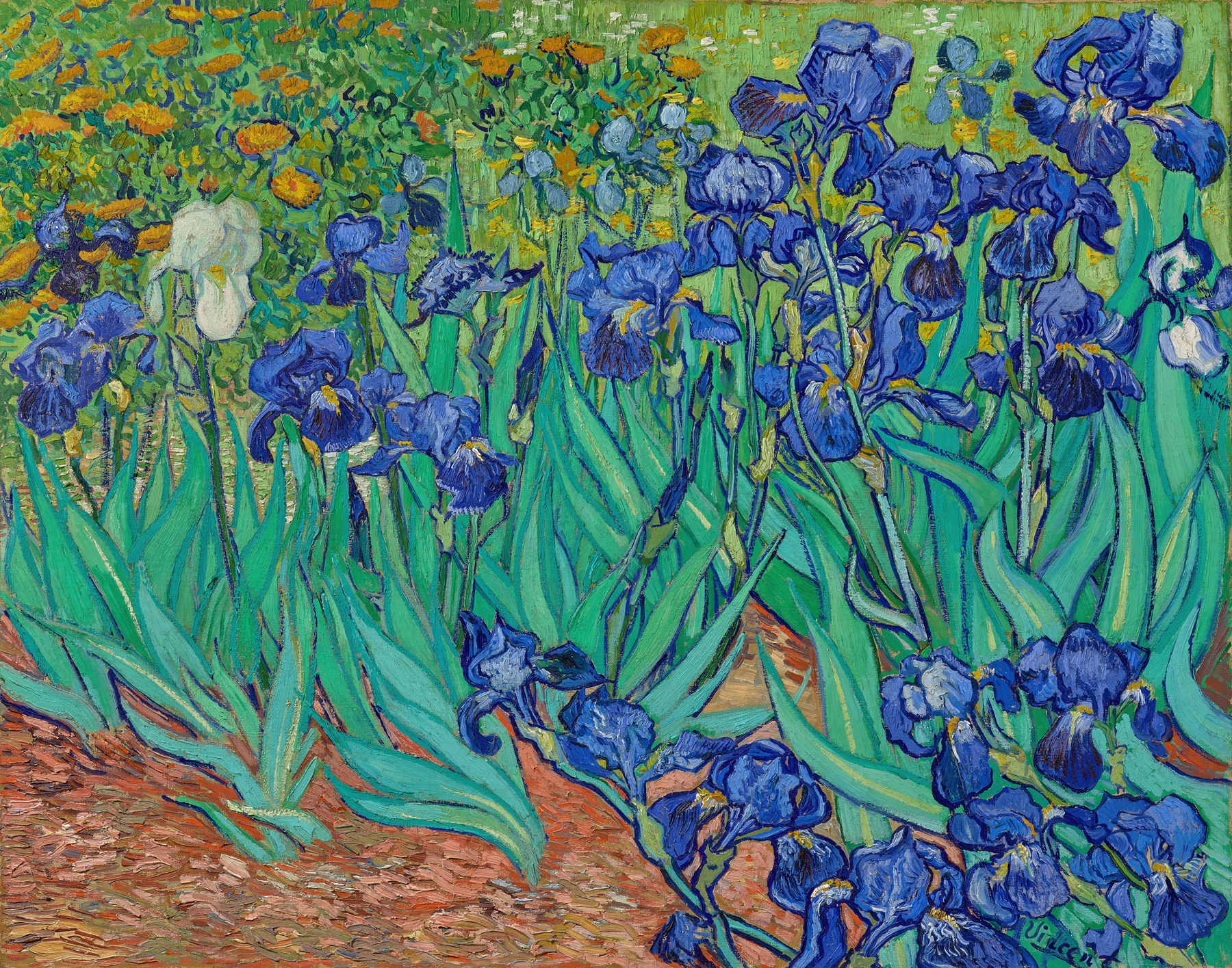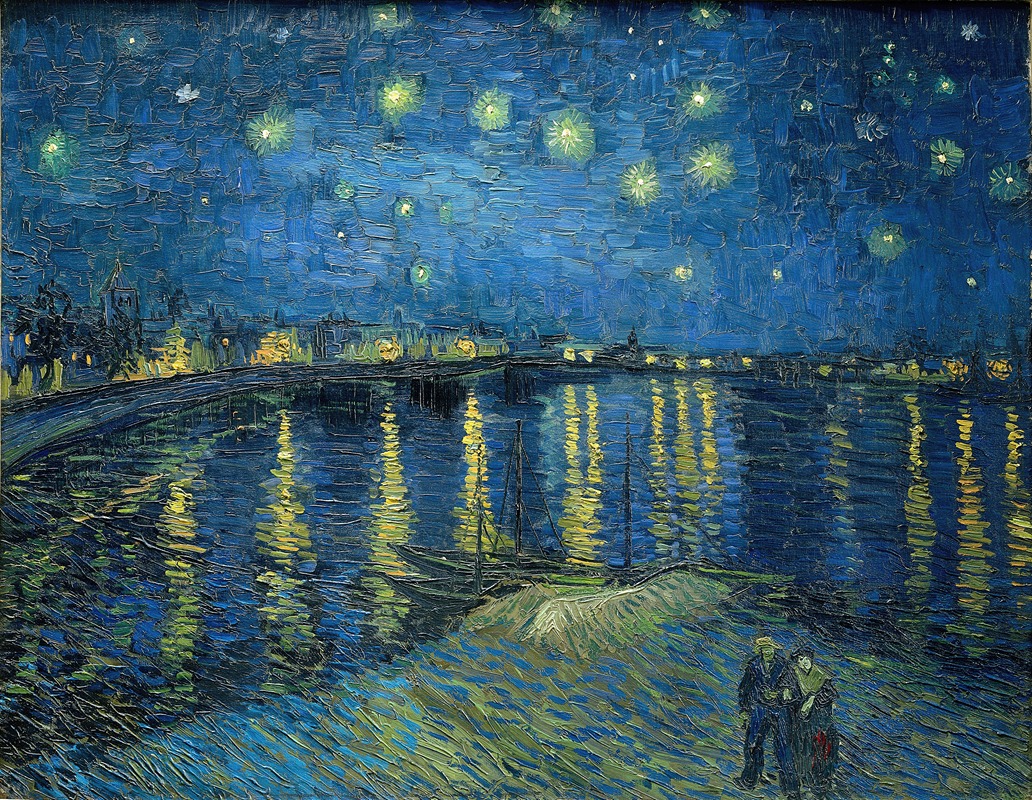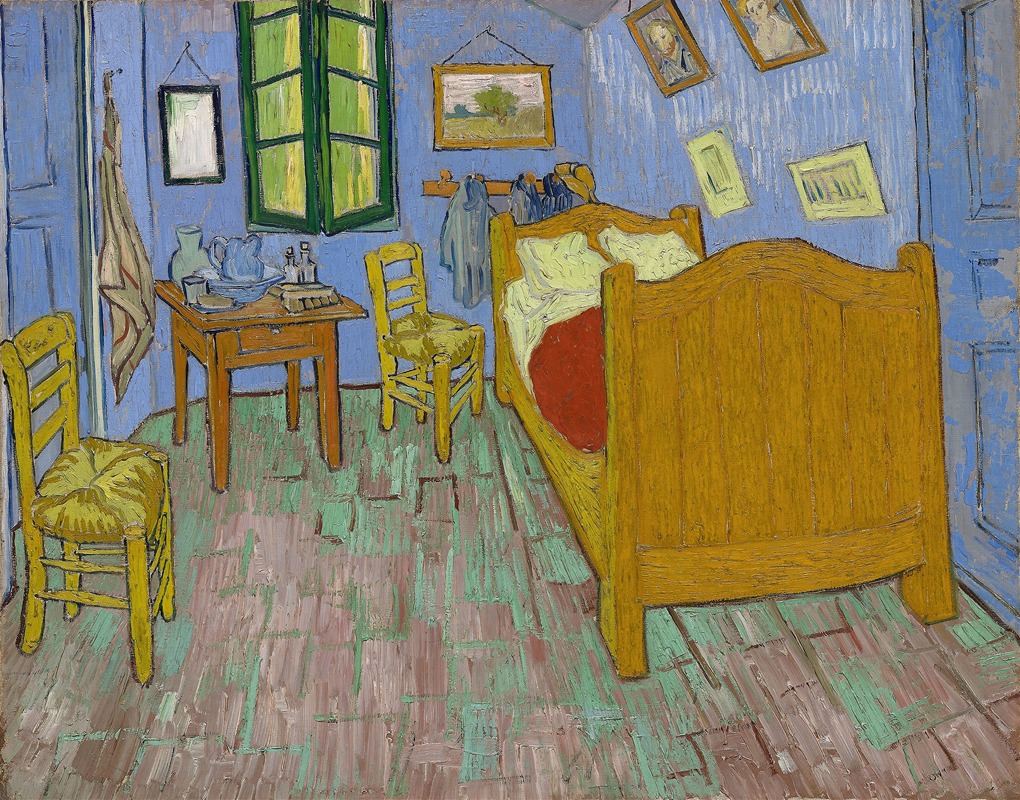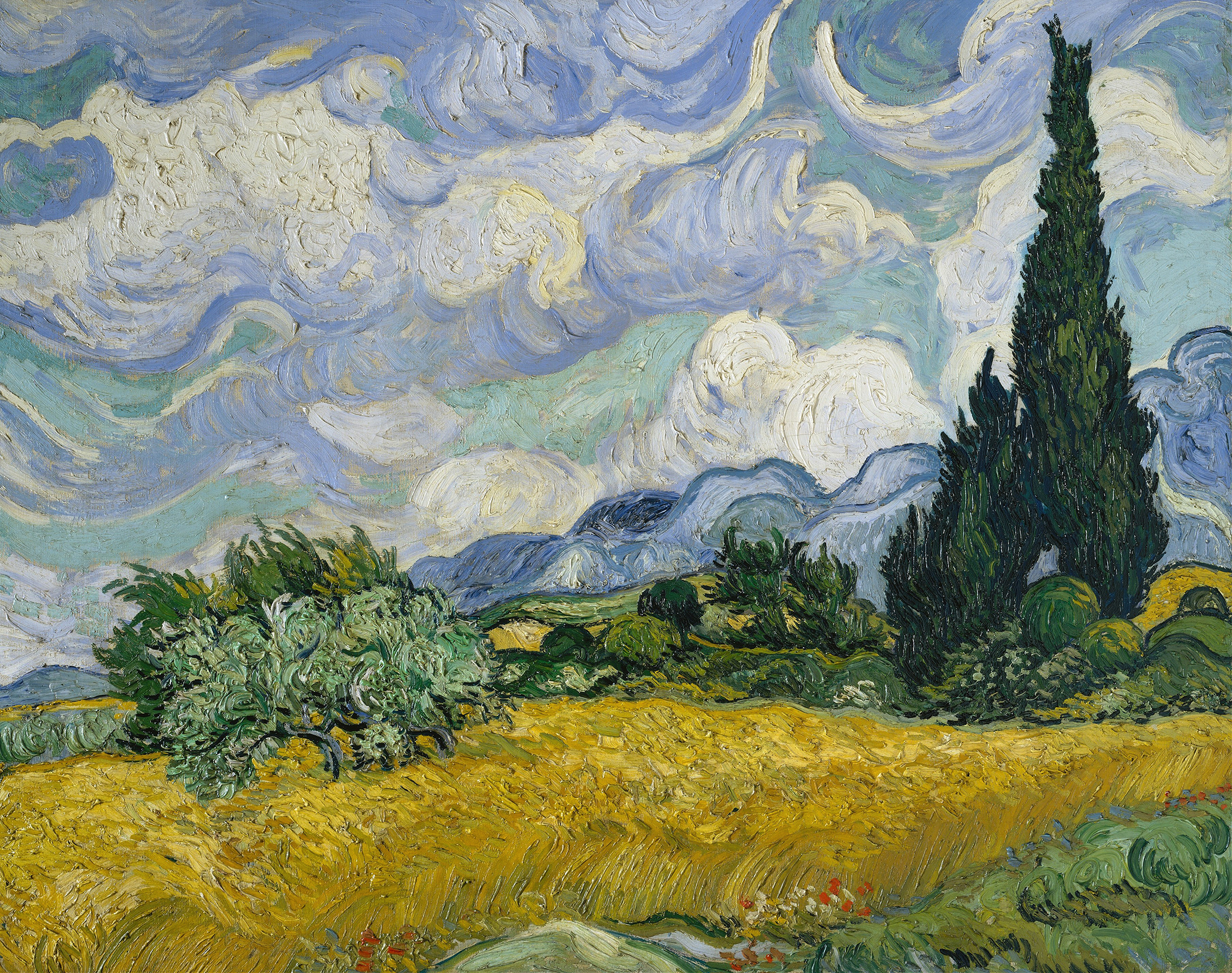

Can beauty exist without sorrow? In the vibrant strokes of Van Gogh's work, the answer is both elusive and profound. Focus first on the bold, swirling sky that dominates the canvas, where shades of cobalt and cerulean dance in harmony. Look to the center, where golden wheat fields stretch toward the horizon, their textures alive with movement. The cypress trees, dark and tall, punctuate the scene, grounding the composition while suggesting a longing that transcends their steadfastness. The contrasting colors — the warm yellows of the wheat against the cool blues of the sky — evoke a powerful emotional tension, revealing desire intertwined with the fleeting nature of beauty. Delve deeper and note the almost frenetic brushwork, which hints at the artist's inner turmoil and passion. The cypress trees, often associated with mourning, stand as silent sentinels against the backdrop of the radiant fields, embodying a struggle between joy and despair. This dichotomy invites viewers to reflect on their own experiences, suggesting that beauty is often tinged with a sense of loss — a reminder of what is both cherished and ephemeral. In 1889, while residing in the Saint-Paul-de-Mausole asylum in Saint-Rémy-de-Provence, Van Gogh created this evocative piece. It was a time marked by his personal battles with mental health, yet also a period of intense creativity and exploration of color and form. His innovative style reflected a growing departure from traditional representation, paving the way for future movements in modern art.