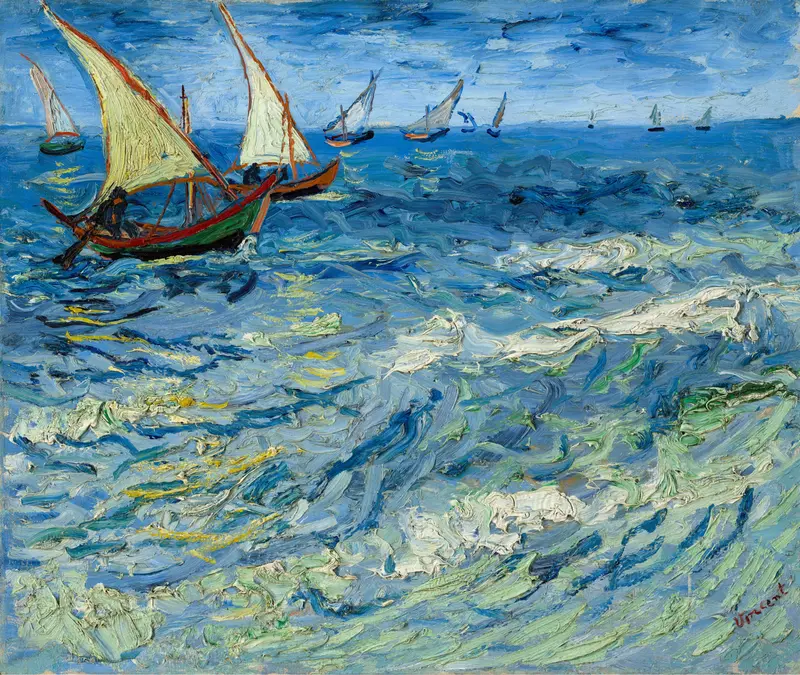
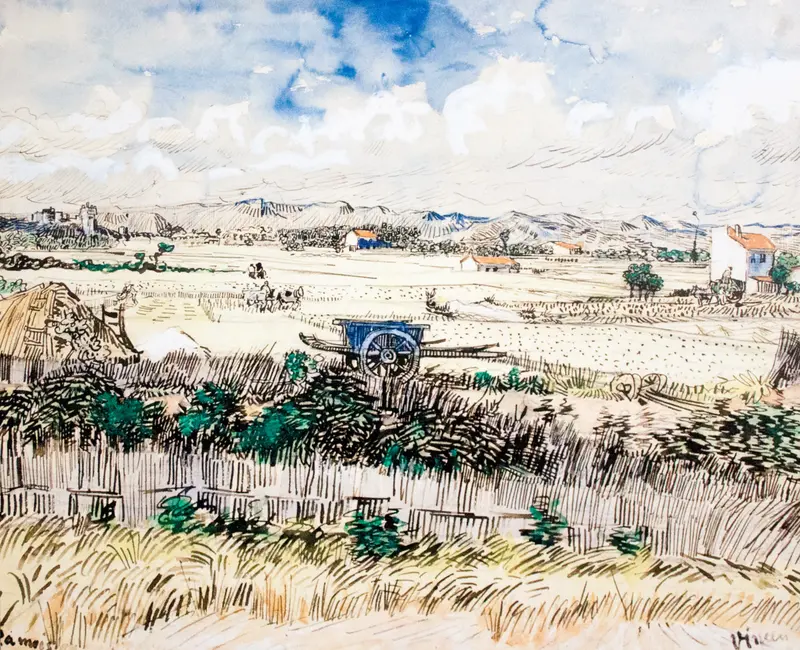
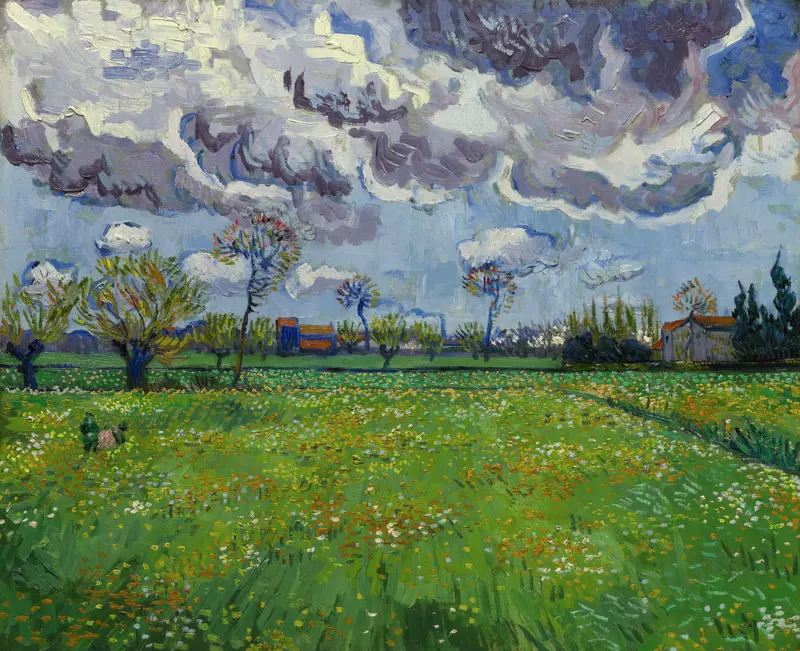
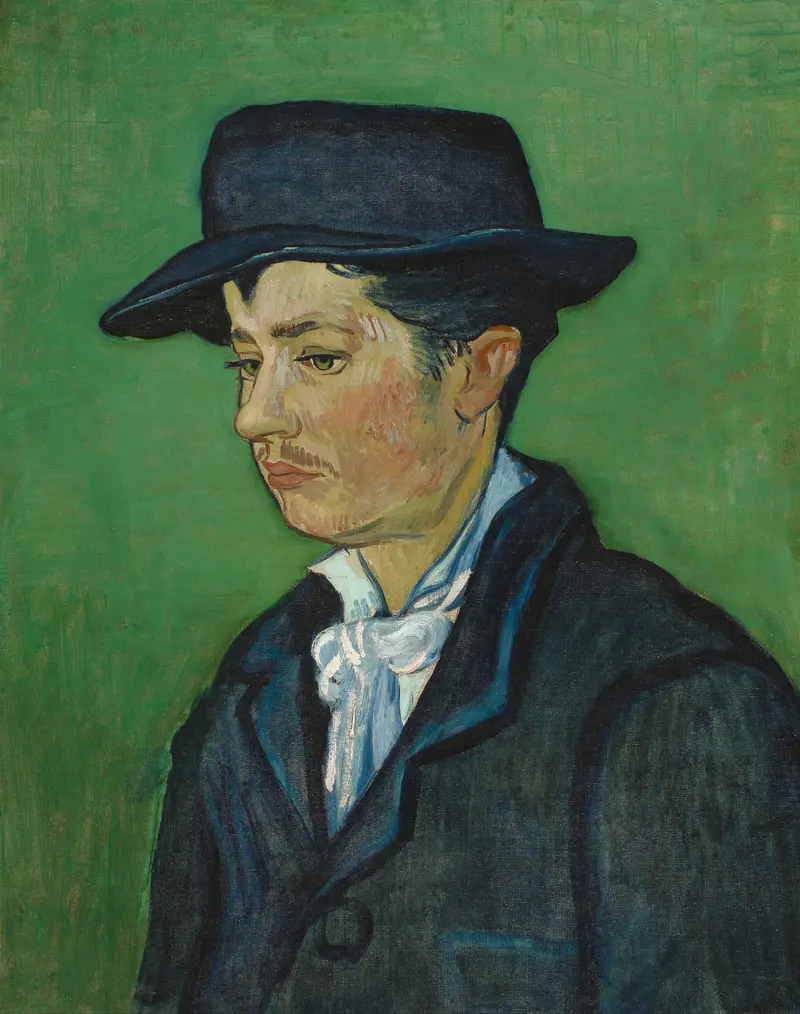
Dutch, 1853–1890

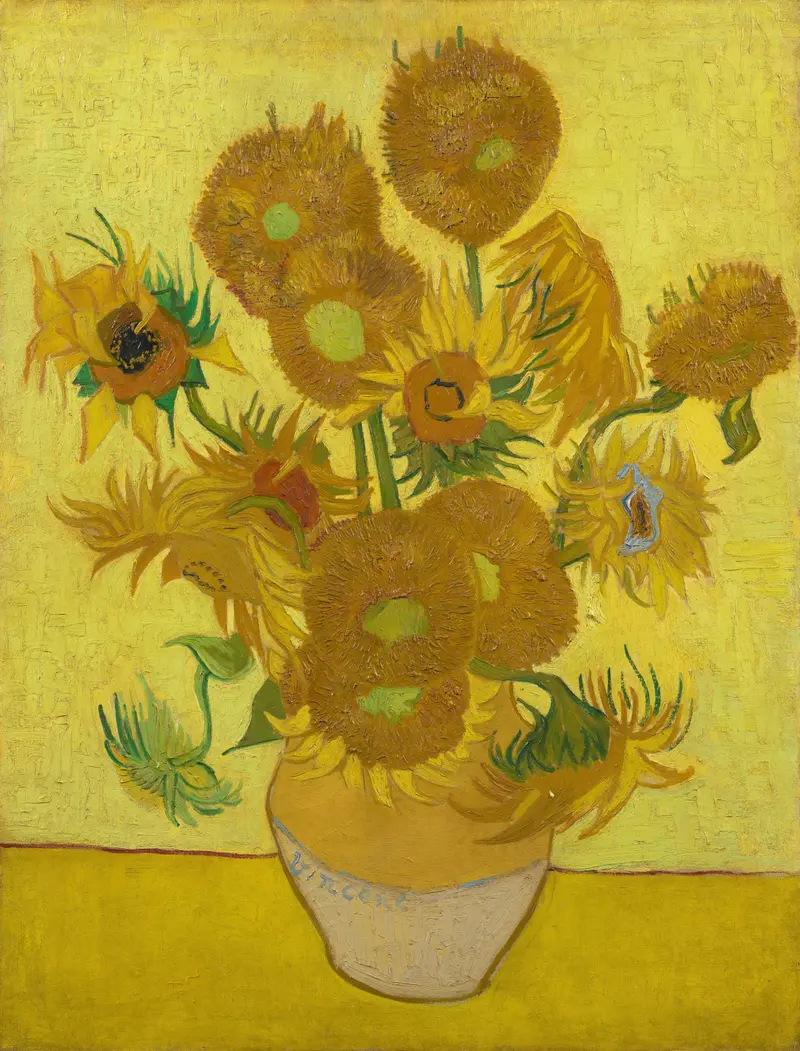
Van Gogh is most famous for The Starry Night (1889) and Sunflowers (1888). His other best-known paintings include Café Terrace at Night (1888), The Night Café (1888), Self-Portrait with Bandaged Ear (1889), Irises (1889), Wheatfield with Crows (1890) and The Potato Eaters (1885). All of them can be downloaded free on Fine Art Free.
Source: Wikidata Q5582 (notable works)
The largest collection of Van Gogh’s paintings, drawings and letters is at the Van Gogh Museum in Amsterdam. Wikidata lists 160 museums and collections with his work, among them the Kröller-Müller Museum, the Musée d’Orsay in Paris and the Museum of Modern Art in New York, home of The Starry Night.
Source: Van Gogh Museum: the permanent collection · Wikidata Q5582 (collections, 2 Nov 2026)
No. Van Gogh is classed as a Post-Impressionist. He lived in Paris from 1886 to 1888, where, according to the Van Gogh Museum, he developed his own, well-known style with bright colors. Wikidata also associates him with Expressionism.
Source: Wikidata Q5582 (movement) · Van Gogh Museum: biography
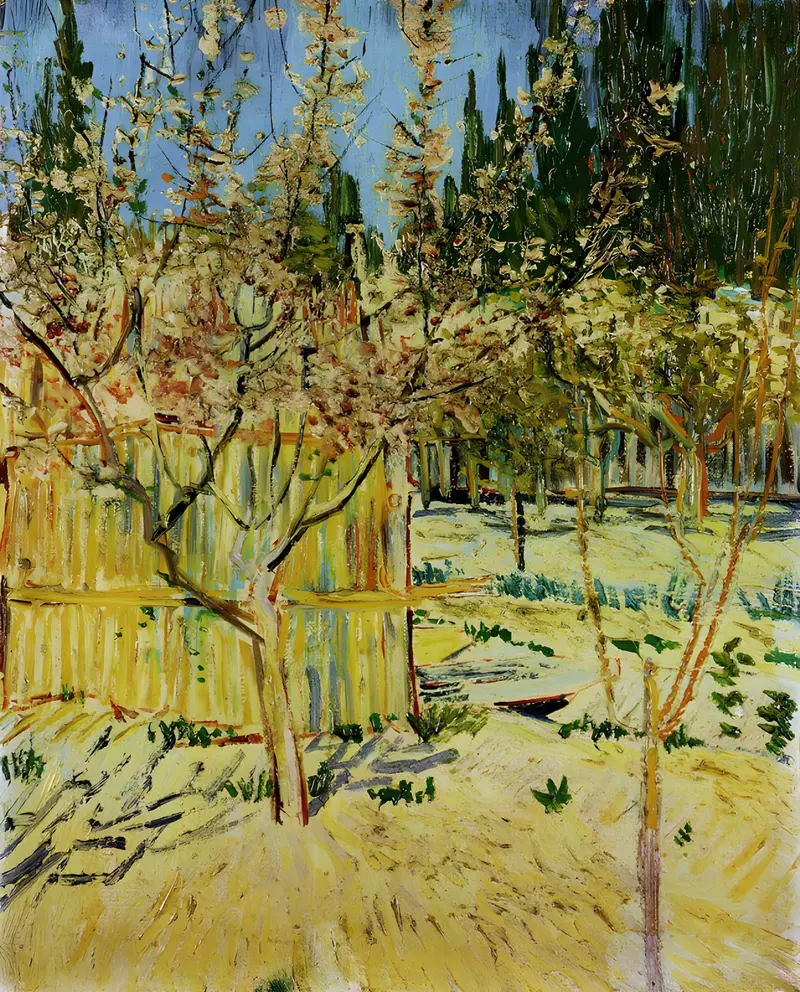
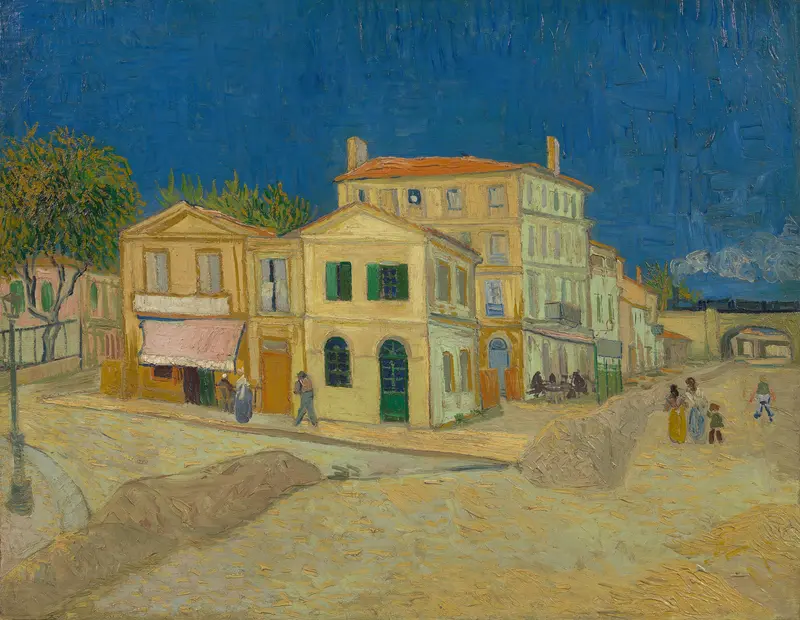
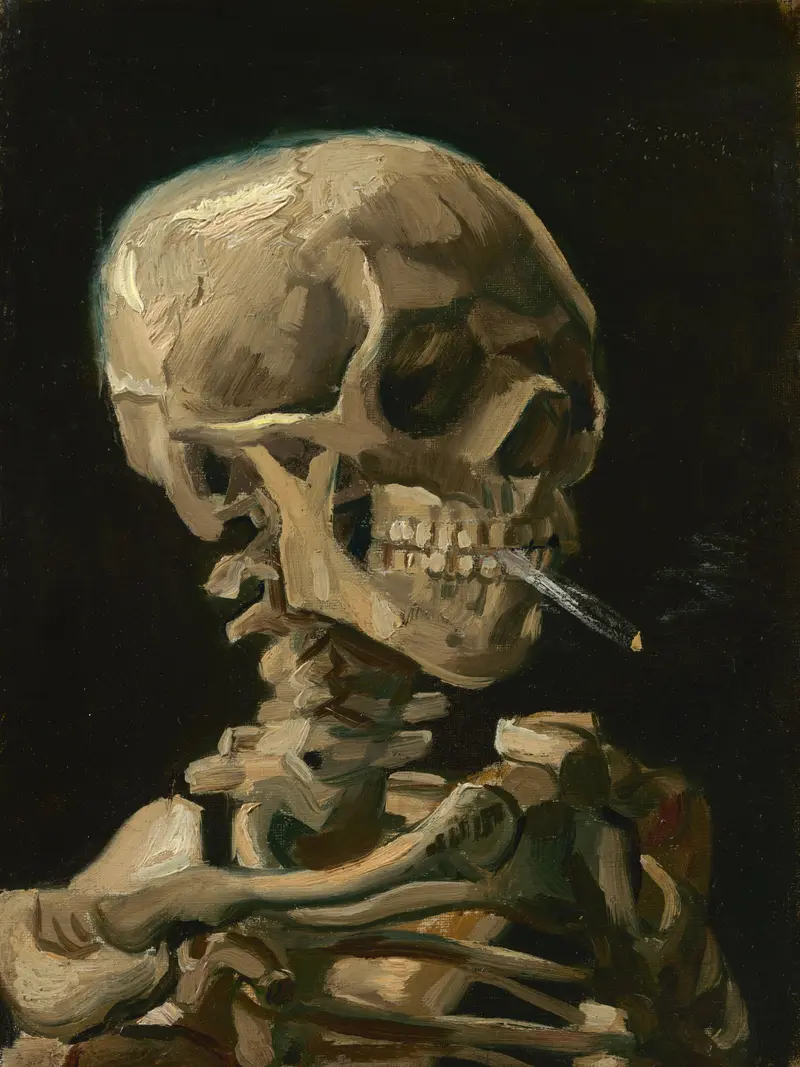
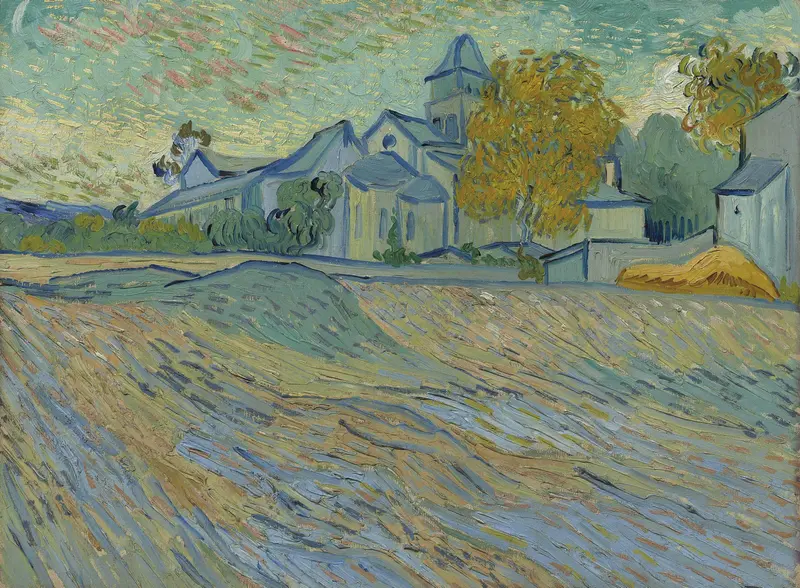
Van Gogh made over 850 paintings and almost 1,300 works on paper, according to the Van Gogh Museum. About 150 of the paintings date from the single year he spent in the hospital at Saint-Rémy-de-Provence (1889–1890), among them The Starry Night and Almond Blossom. Fine Art Free has 730 of his works free to download.
Source: Van Gogh Museum: final months · Van Gogh Museum: biography
Van Gogh became famous mostly after his death. Six weeks after he died, his brother Theo organized a memorial exhibition of his work. Theo died at the end of January 1891, and his widow, Jo van Gogh-Bonger, lent Vincent’s paintings to exhibitions and museums around the world and in 1914 published his letters to Theo. The Van Gogh Museum, built to house the family’s collection, opened in Amsterdam on 2 June 1973.
Van Gogh died by suicide. On 27 July 1890 he shot himself in a wheatfield at Auvers-sur-Oise, where he had lived since May. He died of the wound two days later, on 29 July 1890, aged 37, with Theo at his side. He is buried in Auvers, where Theo was later laid to rest beside him.
Source: Van Gogh Museum: final months · Van Gogh Museum: after Vincent’s death · Wikidata Q5582
Yes, Van Gogh’s paintings are in the public domain. He died in 1890, so his paintings and drawings are free of copyright in every country where it lasts the author’s life plus 100 years or less. Faithful photographs of them add no new copyright in the United States or the European Union, so the 730 works on Fine Art Free can be downloaded and used in personal or commercial projects. Public Domain Images for Commercial Use explains how.
Source: Wikidata Q5582
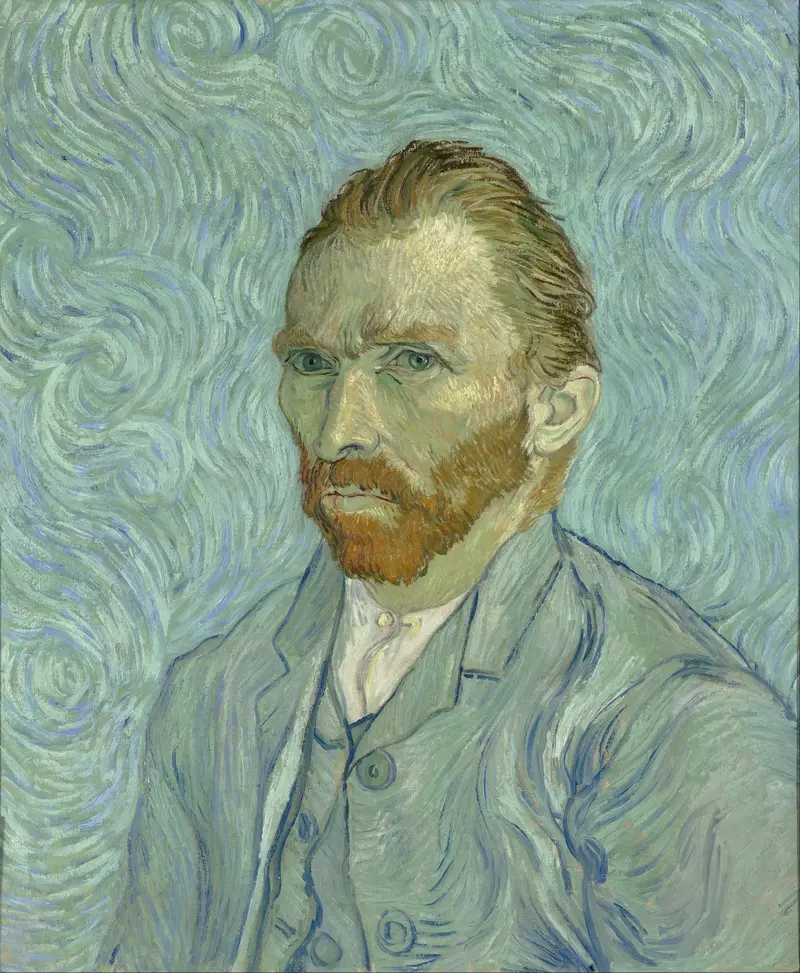
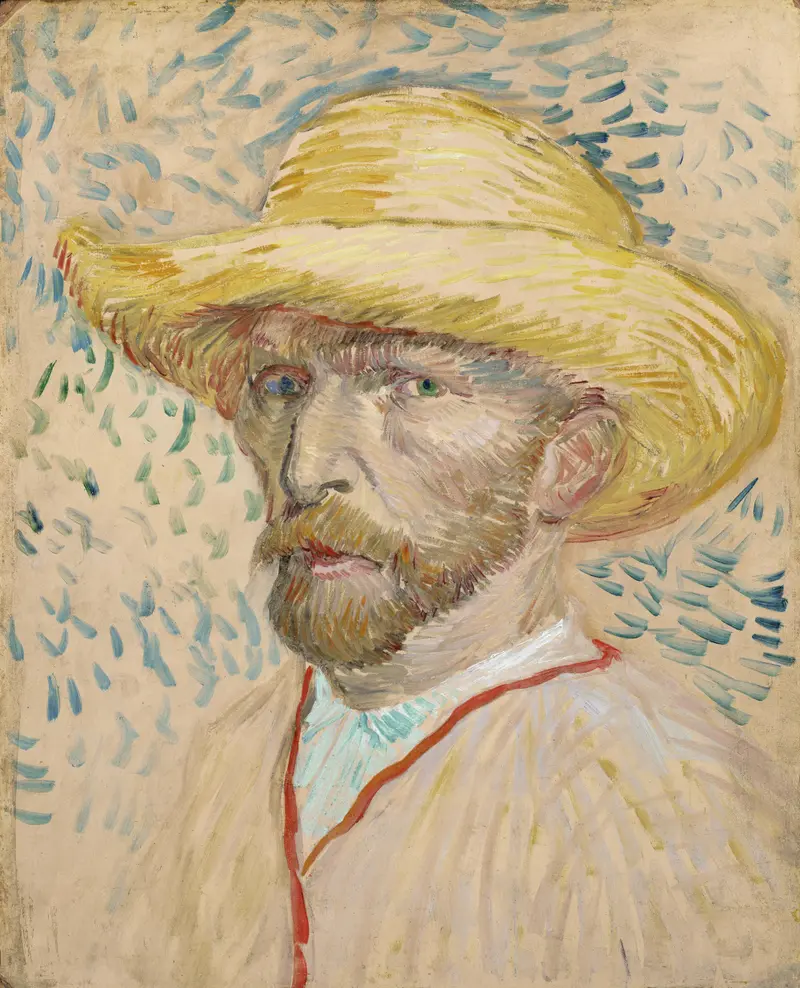
Vincent van Gogh (30 March 1853, Zundert, Netherlands – 29 July 1890, Auvers-sur-Oise, France) was a Dutch painter and draftsman associated with Post-Impressionism. He decided to become an artist at 27 and in the ten years that followed made over 850 paintings and almost 1,300 works on paper, among them The Starry Night, Sunflowers and The Potato Eaters.
Sources: Wikidata Q5582 · Van Gogh Museum: biography · Van Gogh Museum: final months
730 works, free to download