The Bedroom — History & Analysis

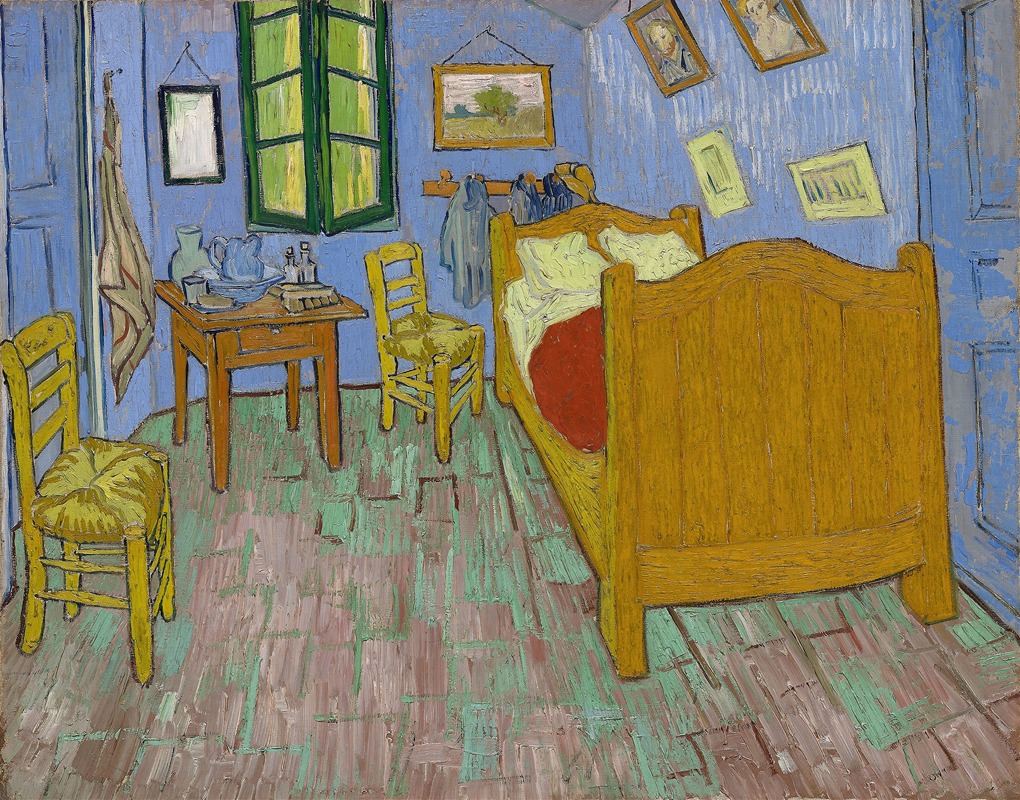
Who listens when art speaks of silence? In the stillness of a room, a hush falls over the viewer, inviting contemplation and introspection. Look to the bold strokes of blue and yellow that define the walls and furnishings, a striking contrast that injects life into the quiet setting. Notice how the bed is slightly askew, the pale sheets rumpled as if recently occupied, drawing the eye to its inviting warmth.
The tilted perspective offers a sense of disorientation, suggesting the artist's inner turmoil while also beckoning an exploration of intimacy and solace. In the midst of apparent tranquility, there lies an undercurrent of emotional tension. The mismatched furniture—a metaphor for fragmentation—evokes a sense of isolation and yearning for connection. Each brushstroke pulses with the essence of revolution, revealing an artist grappling with the chaos of self and societal expectations.
The vibrant colors contrast starkly with the simplicity of the scene, hinting at the complexities of inner life, an emotional landscape as tumultuous as the world beyond this intimate chamber. Vincent van Gogh painted The Bedroom in 1889 while living at the Saint-Paul-de-Mausole asylum in Saint-Rémy-de-Provence. During this period, he sought refuge from his mental health struggles and created a profound body of work influenced by his experiences. The painting reflects his desire for peace and stability amidst personal chaos, showcasing his unique vision that would go on to influence countless artists in the revolutionary movements of the future.