The yellow house — History & Analysis

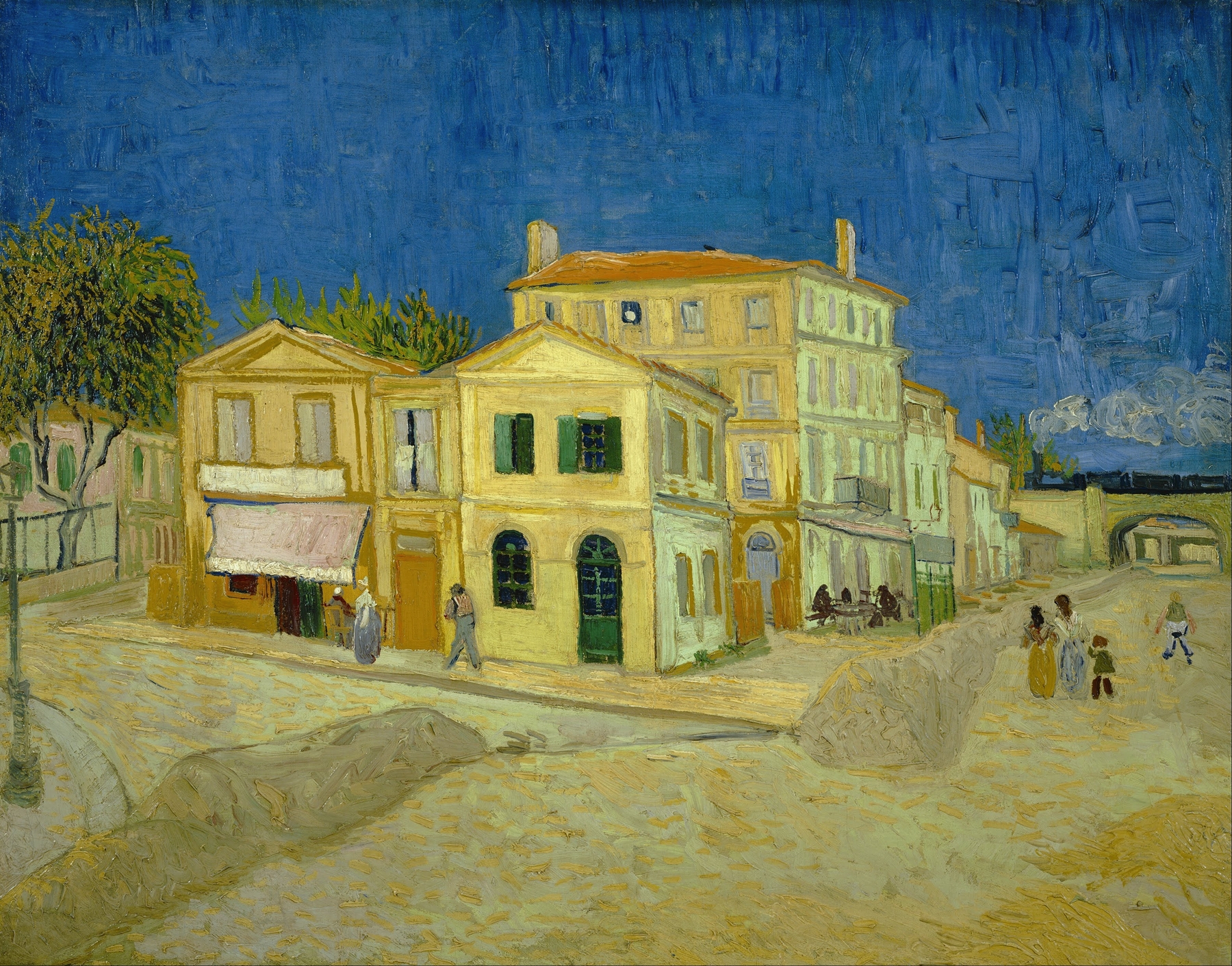
Could a single brushstroke hold eternity? In the swirling vibrancy of a yellow house, Vincent van Gogh captures not just a dwelling, but a sanctuary of dreams and aspirations. Look to the center of the canvas, where the house stands proudly, its sun-kissed facade radiating warmth amidst the cooler blues and greens of the surroundings. Notice how the thick impasto technique creates texture that seems to breathe life into the walls, while dappled sunlight dances over the thatched roof.
The composition, with its bold, diagonal lines, draws your gaze in, inviting you to explore the intimacy and simplicity of rural existence. Yet, within this vibrant depiction lies a deeper emotional landscape. The juxtaposition of the lively yellows against the muted tones hints at the artist's own inner turmoil—his pursuit of happiness intertwined with his struggles. Each brushstroke becomes a silent testament to creation, reflecting the tension between the joy of artistry and the isolation that often accompanies it.
The surrounding nature is both a cradle and a cage, echoing the duality of companionship and solitude. Painted in Arles in 1888, this work emerged during a transformative period for the artist, who sought to establish a community of like-minded creators. The world was shifting, and Van Gogh's vision clashed with the traditional confines of art, challenging norms to express a palette of emotions. This desire for connection and understanding culminated in The Yellow House, a beacon of hope amid the chaos of his tumultuous life.