Almond tree in blossom — History & Analysis

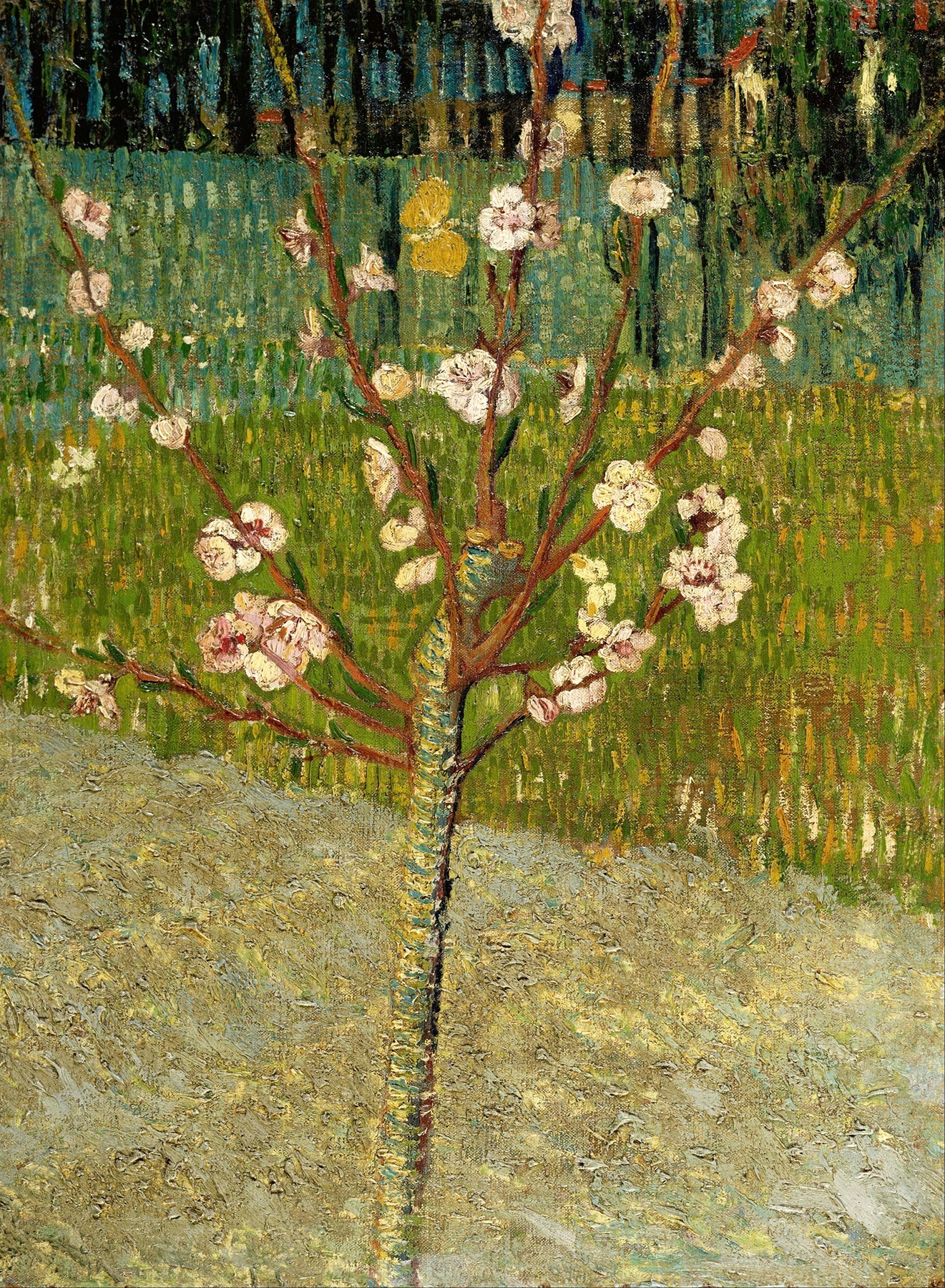
What if silence could speak through light? In the delicate interplay of a blossoming almond tree, nature whispers balance, urging us to pause and reflect. Look to the left at the cluster of vibrant white flowers, each petal seemingly illuminated from within by an ethereal glow. Notice how the branches twist and turn, reaching outward against the pale blue sky, creating a sense of movement and life.
Van Gogh’s signature brushstrokes convey a dynamic energy, as patches of soft greens and creams contrast against the bold outlines, evoking the joy and vitality of spring. Yet, beneath this exuberance lies a subtler narrative. The fleeting nature of the blossoms captures a moment in time, reminding us of the transience of beauty and life itself. The starkness of the branches, devoid of foliage, underscores a delicate tension between hope and fragility, inviting contemplation on the cycles of growth and decay.
This balance of exuberance and vulnerability resonates deeply, reflecting the artist's own inner struggles. Painted in a period marked by personal turmoil, the artist created this work in the south of France during 1888, a time when his palette brightened in response to the comforting warmth of the Mediterranean. Surrounded by a flourishing artistic community but plagued by isolation, he sought solace in nature, using his canvas to express the dichotomy of his tumultuous emotions. This painting stands as a testament to his quest for equilibrium amidst chaos.