Jozef verklaart dromen in de gevangenis — History & Analysis
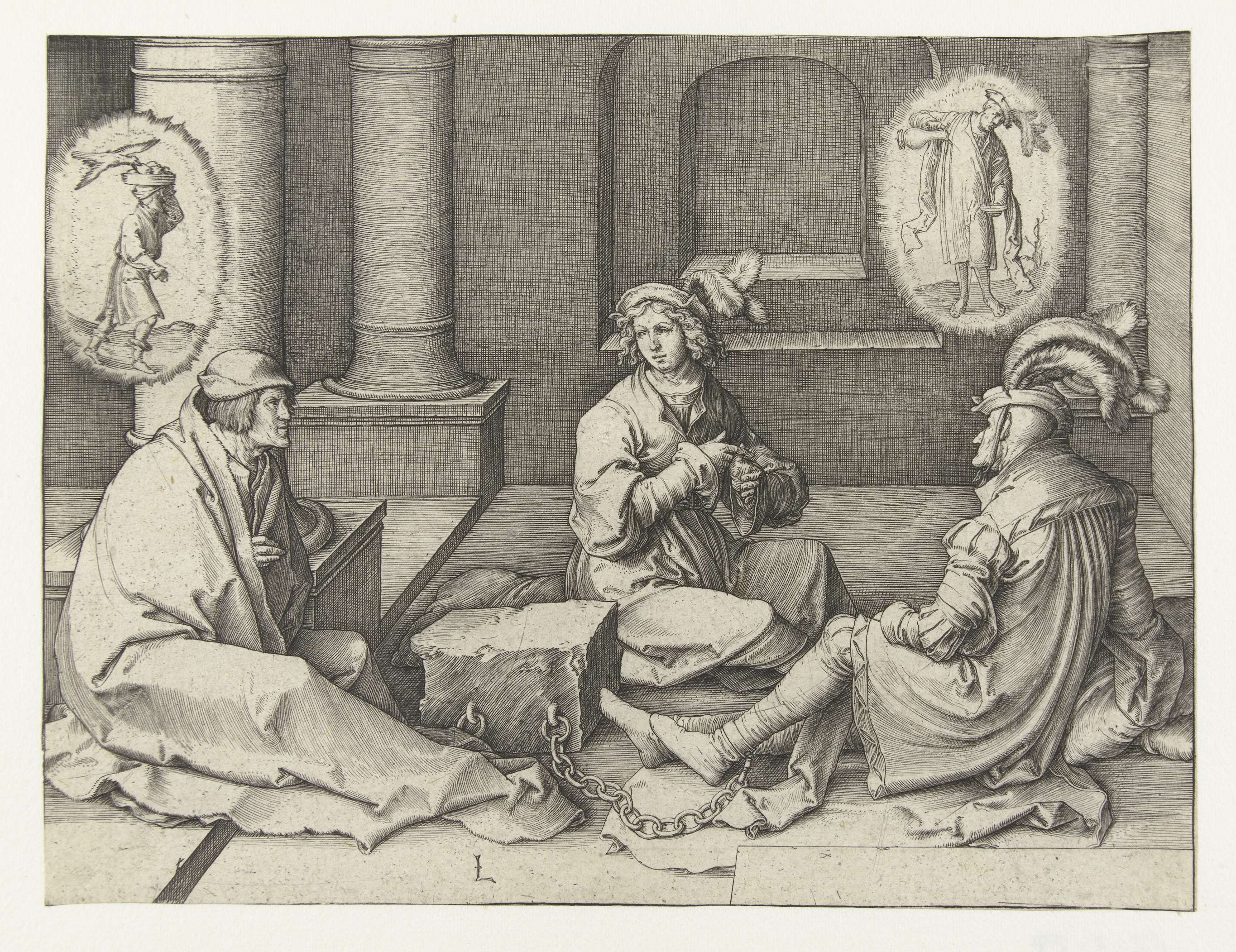
Could beauty survive in a century of chaos? In Lucas van Leyden's Jozef verklaart dromen in de gevangenis, the answer resonates with both hope and melancholy, as the scene unfolds within the confines of a prison cell, where dreams still flicker against the shadows of despair. Look to the left, where the figure of Joseph sits enthroned in a moment of quiet revelation. The gentle chiaroscuro highlights his expressive features, conveying a mix of wisdom and empathy.
His gaze is directed toward the two prisoners who stand before him, their postures vibrating with tension and anticipation. The meticulous details of their garments juxtaposed with the austere prison walls amplify the stark contrast between dreams and reality, while a soft light spills in from an unseen source, infusing the scene with a sense of fragile beauty. In this painting, the juxtaposition of the rich, vibrant colors against the dark background evokes the struggle between hope and despair. The prisoners, with their hands clasped in supplication, symbolize the yearning for understanding and liberation, while Joseph, the bearer of prophetic dreams, embodies the light of knowledge amidst the oppressive darkness.
The careful composition and meticulous technique reflect both the artist's skill and the emotional weight of the narrative, allowing viewers to contemplate the transformative power of dreams, even in dire circumstances. Created in 1512, Lucas van Leyden was navigating the early years of the Northern Renaissance, a time marked by religious upheaval and social change. Working in his native Holland, he was influenced by the burgeoning humanist ideals and the growing emphasis on individual experience. At this moment, his art sought to reconcile human emotion with divine insight, reflecting a world in flux yet still capable of beauty and understanding through the lens of faith and dreams.