La corrida — History & Analysis
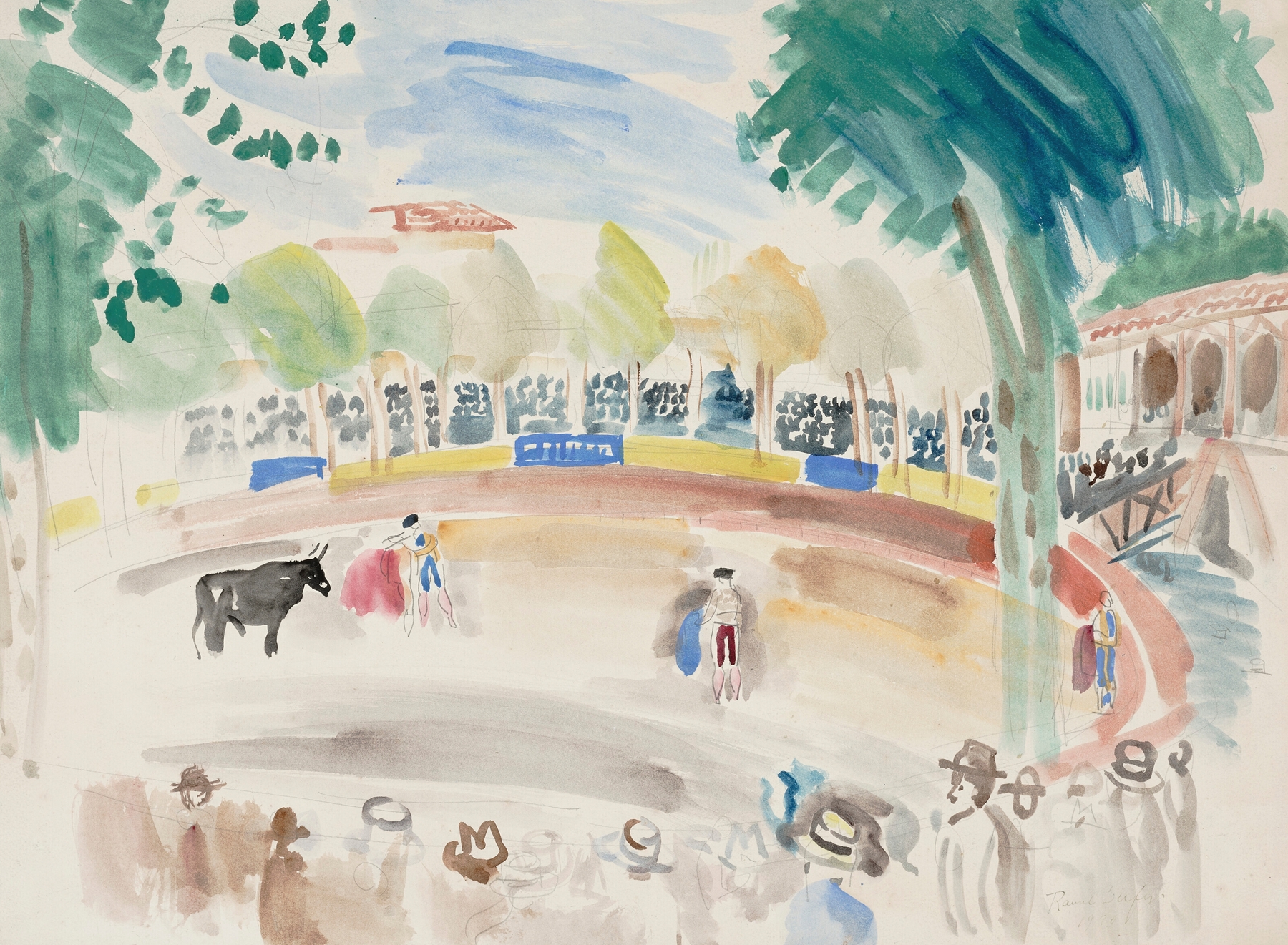
Is this a mirror — or a memory? The vibrant chaos of a bullfight dances vividly across the canvas, yet beneath the surface lies a profound emptiness that haunts the composition. Look to the left at the swirling figures of matadors and spectators, their limbs contorted and expressive, almost as if they are caught in a wild ballet. Notice how the rich reds and deep blues clash, capturing the frenetic energy of the arena, while thick brushstrokes evoke a sense of movement and urgency.
The background, a blurred abstraction, suggests the vast void of the empty seats, amplifying the isolation amidst this fervent display of bravado. This juxtaposition evokes a tension between exhilaration and desolation. Each swirling brushstroke becomes a testament to the fleeting nature of glory and the inevitable solitude that follows. The bullfight, traditionally a celebration of life and death, here transforms into a poignant reminder of the emptiness that lingers after the spectacle has faded.
In every vibrant color, there is a whisper of absence, a lament for what remains unsaid. In 1920, during a time when Raoul Dufy was deeply engaged with Post-Impressionism and Fauvism, he created La corrida. Living in the vibrant artistic milieu of Paris, he was exploring the boundaries of color and form, reflecting a world recovering from the scars of the First World War. This period was marked by a search for meaning amid chaos, and Dufy's work captures both the exuberance of life and the haunting shadows of loss that accompanied it.