Vue de la Tour de Vernet-les-Bains — History & Analysis
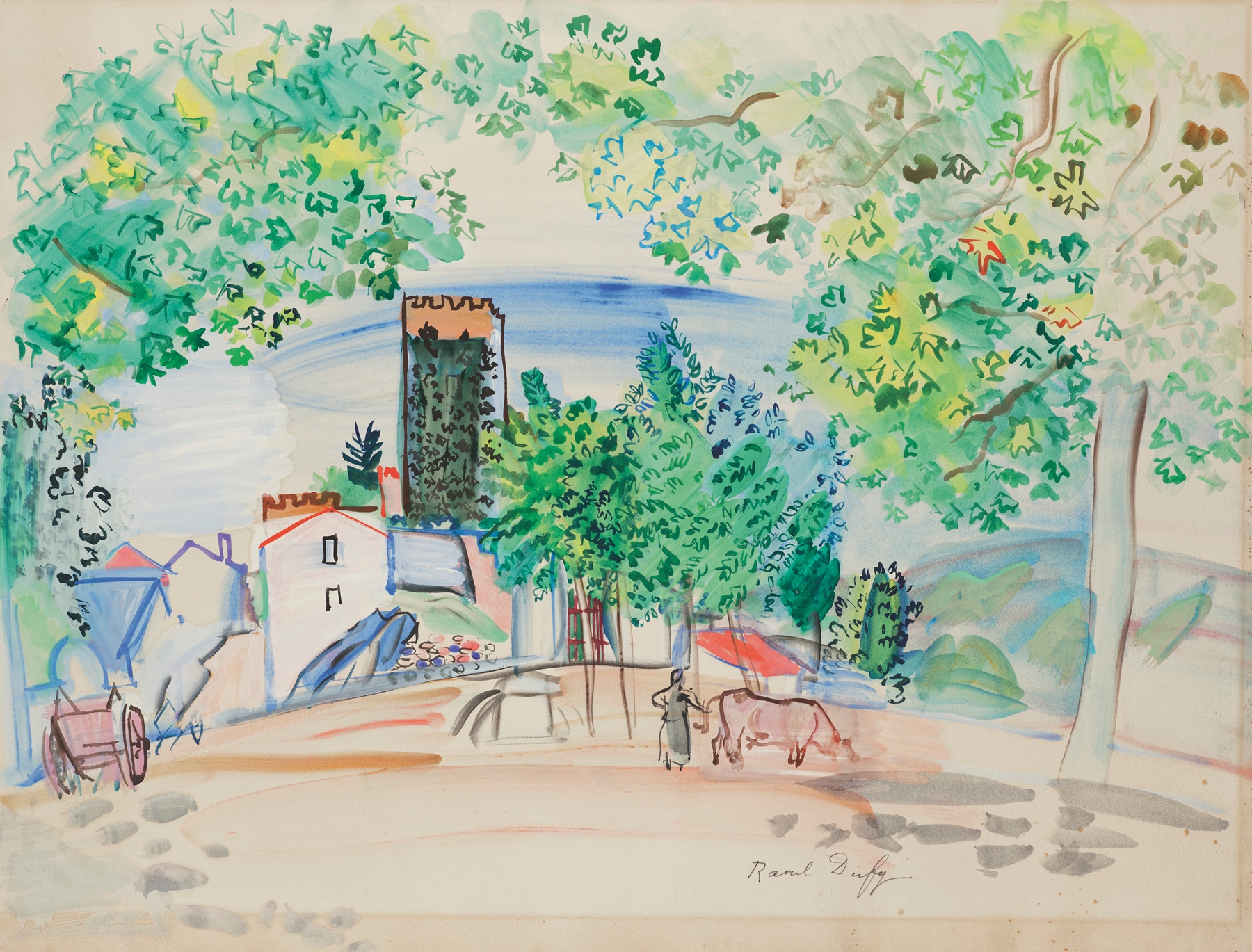
Can beauty exist without sorrow? In Raoul Dufy's *Vue de la Tour de Vernet-les-Bains*, the landscape speaks of a gentle melancholy, as if the vibrant colors cannot mask the weight of absence. Look to the center of the canvas, where the towering mountain rises majestically against a sky awash with soft blues and whites. The brushstrokes are loose yet confident, capturing the essence of the landscape rather than its exact likeness. The sunlight dances across the scene, illuminating the warm hues of the village below, while shadows suggest the lingering presence of loss just beyond the edges of the frame. The contrast between the lively colors and the somber undertones invites reflection. The tranquil scene evokes a sense of nostalgia, perhaps for a time lost to the ravages of war. The quietude of the village, nestled at the foot of the mountain, embodies both safety and isolation, illustrating how beauty can exist in the shadow of sorrow. Each stroke holds a story, intertwining the joy of a picturesque view with the poignant reality of what remains unseen. Dufy painted this work in 1941, during a tumultuous period marked by the unfolding horrors of World War II. Living in France, he was grappling with the impact of conflict on society and art. The vibrant colors and dynamic forms in his paintings from this era serve as a testament to his enduring spirit, attempting to capture beauty even in the face of despair.