Régates à Deauville — History & Analysis
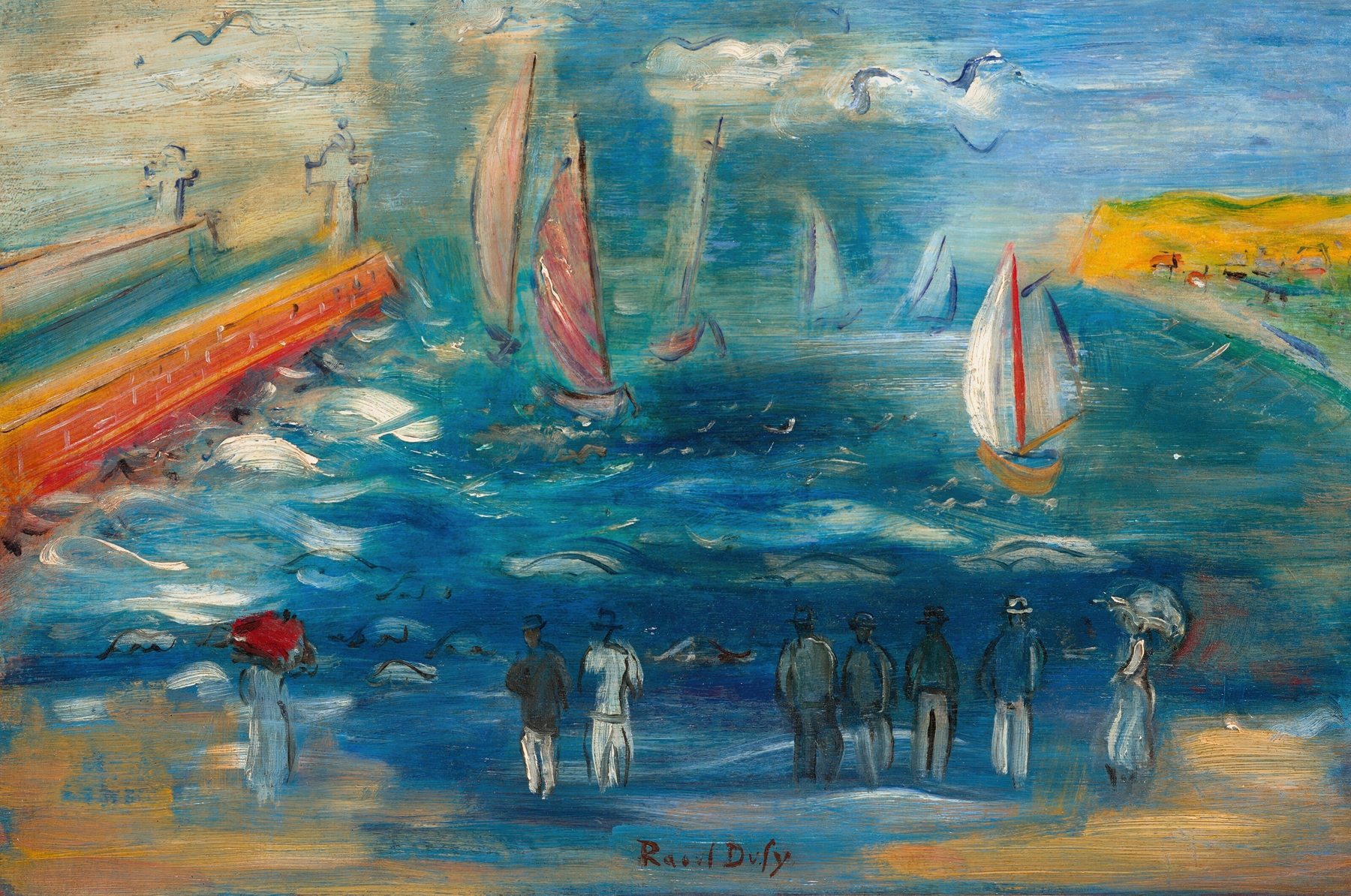
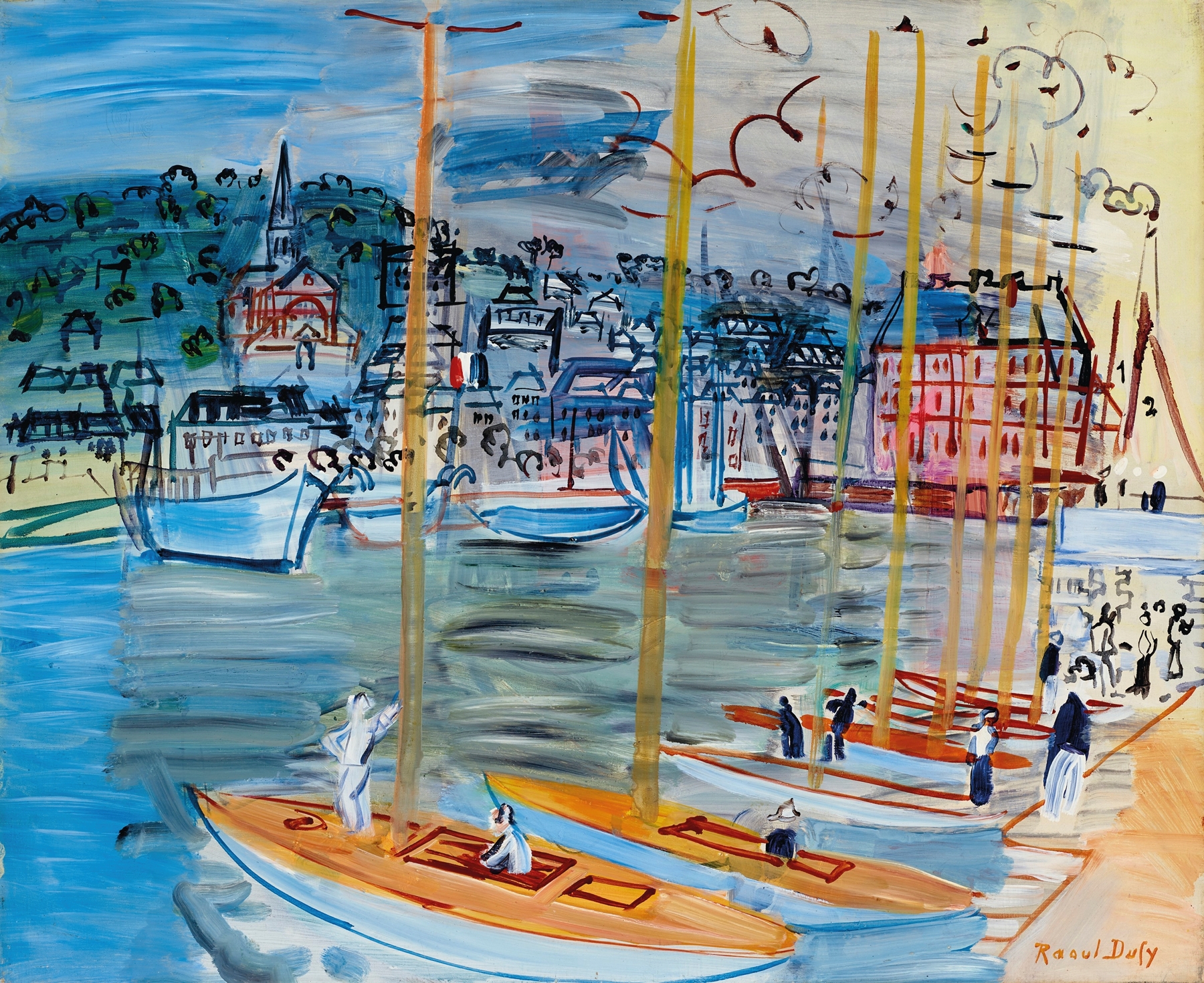
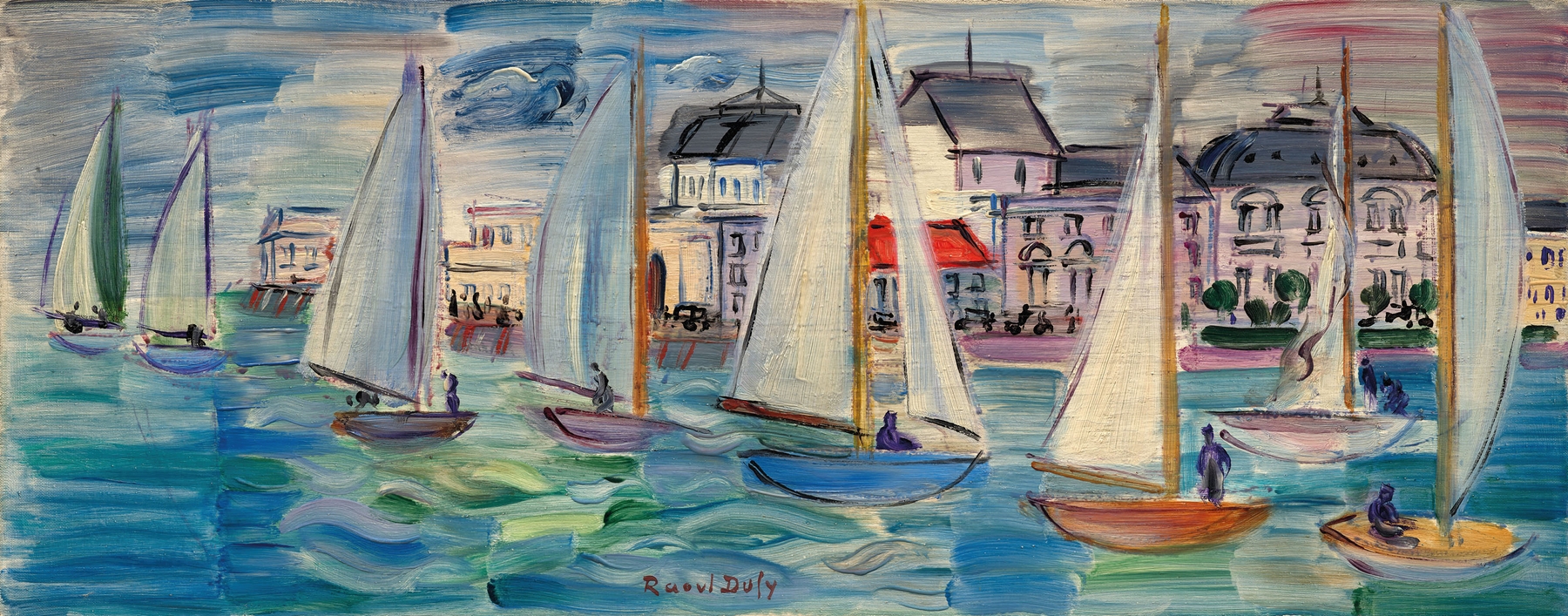
Did the painter know this moment would outlive them? In Régates à Deauville, the vibrant chaos of a sailboat race unfolds on the canvas, juxtaposing the tranquility of water with the frenetic energy of competition. Underneath the surface, a subtle tension simmers, hinting at the violence of human ambition amidst nature's serene beauty. Look to the center where the sailboats slice through the cerulean water, their colorful sails billowing like flags on a battlefield.
The brushstrokes are swift and bold, capturing movement and speed, as if the boats are alive, racing against the waves. Notice how the light dances off the water's surface, creating a shimmering effect that contrasts sharply with the deeper blues and greens of the sea, drawing your eye into the heart of the action. Yet, amidst this lively scene, there lies an underlying dichotomy. The vibrancy of the regatta is tinged with a sense of fleetingness, as if each moment of joy comes with the knowledge of its impermanence.
The boats, representing humanity's fervor and competitive spirit, seem caught in a struggle against the very nature that supports them, evoking a tension between aspiration and the raw power of the elements. Raoul Dufy painted this work in 1934 while living in France, a time marked by artistic innovation yet overshadowed by the economic strains of the Great Depression. As the world grappled with uncertainty, Dufy found solace in the vibrancy of his coastal surroundings, channeling his experiences into a celebration of life that dances across the canvas, forever capturing the beauty and violence of striving for greatness.