Le bassin de Deauville — History & Analysis
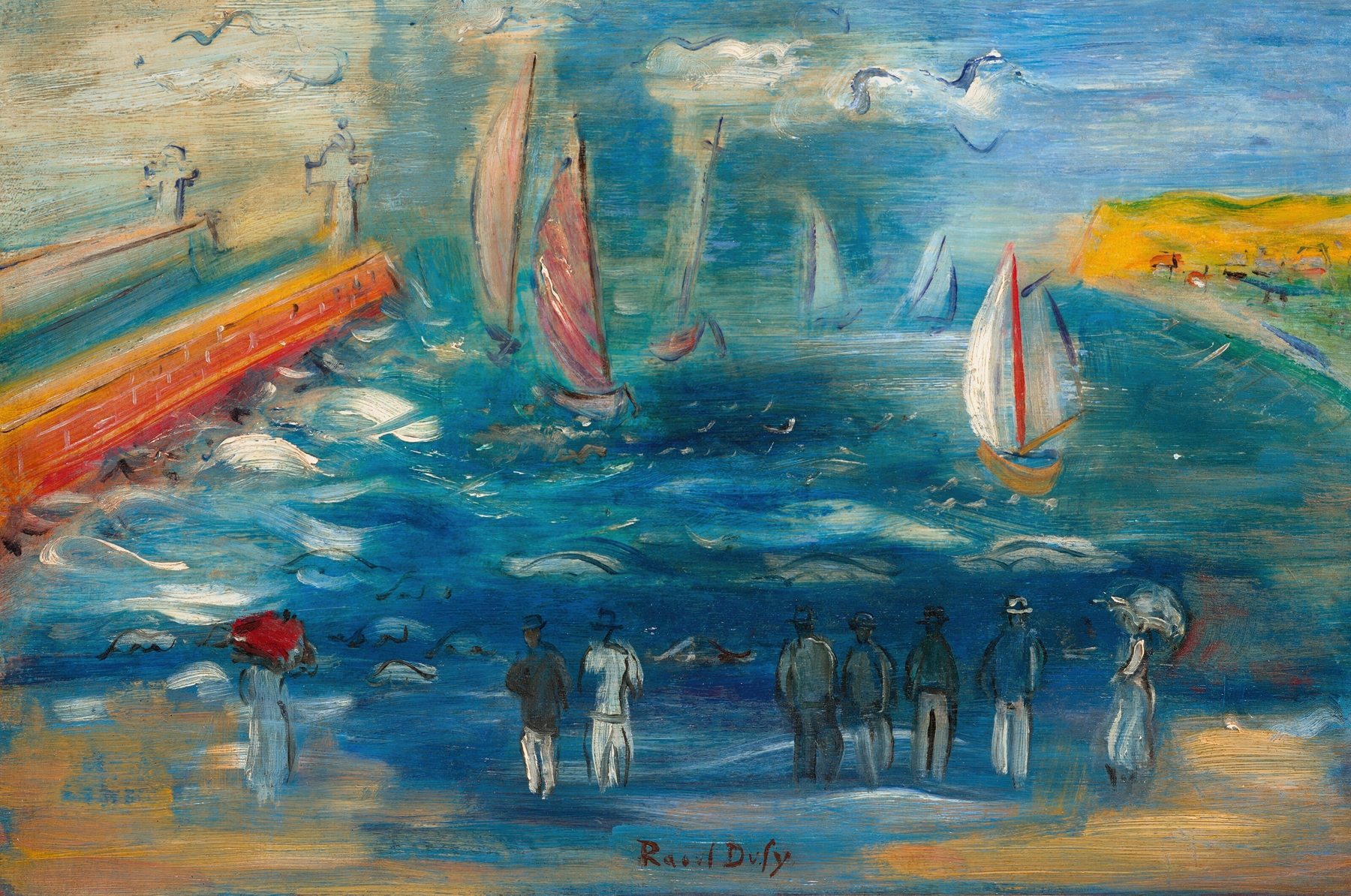
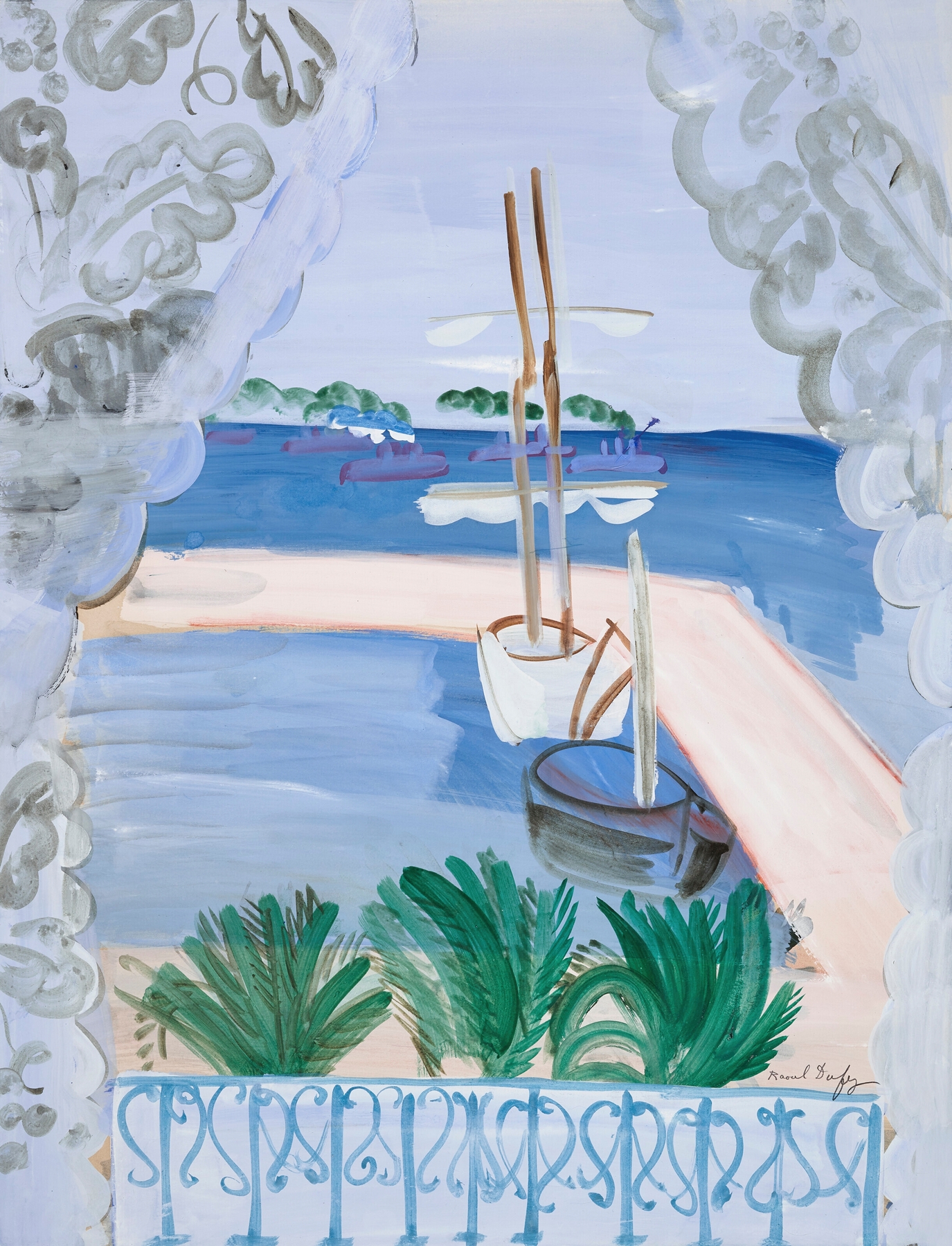
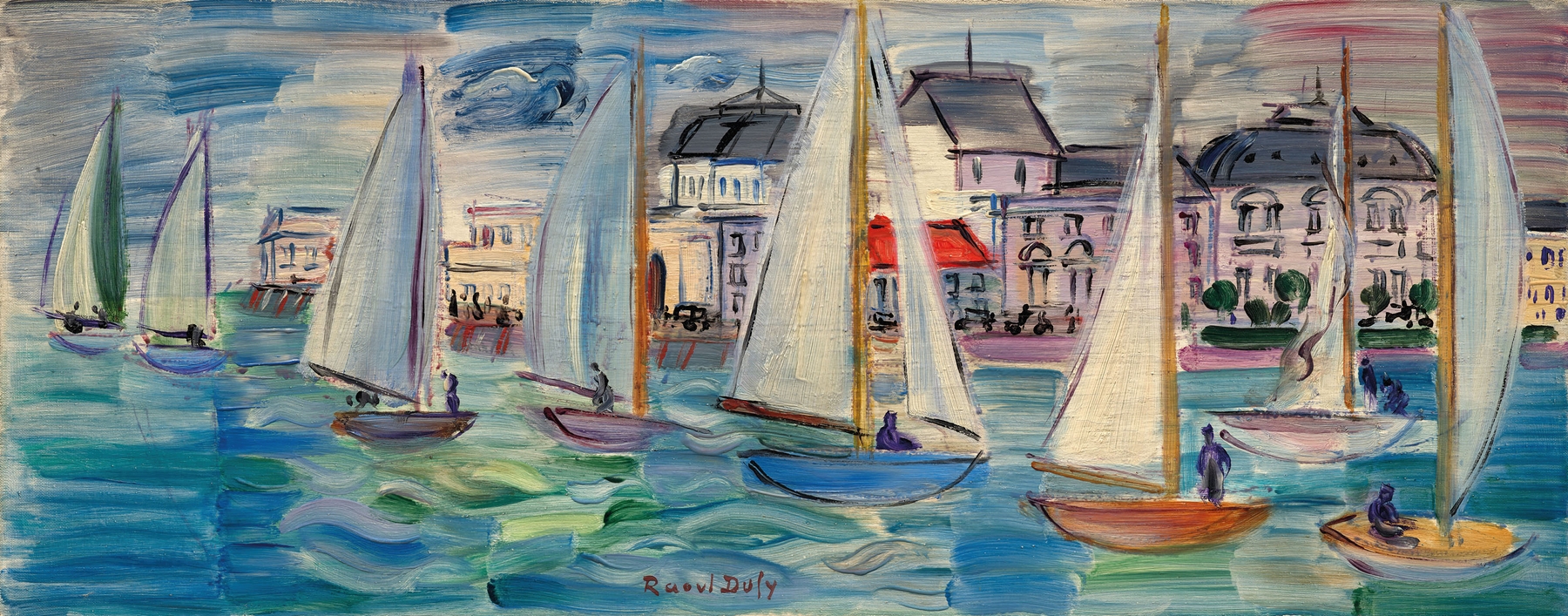
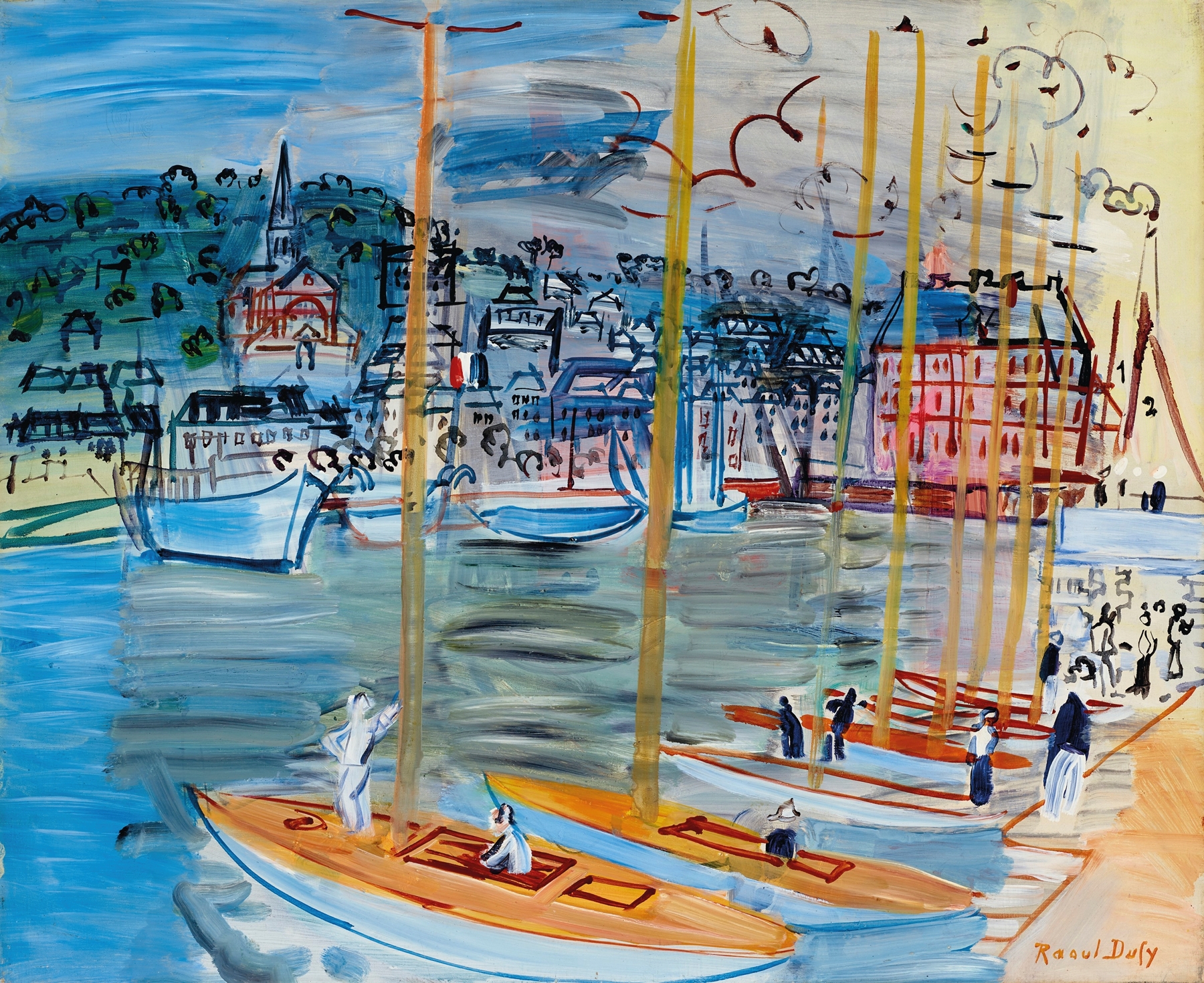
Who listens when art speaks of silence? In Le bassin de Deauville, Raoul Dufy captures a tranquil moment that invites contemplation, turning the void into an orchestra of color and form. Look to the left at the vivid azure of the water, where gentle ripples dance beneath the reflection of a sun-dappled sky. The soft, elongated brushstrokes create a sense of movement, guiding your gaze effortlessly across the canvas.
The contrasting warm hues of the boats anchored in the foreground accentuate the cool serenity of the water, balancing vibrant life against stillness, while the minimalism of the scene reinforces a quiet beauty inherent in leisure. Dufy’s choice to depict a seemingly mundane moment—the stillness of boats at rest—hints at deeper themes of isolation and peace amid chaos. The emptiness of the dock evokes a sense of longing, as if waiting for something that may never come. The juxtaposition of light and shadow provides an emotional resonance, suggesting that even in silence, there can be profound stories hidden beneath the surface.
In 1938, Dufy created this piece during a time of personal challenge, as he faced health issues that would soon affect his career. Living in France, the art world was embracing new movements, yet Dufy remained devoted to his own vibrant palette and style. The world was on the brink of war, making the serene calmness of this painting a poignant reminder of fleeting tranquility in an increasingly unpredictable time.