Le Port du Havre — History & Analysis
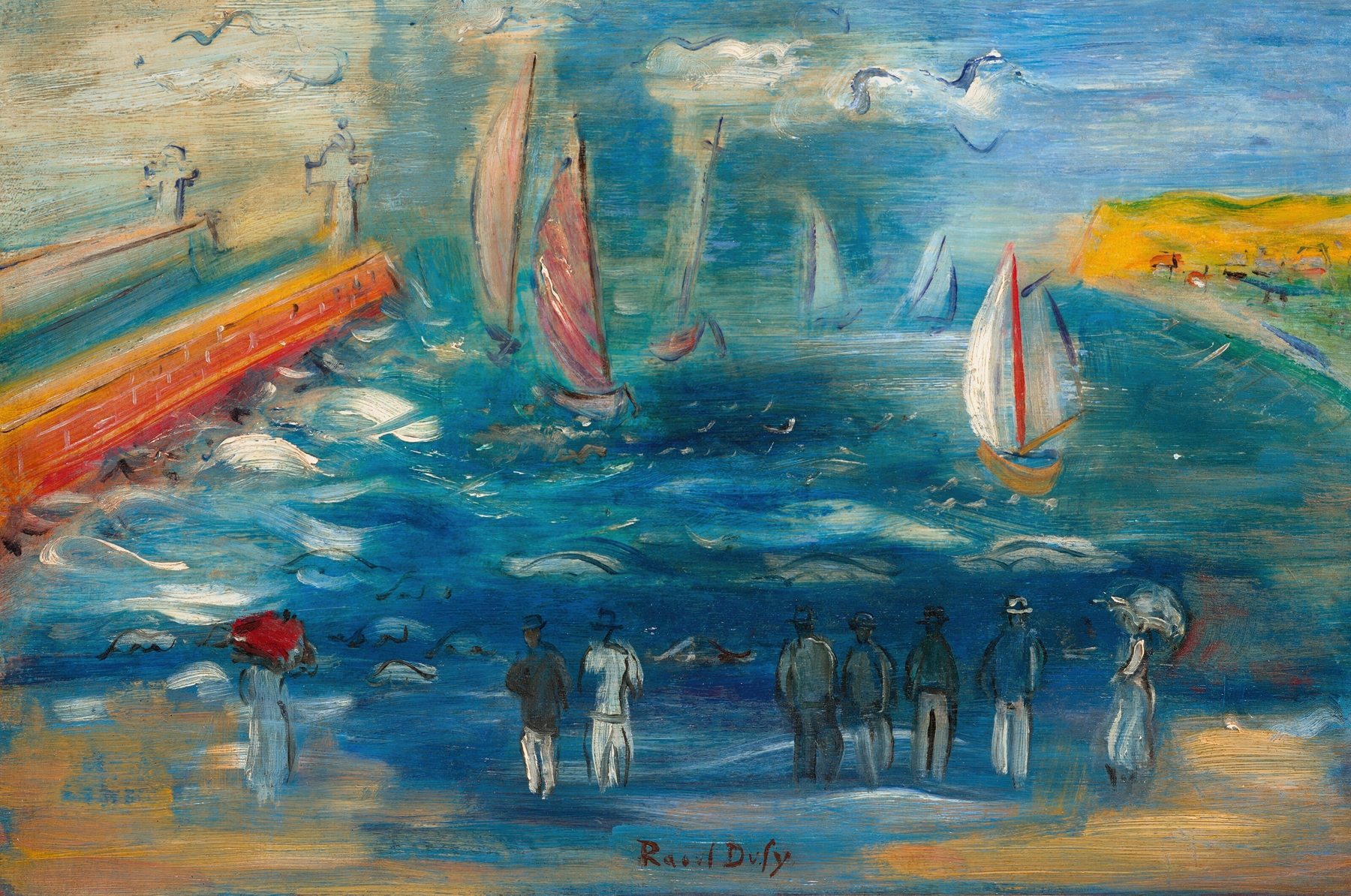
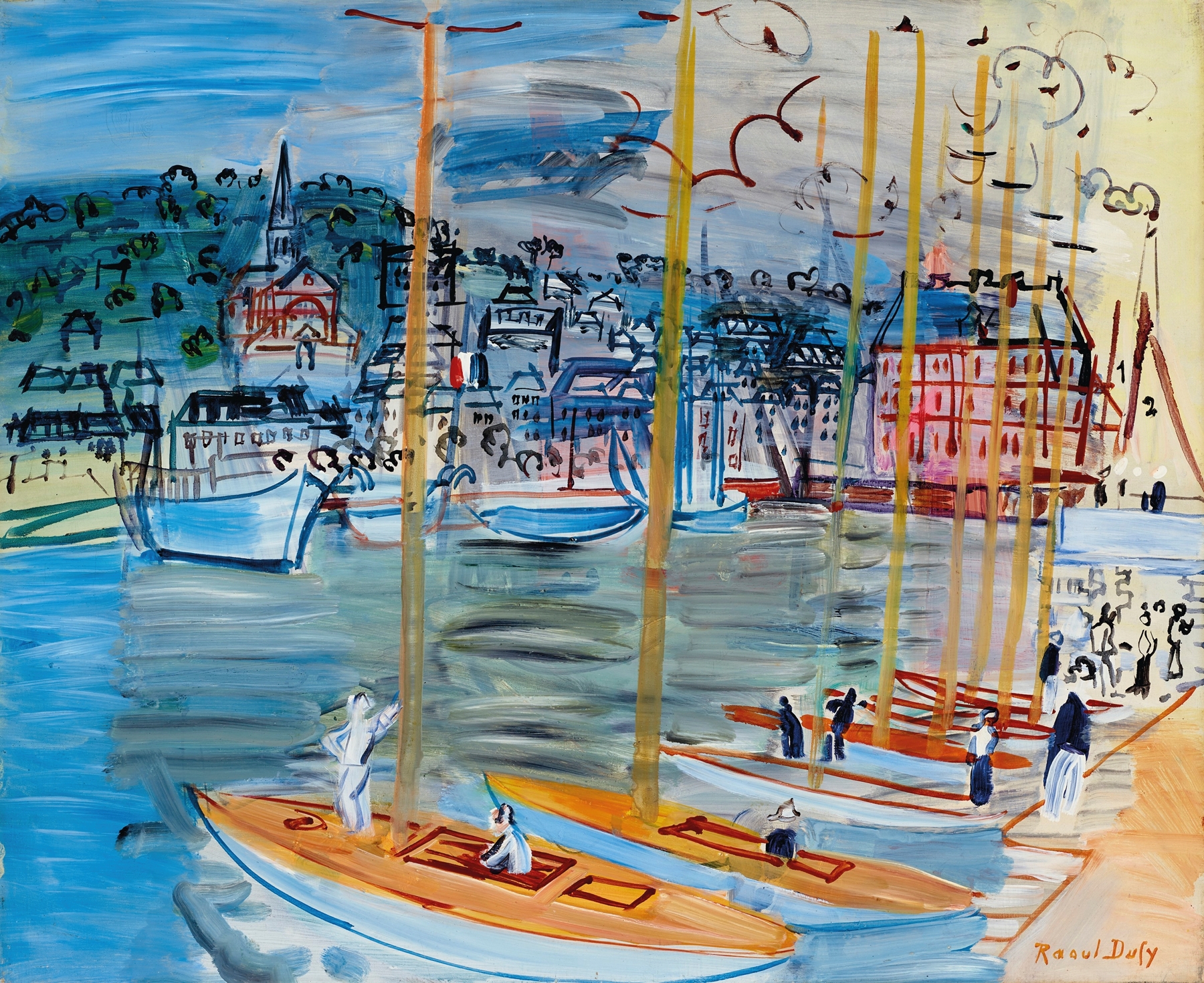
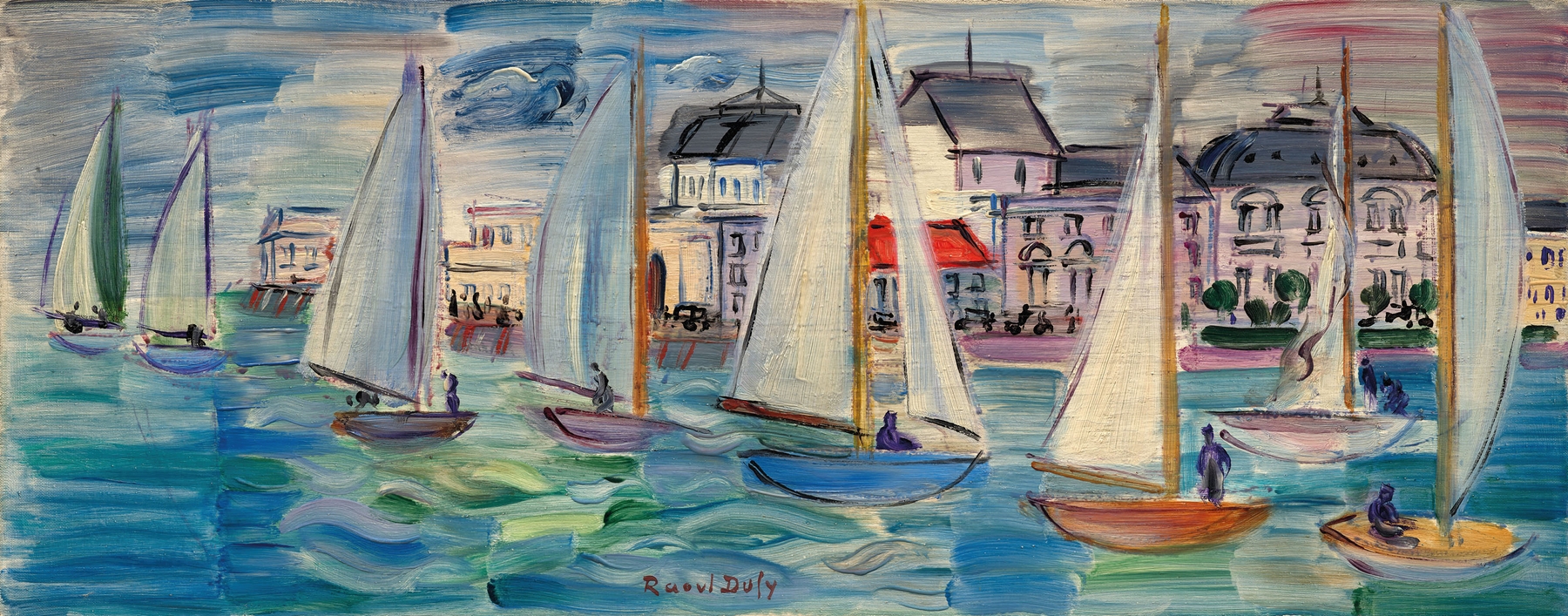
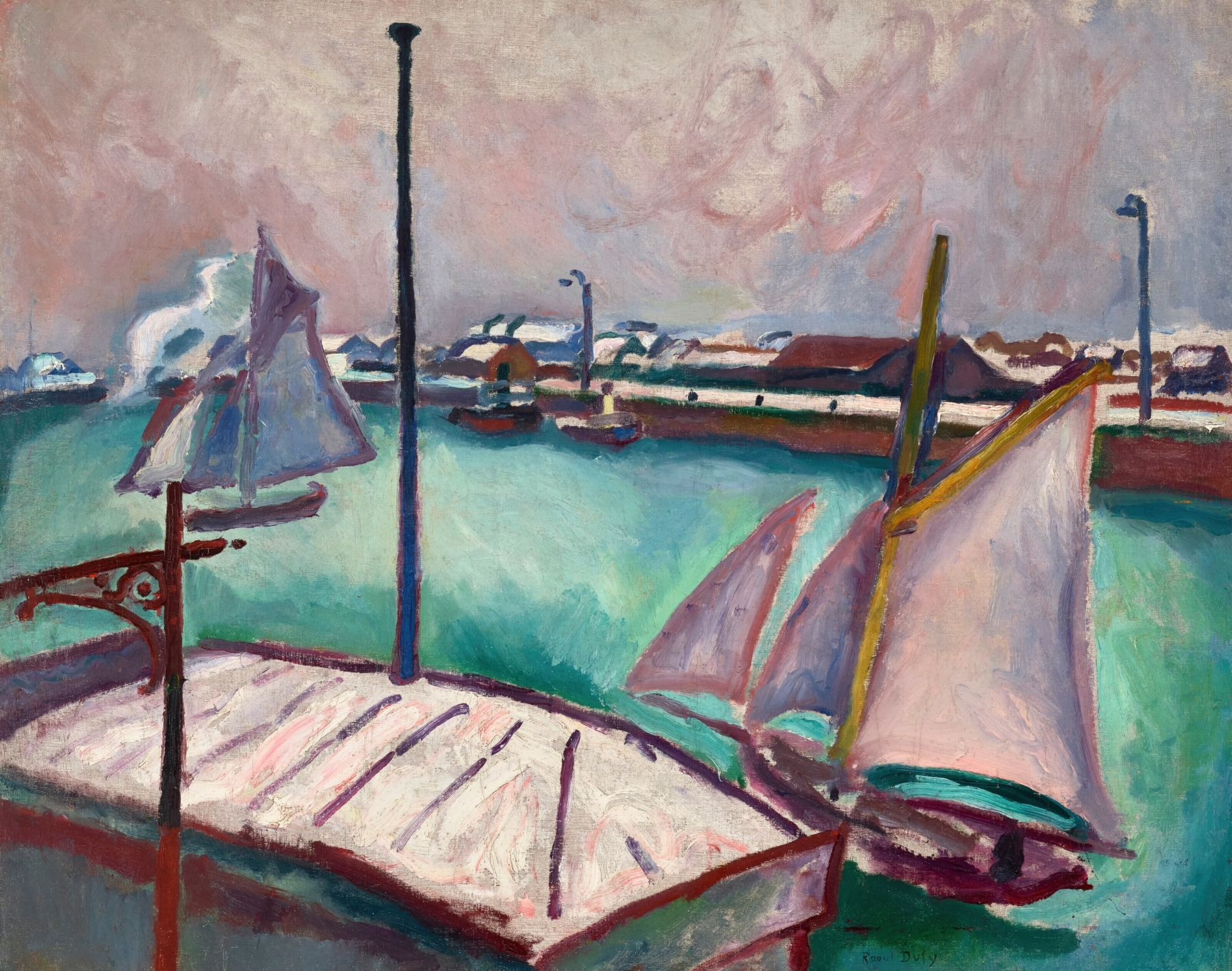
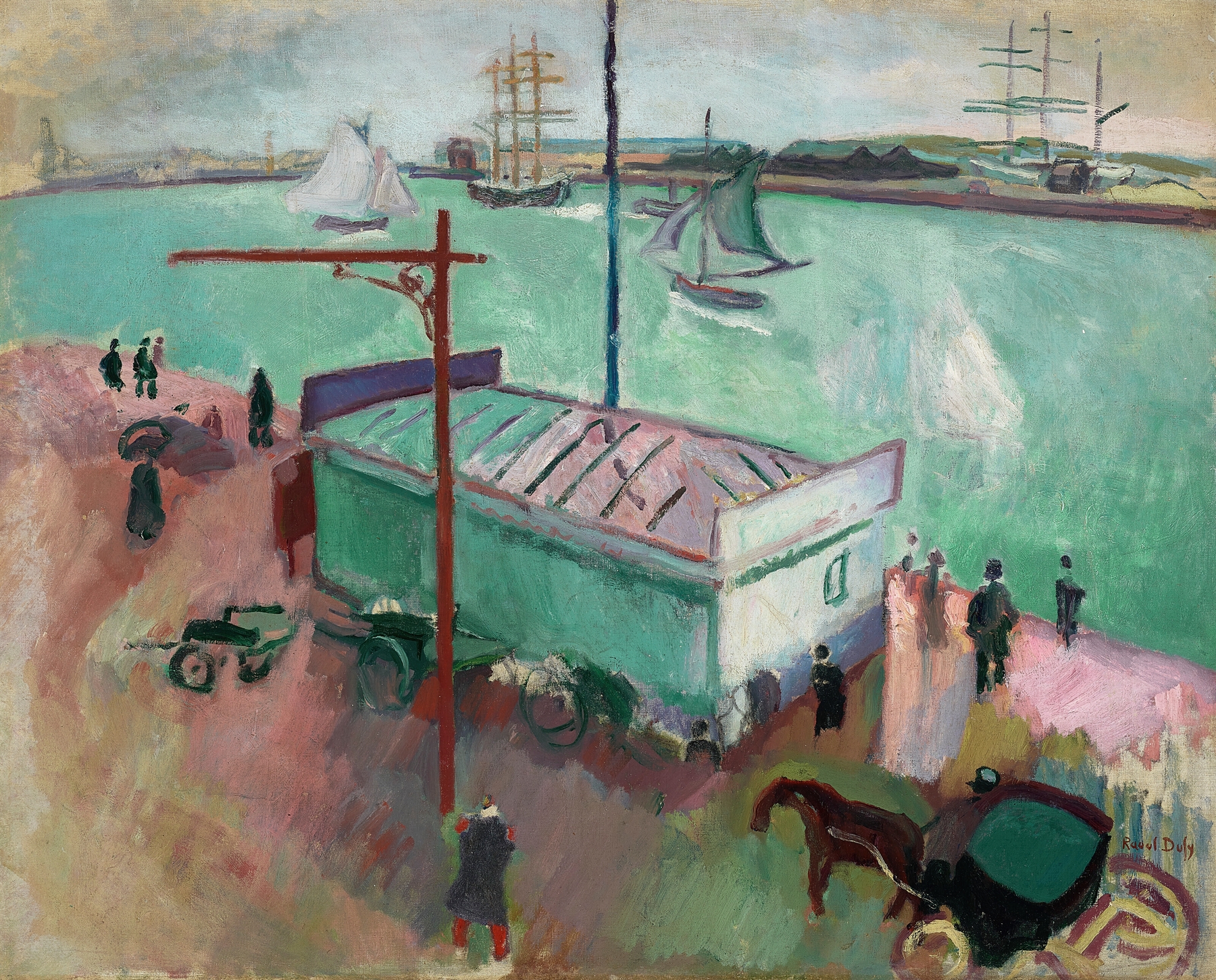
“To paint is to remember what time wants us to forget.” Such is the duality of memory—an act of creation intertwined with an undercurrent of fear. In Le Port du Havre, the artist encapsulates the bustling life of a harbor, a moment suspended yet alive with possibilities and the ever-present tide of time. Look to the top-left corner where vibrant blues mingle with touches of white, suggesting the sky’s reflection on the water’s surface. The strokes are loose and fluid, pulling your eyes toward the boats bobbing lazily in the harbor. Notice how Dufy’s palette is both vivid and yet somewhat muted, echoing the interplay between joy and a hint of melancholy.
The composition leads you through the scene, from the bustling figures on the docks to the distant silhouettes of ships, each element contributing to a harmonious yet dynamic whole. Within this lively tableau, contrasts abound. The vibrancy of the sunlit boats clashes with the shadows cast by looming structures, evoking a sense of fear lurking within the joy of everyday life. The figures, though animated in motion, appear almost solitary against the expansive backdrop, hinting at the isolation that can dwell amidst community.
Each brushstroke serves as a memory of fleeting moments, capturing both the beauty of life and the underlying anxieties that time and transition bring. Painted in 1906 during a period of innovation and change, Dufy explored the realms of Fauvism, breaking conventions with bold colors and forms. At this time, he was living in Paris, immersed in a vibrant art scene that was embracing new expressions of emotion and light. The world was in flux, with the echoes of the past and promises of the future colliding at every turn, reflecting the fear that dances along the edges of progress.