Souvenir du Havre — History & Analysis
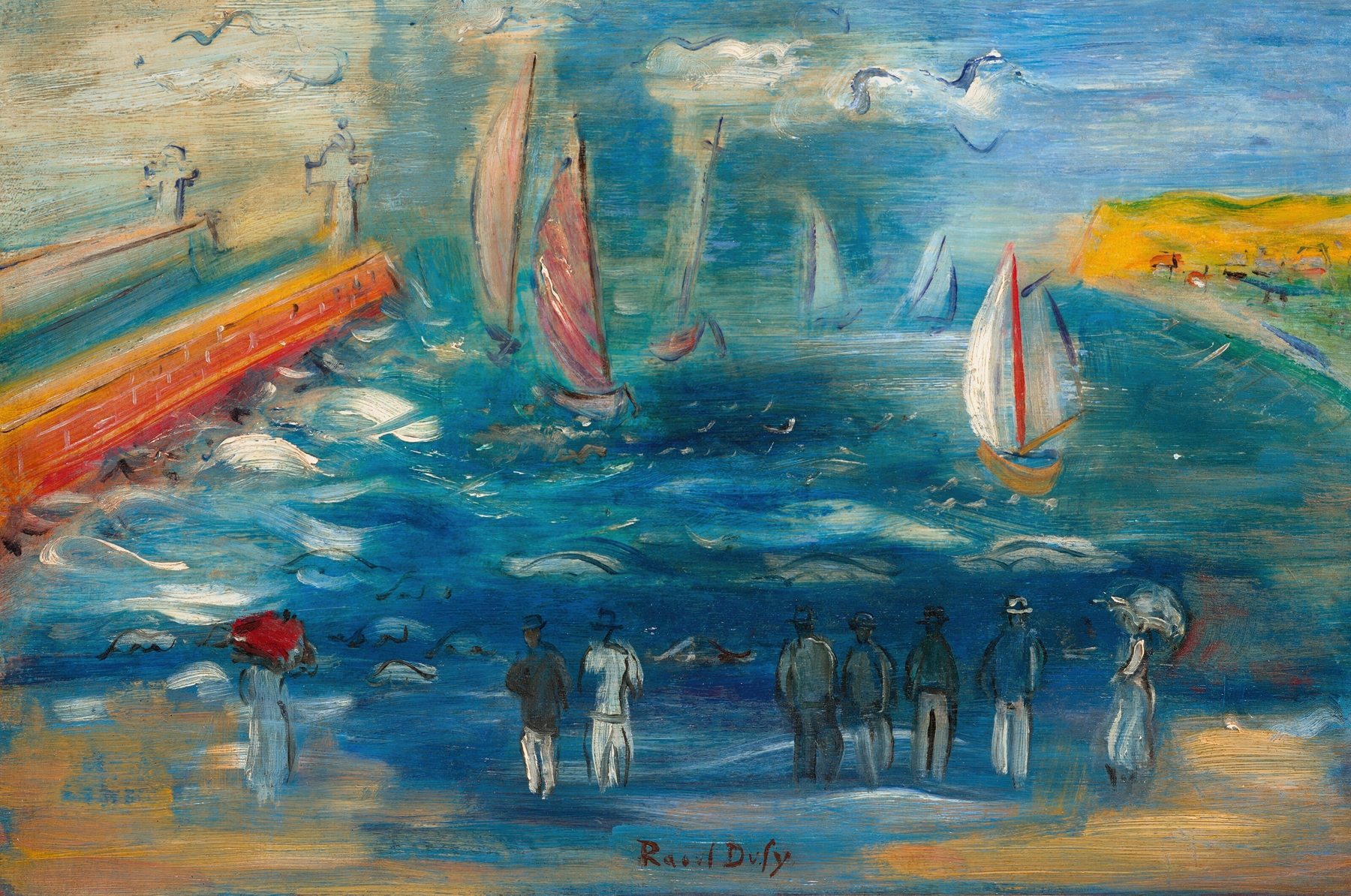
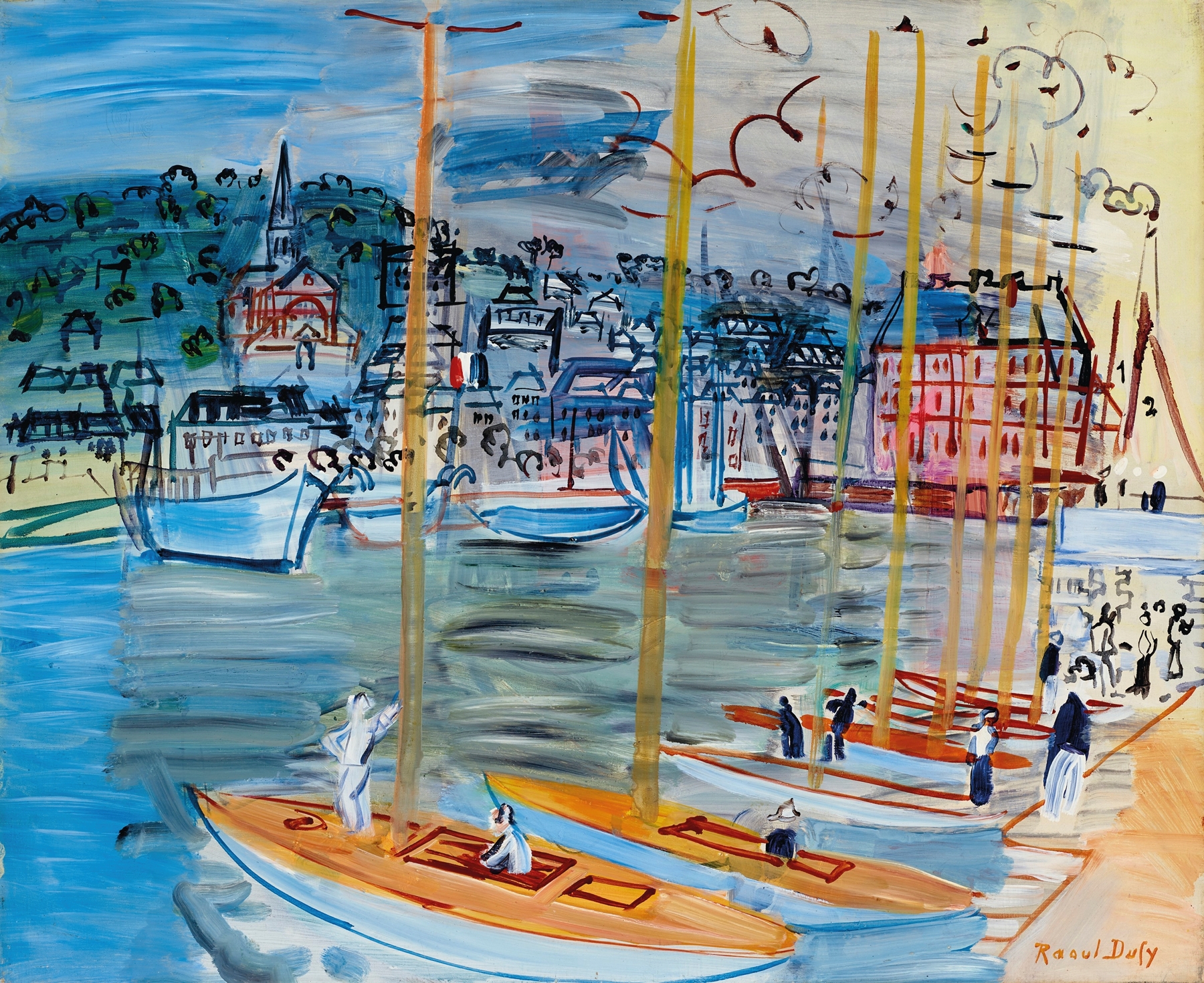
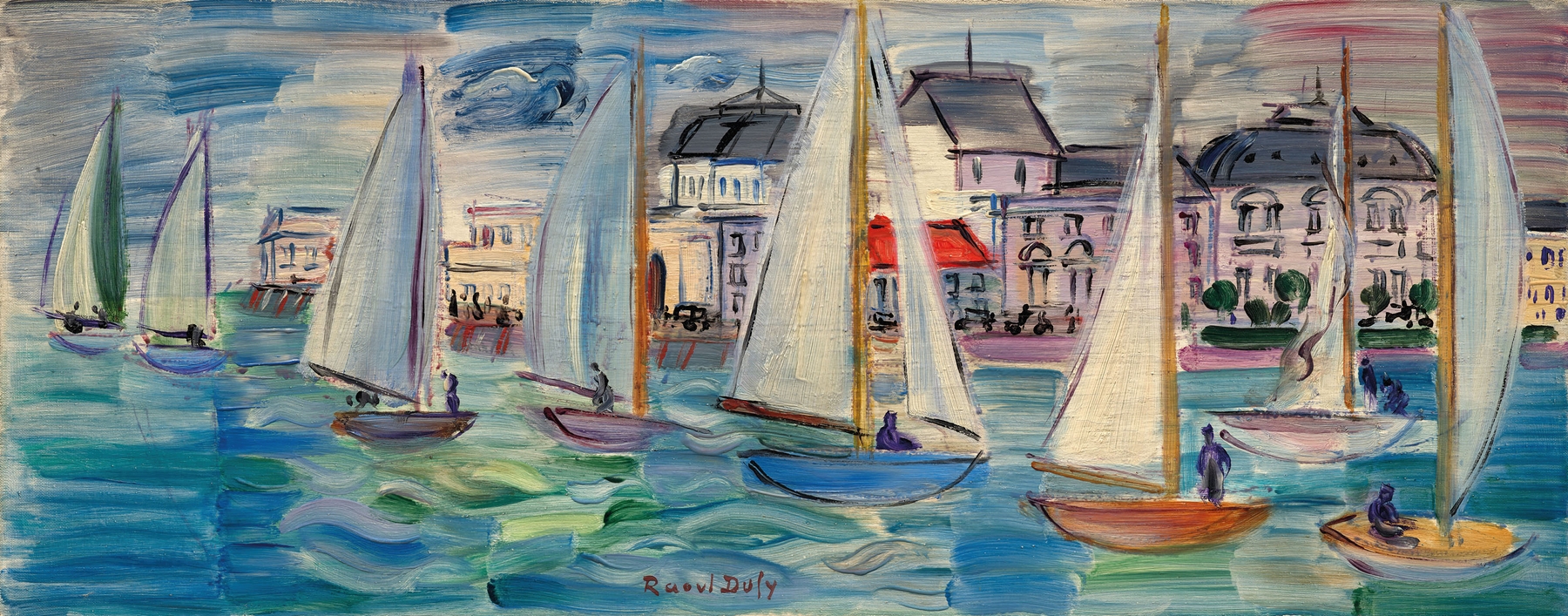
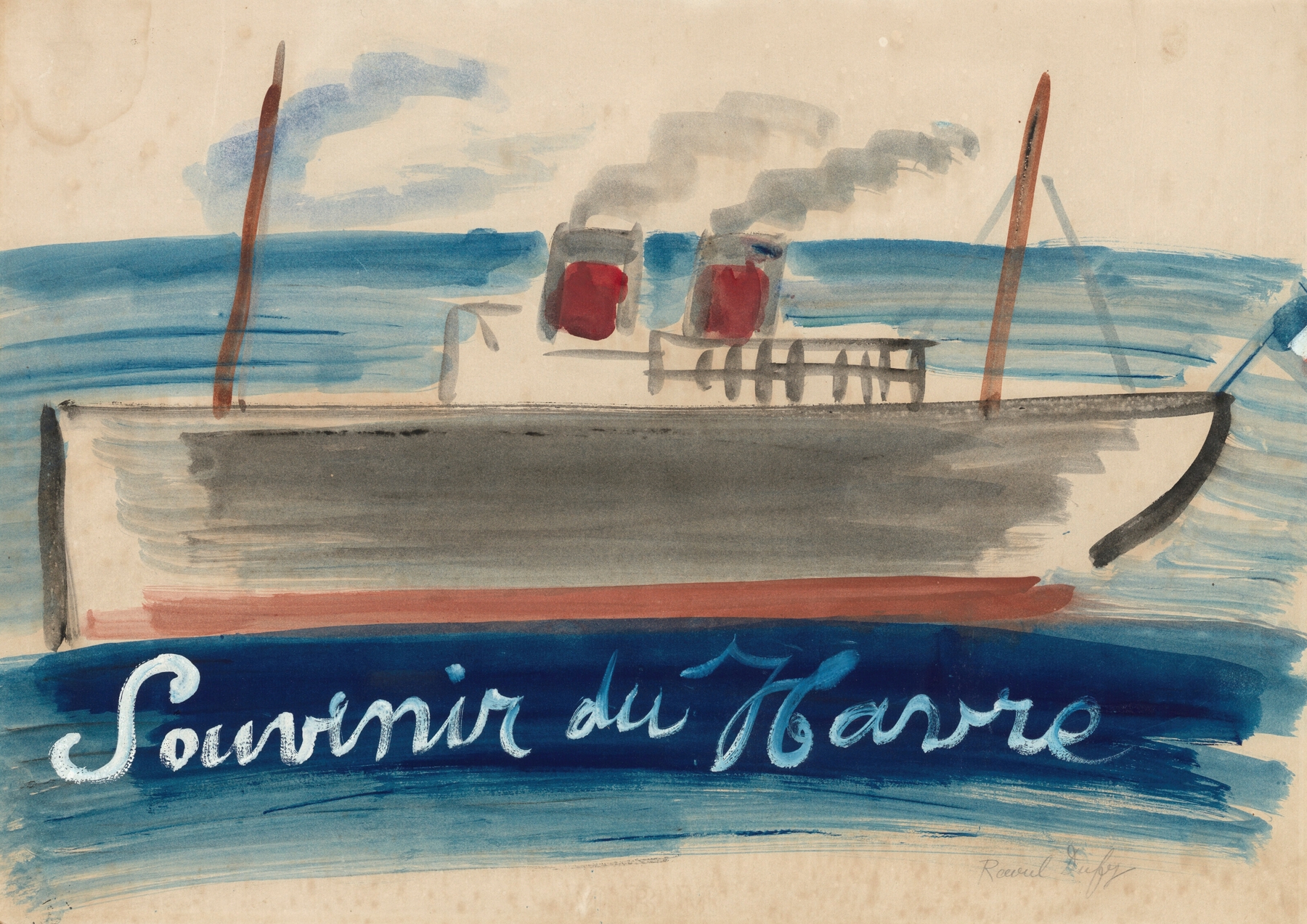
What if silence could speak through light? In Souvenir du Havre, Raoul Dufy captures that intimate conversation, where the vibrancy of color reverberates in the stillness of the moment. Look to the left at the bold strokes of blue, mirroring the serene waters of the harbor, while soft touches of white dance across the scene, suggesting the gentle caress of a breeze. The composition gracefully arranges boats and buildings in a harmonious rhythm, each element carefully placed to evoke a sense of tranquility.
The palette combines vivid hues with pastel whispers, creating a visual symphony that mirrors the silence of a fleeting sunset. Within this calm, hidden tensions emerge. The playful juxtaposition of lively color against the stillness of the scene invites reflection on the nature of memory and time. The boats, though still, seem poised for movement, suggesting both departure and arrival, embodying the transitory essence of life.
The light, soft and diffused, further heightens this dichotomy, revealing layers of meaning beneath its outward beauty. Dufy painted Souvenir du Havre in 1921 during a period marked by his growing reputation as a leading figure in Fauvism. Working in his native Le Havre, he sought to depict the essence of the harbor, a place filled with memories of his childhood. At this time, the art world was embracing new forms of expression, and Dufy's innovative use of color and light reflected the optimism and vibrancy of the post-war era.