La Place d’Hyères, L’Obélisque et le kiosque à musique — History & Analysis
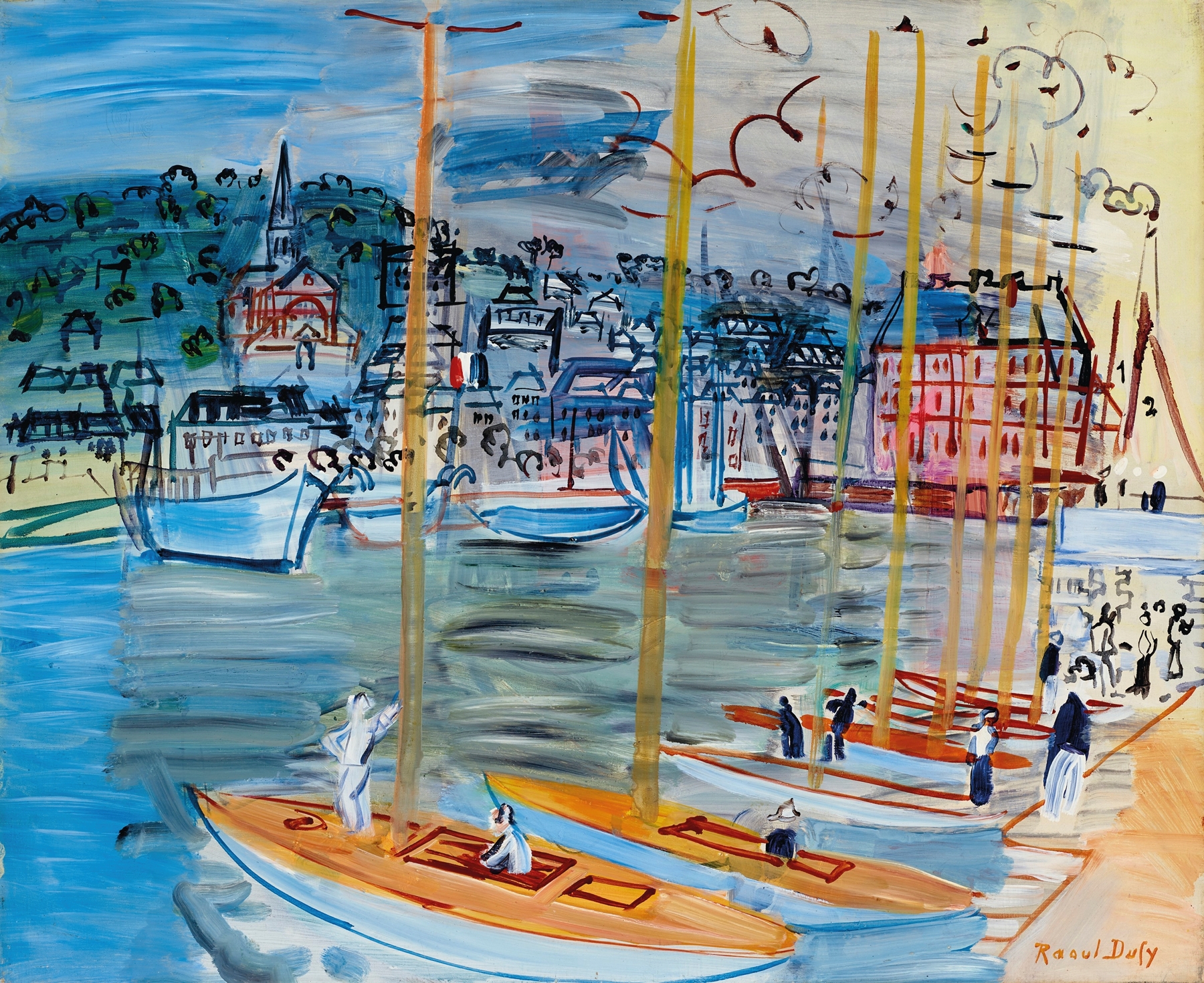
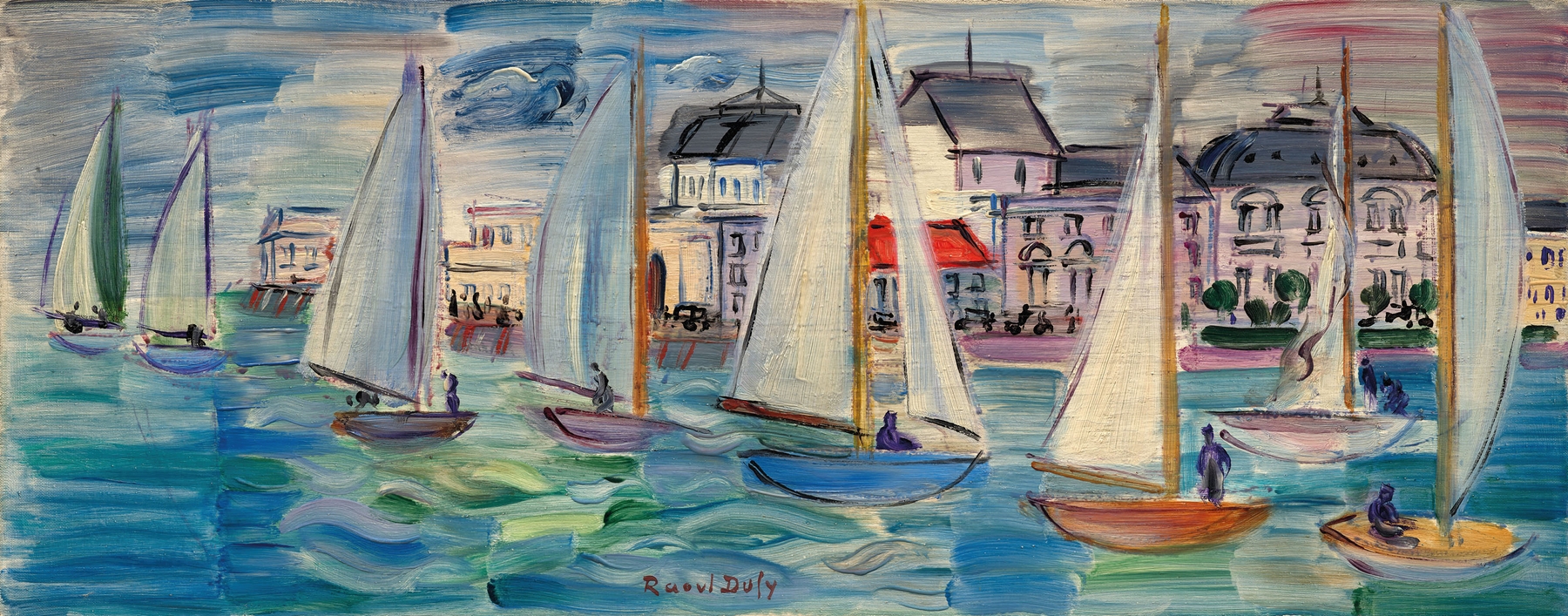
Where does light end, and longing begin? In the delicate interplay of colors, fragility emerges, whispering tales of fleeting moments captured in time. Focus first on the vibrant blues and yellows that dance across the canvas, drawing your eye to the enchanting obelisk at the center. Notice how the sunlit strokes caress the surrounding architecture, illuminating the kiosk's intricate details like a passing memory.
Dufy’s bold brushwork brings a sense of movement and life; the figures scattered throughout appear to sway in tune with the gentle breeze, embodying the rhythm of a sun-drenched day. Yet, amid this joyous scene lies an undercurrent of solitude. The soft, overlapping brushstrokes suggest both connection and separation—the lively crowd a mere backdrop to the quiet intensity of longing. The juxtaposition of light and shadow creates an emotional tension, hinting at the fragility of these joyful moments.
Each figure, though engaged in the festivity, carries an unspoken yearning, revealing the transient nature of happiness. In 1927, Raoul Dufy painted this work amidst a burgeoning trend in modernism, embracing color and abstraction while exploring the essence of human experience. Living in Paris, he was influenced by a world recovering from war and yearning for renewal, manifesting a vibrant optimism that characterizes this piece. This artwork reflects not only his personal journey but also the collective desire for joy in an age marked by fragility and change.