Landscape from Bretagne — History & Analysis
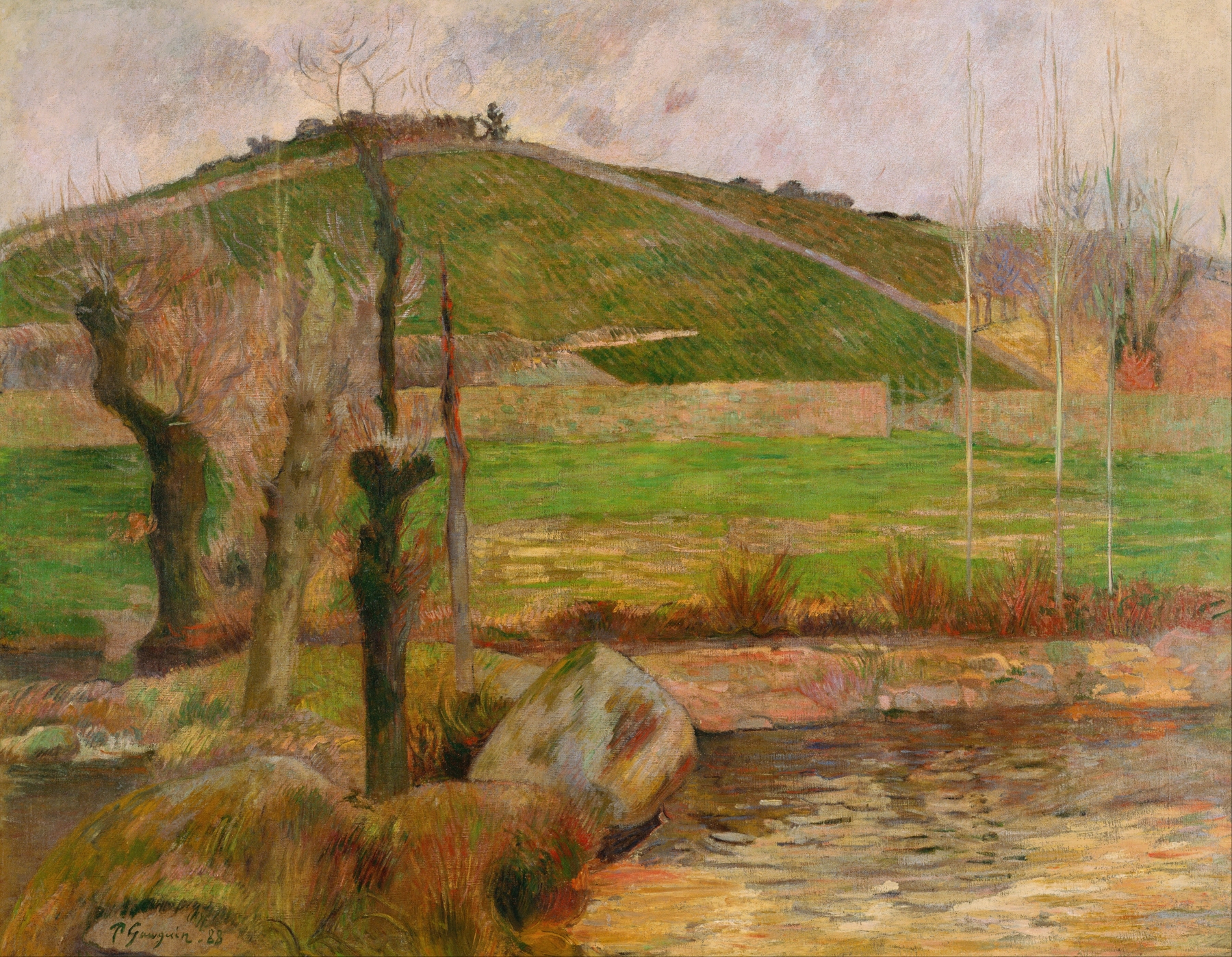
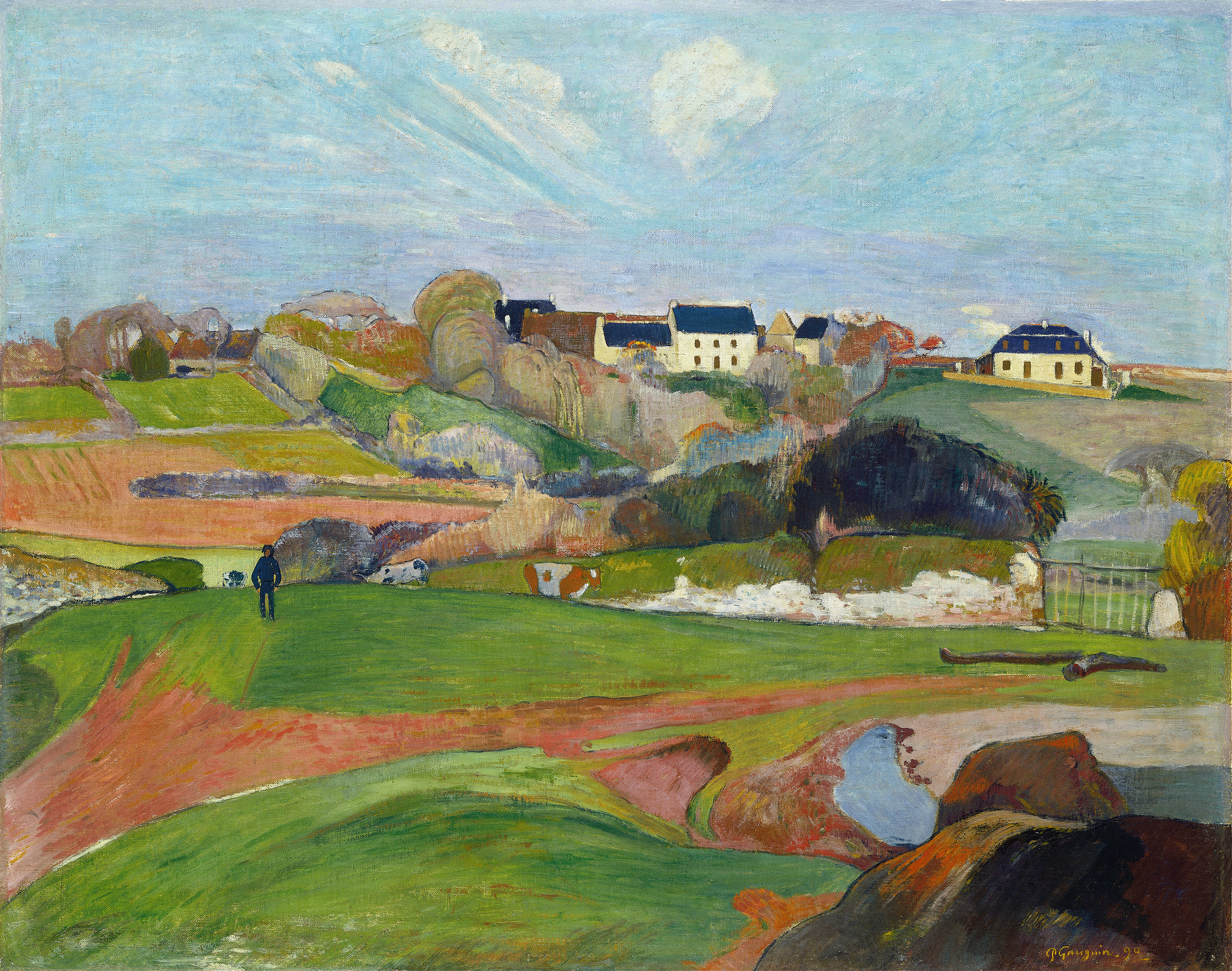
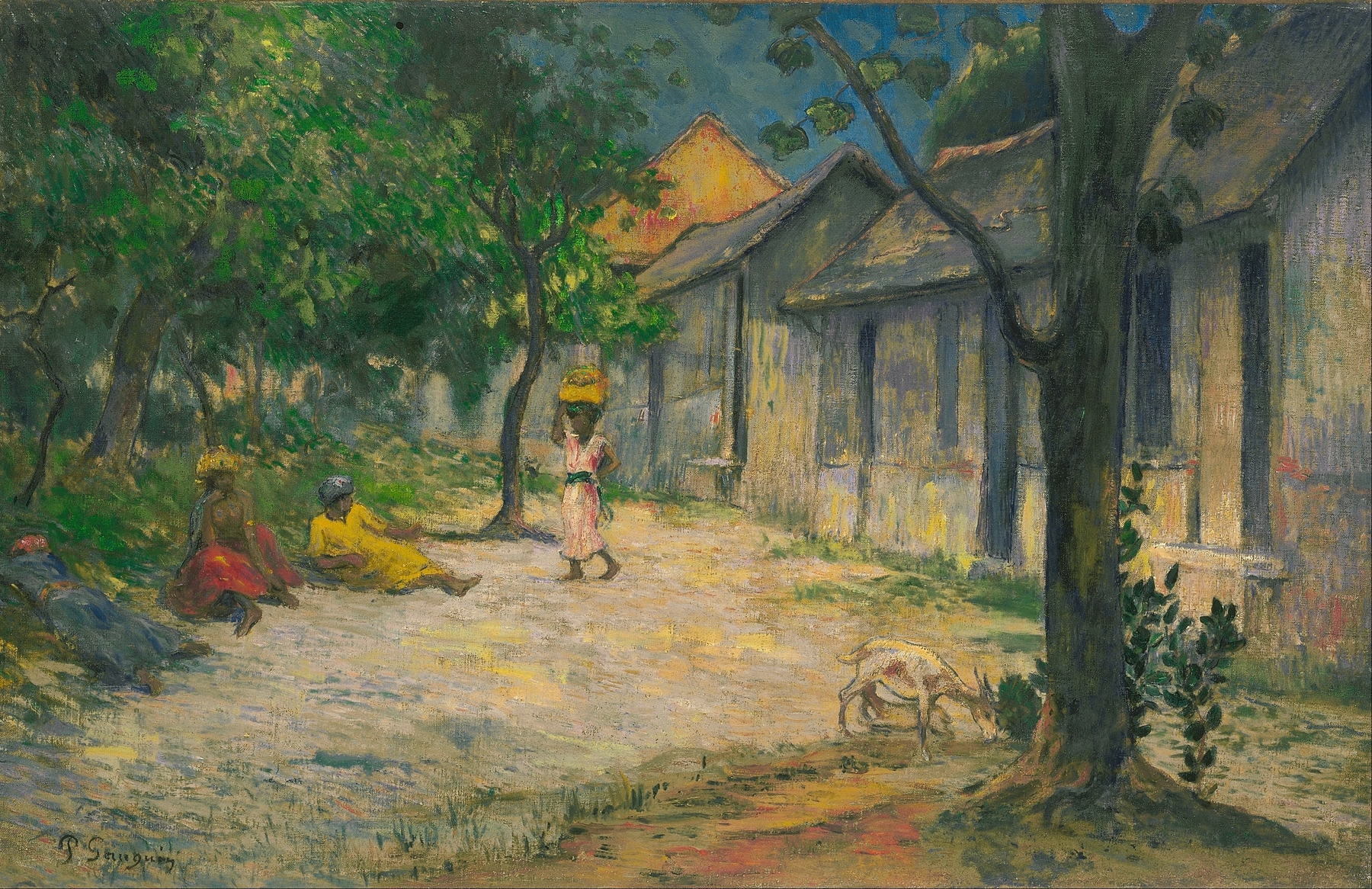
Can paint confess what words never could? In Landscape from Bretagne, the canvas becomes a vessel of destiny, whispering secrets of a tranquil yet profound existence. Look to the bottom left, where the earthy hues of the soil merge seamlessly with the verdant greens of the grass, creating a foundation grounded in nature. As your eyes travel upward, notice how the vibrant blues of the sky stretch expansively, punctuated by wisps of white clouds that seem to cradle the horizon.
The brushwork, both spontaneous and deliberate, conveys an energetic rhythm, inviting the viewer to immerse themselves in the landscape's embrace. Beneath the surface, a tension exists between the vivid colors and the simplicity of the scene—a reminder of life's dichotomies. The juxtaposition of the dynamic sky against the still earth suggests a struggle between the celestial and terrestrial, hinting at the inevitability of change. Each brushstroke speaks to a sense of yearning and connection, reflecting Gauguin's deep desire to find meaning beyond the visible world.
During the late 19th century, when this piece was likely created, Gauguin was exploring new artistic directions, seeking solace in the rural landscapes of Brittany. The period marked his transition from conventional Impressionism toward a more symbolic and expressive style. This shift mirrored his search for authenticity in art and life, as he distanced himself from the constraints of the Parisian art scene to reveal the essence of human experience.