Landscape from Saint-Tropez — History & Analysis
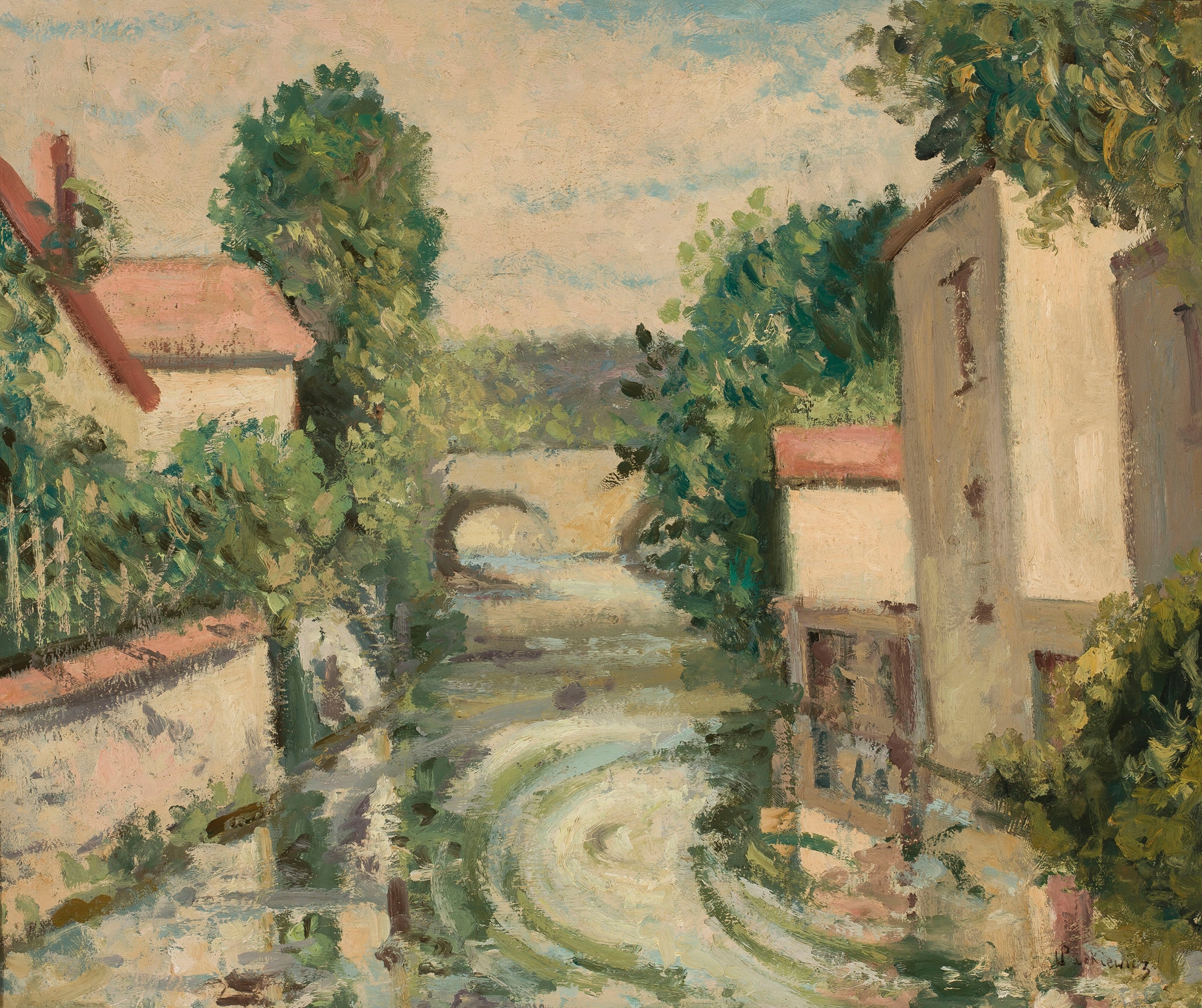
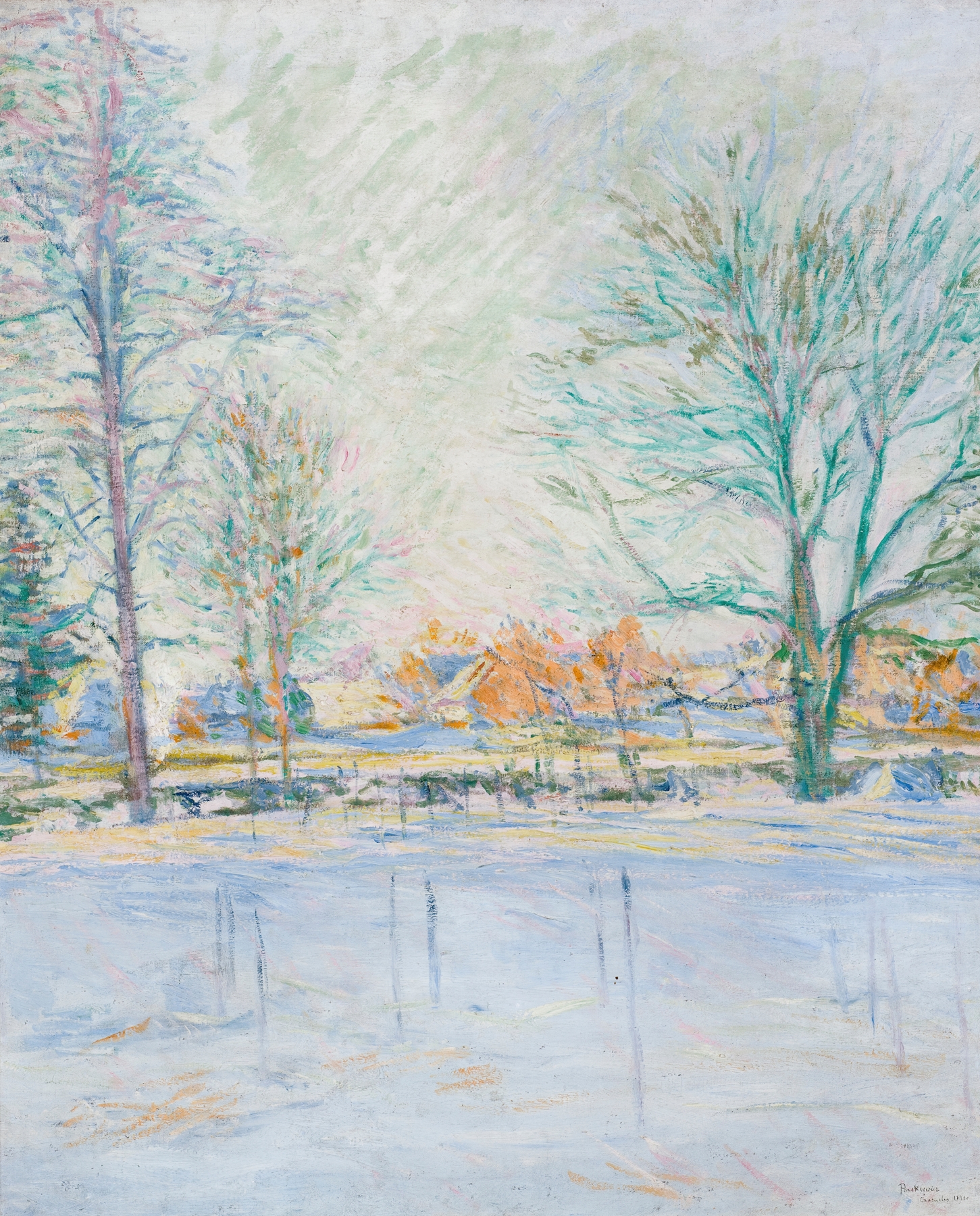
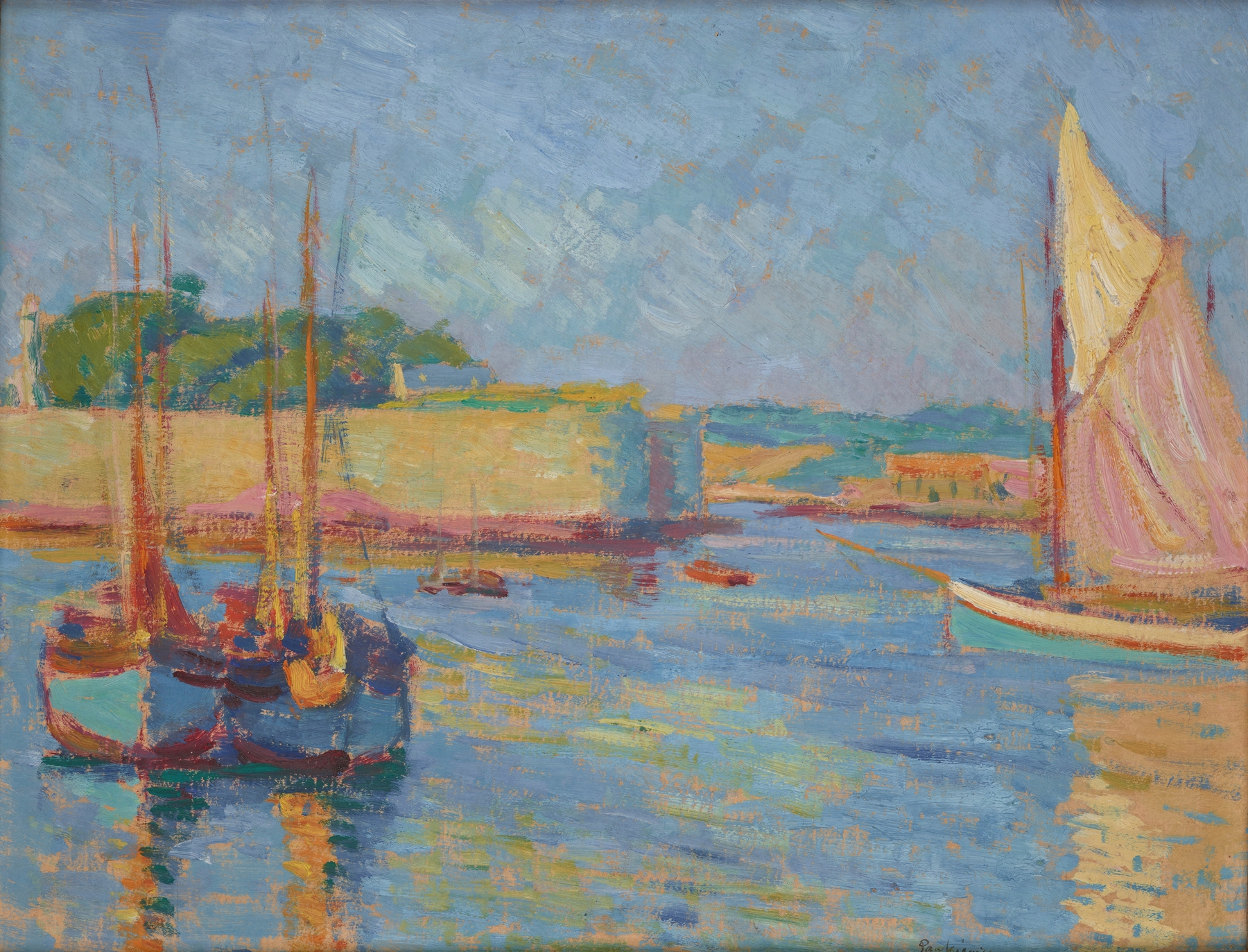
Could beauty survive in a century of chaos? This poignant question resonates as one gazes upon the gentle hues and delicate interplay of light in this stunning landscape. Look to the foreground, where verdant greens of flourishing shrubs beckon the eye, their vibrancy illuminated by the golden sun. Notice how the warm light spills across the canvas, casting soft shadows that breathe life into the scene. The brushstrokes, both fluid and intentional, guide the viewer’s gaze towards the horizon, where the tranquil sea meets a dreamy sky, painted in swirling pastels of blue and pink.
Each element harmonizes, creating a sense of serene balance that invites reflection and contemplation. Yet, beneath this idyllic facade lies the tension of transition. The contrast between the lush landscape and the encroaching darkness of the distant mountains hints at the fragility of beauty, symbolic of an era on the brink of upheaval. The light, pervasive and warm, serves as a reminder of fleeting moments of peace amidst the uncertainties ahead.
One can sense the whispers of history resonating through the brushstrokes, capturing the essence of a world poised on the cusp of change. In 1910, Józef Pankiewicz created this work during his time in Saint-Tropez, a popular refuge for artists seeking solace and inspiration. The burgeoning modernist movement was challenging traditional conventions, while the looming specter of World War I cast a shadow over Europe. This painting reflects both a longing for tranquility and a deep awareness of the chaos that lay just beyond the horizon, encapsulating a moment in time when beauty, indeed, fought to endure.