Landscape from Saint-Tropez – Stone pines — History & Analysis
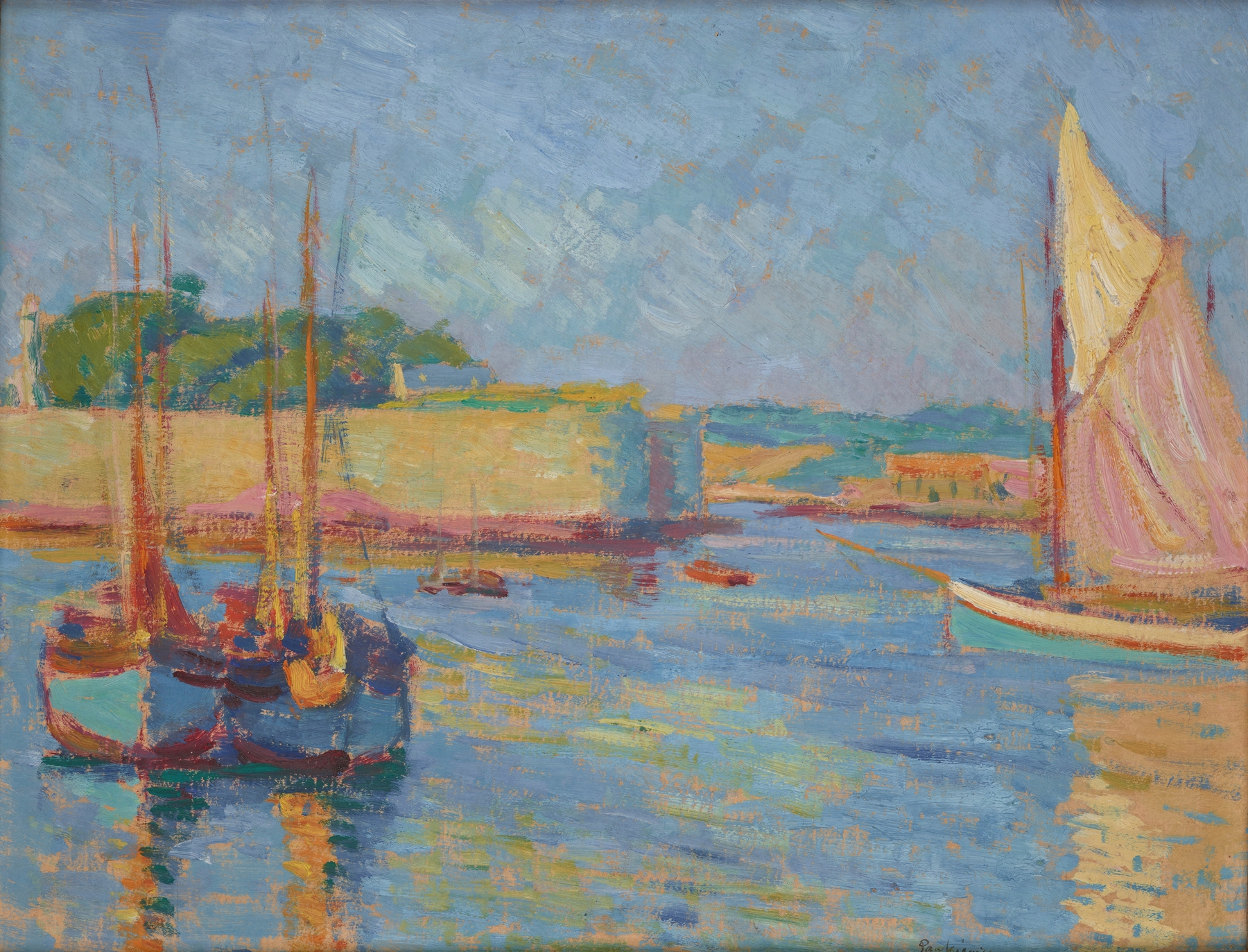
What secret hides in the quiet of the canvas? In Landscape from Saint-Tropez – Stone pines, the turmoil of life is distilled into serene beauty, challenging us to discover the chaos beneath the calm. Look to the left at the stately stone pines, their twisted trunks ascending towards an azure sky, reminiscent of restless spirits caught in a dance with the wind. The strokes—both fluid and opaque—contrast the tranquil blue, creating a sense of movement amidst the stillness of the southern French landscape.
The palette—rich greens and soft golds—imbues the scene with warmth, inviting you to linger, yet the sweeping brushwork hints at an underlying tension. In this artwork, the juxtaposition between the solidity of the trees and the ephemeral quality of the sky evokes a sense of balance between chaos and order. The viewer might feel a whisper of unease as the clouds loom, suggesting an impending change—a reflection of the artist's inner landscape. Each element is meticulously placed, yet there appears to be an inexorable pull towards disruption, as if the natural world is on the brink of upheaval.
Józef Pankiewicz painted this work in 1921 while living in France, a time when modernism was shaping new artistic paradigms. The post-war atmosphere prompted artists to explore deeper emotional truths, and Pankiewicz, influenced by Impressionism yet leaning towards abstraction, sought to express the tension inherent in nature and life itself. This piece stands as a testament to his evolving style and the broader shifts in the art world during this transformative period.