Landscape of the Moon’s First Quarter — History & Analysis
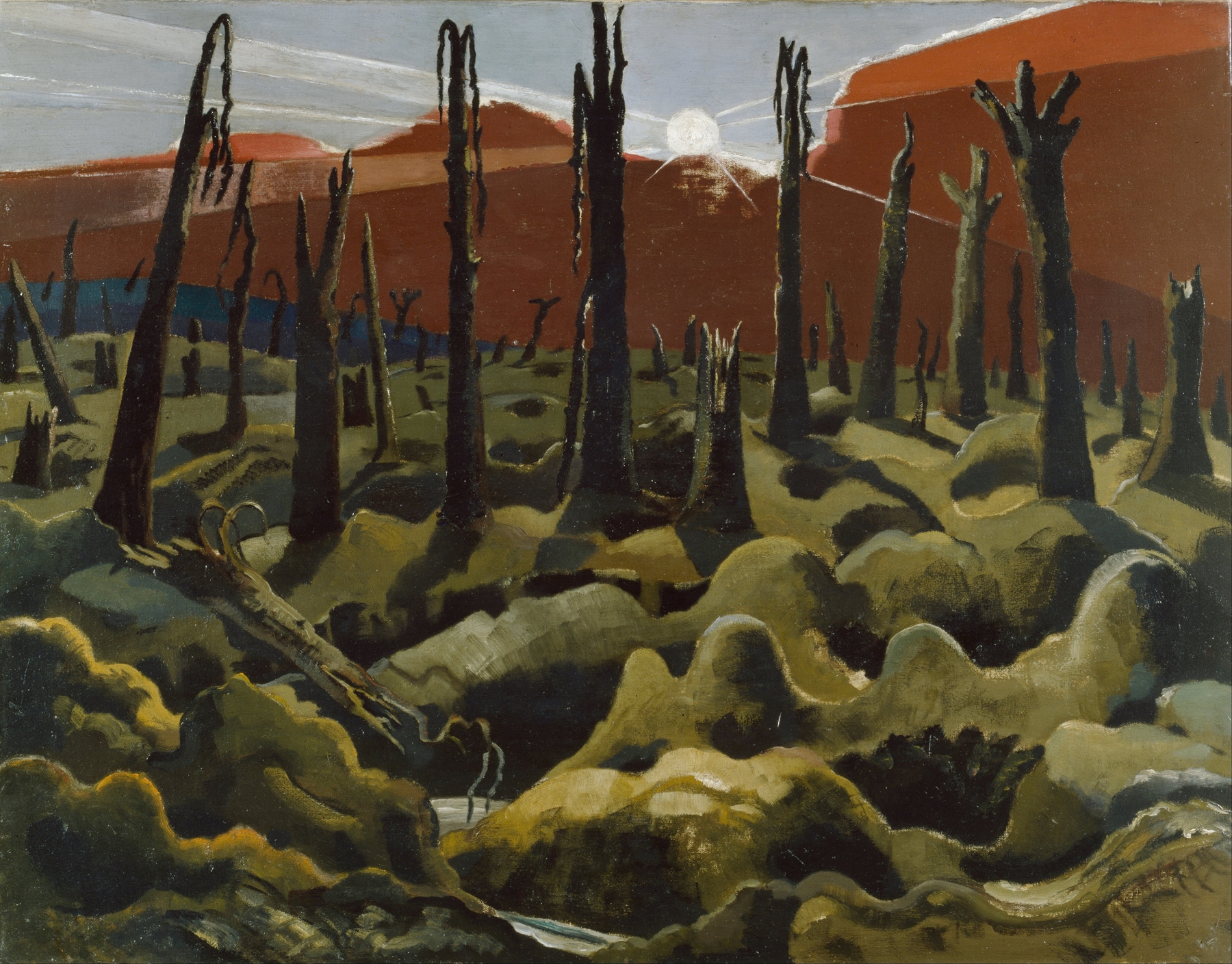
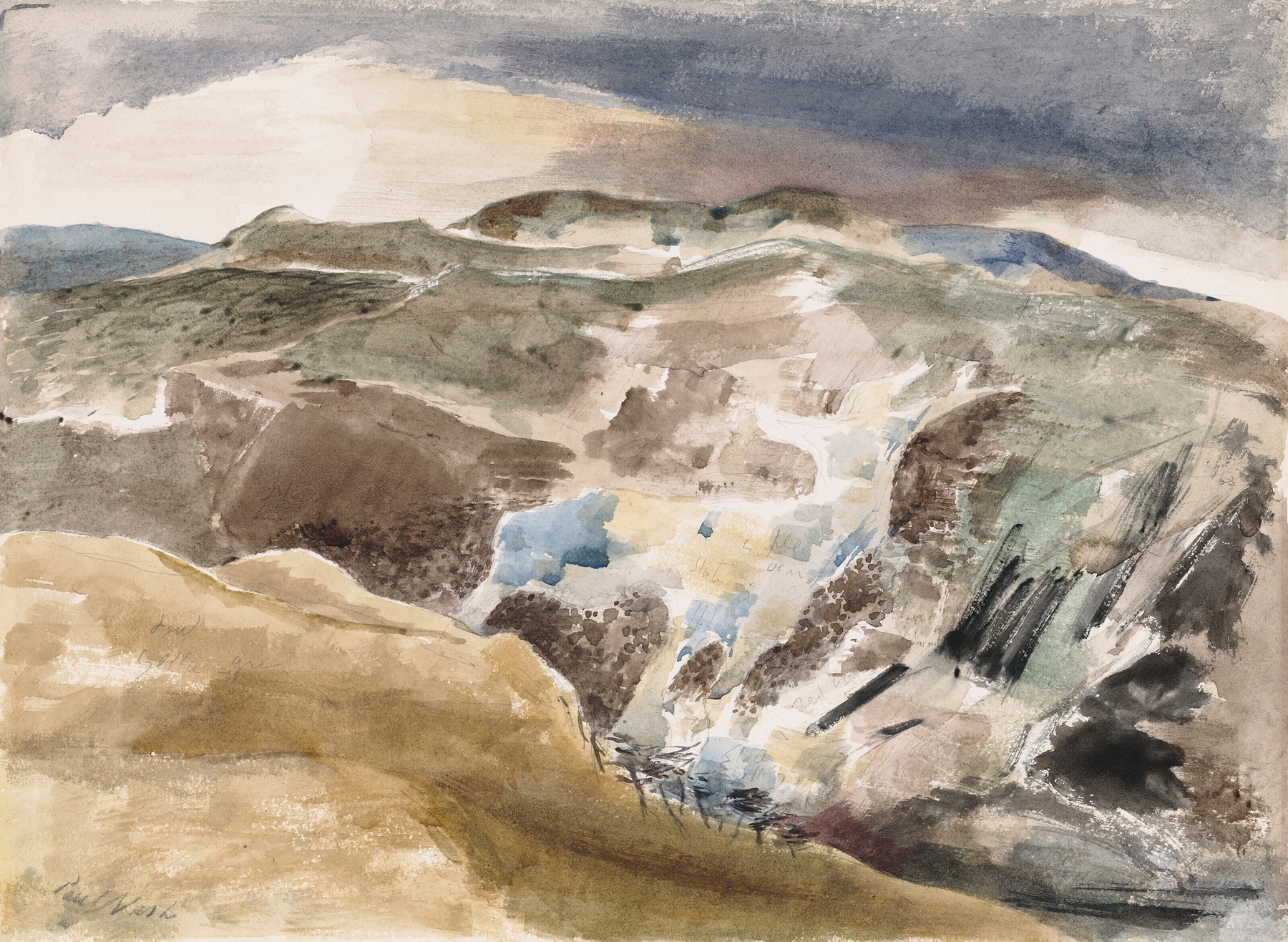
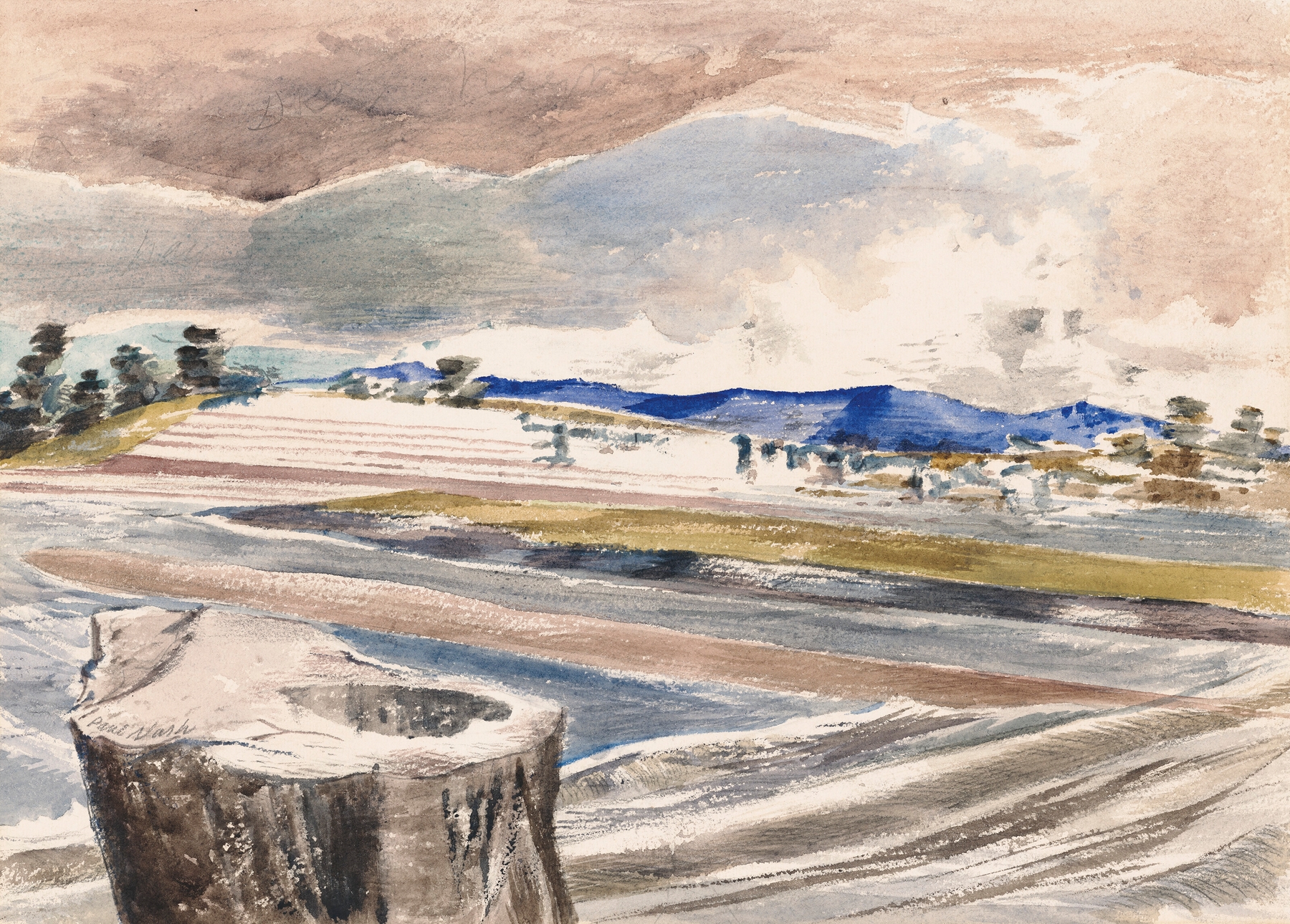
Could beauty survive in a century of chaos? Landscape of the Moon’s First Quarter captures a moment of serene rebirth amid turmoil, inviting contemplation of nature's resilience. Look to the center, where the crescent moon hangs low in the sky, casting a silver glow over the undulating landscape. The stark contrast between dark, brooding clouds and the vibrant patches of light creates a sense of depth, drawing the eye across rolling hills textured with rich greens and browns.
The delicate brushwork reflects Nash's mastery of color, each stroke breathing life into the scene, while hints of abstraction suggest a world both familiar and dreamlike. Beneath the surface, the painting speaks to the duality of existence. The moon symbolizes hope, its phases echoing humanity's cyclical nature of loss and renewal. The tumultuous sky hints at the inner struggles of a world ravaged by conflict, yet the tranquil landscape suggests a quiet defiance—a promise that beauty can endure even in the darkest times.
This tension between chaos and calm evokes profound emotional responses, urging viewers to find solace in the natural world. In 1943, as war raged across Europe, Paul Nash turned to the landscape of his homeland for inspiration. He painted this work during a period of personal and collective upheaval, reflecting the broader themes of grief and regeneration. At this time, Nash was deeply engaged with the art movement that sought to capture the essence of both the sublime and the tragic, positioning him as a pivotal figure in British Surrealism and landscape painting.