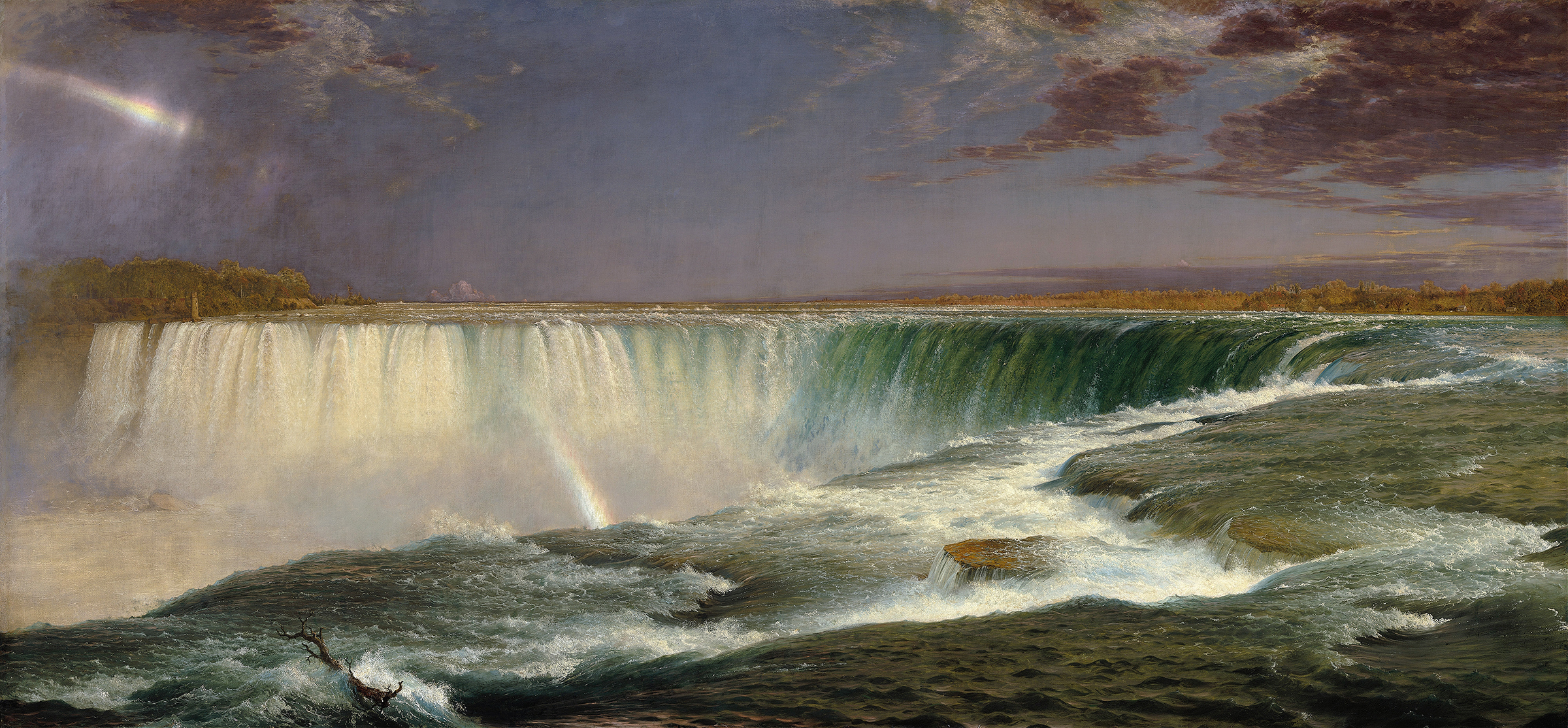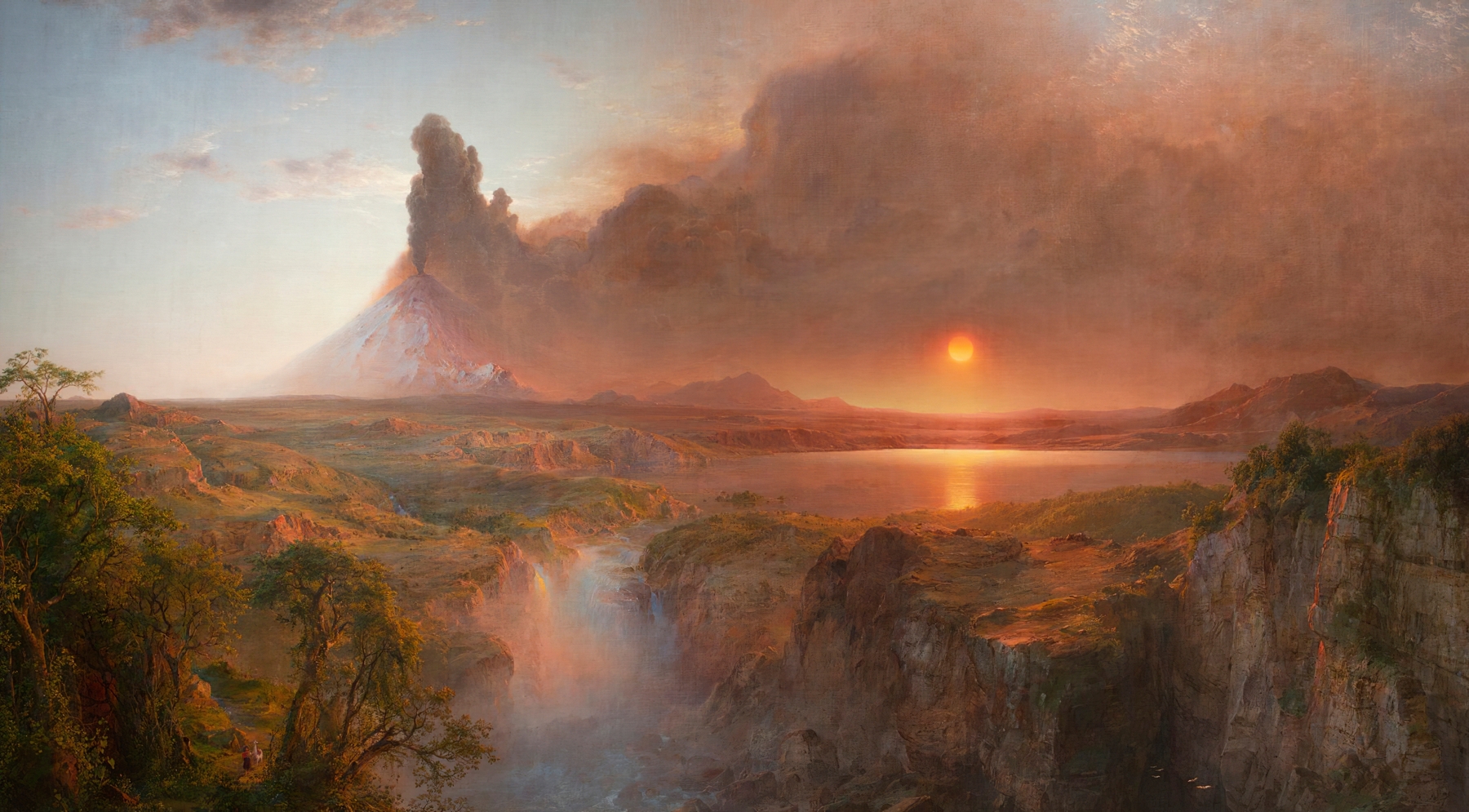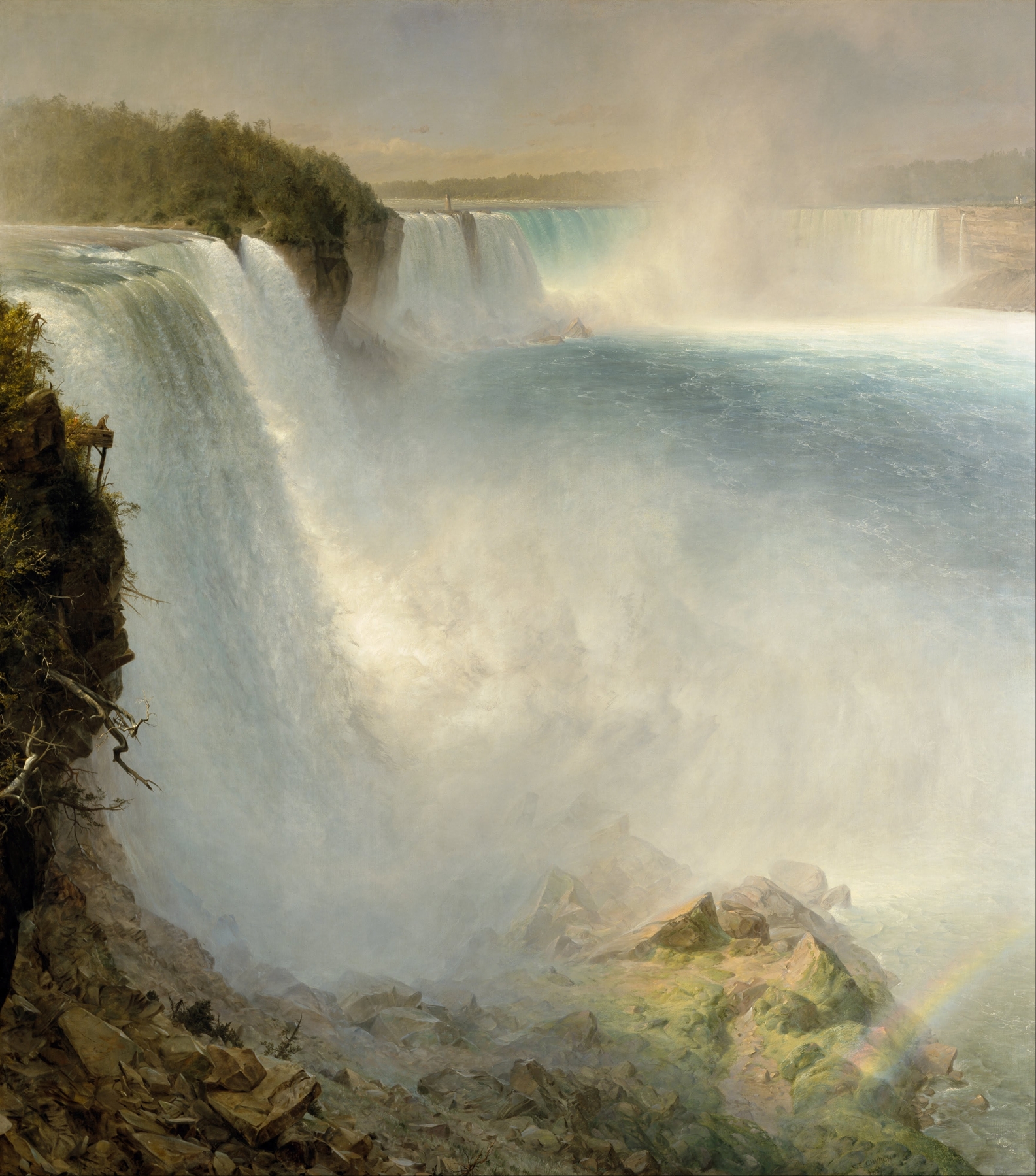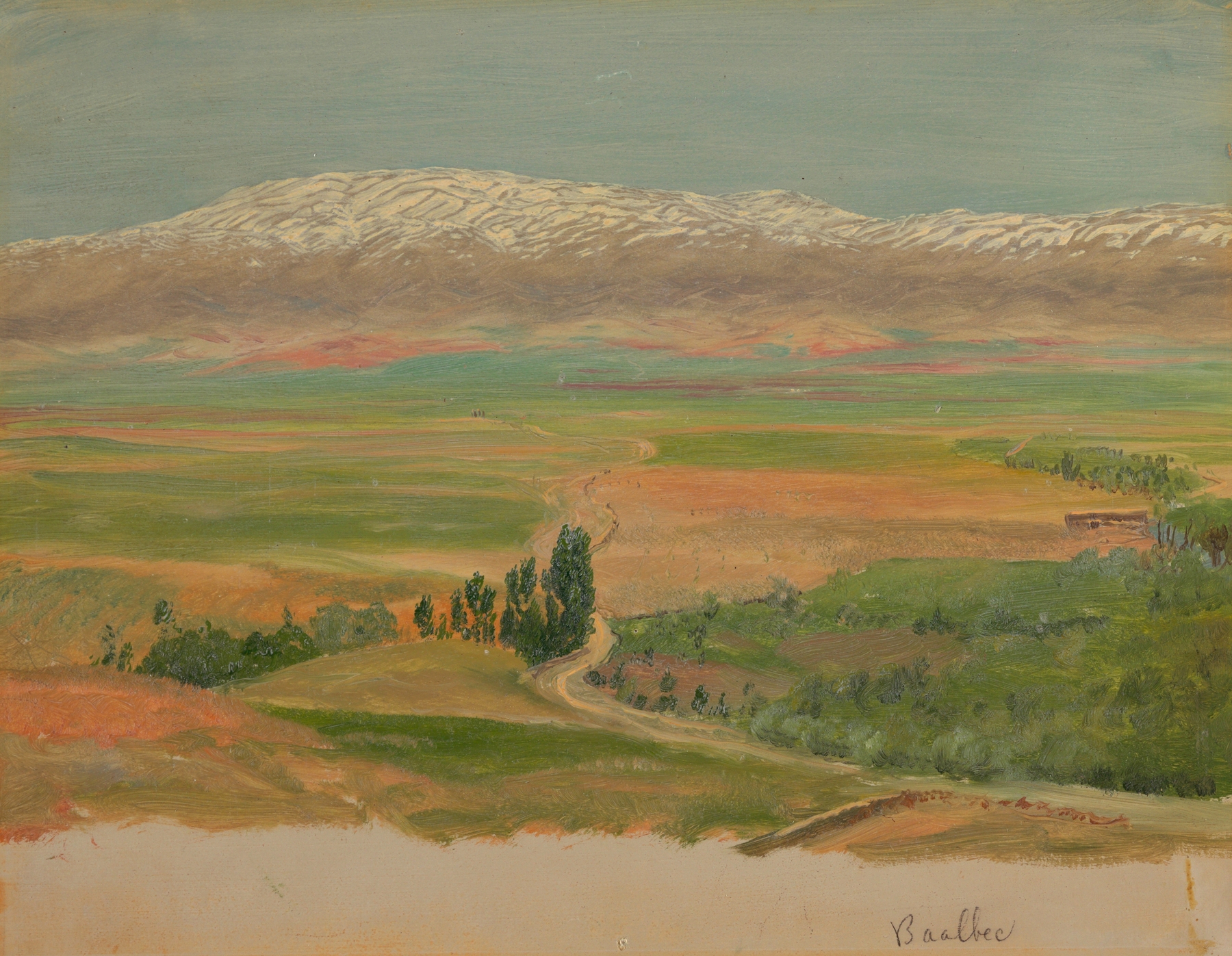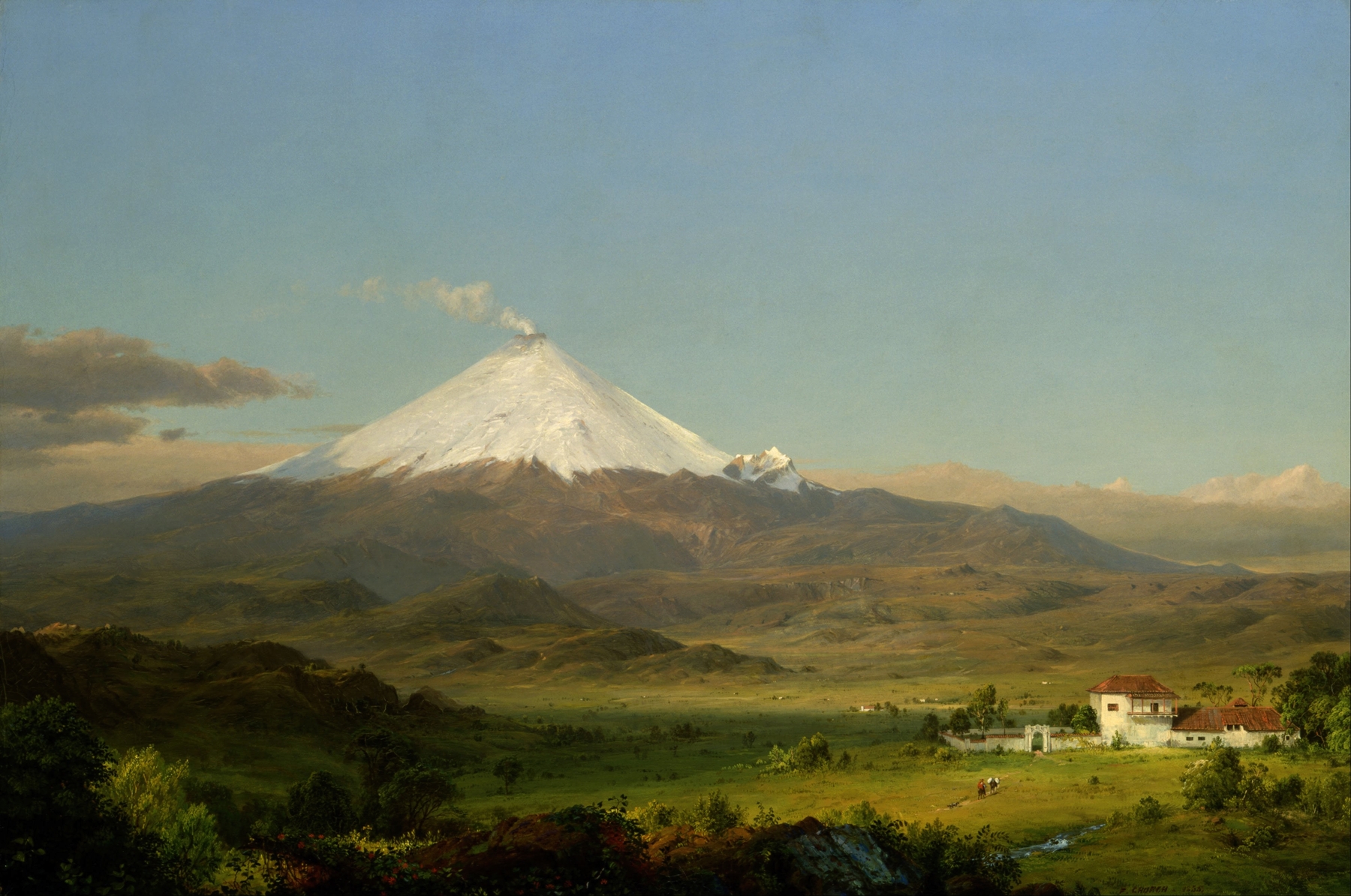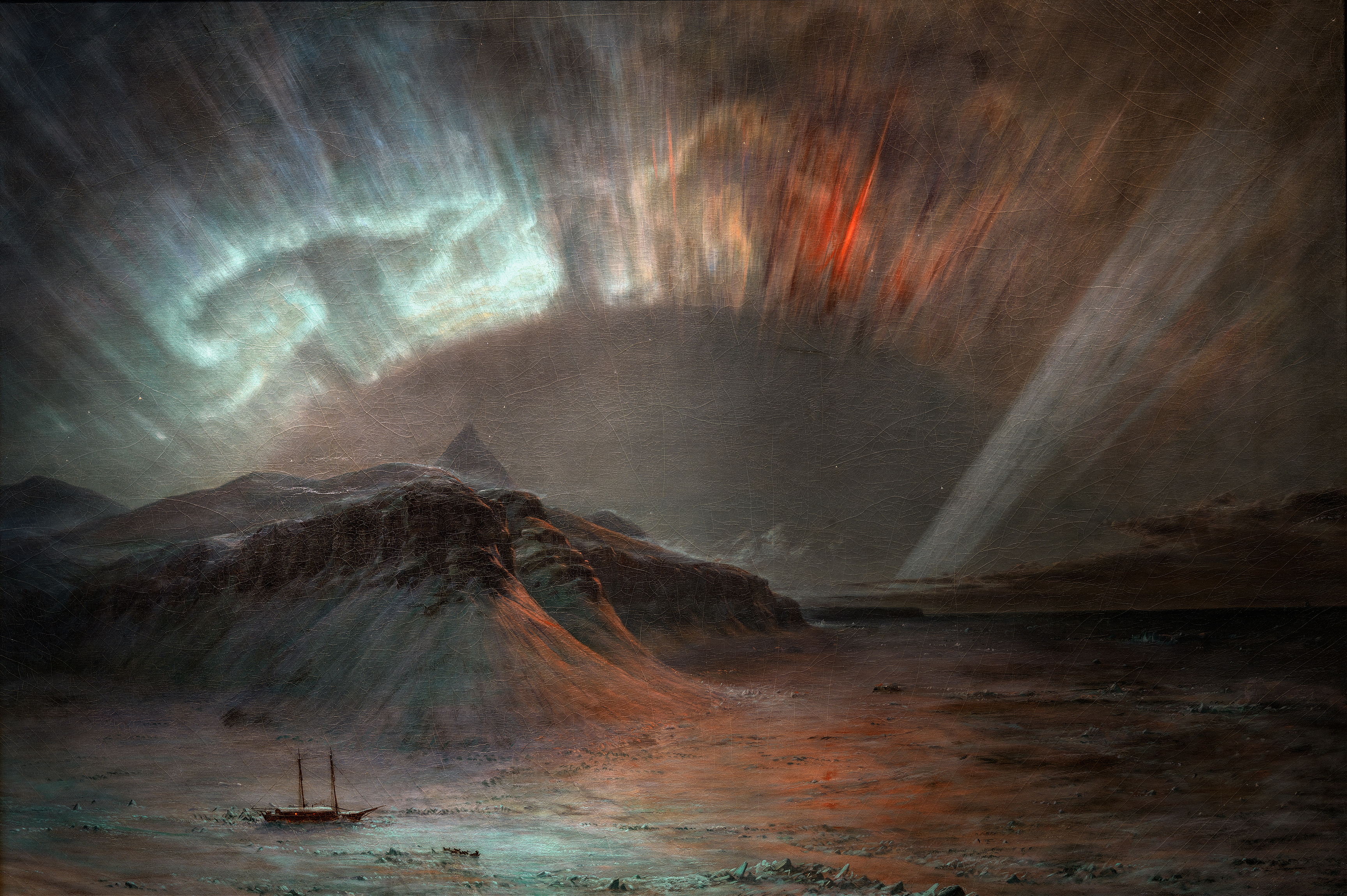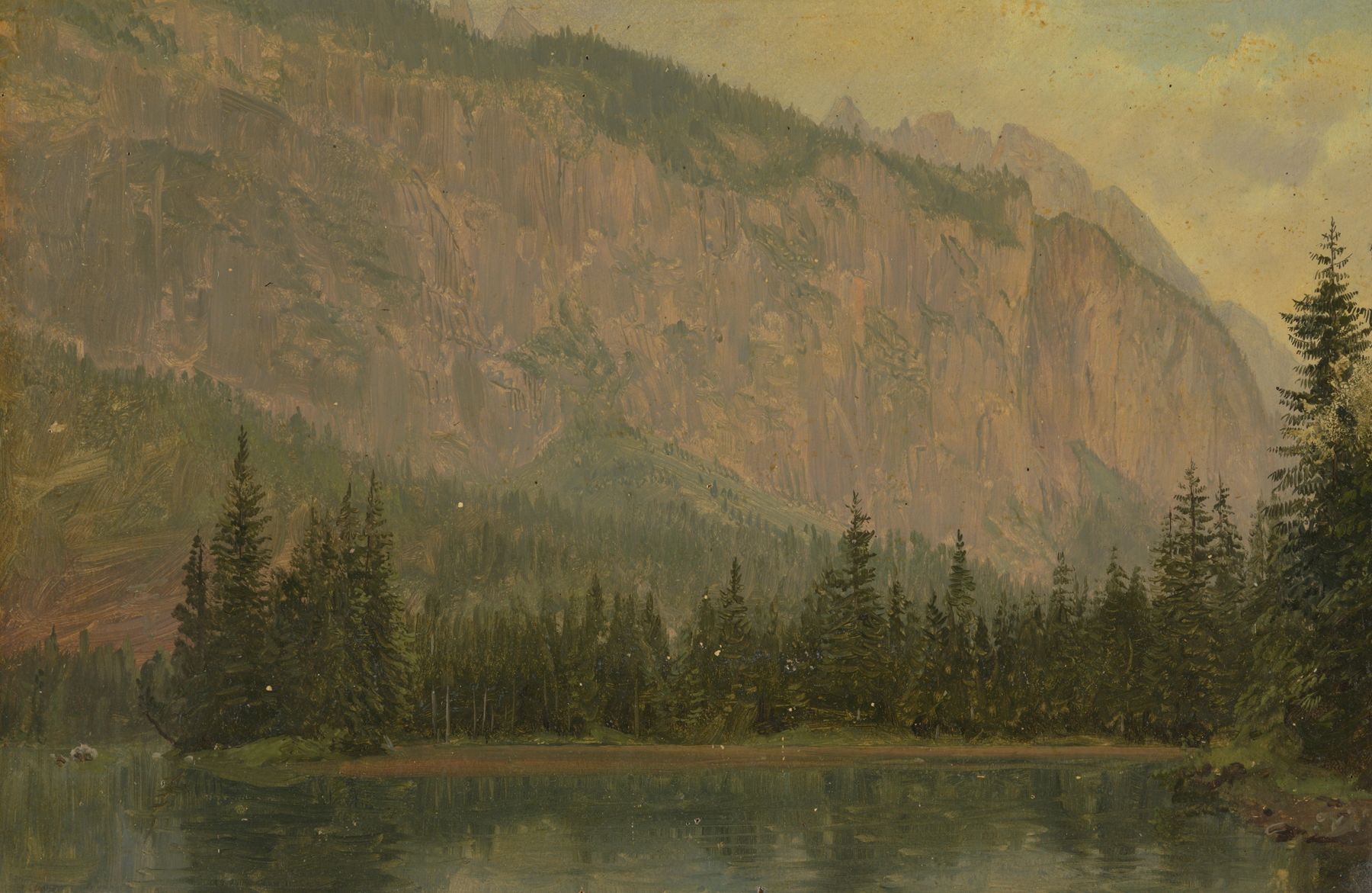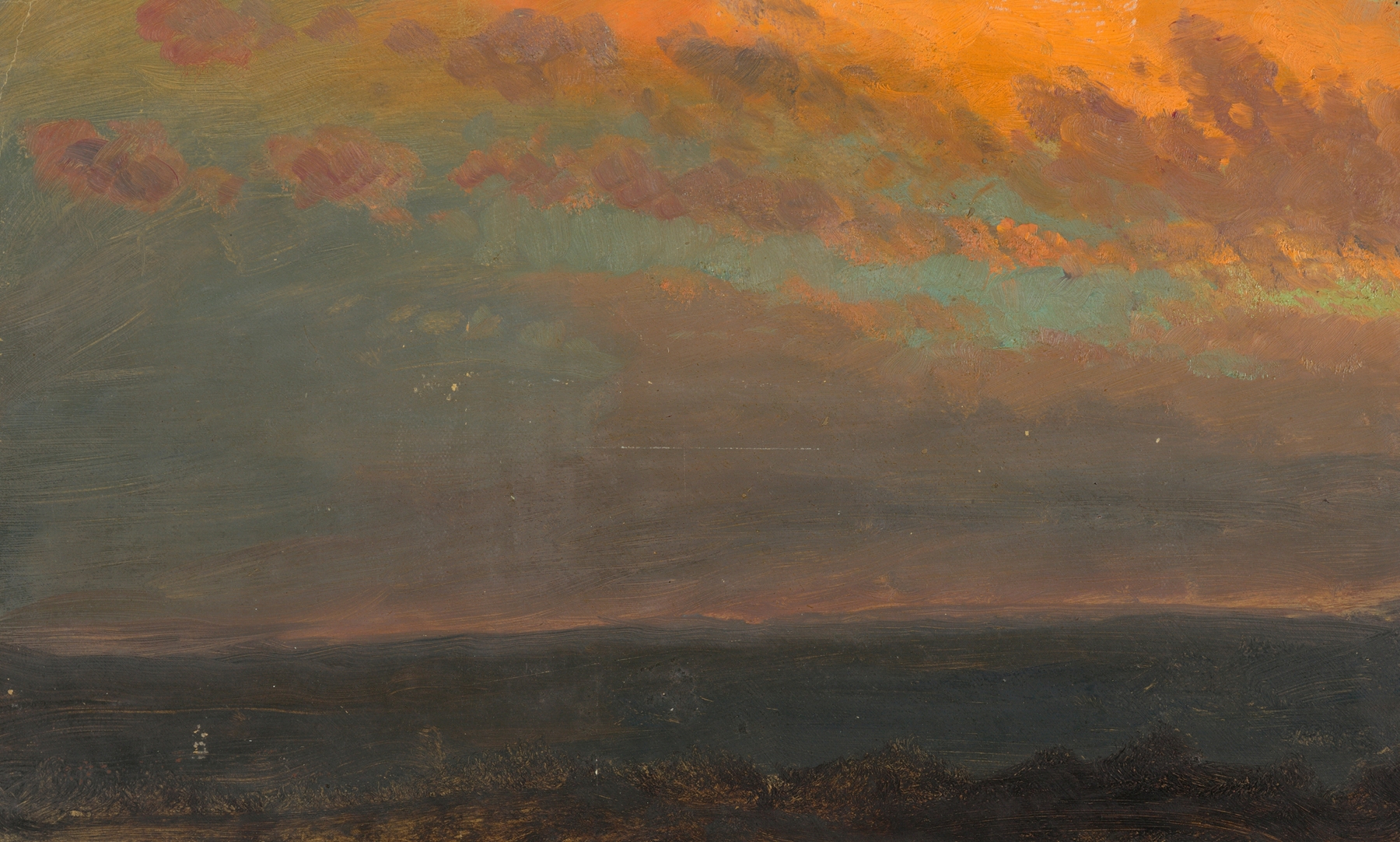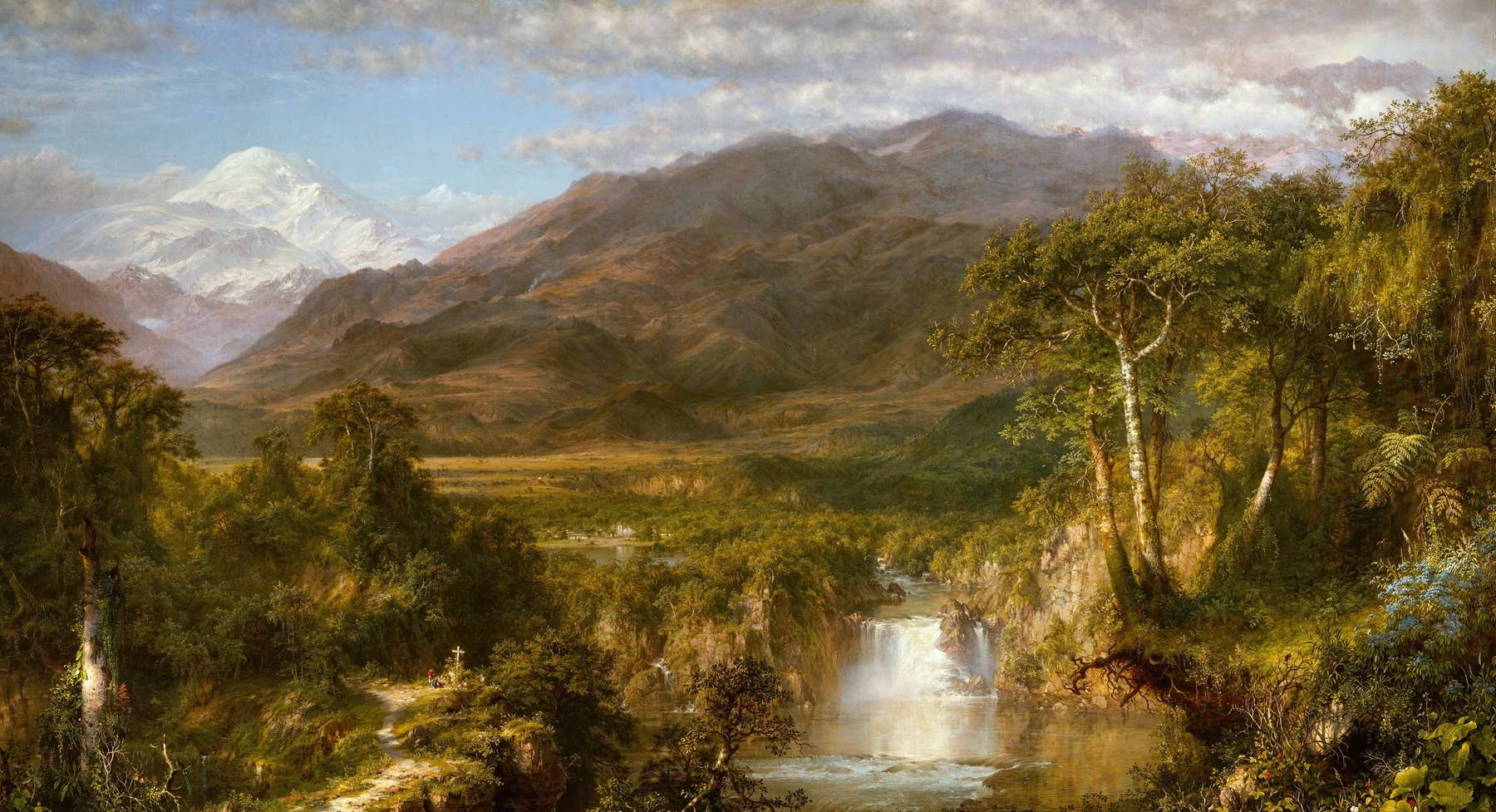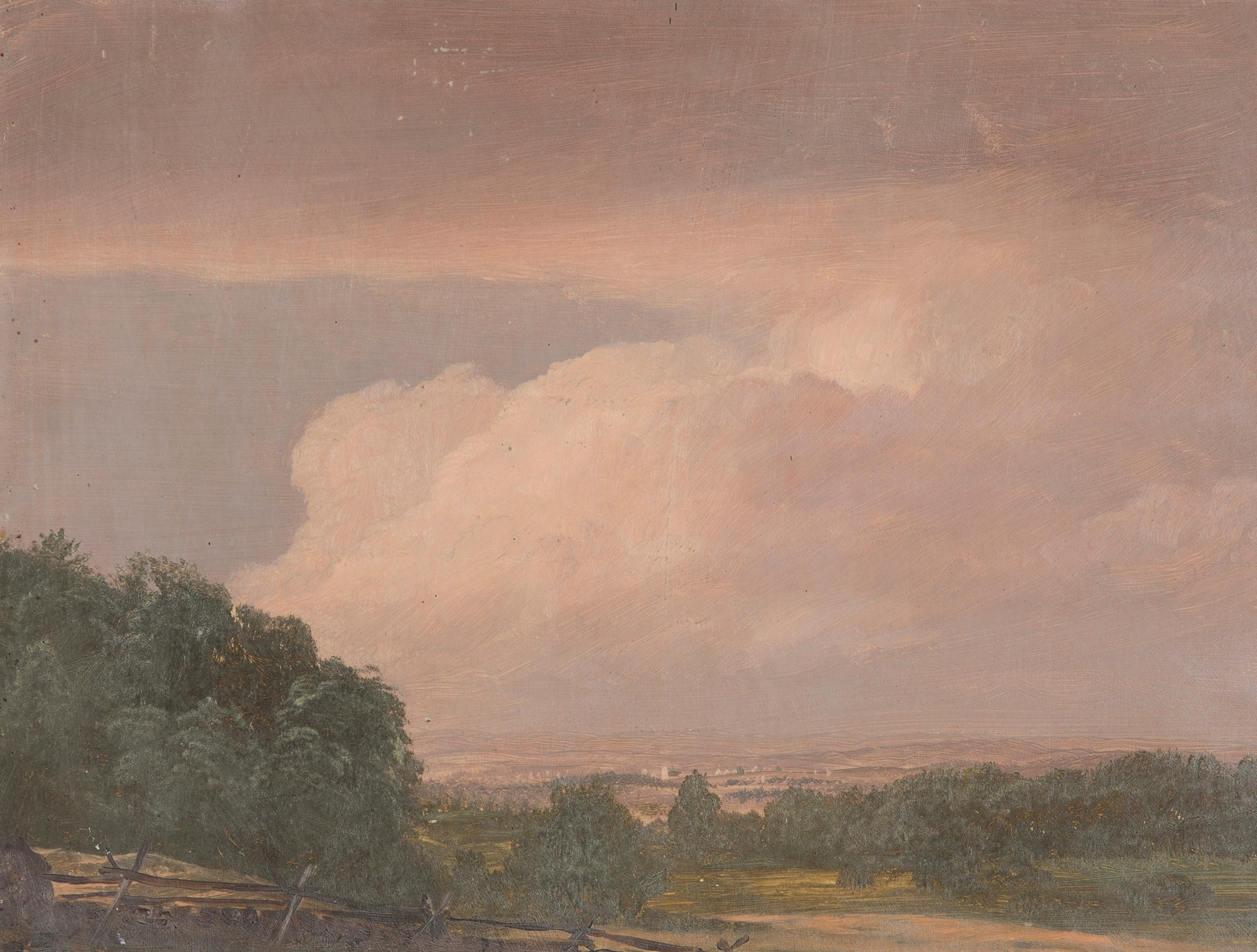
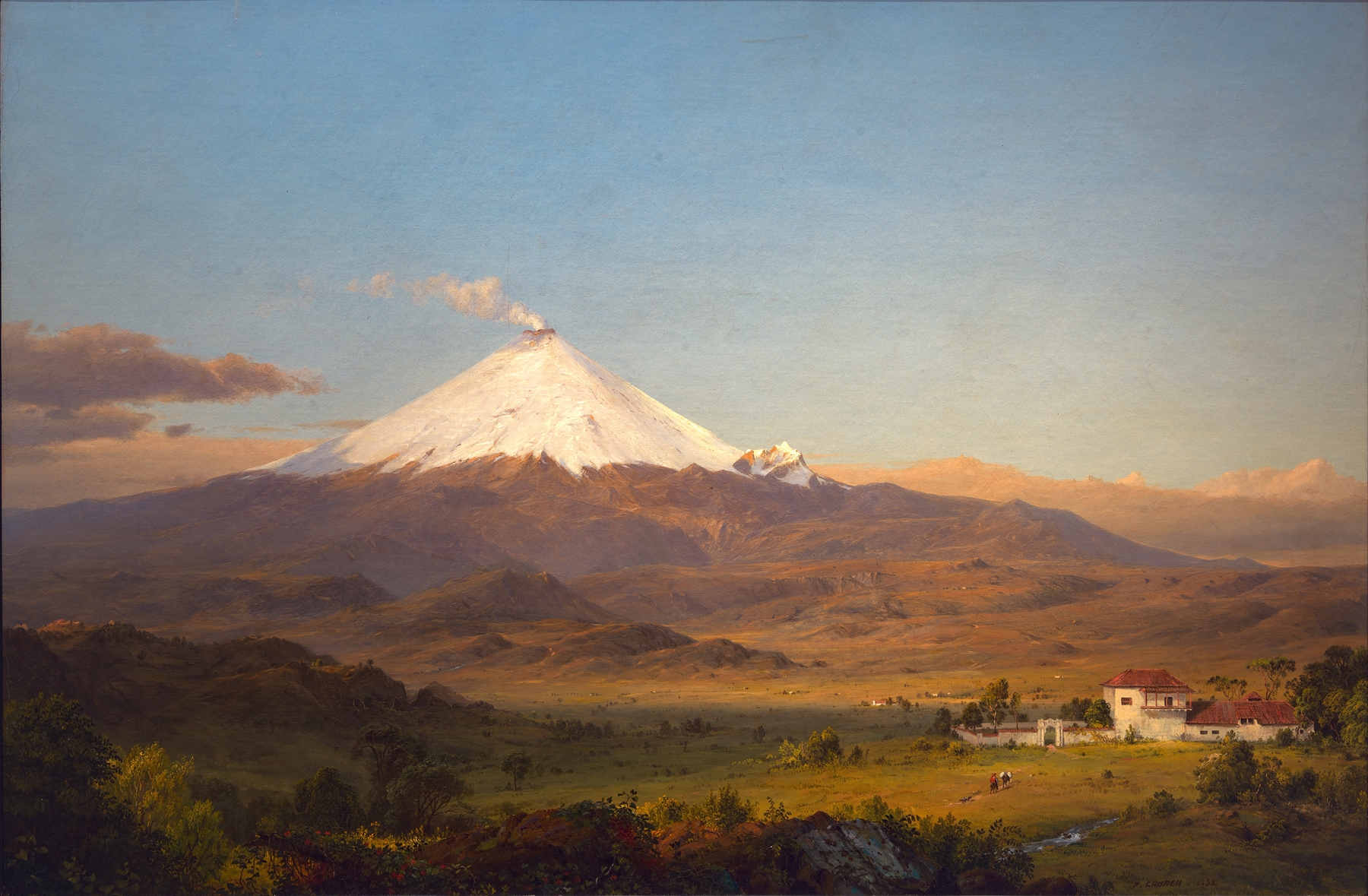
Did the painter know this moment would outlive them? In *Landscape (possibly Hudson Valley)*, the awe of nature unfolds in a breathtaking panorama—its serene majesty a testament to time’s enduring embrace. Look to the left at the gently sloping hills that cradle the horizon. The lush greens interwoven with strokes of golden sunlight beckon the eye, while an azure sky stretches above like an infinite canvas. Notice how the interplay of light casts shadows that dance upon the water, creating a shimmering pathway that invites you deeper into the scene. Each brush stroke is a carefully orchestrated note, revealing the artist’s profound reverence for the landscape. Beneath the tranquil beauty lies a deeper tension—the juxtaposition of the sublime and the mundane. The lush vegetation hints at nature's bounty, yet the absence of human presence prompts contemplation about isolation and solitude. The stillness of the scene evokes a sense of timelessness, suggesting that such beauty, untouched, can only be fleeting. The viewer is left pondering the fragility of this wilderness amid an ever-encroaching industrial age. Frederic Edwin Church painted this work during the years 1860 to 1870, a time when he was an established figure in the Hudson River School, celebrated for his romantic depictions of American landscapes. This period in his life was marked by immense success, yet it coincided with a growing awareness of the environmental changes facing the natural world. Reflecting on the expansive beauty of the Hudson Valley, Church sought not only to capture its essence but also to convey a poignant message about preserving the wilderness in an era of transformation.