Landscape with Classical Ruins and Figures — History & Analysis
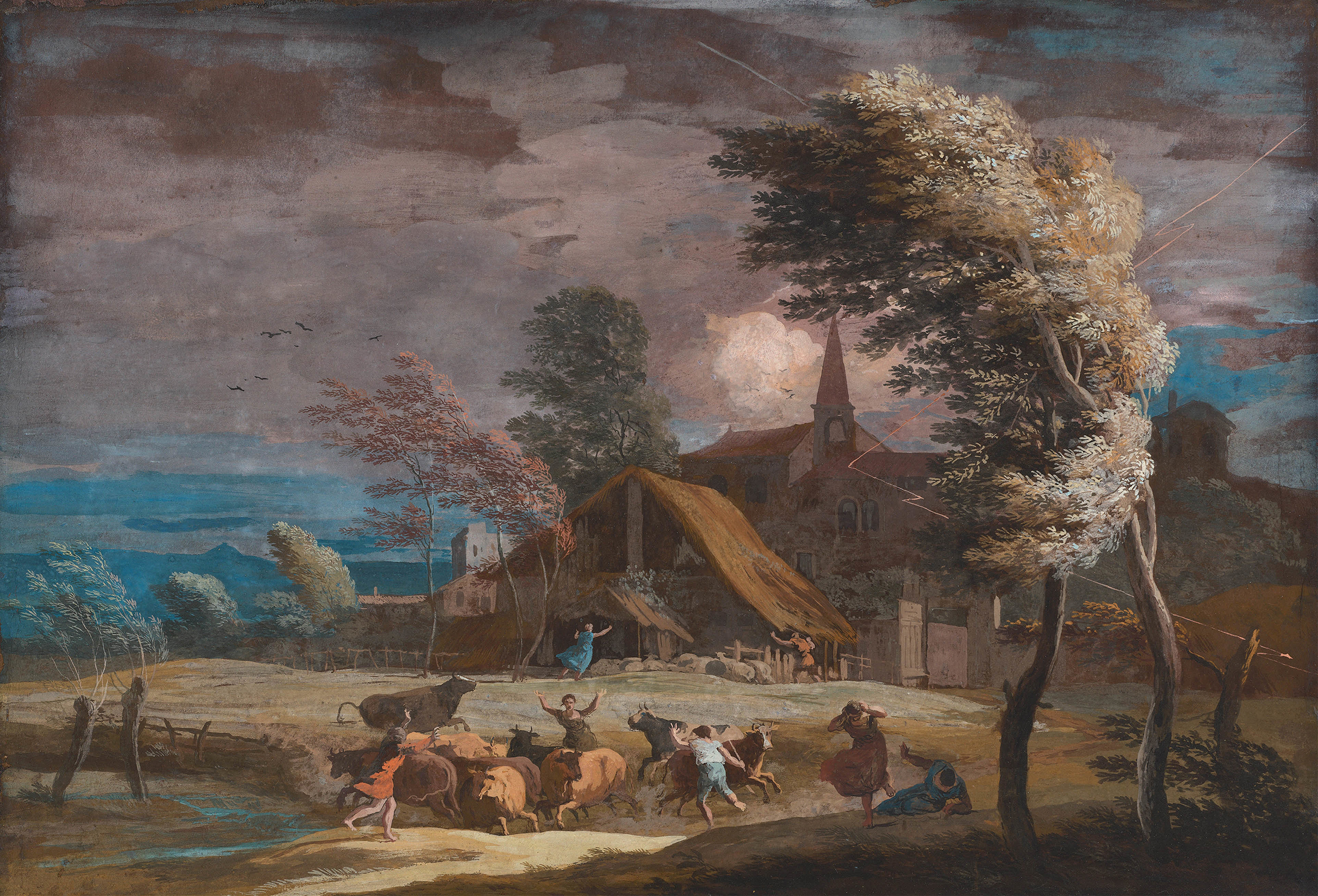
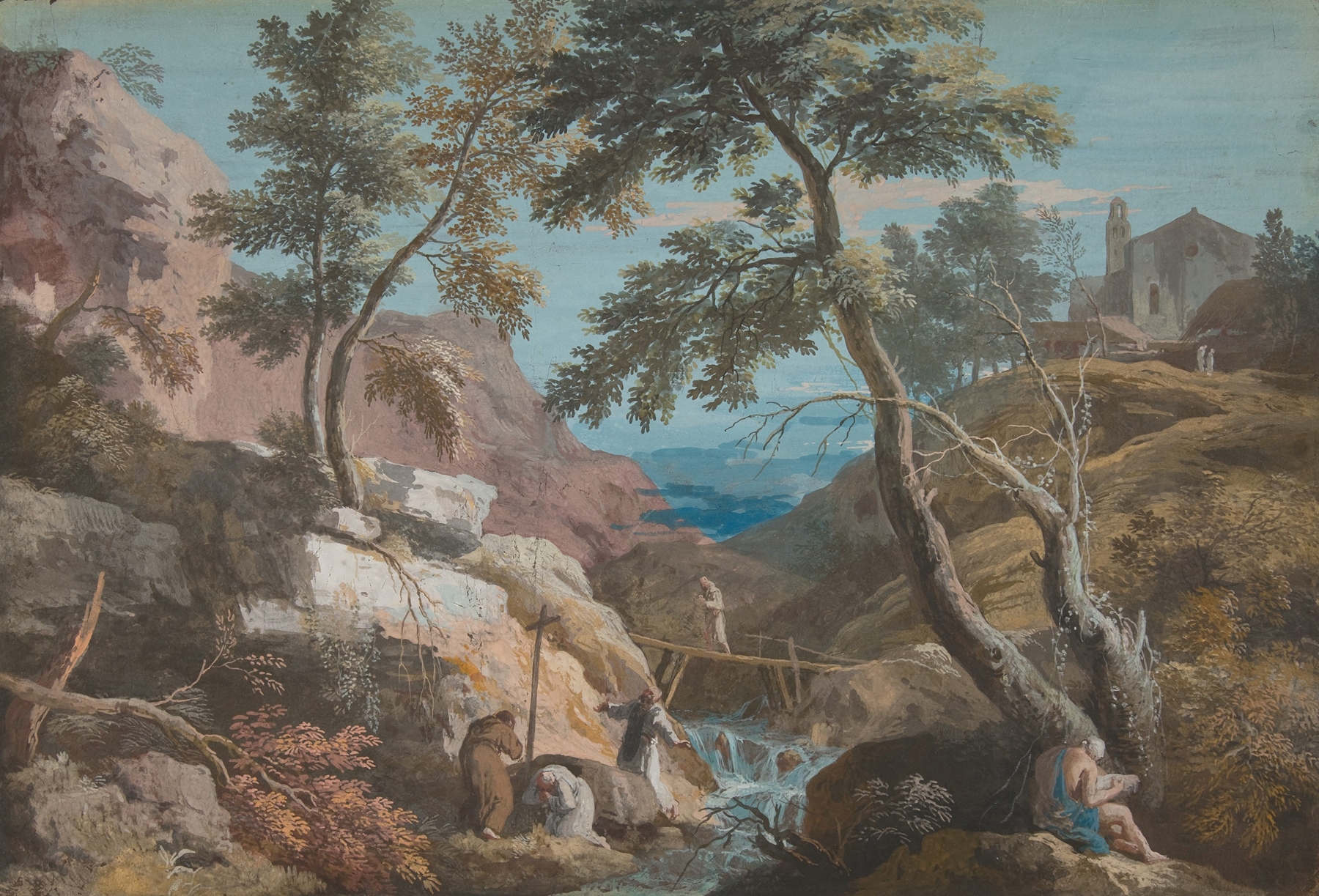
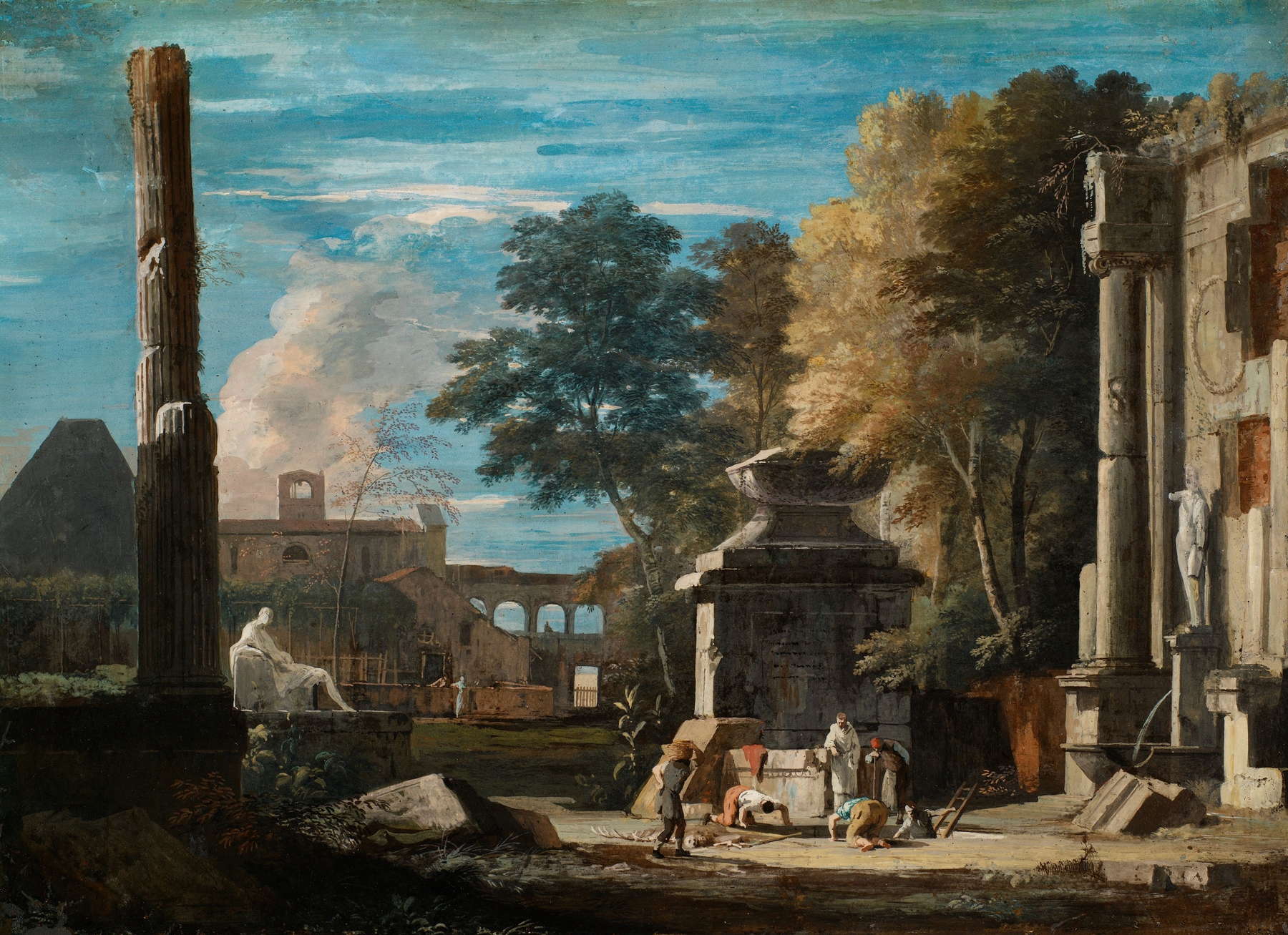
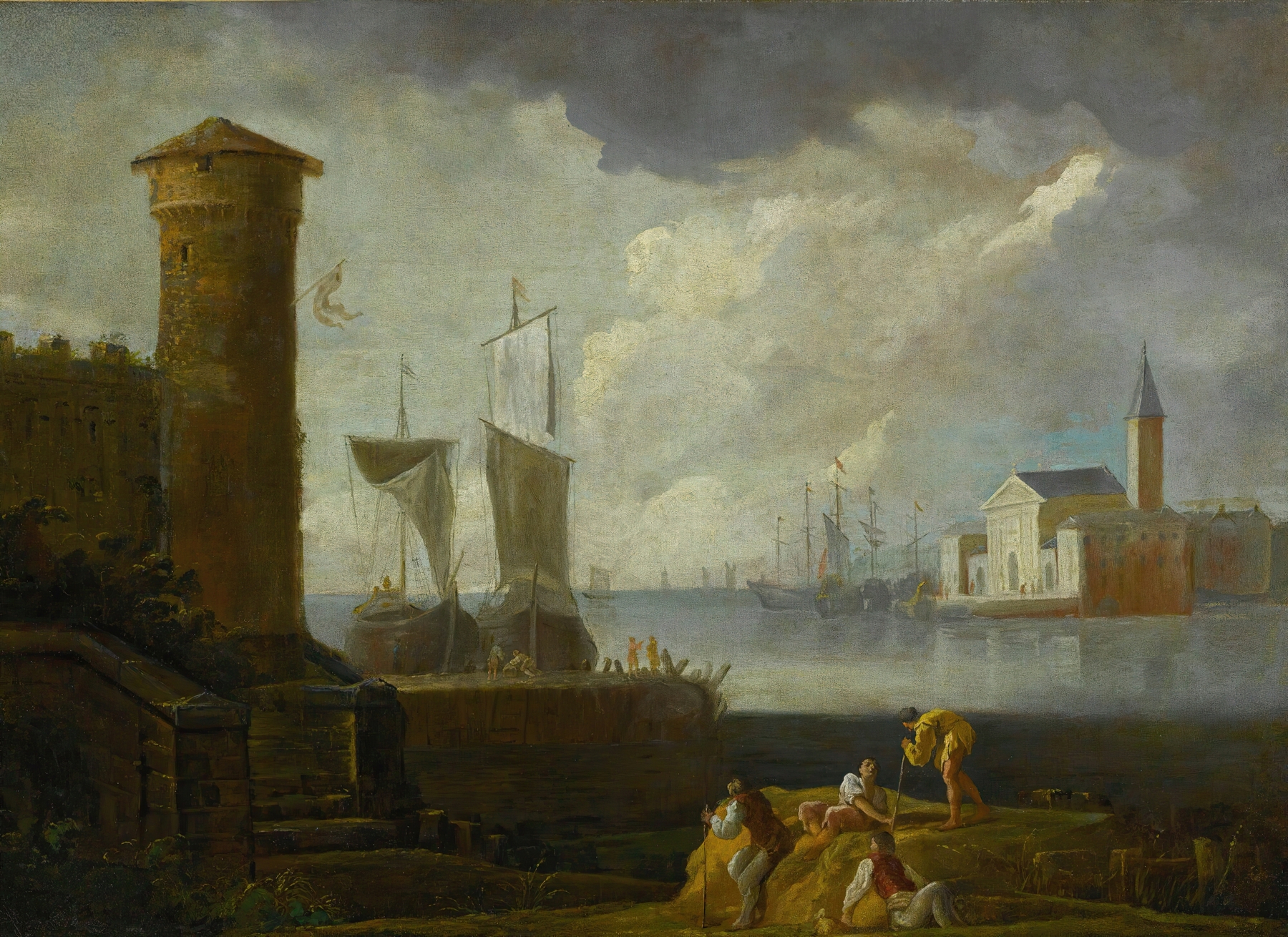
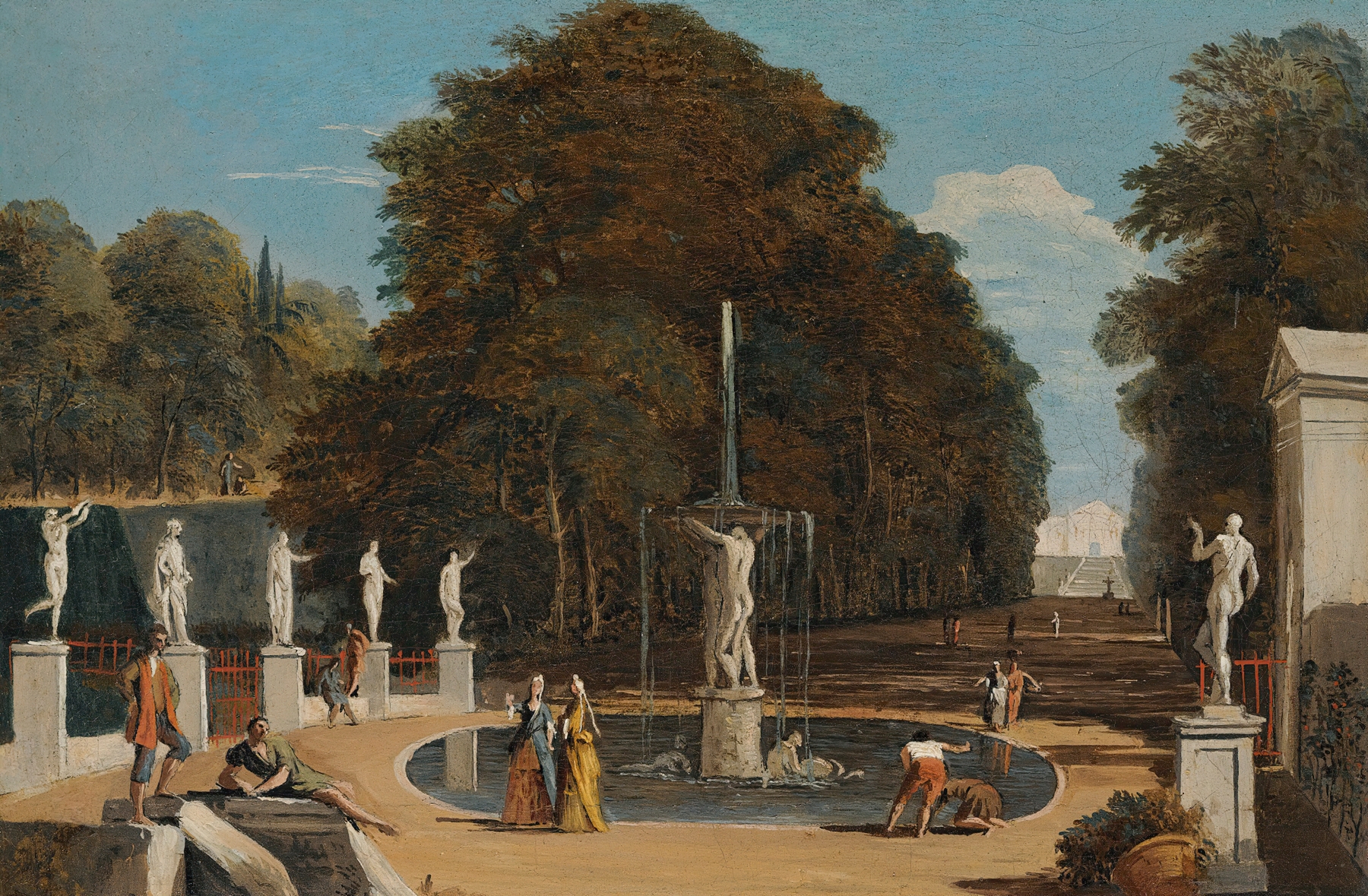
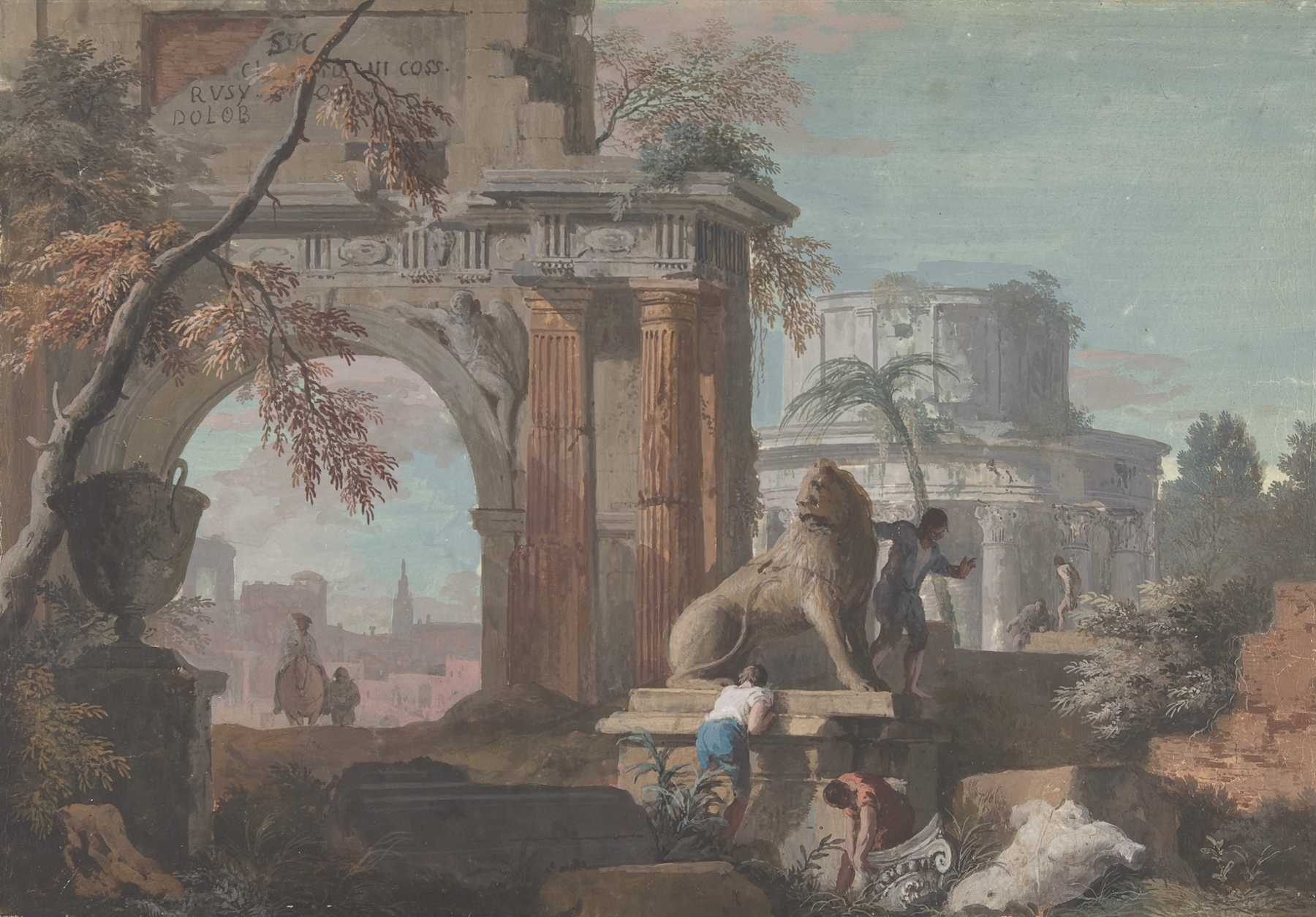
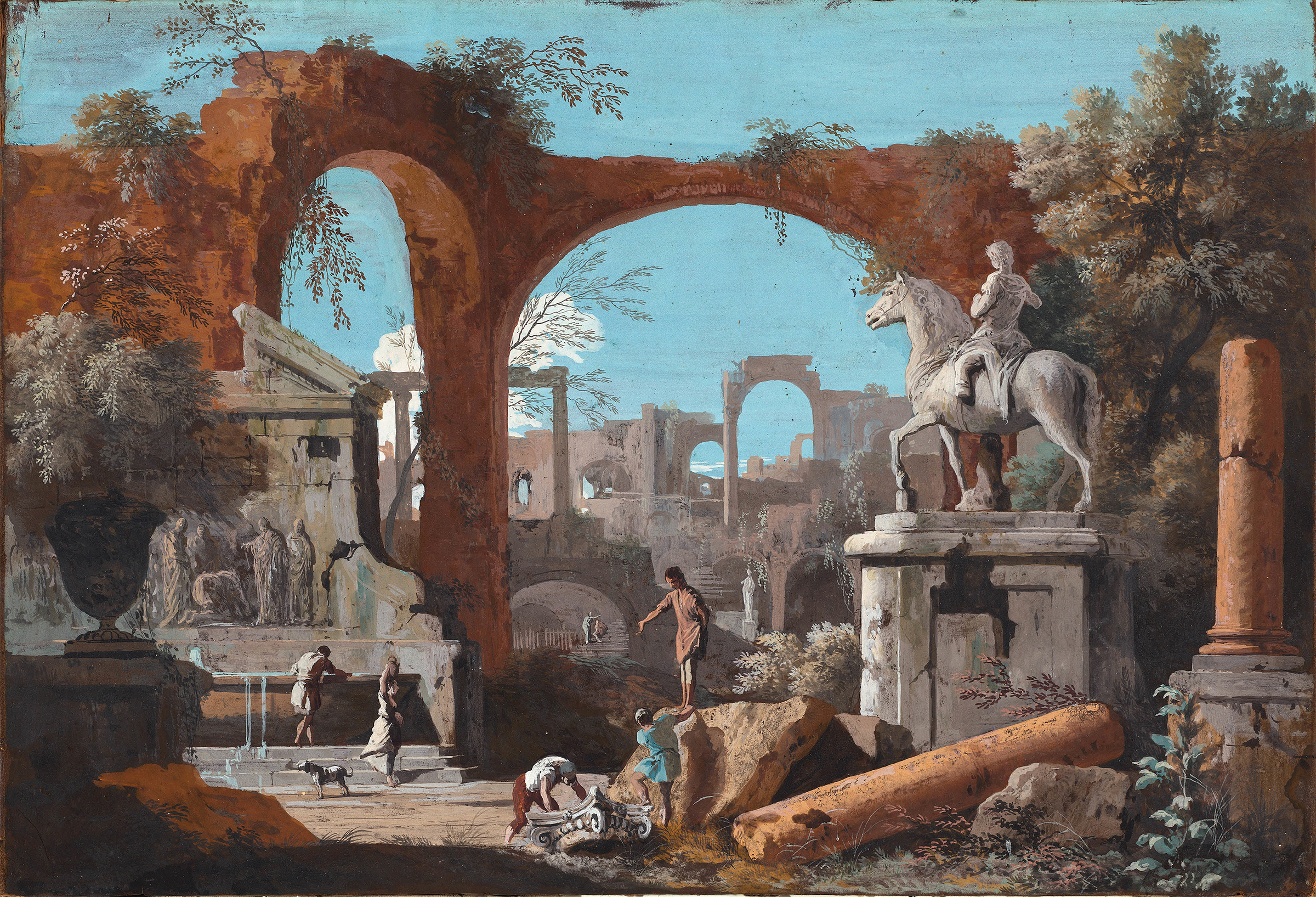
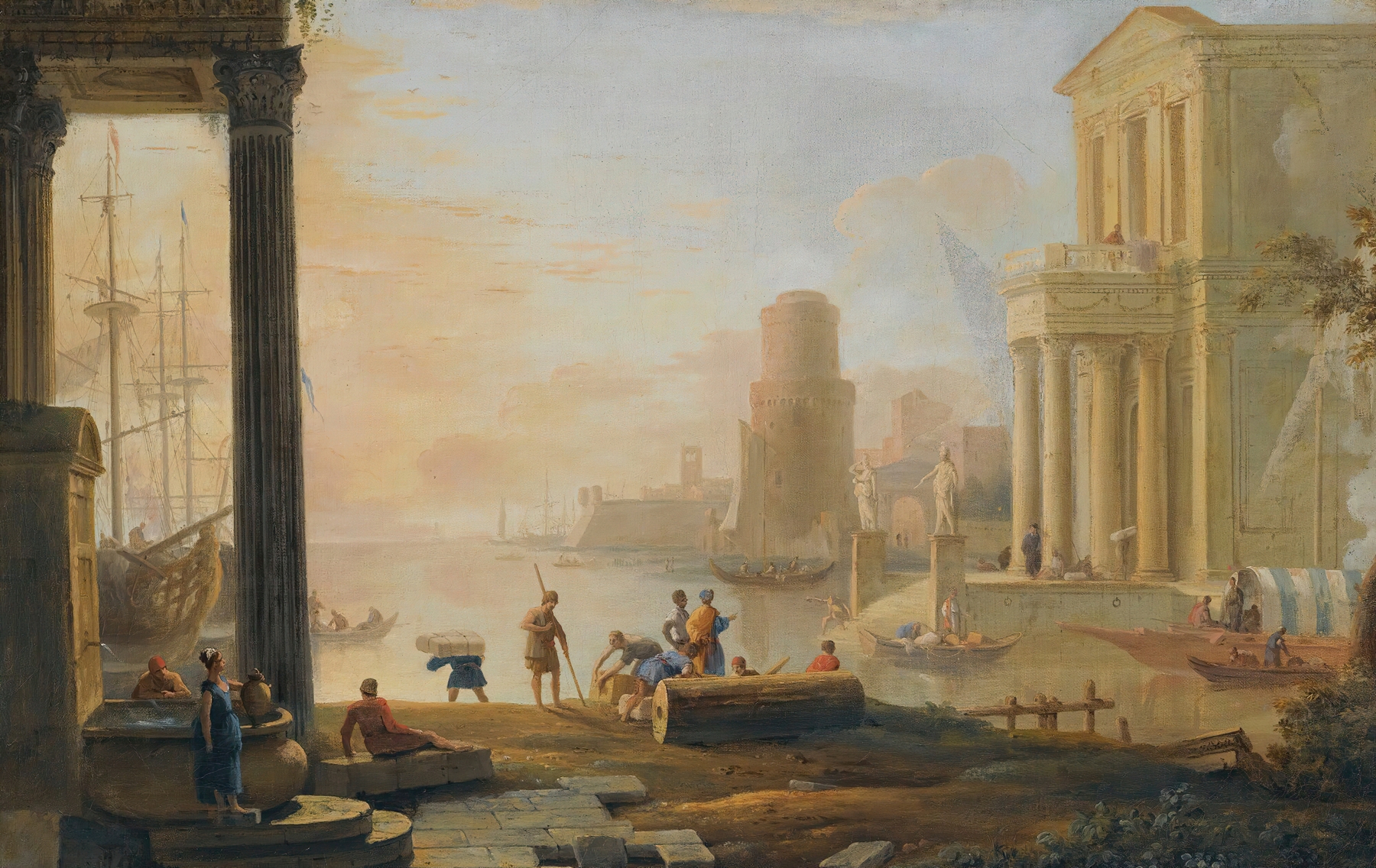
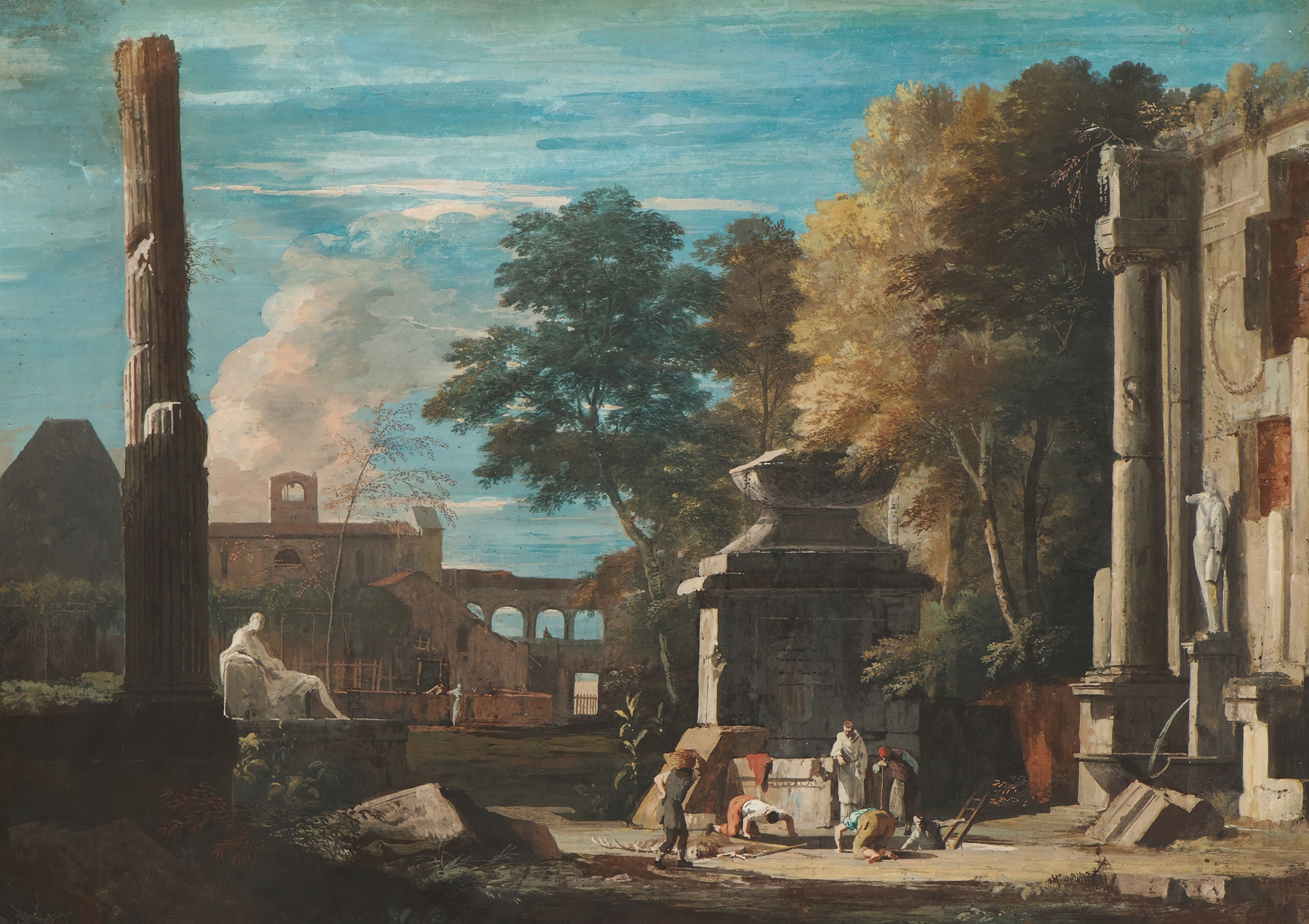
Can paint confess what words never could? In Landscape with Classical Ruins and Figures, movement transcends the canvas, suggesting stories and whispers of the past etched into the very ground we tread. Focus first on the figures scattered throughout the composition, seemingly frozen yet alive in a moment of leisure. Their postures hint at conversations and shared histories, while the ruins loom in the background, anchored by a warm palette of ochres and greens.
Notice how the artist deftly employs a play of light, illuminating the foreground while casting long shadows that stretch toward the horizon, creating a sense of depth and engagement. The openness of the landscape invites the viewer to wander imaginatively through time. Beneath the surface, there is a dialogue between decay and vitality, as the classical ruins signify the passage of time and the fleeting nature of glory. The contrasting vibrancy of the figures against the weathered stones evokes an emotional tension—life amidst the remnants of the past.
Each brushstroke speaks to a world where humanity and nature converge, creating a serene yet poignant reflection on existence and history. During the years 1725 to 1730, Marco Ricci was immersed in the cultural currents of Venice, a hub for the Enlightenment and artistic expression. His works from this period reveal an evolving style that melded the Baroque with influences from the burgeoning Rococo movement. As he explored landscapes, the artist grappled with themes of nostalgia and the transcendence of beauty, resonating with the era’s quest for harmony between man and nature.